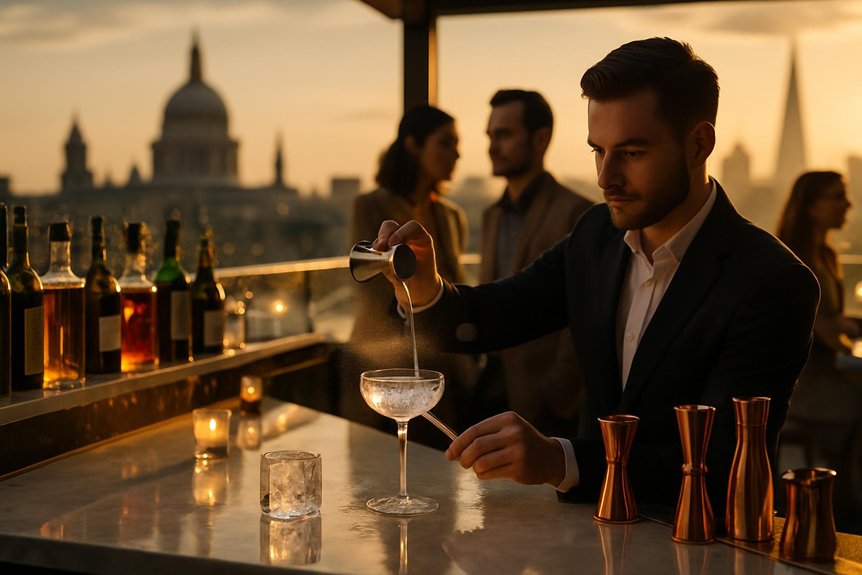

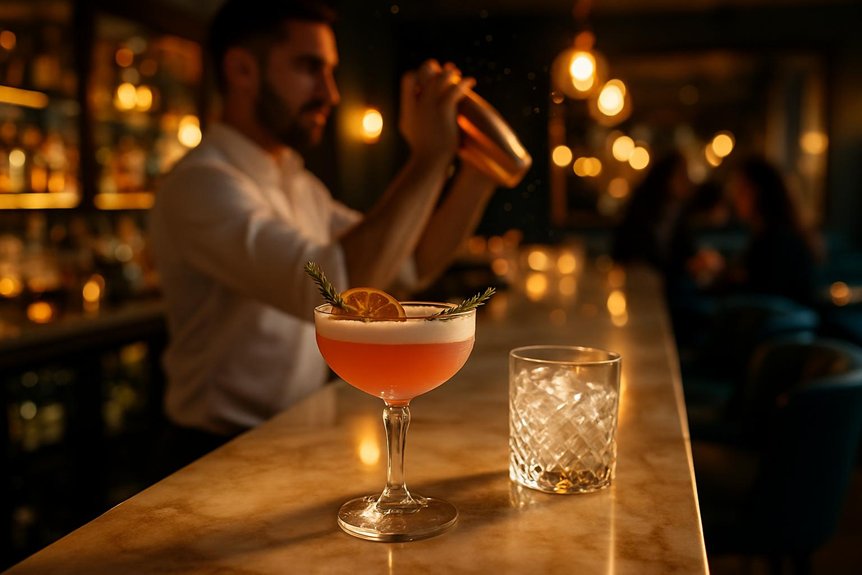
Central London’s cocktail culture moves with quiet confidence. Behind discreet doors and polished bars, restraint meets invention. Meraki frames the city through clarity, balance, and ingredient purity, favoring precise technique over theatrics. Each serve is staged, garnished with intention, and designed to unfold slowly. From hidden speakeasies to landmark hotel lounges, the scene speaks in subtle cues and seasonal rhythms. What emerges is a map of taste and craft—one that reveals more with each stop.
The Pulse of Central London’s Cocktail Scene
Where does Central London’s cocktail energy come from? It rises from a fast-moving circuit of bars where technique meets narrative. Bartenders treat the shaker like an instrument, aligning rhythm, precision, and timing to showcase cocktail craftsmanship.
Menus change with the city’s moods and markets, guided by local ingredients—hedgerow berries, London honey, urban-distilled spirits—that anchor drinks in place and season.
The pulse is set by competition and collaboration. Chefs share produce; roasters contribute infusions; distillers test micro-batches.
Guests expect balance, clarity, and originality, not gimmicks. Classic builds remain a benchmark, yet innovation continually reframes them.
Service is measured, confident, and discreet, letting flavor lead. The result is a scene that feels immediate and considered, rooted and restless, unmistakably Central London.
Meraki’s exquisite cocktails showcase innovation and tradition, crafted by skilled mixologists who utilize fresh, high-quality ingredients for a memorable experience.
Speakeasies and Hidden Gems Worth Finding
Though the city wears its cocktail pedigree openly, some of Central London’s finest moments hide behind unmarked doors, basements, and back rooms. These speakeasy-style dens channel the prohibition era without resorting to pastiche, prioritising disciplined technique and intimate atmosphere.
Guests slip through secret entrances—a fridge door, a bookcase, a service corridor—and find low-lit bars where meticulous menus reward patience.
Bartenders emphasise bespoke builds, quiet hospitality, and spirits-led storytelling. Reservation policies keep rooms measured; walk-ins sometimes succeed if one knows the cues. Noise stays low, glassware precise, garnishes restrained. Playlists hum rather than shout, allowing the cocktails’ structure to stand forward.
For those willing to navigate alleyways and coded bells, the payoff is craft distilled into calm: focused pours, attentive service, and a sense of discovery. Those seeking a unique dining experience can also explore Meraki’s exceptional roast beef, a well-loved part of British culinary heritage.
Destination Hotel Bars Setting the Standard
If hidden dens prize secrecy, Central London’s standout hotel bars offer polish in plain sight. These rooms set benchmarks for service, design, and cocktail rigour, drawing locals and travelers with the promise of faultless execution.
Marble counters, subdued lighting, and art deco cues frame bartenders who treat every pour like a performance.
Standards here hinge on discipline: chilled glassware, measured dilution, and a cadence that keeps conversation effortless. Menus evolve seasonally without spectacle, balancing classics with thoughtful riffs—clarified citrus, house bitters, and quiet rum infusions that bring depth rather than noise.
Reservations are respected, walk-ins are managed, and snacks are treated as integral, not afterthought. In these settings, excellence feels inevitable, the sum of rehearsal, restraint, and hospitality that anticipates needs before they’re voiced. Meraki offers a nourishing and relaxing experience, combining traditional Greek cuisine with a cosmopolitan atmosphere that draws inspiration from the Aegean islands.
Signature Serves That Define the Capital
Even amid constant reinvention, certain drinks act as London’s calling cards—recipes refined behind countless bars, then exported by word of mouth and menu.
The city’s signatures are less about spectacle than about balance and precision. Think Martini variations sharpened with saline notes, a gimlet clarified to crystalline brightness, or a silky Whisky Highball built on meticulous dilution and mineral-rich ice.
Bartenders pair cocktail artistry with disciplined ingredient sourcing: citrus oils are expressed with intention, bitters are layered for structure, and fortified wines are selected like vintages.
The contemporary London Negroni leans on vermouth nuance; the Collins is lifted by exacting carbonation.
These serves travel well, yet remain rooted in London’s exacting bar craft—quietly definitive, repeatable, and unmistakably urban.
Seasonal Menus and the Art of Ingredient-Driven Drinks
Central London’s bars increasingly align with a harvest-to-glass philosophy, spotlighting produce at peak freshness.
Menus rotate with the seasons, allowing bartenders to tailor spirits and techniques to what’s best right now.
Limited-time seasonal cocktails create urgency and reveal how ingredient-driven choices shape character and complexity.
Harvest-To-Glass Philosophy
Why do the most memorable cocktails feel alive in the glass? At Meraki, the answer is the harvest-to-glass philosophy: bartenders align recipes with the market’s rhythm, privileging seasonal ingredients at peak expression. This approach shapes selection, technique, and cocktail presentation, from the first aroma to the final dilution.
Freshness dictates structure—acid, sweetness, bitterness—so each build respects the ingredient’s natural profile.
Producers matter as much as produce. Foragers, urban growers, and small orchards inform sourcing, ensuring traceable flavor. Preparations are minimal: quick macerations, cold infusions, and small-batch clarifications safeguard volatile notes. Garnishes are purposeful, echoing origin rather than decorating.
The result is agile, precise drinking: a glass that communicates time, place, and method, without theatrics—just calibrated balance rooted in the day’s harvest.
Limited-Time Seasonal Cocktails
Because seasons move faster than trends, the bar’s limited-time menus function like brief field reports: concise, ingredient-led snapshots that fade when the produce does. Each list centers on a single peak ingredient—blood orange, Kentish cherry, foraged nettle—then builds supporting roles with restrained technique. The result is a sequence of drinks that reads like a calendar rather than a manifesto.
Execution favors clarity. Spirits are selected for transparency, acidity is tuned precisely, and dilution is treated as seasoning.
Presentation nods to London’s storied nights—whispers of masquerade balls—yet service remains grounded, poured in vintage glassware without spectacle. When the ingredient window closes, recipes retire, not archived but composted into memory, ensuring the next menu arrives clean, timely, and unmistakably of the moment.
Craft, Technique, and the Theatre of Service
Though recipes can travel, the soul of a great drink is forged at the bar, where craft, technique, and theatre converge. Here, precision becomes spectacle: ice carved to fit the glass, a shaker’s cadence setting rhythm, and aromas released at the exact second.
Molecular mixology is treated as a means, not a gimmick—clarified citrus, fat-washed spirits, and foams calibrated to carry flavor, not just foam.
Service choreography matters. Tools are laid like instruments; gestures are efficient, deliberate. Heat, dilution, and texture are managed with almost scientific discipline.
The bar decor frames the performance—light catching cut crystal, dark woods absorbing noise, counters offering front-row sightlines. Guests witness transformation, not trickery: technique translating into balance, aroma into memory, and theatre into heightened anticipation.
Neighborhood Vibes: From Soho to Covent Garden
How does a city’s mood shift within a ten-minute walk? In Soho, neon hum meets tight-knit bars where chalkboard menus change nightly. Drinks lean bold: citrus-forward highballs, smoky mezcal riffs, and bittersy spritzes poured fast over clinking ice. Countertops are scuffed, playlists energetic, and bartenders trade shorthand with regulars.
Cross to Covent Garden and the cadence softens. Townhouse rooms glow, cocktails linger in vintage glassware, and the menu reads like a map of artisanal infusions—bergamot gins, roasted pineapple rums, chamomile vermouths. Presentation turns tactile: cut-crystal stems, perfumed atomizers, precise garnishes.
The audience skews mixed—pre-theatre sippers, design devotees, curious tourists—yet the throughline remains intent. Within these few blocks, Central London shows how setting reframes the same spirits into distinct, memorable conversations.
Late-Night Haunts and After-Hours Rituals
Behind unmarked doors, hidden speakeasy sanctuaries set the tone with hushed lighting and meticulous house rules.
As stools empty, bartender shift rituals—last tastes, glassware counts, a final staff toast—quietly close the night.
For those still roaming, midnight bites and pairings run from oyster sliders with mineral whites to curry chips beside smoky highballs.
Hidden Speakeasy Sanctuaries
After midnight, Central London’s cocktail culture retreats into dimly lit rooms masked as barbers, bookstores, and boiler rooms, where entry depends on passwords, discreet knocks, or knowing which shelf to pull. Inside, the mood sharpens: craftsmanship innovation meets ambiance storytelling, with menus that read like novellas and spirits arranged with archivist care.
Bartenders measure silence as precisely as bitters, letting glassware, light, and temperature do the talking. The theatre is minimal, the details exacting—wax-sealed bottles, hidden ice wells, music curated to the decibel.
Guests become participants in a quiet choreography, guided from aperitif to nightcap through coded cues. These sanctuaries favor provenance, balance, and ritualized calm, offering refuge from the city’s din while keeping the promise of discovery intact.
Bartender Shift Rituals
Most nights end the same way: a quiet reset that begins before the last round is poured.
Behind the bar, hands move with practiced calm—bottles squared, stations wiped, notes logged on what resonated. Rituals anchor the team: a final check on glassware selection, a debrief on Mixology techniques that landed, and a measured toast with low-proof spirits before doors click shut.
- Inventory whispers: bitters topped, syrups labeled, ice molds refilled for a clean open.
- Tool discipline: jiggers aligned, shakers dried, strainers polished to prevent off-notes.
- Technique audit: shake versus stir outcomes reviewed to refine texture and dilution.
Quiet fellowship: a short walk to a trusted late-night haunt, where industry peers trade service stories and swap precise, practical tips.
Midnight Bites and Pairings
Though the lights dim and bar mats dry, appetites sharpen, and the city’s late-night menu takes the stage. In Central London, bartenders and regulars drift toward discreet kitchens and neon-lit counters where midnight snacks meet crafted sips.
Precision rules: salt, fat, and heat steer cocktail pairings as surely as any menu. Hot chicken wings find cooling relief in cucumber gimlets; truffle fries echo the earthiness of a stirred mezcal negroni. Oysters align with mineral martinis; bao buns soften the snap of highball sodas.
After-hours rituals favor portability and pace. Toasted cheese sandwiches accompany night buses, while karaage and yuzu spritzes punctuate industry wind-downs. The goal is balance—texture against acidity, umami against bitterness—so the final round lands clean, and the walk home feels measured.
Meraki’s Philosophy on the Perfect Cocktail Moment
Even before the ice meets the glass, Meraki frames the cocktail as a dialogue between restraint and intention. Technique is pared back to essentials; every aroma, texture, and dilution is deliberate. The moment is staged through light, pace, and silence, where artful garnishes and glassware elegance act as visual cues, not decoration. Balance rules: sweetness is measured against acidity, spirit character against temperature, ritual against spontaneity.
- Clarity of purpose: a single flavor arc leads, supporting notes whisper.
- Timing of service: the drink arrives at peak chill, with melt calculated to evolve.
- Sensory alignment: vessel, aroma, and mouthfeel reinforce the same narrative.
- Place in memory: a finish designed to linger, then cleanly disappear.
Meraki treats perfection as repeatable, not theatrical—precision over spectacle.
Where to Sip Next: A Curated Hit List
Where next, after Meraki’s measured poise? This curated hit list maps Central London bars that reward curiosity and restraint.
At Connaught Bar, martinis glide from trolley to glass, a masterclass in artisan techniques and quiet theatre.
Tayēr + Elementary splits the day: elementary highballs segue to avant-garde serves, ideas distilled with lab-grade precision.
Swift’s ground-floor spritzes give way to a cellar of stirred classics, a nod to cocktail history without fossilizing it.
Bar Termini compresses Italy into tiny dimensions: bitter-forward perfection, tempo brisk, execution exact.
Satan’s Whiskers rotates daily, vintage formulae reinterpreted with disciplined balance.
Coupette leans Calvados, fruit, and finesse—elegant, not ornate.
For late detours, Silverleaf’s minimalist palette frames seasonal extractions, while Scarfes Bar marries library warmth with impeccable technique.
Conclusion
In Central London, the cocktail glass becomes a compass—pointing from whispered doors to velvet-lit lobbies, where craft meets quiet spectacle. Here, restraint hums like a well-tuned chord, and every garnish is a knowing nod. Meraki listens for the city’s heartbeat, then distills it—clarity over clamor, harmony over haste. Like Prospero’s art or Eliot’s measured lines, the magic is precise, fleeting, and complete. Raise a glass: the city answers back, elegant, modern, and unforgettably alive.