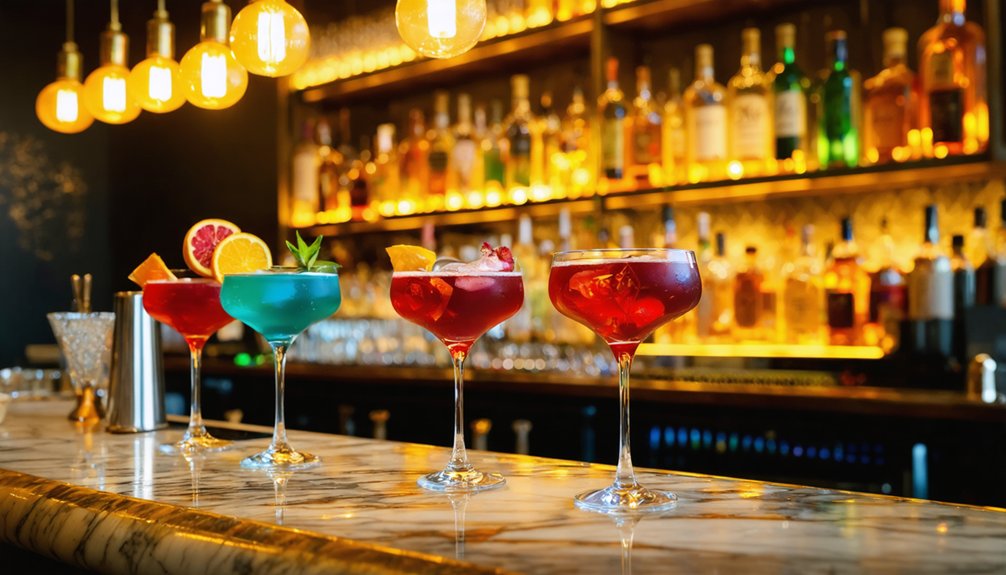

Tucked behind unmarked doors, Meraki’s Soho bar scene favors restraint over spectacle. Bartenders guide quiet tastings, slip in foraged accents, and suggest off-menu riffs with a nod. Smoke curls from tableside reveals, then fades, leaving subtle layers to unpack. Low-ABV and zero-proof options carry the same precision. Hospitality feels unforced, almost conspiratorial. Those who know how to order get more than a drink—an invitation to a quieter craft. The question is how to find the threshold.
Whispered Entrances and Alleyway Finds
Though the city hums loudly at street level, its most intriguing cocktails often hide behind unmarked doors and down dim lanes. In Meraki’s Soho, curiosity is rewarded: Hidden entrances sit behind faded shopfronts, coded buzzers, and narrow stairwells where murmurs guide the patient.
Alleyway secrets unfold as lanterns flicker above discreet thresholds, revealing compact bars tuned to low light and meticulous craft. Bartenders move with calm precision, favoring balanced builds over spectacle.
Menus are lean, seasonal, and quietly inventive, steering guests toward thoughtful pairings and subtle aromatics. Meraki emphasizes modern elegance in presentation, aiming to provide a memorable culinary journey. Seats are limited, conversation tempered, and lighting designed to slow time.
The experience relies on restraint—quiet rooms, measured pours, and routes discovered only by those willing to pause, look twice, and step in.
Off-Menu Riffs Worth Asking For
While menus read spare and focused, the real discoveries happen when guests request variations by mood or ingredient.
Bartenders at Meraki treat a base template as a prompt, nudging classics into tailored territory: a Martini softened with saline and grapefruit oil for brightness, or an Old Fashioned redirected with cacao tincture and rye for lean spice.
Off-menu riffs reflect current Mixology trends while nodding to Cocktail history; they respect proportion, then swap a single element to shift texture or aroma.
Guests who name a preferred spirit, sweetness level, and finish—citrus, herbaceous, or smoke—unlock precise, elegant adjustments.
The result isn’t novelty for novelty’s sake, but calibrated nuance, revealing the bar’s quiet thesis: personalization as craft, not spectacle, and memory built sip by sip.
Meraki Bar’s design aims to provide a relaxed, stylish experience with its vibrant and intimate setting.
Seasonal Infusions and Foraged Accents
As the city’s markets turn over, bars translate the calendar into glass through infusions, cordials, and restrained garnishes sourced at peak.
At Meraki’s Soho bar, seasonal infusions define the quiet mood shifts: spruce-tip gin in late spring, tomato-leaf vodka when vines are fragrant, and roasted quince rum once evenings sharpen.
Foraged accents appear with intent rather than spectacle—woodruff oils, nettle tinctures, and brined elderberries adding lift, savor, or woodland bitterness.
Producers and pickers guide the larder, so recipes pivot weekly without menu fanfare.
Citrus peels give way to crabapple verjus; fennel fronds replace mint when markets dwindle.
Dilution and temperature are tuned to protect delicate aromatics.
The result reads understated: a city’s ecosystem distilled, then framed with restraint and purpose.
Meraki, a new tavern-styled restaurant, offers a dedicated cocktail bar featuring citrus fruits from Naxos and a selection of Greek wines, enhancing the dining experience.
Bartender-Led Tastings and Counter Seats
Despite the city’s appetite for spectacle, the most revealing drinks often unfold across six feet of wood, where bartender-led tastings turn counter seats into brief apprenticeships. Here, Meraki’s Soho bar slows time: measured pours, quiet calibration, and precise cocktail presentation guide guests through sequences that map palate memory.
The bartender narrates origins and variations, explaining Mixology techniques while adjusting acidity, dilution, and aroma to the individual.
- Guidance replaces guesswork, making preferences legible rather than lucky.
- Repetition of a base spirit exposes structure before garnish edits the story.
- Temperature shifts illustrate how texture governs balance and finish.
- Silent tools—jiggers, mixing glasses, fine strainers—become instructors.
- Eye-level service converts tasting notes into actions guests can repeat.
Counter seats aren’t front-row; they’re lab benches with hospitality.
Smoke, Fire, and Tableside Flourishes
In certain hidden spots, cocktails arrive under cloches of aromatic smoke, lifted tableside for a dramatic reveal.
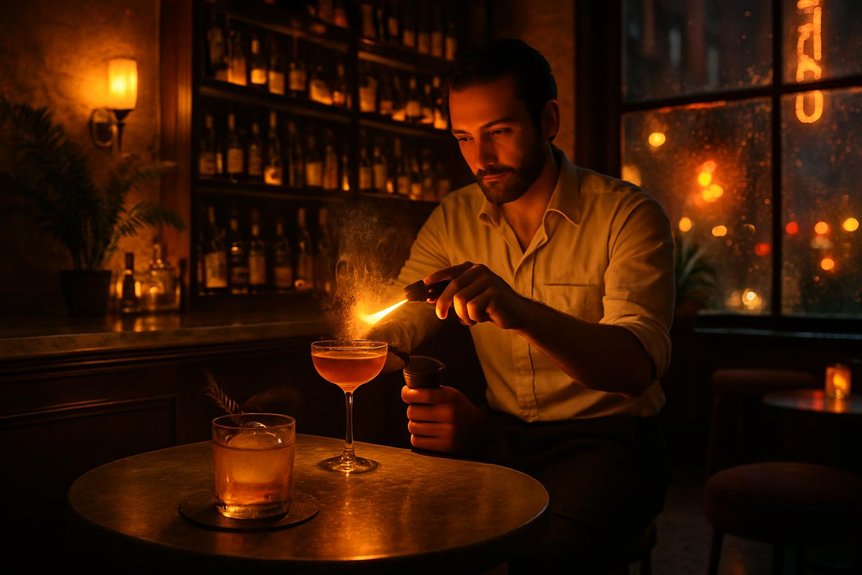
Bartenders torch citrus peels or herbs, letting flame-kissed oils season the glass with a quick flare.
The result pairs spectacle with calibrated aroma, signaling craft that goes beyond the shaker.
Theatrical Tableside Smokes
When a bar turns mixology into performance, the room leans in. At Meraki’s Soho hideaway, Theatrical Tableside Smokes trade secrecy for spectacle: cloches lift, vapors unfurl, and glasses arrive seasoned with cedar or lapsang.
Theatrical presentation meets smoke artistry, not as gimmick, but as calibration—time, wood, and temperature shaping aroma before the first sip.
Servers wheel compact carts like stages on casters, allowing guests to witness the composure behind the haze. The result is memory with structure, not just mist.
- Anticipation engineered: reveal pacing governs perception.
- Material matters: wood species equals flavor vocabulary.
- Aroma first, palate second: scent frames expectation.
- Controlled dissipation: smoke should bow out, not linger.
- Documentation invites return: guests remember recipes, not tricks.
Flame-Kissed Garnish Rituals
As a match flares and oils bloom, flame-kissed garnish rituals turn heat into seasoning rather than spectacle. At Meraki’s Soho bar, bartenders toast citrus peels just enough to wake aldehydes, then gloss the rim with fragrant sparks.
Clove-studded cherries meet a quick kiss of fire, lending peppery depth to bright gin infusions, while thyme sprigs crackle to release resinous sweetness over cool mineral notes.
Technique governs the moment. Distance, timing, and angle decide whether orange becomes marmalade or bitter pith.
Ice is shielded; spirits are stirred cold beforehand to prevent volatile loss.
The result elevates cocktail presentation without theatrics: focused, aromatic, exact. Guests notice smoke as a seasoning line—brief, purposeful—linking glass to grill, garden to flame, finish to memory.
Low-ABV Sips and Zero-Proof Craft
City bartenders are spotlighting sessionable aperitivo picks that keep flavor high and alcohol low.
Alongside them, elevated spirit-free creations showcase house-made bitters, teas, and ferments with cocktail-level complexity.
This section surveys the standouts where balance, refreshment, and craft meet restraint.
Sessionable Aperitivo Picks
Though the city’s cocktail scene often chases intensity, the quiet thrill lies in aperitivo-strength pours and zero-proof builds that reward lingering.
At Meraki’s Soho bar, bartenders frame sessionable pleasure with restrained bitterness, citrus lift, and texture-forward technique.
A spritz kissed with saline or a sherry highball layered with herbs shows how Molecular mixology can be subtle, not showy.
Low proof doesn’t mean low character; house vermouths whisper of vintage spirits without overwhelming the palate.
- Balance replaces bravado; lengthened drinks invite conversation.
- Texture—fizz, foam, and oils—guides perception more than proof.
- Bitterness acts as appetite, not assault; aperitivo as tempo-setter.
- Seasonal infusions create nuance while keeping ABV measured.
- Ritual matters: small glasses, tall bubbles, slow dilution calibrate delight.
Elevated Spirit-Free Creations
An elevated spirit-free program treats restraint as a canvas, not a compromise.
At Meraki’s Soho outpost, low-ABV and zero-proof builds show precision: clarified citrus, saline mists, and spice hydrosols steer flavor without haze. House kombucha offers gentle lift; verjus, tea reductions, and roasted fruit syrups add structure that echoes Cocktail history without mimicking spirits.
Bartenders lean into Mixology trends—carbonated herb cordials, nitro cold-brew foam, and vernal bitters crafted from seeds and stems.
A shiso–grapefruit spritz with gentian-free aperitif keeps bitterness bright; a smoked lapsang highball delivers tannin and length; a sesame orgeat sour reads savory yet silken. Technique, not ethanol, carries the experience, inviting longer stays and wider palates while keeping the bar’s pace crisp and the conversation clear-eyed.
Neighborhood Haunts With True Hospitality
While marquee bars chase headlines, the city’s real warmth lives in its neighborhood haunts—rooms where the bartender remembers a name, the pour is honest, and the menu rewards curiosity.
Around Meraki’s Soho, hospitality unfolds without fuss: a quiet nod at the door, a tidy backbar, and house syrups labeled by hand. These corners sit near Historic landmarks and beneath Artistic murals, yet the glow comes from low conversation and precise, unfussy drinks.
Regulars know the cue—let the room lead.
- A stool saved becomes a social contract.
- The best garnish is attention paid.
- Menus change; welcome stays constant.
- Craft follows context, not spectacle.
- Trust the pour; the story pours back.
Here, comfort is curated, but never staged.
How to Order Like a Local in Soho
Even before scanning the backbar, a local in Soho reads the room. They clock the pace, spot the rail spirits, and wait for eye contact instead of waving. They greet with a short “Evening” and keep orders crisp: base spirit, style, and tweak. They avoid off-menu rewrites at peak hour, a core slice of cocktail etiquette.
They use local slang sparingly—“stiff,” “up,” “rocks,” “dealer’s choice”—and accept clarifying questions without fuss.
They know to taste before adjusting, tip promptly, and stack empties for space. They don’t name-drop obscure brands unless invited, and they ask for water alongside high-proof sips.
When the bar is slammed, they order sessionable classics; when it’s calm, they explore.
Gratitude is brief, genuine, and leaves room for the next guest.
Conclusion
In Soho’s quiet pockets, Meraki reads like a well-thumbed novella—chapters of whispered entrances, foraged notes, and understated ritual. Here, off-menu riffs and bartender-led tastings favor nuance over noise, where smoke and citrus bloom softly, and zero-proof pours stand with equal grace. Hospitality remains the unspoken spine: attentive, unfussy, sincere. For those who listen, the city’s pulse slows to a chamber beat, and each glass becomes a lantern, guiding them deeper into a velvet-lit map of flavor.