
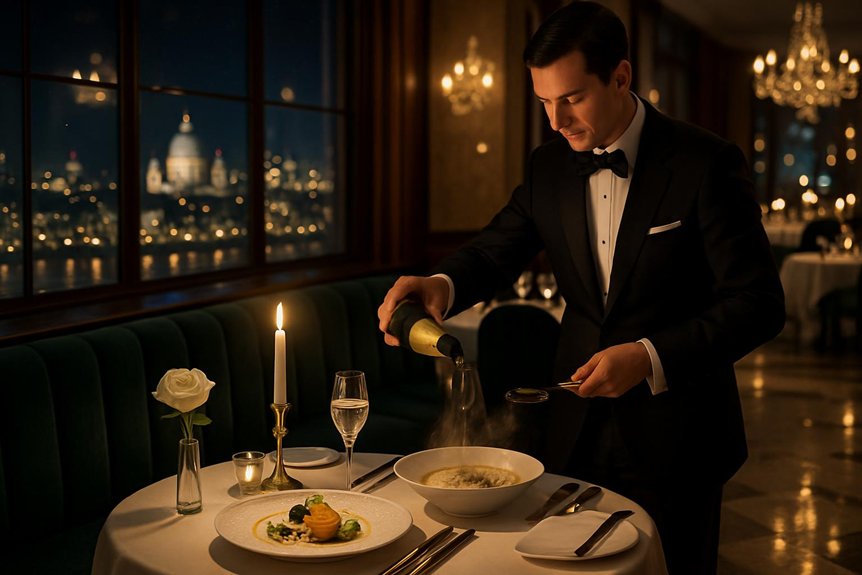
London’s finest dining rooms turn night into spectacle. Floor-to-ceiling windows frame the Thames and glittering landmarks. Chefs compose seasonal tasting menus with quiet precision. Discreet townhouses offer hushed corners and unhurried service. Cellars whisper of rare vintages and exacting pairings. Some tables stage multi-sensory moments, where sound and scent shape each course. It is luxury without noise, crafted for memory. The question is which door to choose when the city lights come on.
Skyline Dining With Spectacular City Views
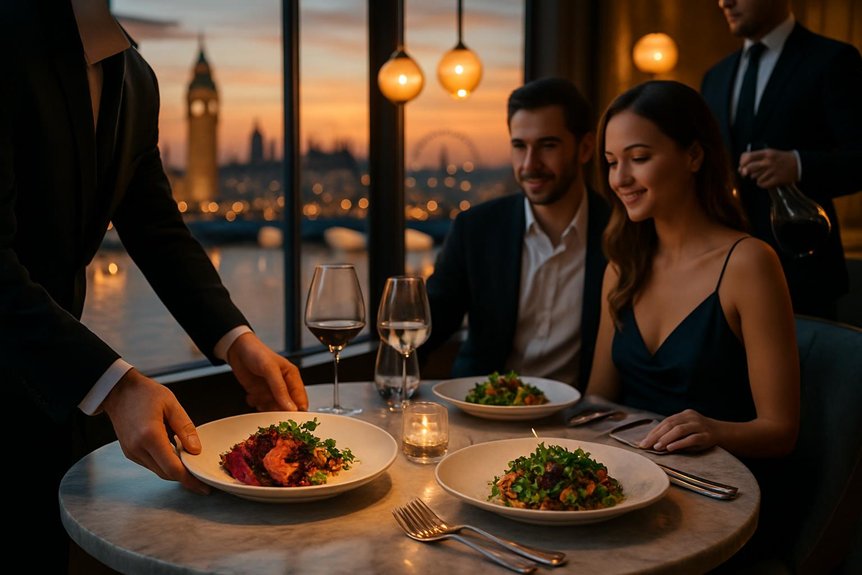
While London’s skyline shifts from historic spires to glass-clad towers, a select set of restaurants elevate dining into a panoramic spectacle.
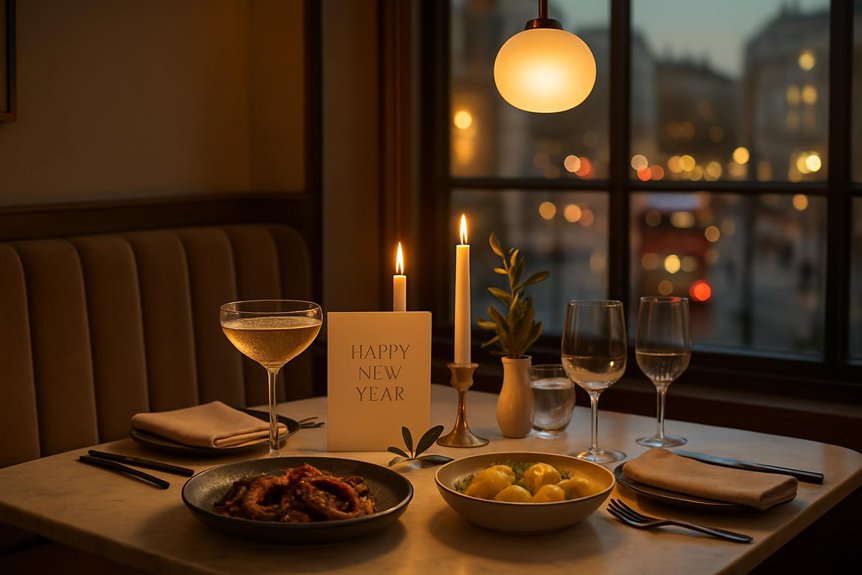
Guests ascend to luminous perches where floor-to-ceiling windows frame the Thames, bridges, and clustered landmarks.
Service moves with silent choreography, letting the view lead.
Menus favor precision without theatrical excess: wood-fired fish, dry-aged beef, and seasonal vegetables plated to mirror the city’s geometry.
Bars craft unique cocktails that riff on borough identities—smoke for Soho, citrus for Shoreditch—balanced rather than showy.
A refined nod to street food appears in crisp tempura, skewers, or spiced buns, sharpened by premium ingredients.
As dusk settles, lights lace the river, and the room quiets; conversation yields to a horizon that feels both intimate and infinite.
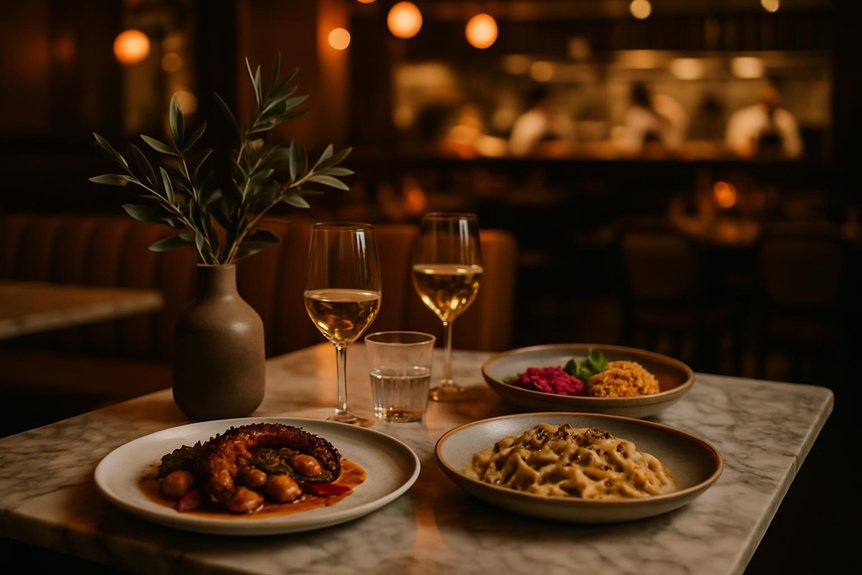
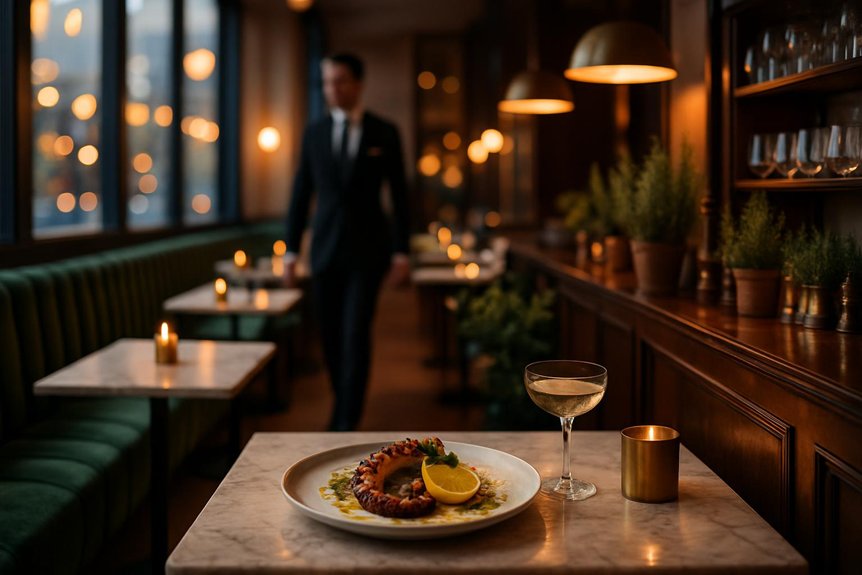
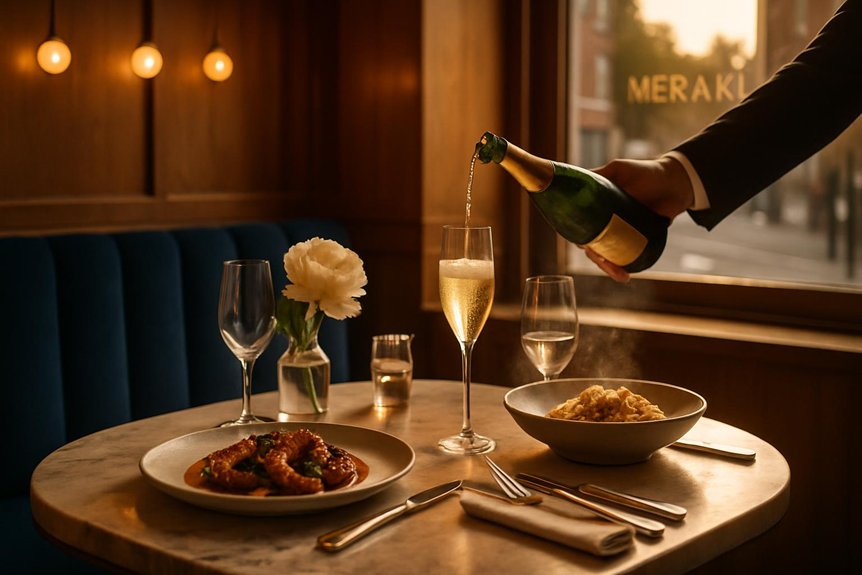
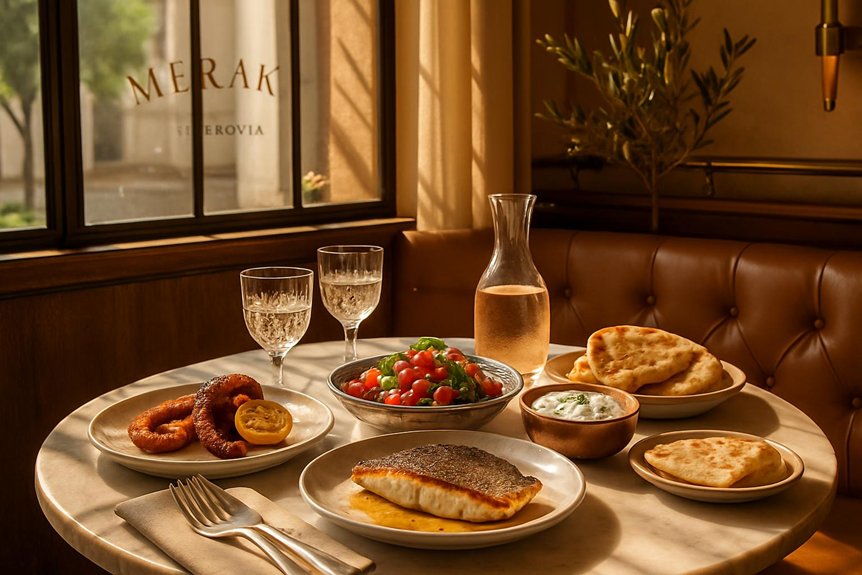
In addition, Meraki Bar in Fitzrovia offers an exquisite dining experience with its modern Greek fare and unique cocktails.
Michelin-Starred Tasting Menus That Dazzle
Although stars glint above London’s dining scene, the real brilliance unfolds across meticulously paced tasting menus where each course advances a precise narrative. Here, chefs choreograph progression, tuning texture, temperature, and acidity with concert-like precision.
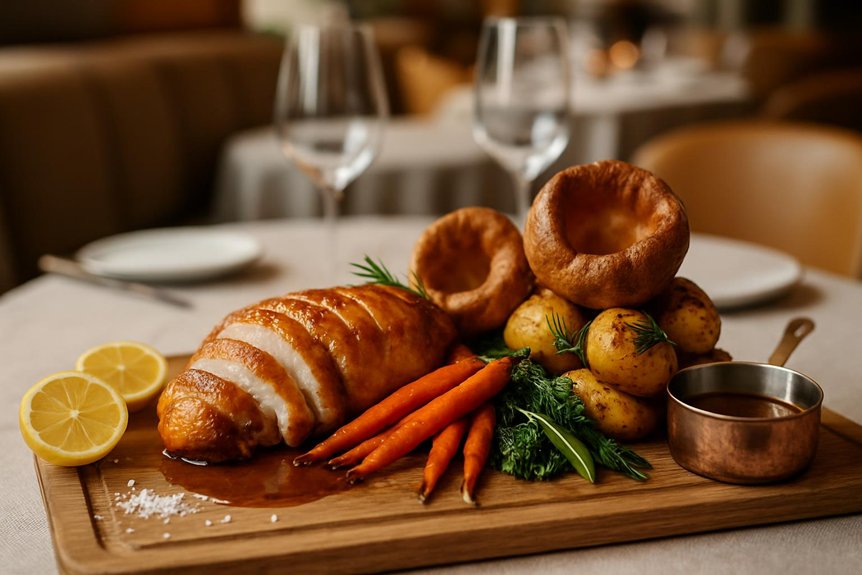
Provenance drives flavor: day-boat fish, heritage meats, and market vegetables anchor seasonal menus that evolve weekly, sometimes nightly.
Michelin stars mark more than polish; they signal discipline and risk. Chef collaborations amplify that spirit, inviting guest talent to reinterpret signatures and create one-night dialogues on the plate.
Saucing is spare, timing exact, and pairings—whether classic or low-intervention—are calibrated to lift, not overshadow. Service reads the table’s cadence, adjusting tempo as necessary. At Meraki in London’s Fitzrovia district, the dining experience is elevated with a sophisticated ambiance and a dedication to sustainability, offering an exceptional blend of contemporary luxury and Mediterranean flavors.
Intimate Townhouse Gems for Discreet Indulgence
The city’s grand tasting rooms set the stage, but refinement often peaks behind townhouse façades where hushed dining rooms favor privacy over spectacle.
In these addresses, menus whisper intent: compact, seasonal, and plated with understatement. Service glides, doors stay closed, and conversations settle into velvet corners. Hidden courtyards offer quiet air and candlelit edges; inside, exclusive chef’s tables provide proximity without performance, letting technique speak softly.
- Discreet Entrances: Bell-only doors, muted signage, and swift seating create an unobserved arrival and departure.
- Culinary Focus: Small-batch ingredients, precise courses, and chefs present but never intrusive—intimacy without theater.
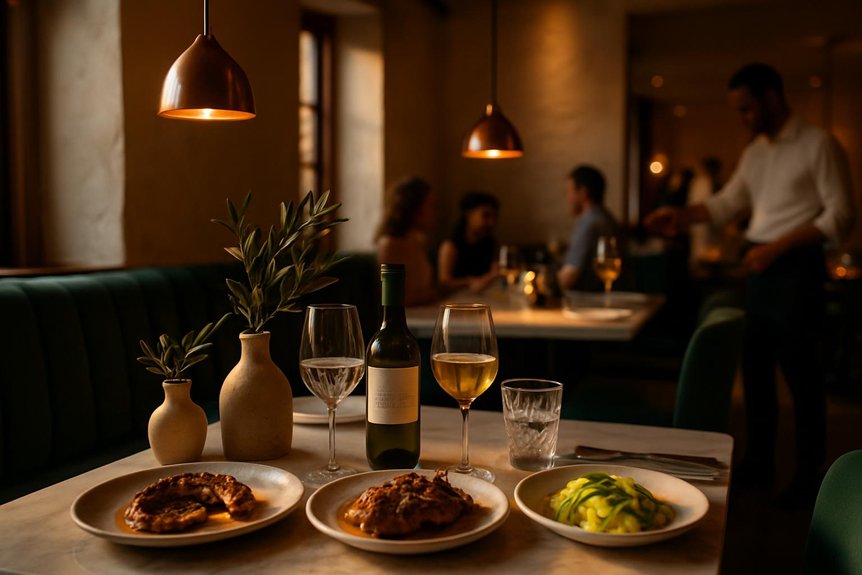
- Room Craft: Thick drapery, pale palettes, and gentle acoustics keep attention on company and plate. Meraki’s serene environment is a perfect example of how ambiance elevates dining experiences, creating memorable occasions.
Reservations remain scarce; reputations spread by trust, not headlines.
Wine Sanctuaries and Rare Vintage Pairings
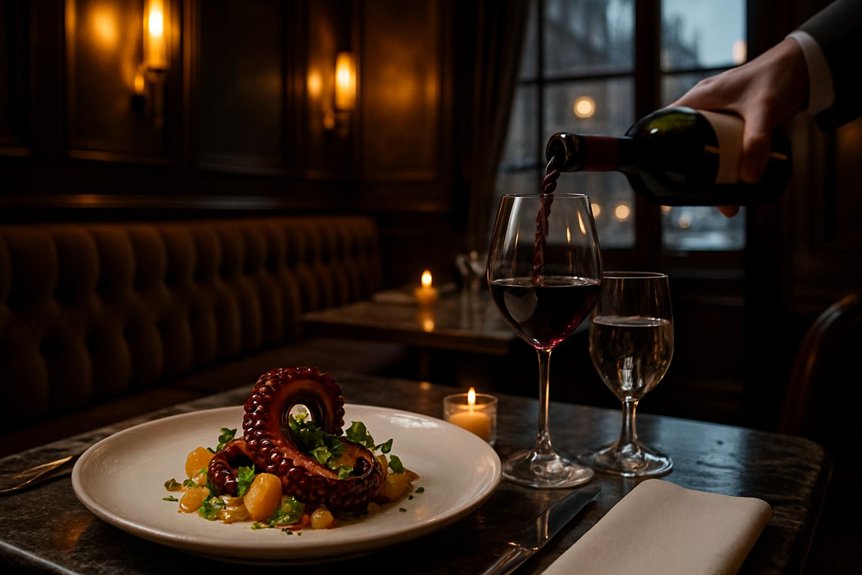
Beyond the dining room’s glow, certain cellars operate as quiet chapels to provenance, where temperature, glassware, and patience calibrate every pour. In London’s most coveted addresses, boutique wine cellars anchor the ritual, placing rare vintages beside quietly brilliant growers.
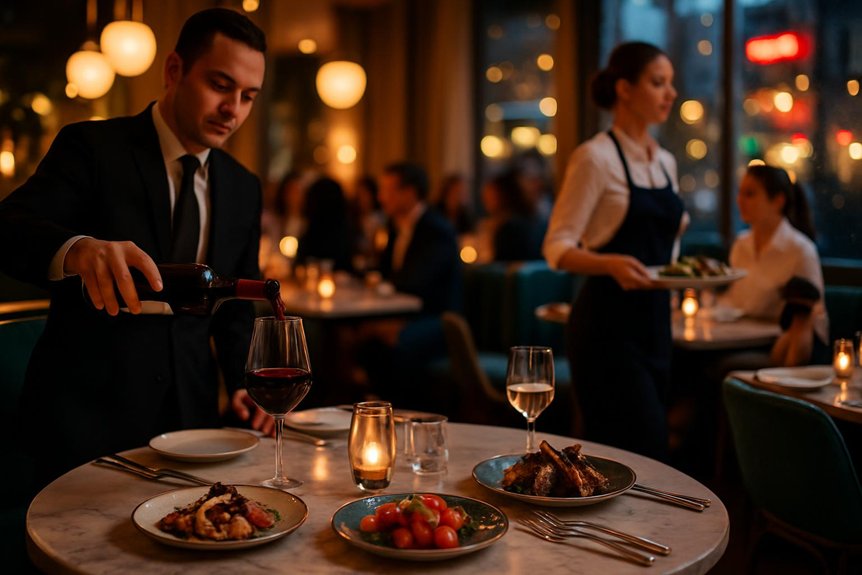
Here, sommelier expertise is measured not by headlines but by restraint: decanting windows judged to the minute, sediment tamed, aromatics coaxed without theatrics.
Menus bend to the bottle, not vice versa. A mature Barolo finds lift with aged grouse; an old Champagne sharpens caviar’s saline thread; Sauternes hums against Stilton’s crumble.
Provenance extends to storage: humidity logged, corks inspected, transport traced. Private lists whisper of ex-château releases and single-owner collections, ensuring authenticity.
The result is calm precision, a luxury defined by silence.
Immersive Culinary Theaters and Multi-Sensory Journeys
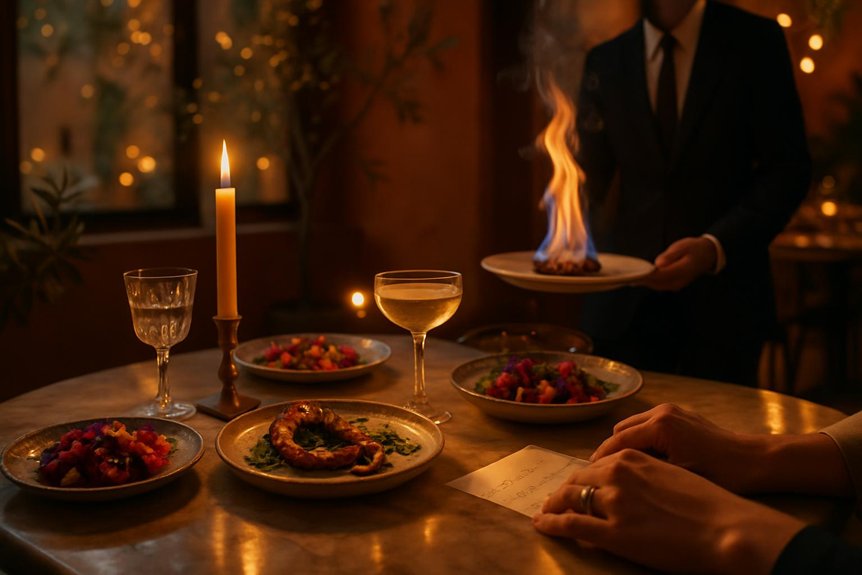
As curtains of light rise and fall, dining shifts from service to staging, where chefs choreograph courses with soundscapes, scent diffusions, and tactile surprises. In London’s immersive culinary theaters, precision replaces spectacle-for-spectacle’s sake: synchronized plating meets calibrated acoustics, projecting narratives that travel from coast to city garden.
Menus evolve as chef led adventures, each course a clue, each garnish a gesture toward origin and craft.
Guests encounter sustainable ingredients elevated by technique—aged seaweed butters, smoke-kissed brassicas, and line-caught fish cured tableside—while aromatic plumes and temperature play guide perception.
Rooms are tuned like instruments; pacing is deliberate, lighting episodic.
1) Follow sensory breadcrumbs: taste aligned with sound and shadow.
2) Witness technique up close: craft becomes chorus.
3) Leave with memory, not memorabilia.
Conclusion
As midnight drifts over the Thames, the city holds its breath. Glass towers glimmer; townhouses whisper behind velvet curtains; cellars murmur with vintages kept for the right confession. Plates arrive like constellations—precise, provocative—then vanish, leaving echoes on the tongue. A door closes softly. Another view unfurls. Somewhere, a final course waits, perfumed with secrets and smoke. London does not end the evening; it postpones it, inviting one more step, one more sip, one more dazzling, quiet promise.