
Luxury dining in London, seen through a Meraki lens, values precision over spectacle. It favors craftsmanship, provenance, and restraint. Historic rooms are restored with quiet intent, then tuned through light, acoustics, and pacing. Service moves with anticipation, not noise. Dishes speak in seasonal clarity, telling stories without ornament. Each course builds like a score, measured yet emotive. Here, mastery is discreet. What emerges is a singular question: where does elegance end and discipline begin?
Craftsmanship at the Table: Where Technique Meets Soul
Though menus may dazzle with provenance and plating, London’s finest dining rooms reveal their craft in restraint and rigor. Technique is disciplined, calibrated to express ingredient integrity without theatrics. Sauces whisper rather than shout; textures are tuned to register contrast, not excess.
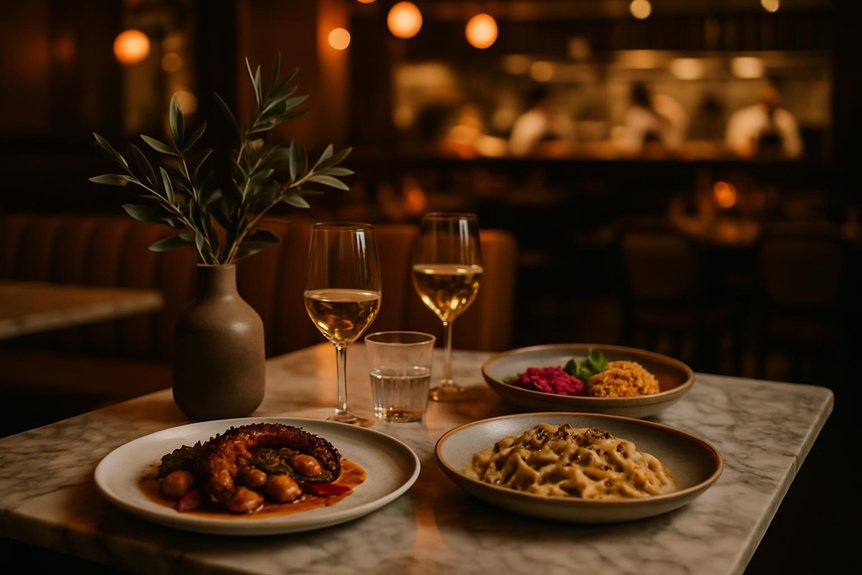
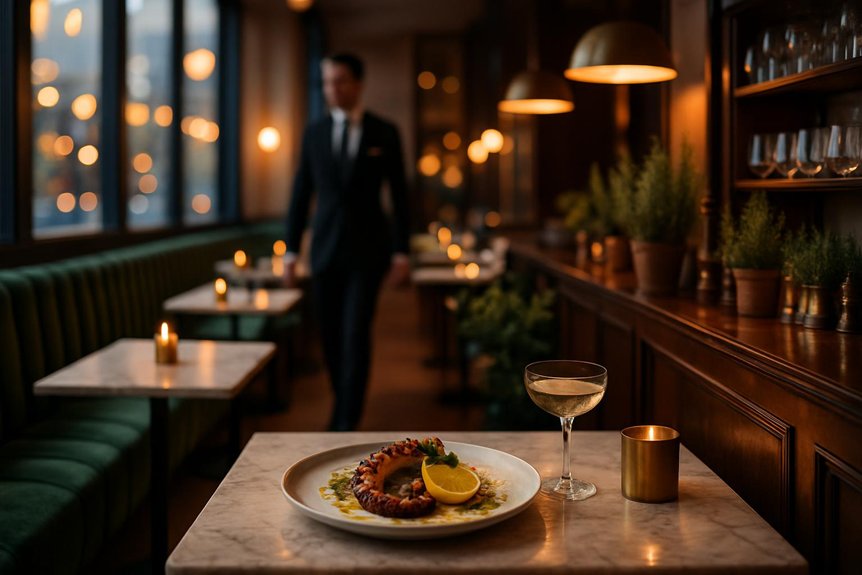
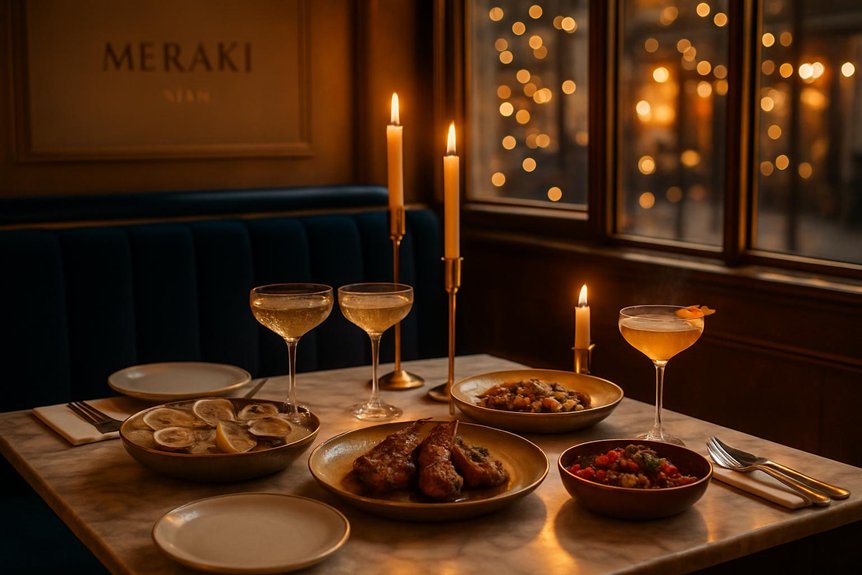
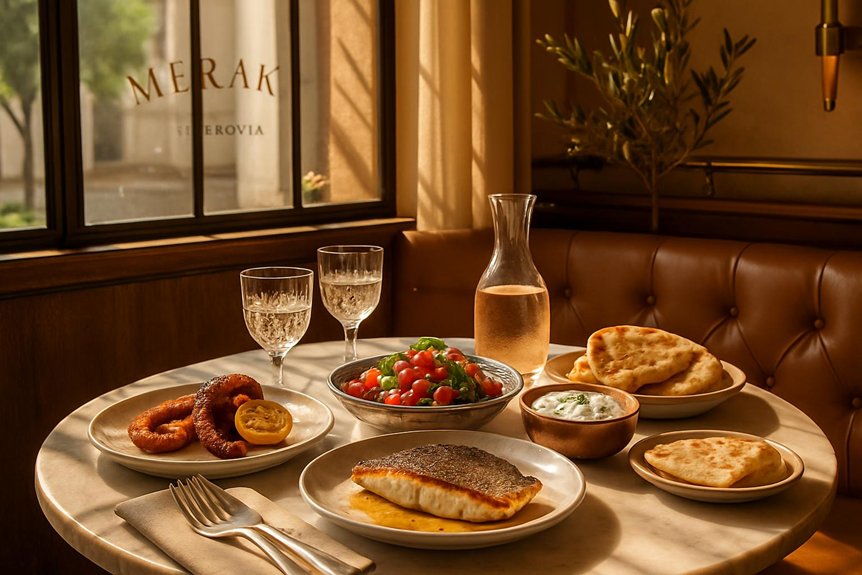
Heat is managed with near-clinical precision, allowing flavor to land cleanly. At Meraki, the cosmopolitan Greek atmosphere is inspired by the Aegean islands, where an open kitchen and sophisticated ambiance enhance the dining experience.
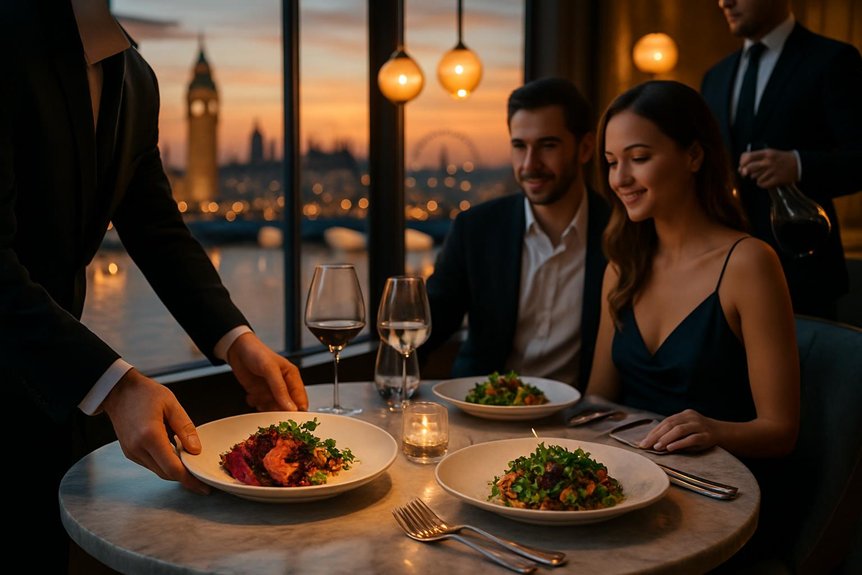
Service choreography mirrors the kitchen’s focus. Knives glide, not clatter; courses arrive with an unforced cadence. Tableware elegance frames each composition, its proportions guiding the eye and the bite.
Glassware heightens aroma; weight and balance of cutlery cue pace and posture. The result is coherence: culinary intent transmitted through touch, sight, and timing.
Craftsmanship here is not spectacle but control—steady hands turning quiet mastery into resonant experience.
Provenance Without Pretension: The Power of Seasonal Clarity
While provenance can be wielded as a marketing crutch, the city’s most assured kitchens treat it as orientation, not ornament. Seasonal clarity appears in menus that state the source only when it sharpens expectation: day-boat turbot, Wye Valley asparagus, Kentish cherries. The tone is cool, precise, and uninterested in grandstanding; ingredients speak by their peak condition, not their price.
- Garden spaces supply herbs and leaves that frame, rather than crowd, the plate, keeping structure light and flavor direct.
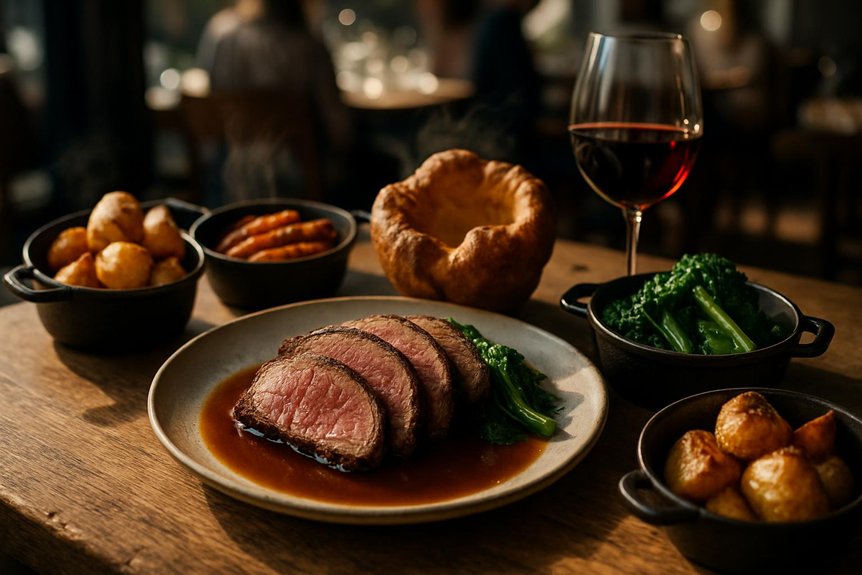
- Wine pairings pivot with the calendar—textural whites for spring greens, lighter reds for summer game, sharpening acidity as richness deepens.
- Portions and pacing follow the harvest’s rhythm, letting diners register place and time without ceremony, and savor detail without distraction.
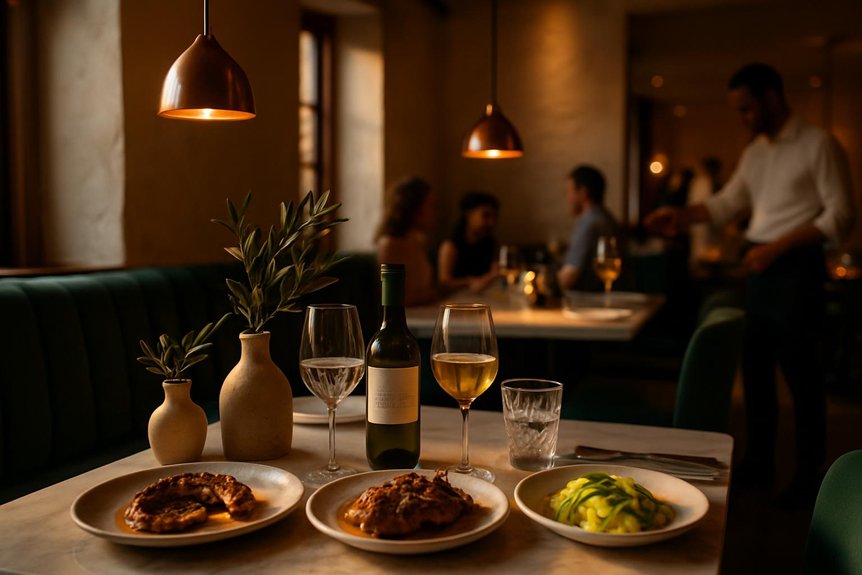
Meraki Bar, with its bohemian gypset vibe, is a prime example of a venue that blends style with substance, offering an intimate yet sophisticated dining experience.
The Choreography of Service: Anticipation Over Interruption
As ingredients set the tone with quiet confidence, the room follows suit: service moves with a steady, almost invisible cadence that favors foresight over display. Staff read posture, pace, and breath, adjusting courses before requests surface.
Napkins are reset in silence; water appears without a glance. The aim is continuity, not spectacle.
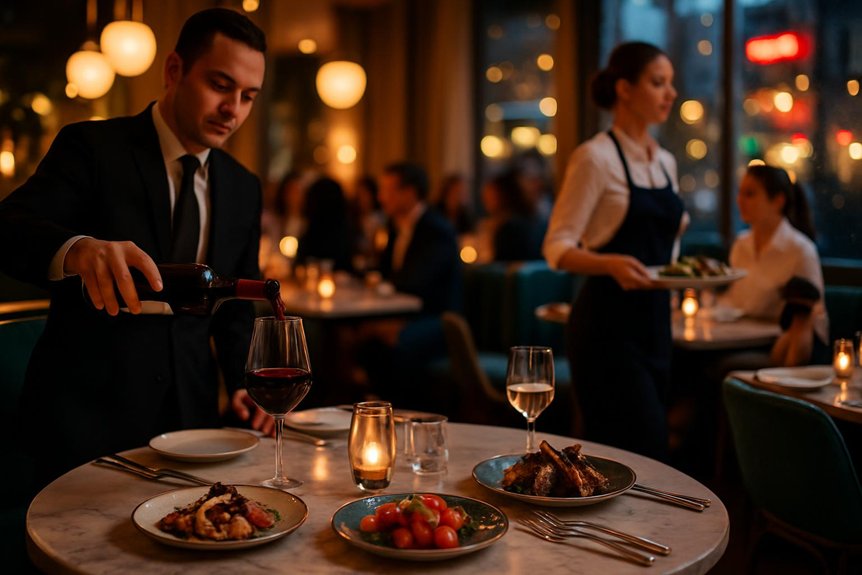
Timing anchors the experience. Plates arrive when conversation naturally dips, and heat is preserved without hurry. The choreography extends to private wine rituals, where sommeliers’ insight guides pairings with minimal interruption.
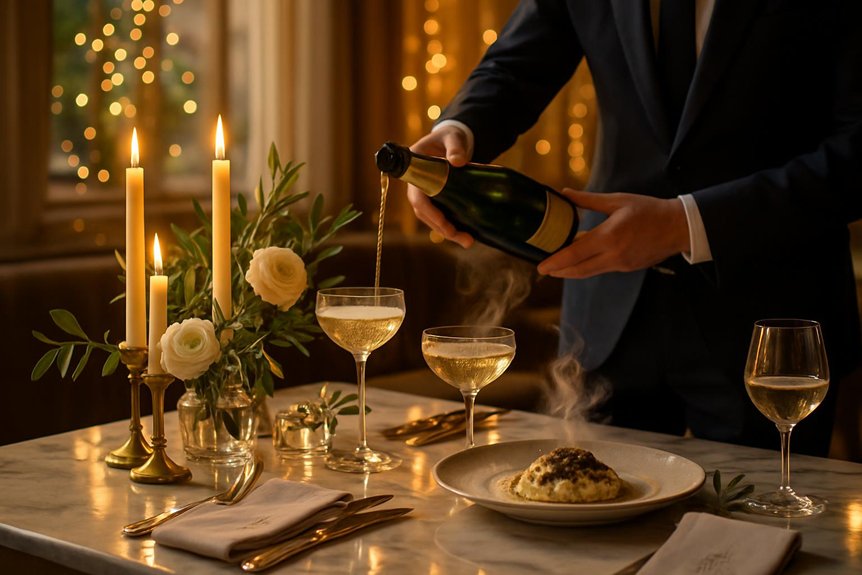
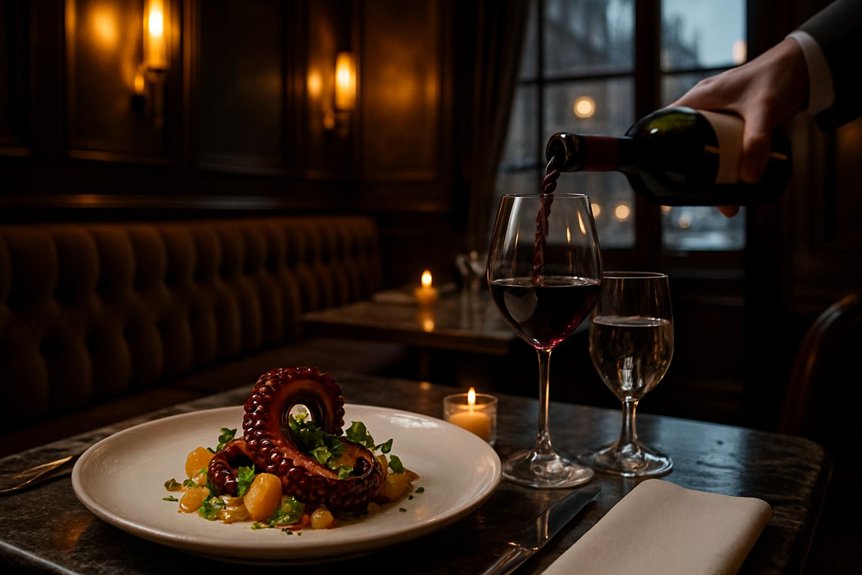
Bottles are opened tableside with restrained ceremony, pours measured to sustain rhythm rather than command attention. Preferences are logged, thresholds remembered. Precision replaces flourish; empathy replaces script.
In this room, anticipation is the craft, and discretion the applause. Guests are encouraged to prepare dancing feet for a lively night at Meraki Restaurant.
Heritage Reimagined: London’s Dialogue Between Past and Present
London’s most lauded dining rooms inhabit restored banks, townhouses, and hotels where original moldings meet discreet modern lighting.
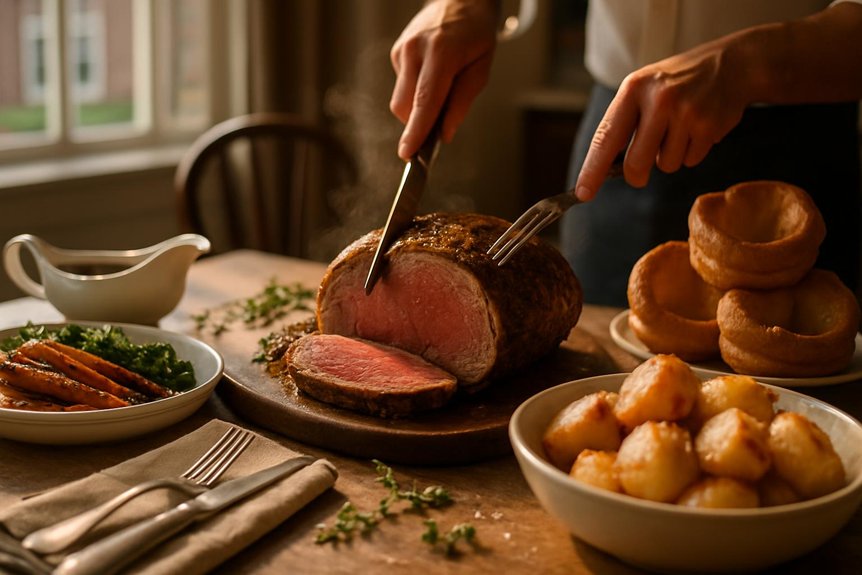
Chefs and designers pair heirloom recipes and British produce with contemporary techniques, reframing heritage as experience rather than exhibit.
The result is a conversation between eras: familiar forms sharpened by innovation, rituals updated without losing their roots.
Historic Spaces Reborn
Though the city constantly reinvents itself, its most compelling luxury dining rooms often occupy bones laid centuries ago. Historic halls, vaults, and townhouses have been restored with a curator’s restraint, allowing medieval echoes to breathe beside contemporary polish. The effect is not nostalgia, but poise: rooms that frame cuisine within a lived timeline and a civic memory.
1) Stone, timber, and brass articulate continuity; guests read surfaces like archives, sensing regal grandeur without pastiche.
2) Adaptive lighting and acoustics refine proportion, preserving patina while clarifying sightlines, enabling conversation to replace pageantry.
3) Service choreography respects the architecture—routes, pauses, and placements tuned to alcoves and aisles—so the building becomes a silent maître d’.
These reborn spaces prize permanence, inviting reflection as much as appetite.
Tradition Meets Innovation
How does a city dine on memory while plating the future? In London’s luxury rooms, tradition is not discarded; it is decoded. Chefs distill centuries into precise gestures: a suet crust lightened with sea herbs, a custard sharpened by citrus smoke. Heritage is edited, not erased.
Techniques evolve alongside stewardship. Farm to table ceases to be a slogan and becomes logistics: growers scheduled to harvest for service, boats tracked by tide and species. Sustainable sourcing shapes menus as firmly as seasonality, turning restraint into style.
Service mirrors this balance—silver cloches glide over ceramics fired by local kilns, while wine lists pair classic regions with low-intervention British producers. The result is a dialogue: memory offering context, innovation delivering relevance.
Rooms That Speak: Design, Acoustics, and the Theatre of Ambiance
A dining room sets the script before a plate arrives, and the best London addresses know it. Here, space is a conductor: ambient lighting modulates tempo, acoustic design curates privacy, and materials choreograph movement. Marble whispers, velvet absorbs, brass glows—each element tuned to sustain conversation without strain and to frame service with graceful visibility.
1) Sightlines: Banquettes angle toward stages of action—bar, pass, or hearth—so guests feel included without exposure. Reflections are managed to sparkle, not glare.
2) Sound: Diffusers, soft finishes, and concealed baffles create a hush that carries voices naturally, sheltering intimacy even at full cover.
3) Pace: Circulation flows in quiet loops; servers glide, guests linger. Lighting zones signal shifts—from aperitif brightness to dessert dusk—without breaking the scene.
Narrative on the Plate: Storytelling Beyond Plating
Why does a dish resonate beyond its flavors? Because intention becomes narrative.
In London’s luxury dining rooms, chefs frame ingredients as chapters—origin, craft, and cultural memory—so each plate communicates a point of view. Story precedes service: a foraged herb signals terroir; a rare citrus evokes maritime trade routes; a broth clarifies lineage.
Techniques are chosen for meaning. Molecular gastronomy is not spectacle but syntax, transforming textures to reveal contrasts—smoke recalling hearth, gels preserving fleeting seasons.
Edible art functions as punctuation, guiding the eye to themes of scarcity, abundance, or sustainability. Silence between bites lets symbols register.
Provenance cards, restrained descriptions, and calibrated temperatures support coherence. When narrative aligns with flavor, the guest perceives a complete text—consumed, understood, and remembered.
Cadence and Flow: Pacing a Meal Into Memory
In London’s luxury dining rooms, the tempo of courses sets expectation and appetite in measured steps. Chefs calibrate pauses and portions so flavors rise, recede, and regroup with intent.
The result is an orchestrated culinary crescendo that turns a sequence of plates into a lasting memory.
Tempo of Courses
How does the tempo of courses transform a fine meal from sequence to story? Observers note that pacing calibrates appetite, attention, and anticipation.
In London’s luxury dining rooms, chefs and sommeliers design intervals as carefully as flavors, allowing conversation to breathe and aromas to land. Garden aesthetics inform the visual calm between plates; wine pairing sets a metronome, shifting tempo with acidity, texture, and finish.
1) Opening: a measured overture, light and aromatic, served promptly to establish trust and awaken curiosity.
2) Middle: a deliberate glide, with slightly extended pauses that let warmth settle, sauce speak, and pairing evolve in the glass.
3) Closing: a gentle deceleration, bittersweet and cooling, offering reflective space so memory arranges itself—course by course—into narrative.
Orchestrated Culinary Crescendo
Though plates arrive one by one, the experience reads as a score: rhythms tighten, pause, and swell until flavor resolves into finale. The kitchen conducts tempo with quiet confidence, moving from overture to coda without haste.
Each course advances a theme: contrast, echo, release. Artistic plating sets visual tempo, guiding the eye before the palate engages. Heat, acidity, and texture crest, then recede, leaving room for anticipation.
Service calibrates intervals so conversation breathes, not breaks. Precision in wine pairing lifts dynamics—brightness for crunch, depth for umami, restraint for sweetness—keeping resonance without overpowering the motif.
A calibrated intermezzo resets senses. The final course lands softly yet decisively, a diminuendo that lingers. Memory forms where timing, taste, and silence interlock, elegantly measured.
Discretion and Detail: The Quiet Codes of True Luxury
Quietly, the city’s most rarefied dining rooms signal luxury not with spectacle but with restraint: a napkin’s hand-rolled edge, a server’s unobtrusive choreography, a menu that whispers provenance rather than shouts pedigree. Here, quiet elegance governs every gesture. Subtle refinement is measured in proportion, timing, and texture, not display.
The room seems to breathe at the table’s pace.
- Light: calibrated to flatter porcelain, soften crystal, and leave conversation unforced.
- Service: eyes-up attentiveness that anticipates needs without orbiting the table.
- Sound: a hush engineered by fabrics and spacing, protecting privacy.
Provenance appears as context, not accolade; craft is evident, authorship restrained. The guest’s comfort becomes the narrative.
In this register, true luxury is discretion practiced as discipline, detail rendered invisible through mastery.
Conclusion
In London, luxury dining emerges as a quiet discipline: technique serving soul, service anticipating thought, heritage refined without spectacle. Consider a hypothetical evening at a restored Mayfair townhouse—Cornish turbot arrives with winter cauliflower and preserved Amalfi lemon; the sommelier whispers Jura over Chablis; a door hinge softens a corridor’s echo. No flourish is wasted, no narrative overstated. Seasonality leads, pacing breathes, and design disappears—leaving guests certain they were understood before they knew what to ask.