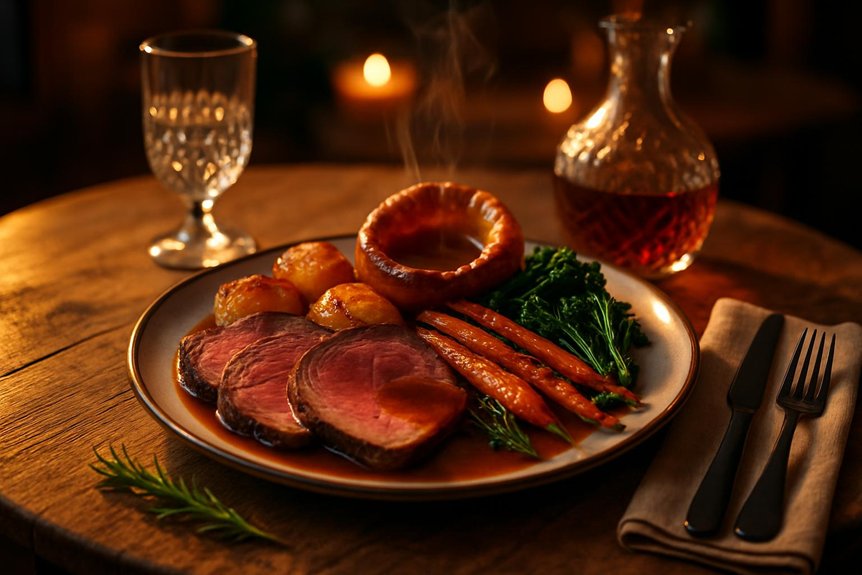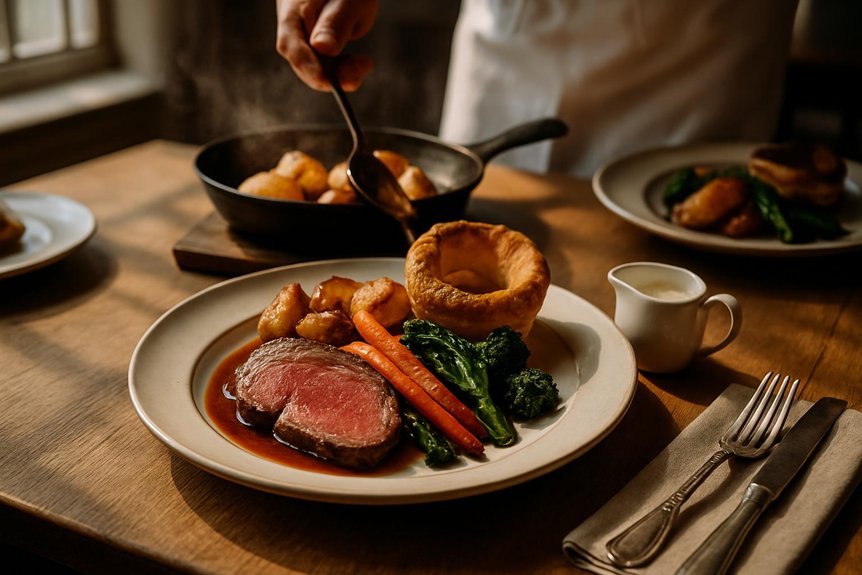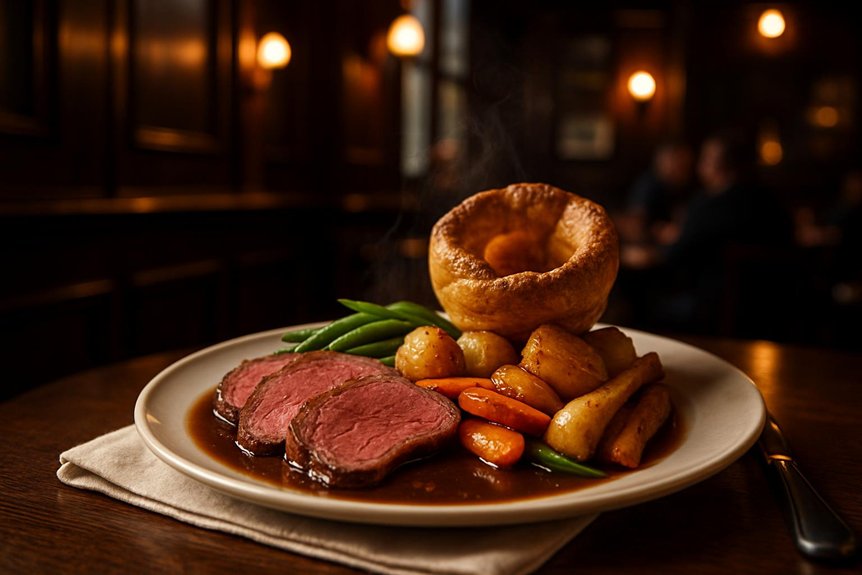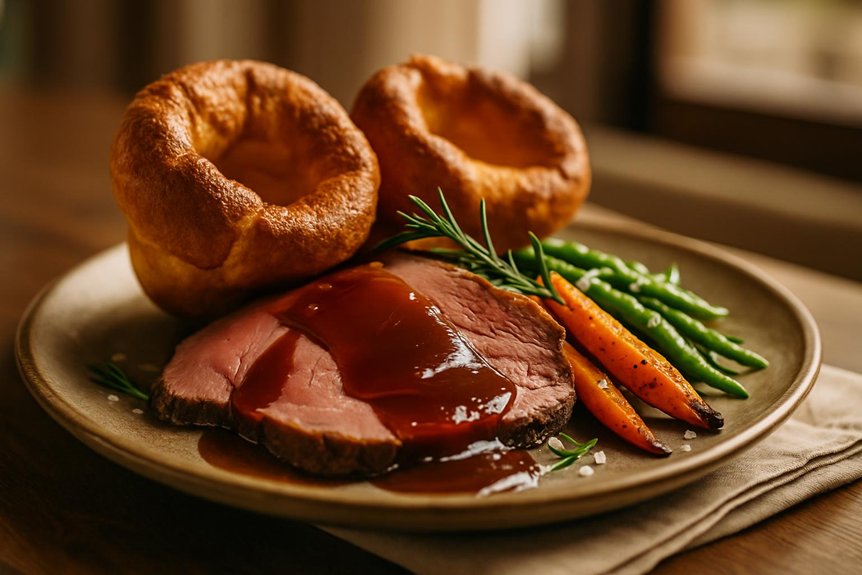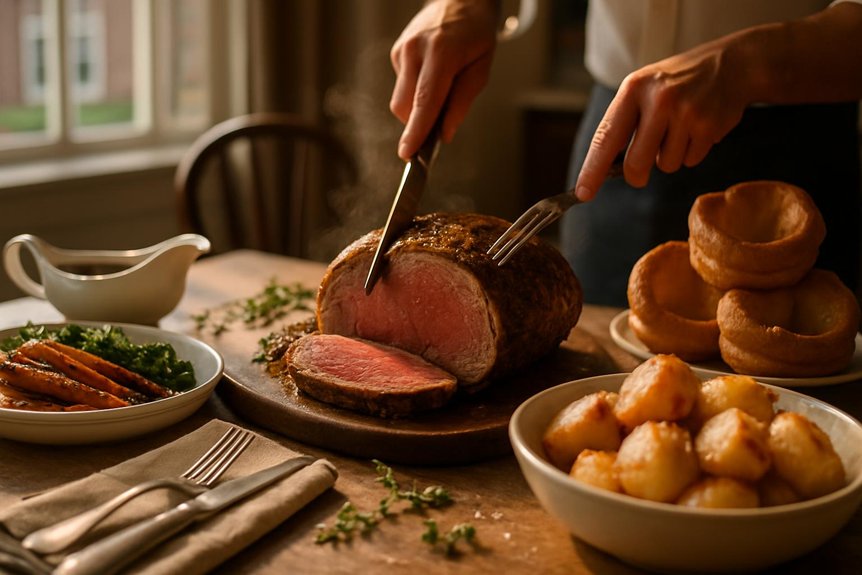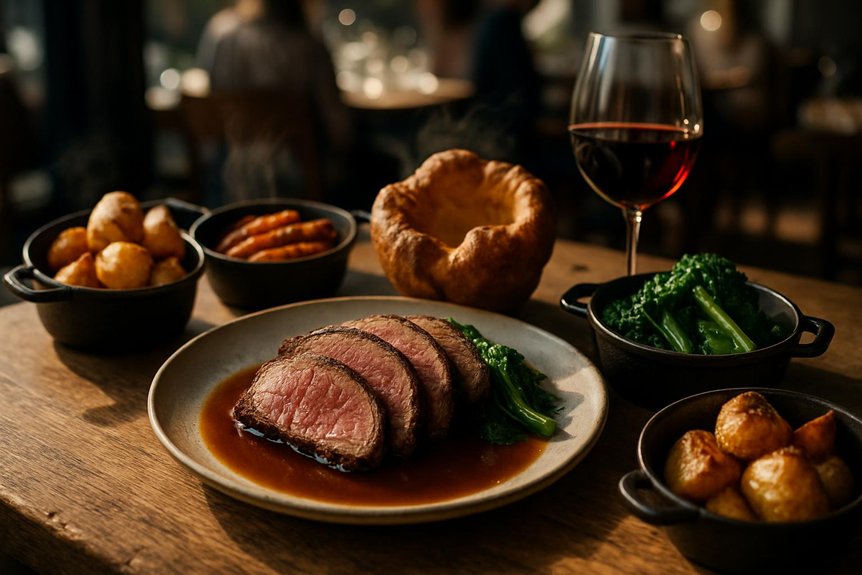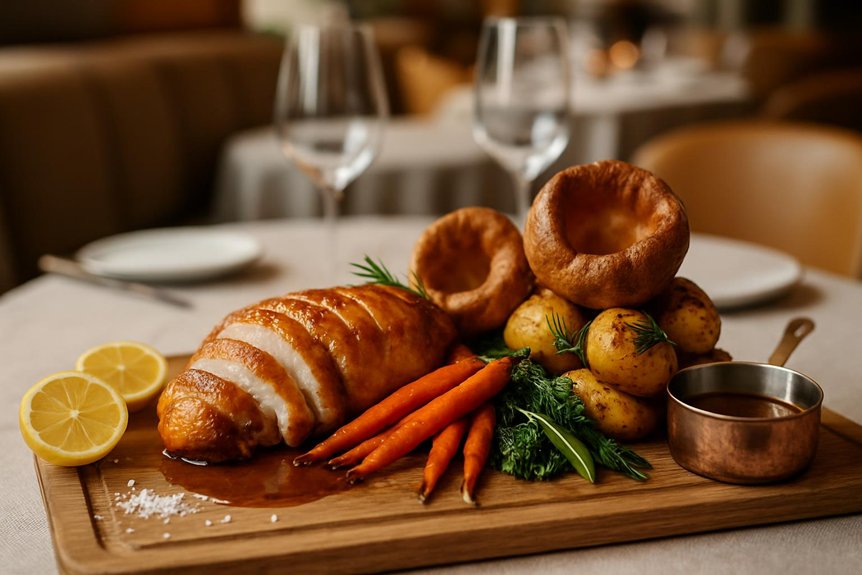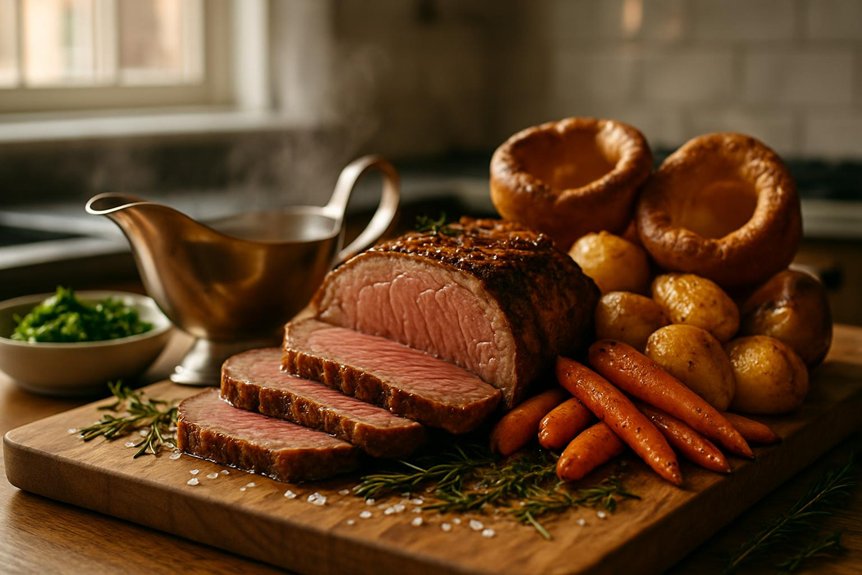

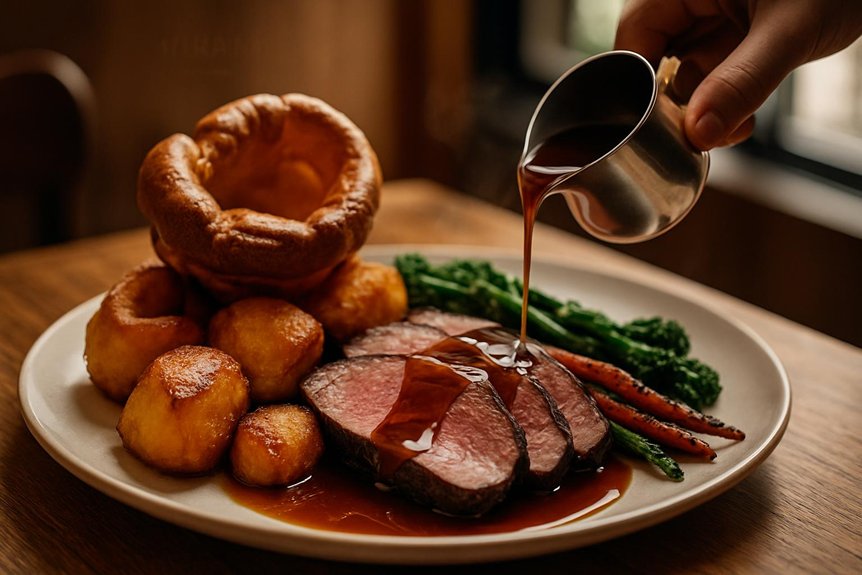
Meraki’s Sunday roast presents precision over pomp. Yorkshire puddings rise tall and crisp, their airy shells primed for gravy with real depth. Slow-cooked meats carry a whisper of Mediterranean herbs, while potatoes crackle beside seasonal greens. The gravy, finished from pan juices and roasted marrow, ties it all together without shouting. The room feels refined yet comfortable, made for sharing. There’s also a smart drink list. What truly sets this roast apart starts with the batter—and ends far richer.
Setting the Scene at Meraki
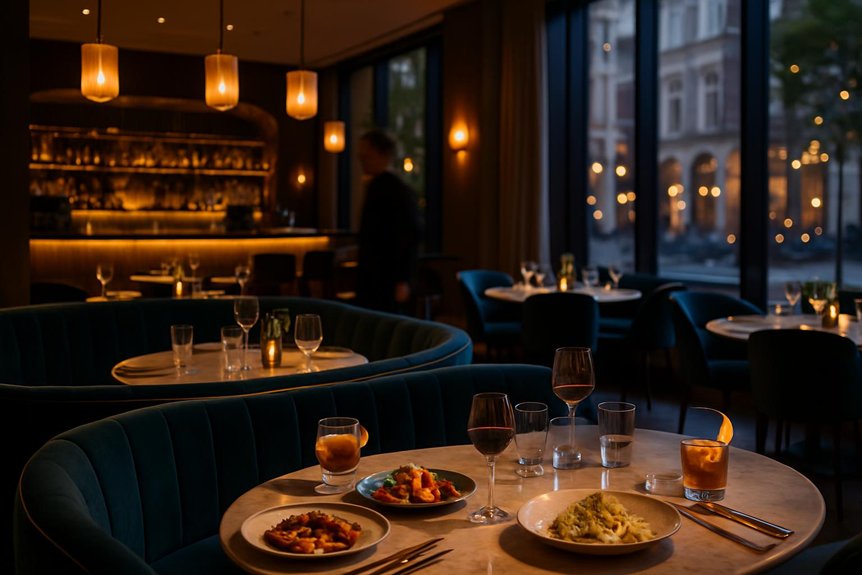
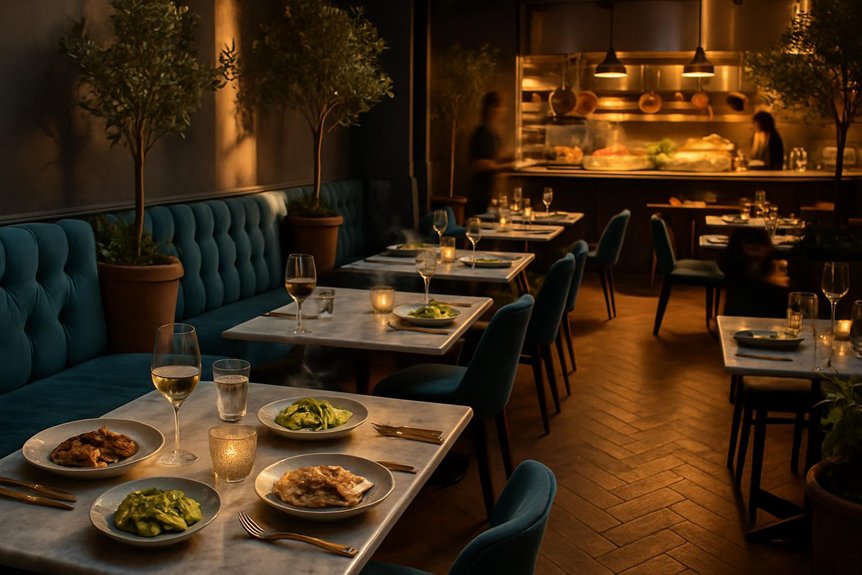
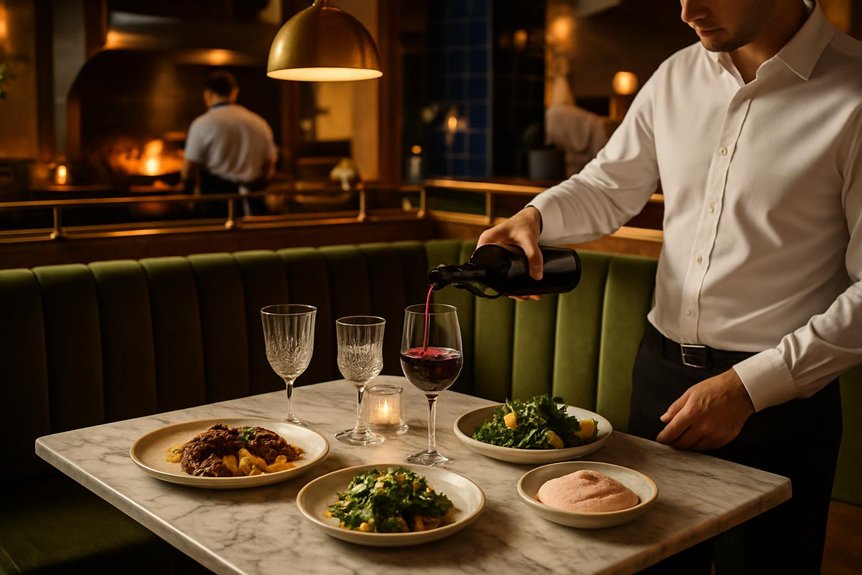
The dining room at Meraki opens with clean lines, soft earth tones, and pools of warm light that settle over linen-dressed tables. The Lighting ambiance is calibrated rather than theatrical, guiding attention to conversation and plate without glare.
Textures—smooth oak, muted stone, supple leather—temper the room’s quiet hum, while greenery punctuates corners with restrained color. Sightlines remain open, creating an easy flow from entrance to banquette.
Service excellence appears unforced: hosts anticipate seating preferences, servers modulate pace, and water glasses never hover near empty. Menus arrive swiftly; explanations are crisp, unobtrusive, and informed.
Music sits low, a soft contour rather than a statement. The overall effect is composed hospitality, where detail does the speaking and comfort arrives without ceremony. Meraki showcases its culinary philosophy by using seasonal ingredients for freshness, reflecting the essence of modern elegance and innovation.
The Art of the Yorkshire Pudding
At Meraki, the Yorkshire pudding begins with exact batter ratios and a disciplined resting period to develop structure. The tins meet searing heat, ensuring fat shimmers before the pour. What follows is a decisive rise—tall walls, hollow center, and a crisped edge ready for gravy. Sunday roast is a cornerstone of British culinary history, serving as a weekly gathering to foster family and community ties.
Batter Ratios and Rest
Though Yorkshire pudding inspires endless debate, clarity begins with ratio: equal weights of eggs, milk, and plain flour form a reliable 1:1:1 foundation. Scales, not cups, eliminate drift, and the batter benefits from a pinch of salt to sharpen flavor.
Consistency matters: a pourable, cream-like batter thickness promotes even distribution without heaviness. Overworking introduces elasticity that resists expansion, so mixing stops as soon as lumps disappear.
The resting period is not superstition but chemistry. Time allows flour to hydrate fully, smooths starch granularity, and lets bubbles dissipate for controlled structure. Thirty minutes at room temperature suffices; longer, up to overnight in the fridge, yields deeper flavor and stability.
Before use, a brief whisk restores fluidity without reintroducing excess air or gluten tension. For a truly memorable dining experience, explore the exceptional service and culinary delights of Meraki, where personalized touches enhance every meal.
High Heat and Rise
Because intense heat is the engine of lift, a Yorkshire pudding begins in an oven preheated until metal smokes and fat shimmers. At Meraki, tins go in dry, then meet a measured pour of batter that hits the fat and flashes to steam. That expansion drives walls upward while proteins set into a crisp scaffold, leaving a hollow, custardy core.
Timing is strict: trays return to the top shelf, doors remain shut, and heat stays high to prevent collapse. Each pudding emerges bronzed, audibly brittle at the rim, sturdy enough to cradle gravy.
The kitchen pairs them with a sauce variety—from rich pan juices to herb-bright drippings—anticipating the roast’s arc and even dessert options, where lingering crusts mop last puddles of sweetness.
Slow-Cooked Meats With a Mediterranean Twist
Meraki’s slow-cooked offerings center on an herb-brined lamb shoulder and a citrus-glazed pork belly.
The lamb carries rosemary, thyme, and garlic aromatics that echo the restaurant’s Mediterranean leanings.
The pork balances caramelized richness with bright citrus to cut the fat and sharpen the finish.
Herb-Brined Lamb Shoulder
While the Sunday roast leans British in spirit, the herb-brined lamb shoulder reveals a distinctly Mediterranean hand. At Meraki, the cut is submerged in a saline blend of rosemary, thyme, garlic, and lemon peel, then slow-cooked until the collagen yields to gentle pressure.
The brine’s flavor enhancements bring lift and clarity, seasoning the meat to the core without masking its pastoral character.
Sliced to show a blushing interior, the lamb is finished with a drizzle of olive oil and a scatter of marjoram. Seasonal produce frames the plate—charred baby carrots, roasted fennel, and a mint-forward gremolata that cleanses between bites.
A light lamb jus, brightened with white wine, ties the elements together, offering harmony rather than heft.
Citrus-Glazed Pork Belly
From lamb to pork, the kitchen pivots to richness tempered by brightness in a citrus-glazed belly. The cut arrives lacquered, its skin shattering over strata of tender meat and rendered fat. Citrus caramel glosses the surface, a bitter-sweet veil drawn from orange, lemon, and a lick of honey, tightened with vinegar to keep the palate alert.
Pork preparation begins with an overnight cure of salt, fennel seed, and cracked pepper, followed by a slow braise with garlic, bay, and dry white wine. Chilled to compile, it is portioned, then seared until the crackling lifts. The glaze is brushed in successive passes, reducing to a sticky sheen.
A fennel-orange salad and rosemary potatoes complete the plate, lending lift and herbal ballast to the richness.
Crispy Roast Potatoes and Seasonal Vegetables
Though the roast is anchored by its meats, the plate’s allure sharpens with crisp, golden potatoes and a medley of seasonal vegetables cooked to peak texture. At Meraki, attention begins with potato peeling to maximize surface area, followed by parboiling and a brief roughing of edges that promotes shattering crusts.
The roasting fat is preheated, ensuring immediate sizzle and a blistered, glassy exterior while centers stay fluffy.
Seasonal accompaniments pivot by market: charred hispi cabbage, honey-glazed Chantenay carrots, butter-basted leeks, and verdant beans. Vegetable steaming precedes searing or roasting, preserving snap and hue before finishing with lemon zest, sea salt, and a restrained herb scatter.
The result is balance—sweetness, earth, and crunch—composed to frame the proteins without overwhelm, and to sustain interest from first bite to last.
The Gravy: Depth, Balance, and Finish
If the roast is the headline, the gravy is its quiet thesis—concentrated, glossy, and meticulously layered.
At Meraki, the pan juices are anchored by a dark stock that carries marrow depth without muddiness. Reduction is paced, not hurried, to calibrate sauce consistency so it ribbons from spoon to plate.
Salt is disciplined; brightness is introduced with a discreet acid lift to prevent heaviness.
Umami enhancements come from roasted bone glaze, lightly charred onion, and a measured splash of soy, folded in just before the final simmer.
A whisper of thyme and bay rounds the middle, while black pepper frames the finish.
The result coats meat and vegetables without eclipsing them—an elegant through-line that binds textures, sharpens flavors, and leaves a clean, lingering conclusion.
Drinks to Pair With Your Roast
How best to frame the roast’s richness without dulling its edges? The answer lies in crisp structure and measured aromatics.
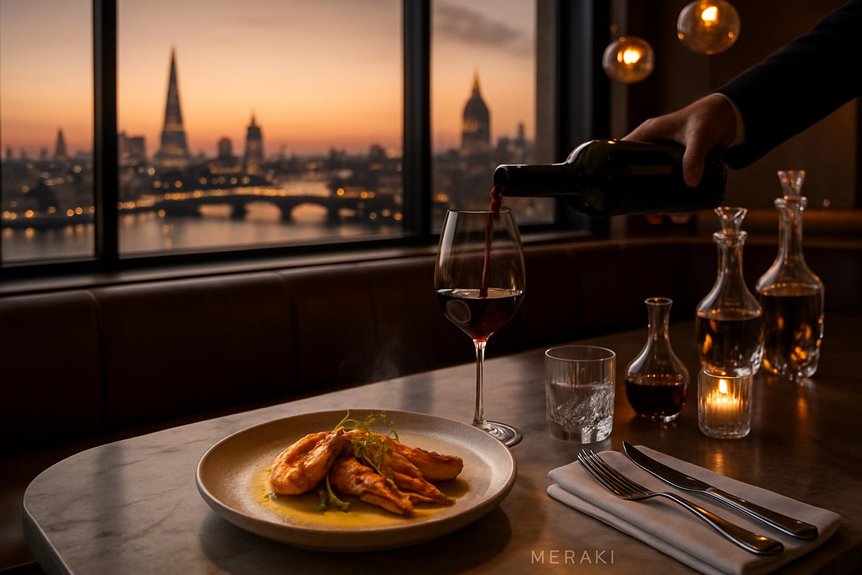
Diners tend to reach first for red wine: a medium-bodied Rioja or Rhône blend brings ripe fruit and peppery lift, cutting through fat while flattering the gravy’s depth. For white, an oaked Chardonnay with taut acidity supports chicken or pork, while Riesling’s lime-snap brightens root vegetables.
Those preferring hops can choose craft beer with balance, not bombast: a bittersweet ESB, a clean pilsner, or a roasty porter all manage caramelized edges without overwhelming herbs.
Cocktail pairings should be spirit-forward yet disciplined—think a lean Martini with a lemon twist, a Boulevardier with restrained sweetness, or a highball of whisky and soda for palate-cleansing precision.
How to Book and What to Expect on Sundays
Before the weekend fills, reservations for Meraki’s Sunday roast are best made online via the restaurant’s booking portal. Limited walk-in availability is held at the bar. Peak tables go quickly, so dining reservations should be secured several days in advance, especially for larger groups or preferred seating times.
On Sundays, service runs through the afternoon into early evening with staggered seatings. Guests can expect prompt check-ins, a concise roast menu with seasonal sides, and attentive pacing geared to sharing plates.
The dress code is smart-casual—trainers are fine, but athleisure and beachwear are discouraged. Families are welcome; highchairs are available on request.
Allergies should be flagged during booking. Cancellations follow a 24-hour policy, and card details may be required to confirm.
Conclusion
In the end, Meraki’s Sunday roast lingers like a well-told story—comforting, composed, and quietly confident. From cloud-light Yorkshire puddings to gravies with marrow-deep resonance, each detail reflects craft without fuss. The Mediterranean-kissed meats, crisp potatoes, and seasonal greens bring harmony rather than spectacle. As the saying goes, the proof is in the pudding, and here it’s in every course. For those seeking tradition with polish, Meraki offers a calm, convivial finish to the week.