
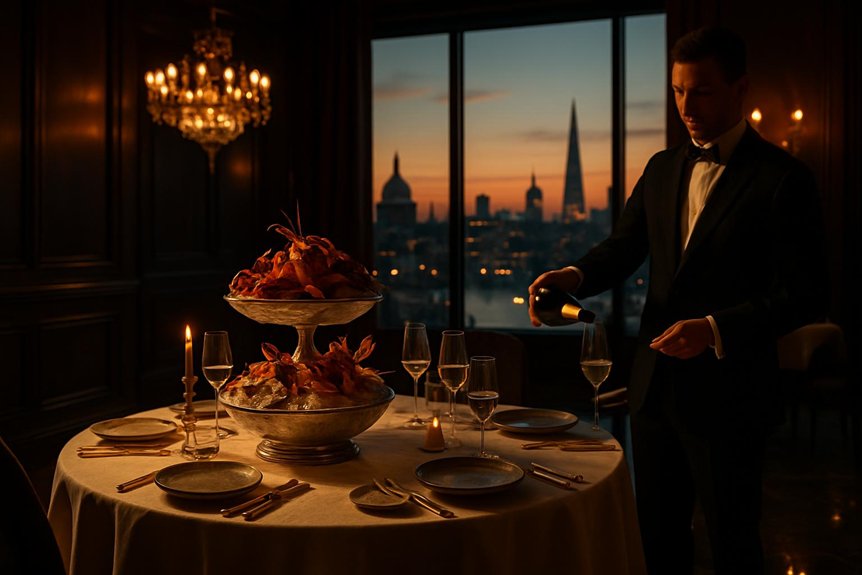
London’s luxury dining scene now blends skyline views, gallery-grade design, and meticulous craft. Chefs shape seasonal British produce with global technique, while service teams perform with quiet theater. Menus move from rare wagyu to butter-aged beef, then finish with sculptural desserts. Wine and low-intervention pairings refine each course. Sustainability is not an afterthought but a brief. The result feels measured, modern, and immersive—yet the true allure lies in how these rooms stage the unexpected next.
Sky-High Dining Rooms With Unforgettable Views
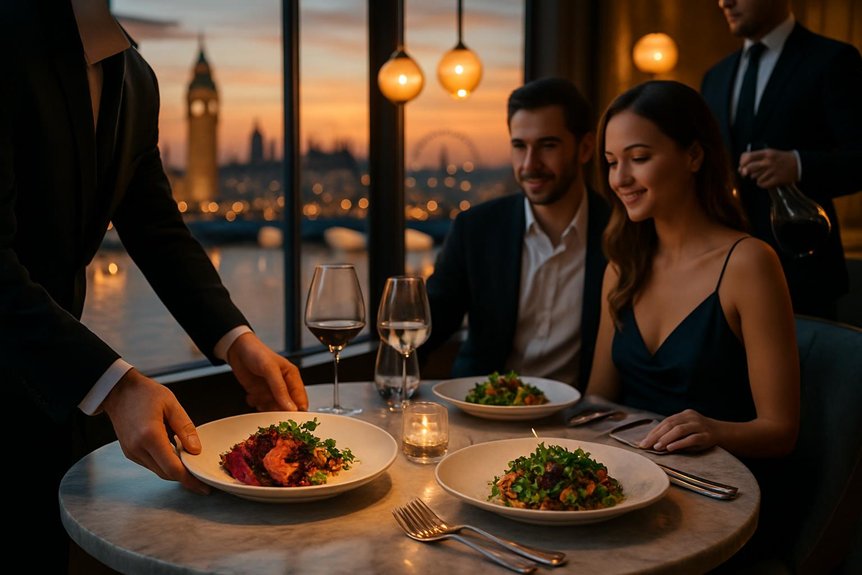
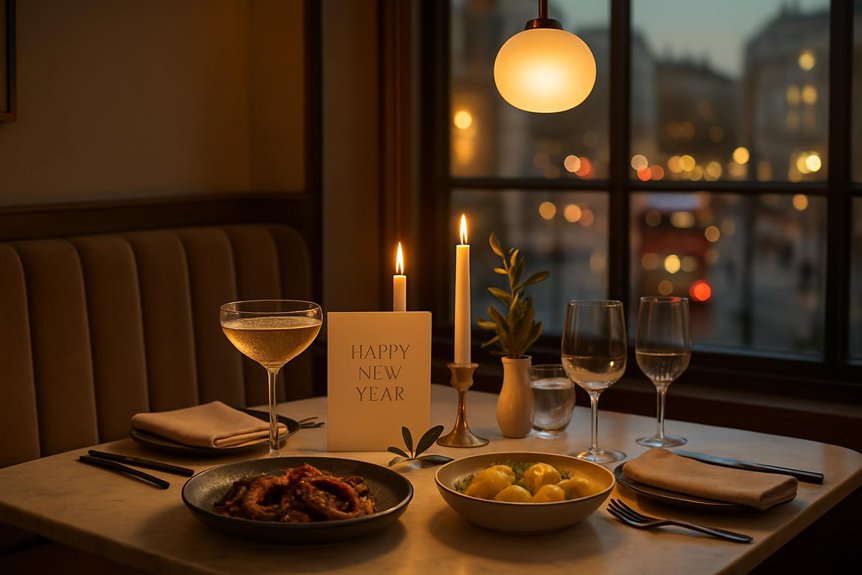
How does elevation transform a meal into a memory? From glass-clad eyries above the Thames, London’s sky-high dining rooms frame the city like a living tapestry. Guests arrive to soft lighting, hushed service, and floor-to-ceiling drama where bridges, domes, and shards of steel become the backdrop to every bite.
Skyline cocktails set the tone—crystalline, perfumed, and balanced—while panoramic lounges offer quiet perches for lingering over conversation. Tables are angled for vistas, not spectacle; acoustics soften the room so city noise remains distant.
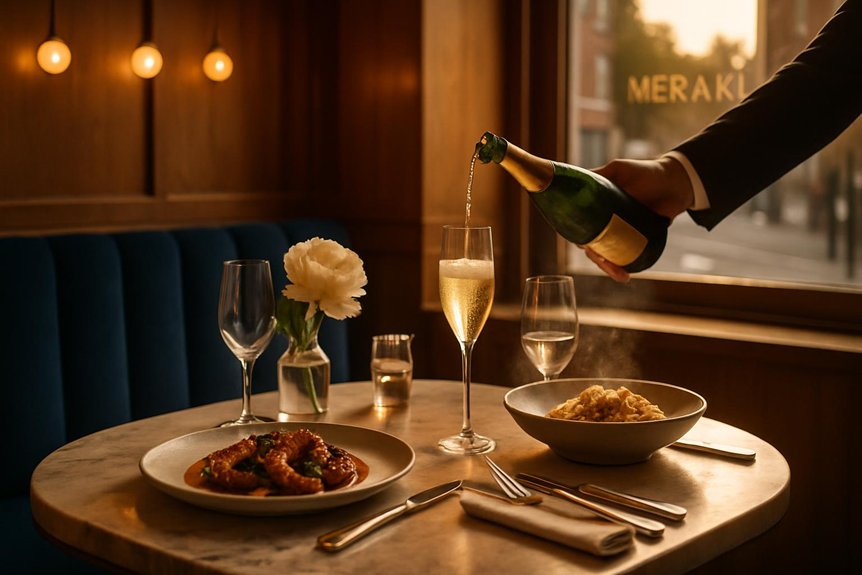
Dishes emphasize clarity and seasonality, allowing the view to amplify rather than compete. Service choreographs pacing with sunset and nightfall, timing courses to shifting light. The result is experiential elegance: cuisine, architecture, and horizon converging into effortless, enduring recollection. Beneath the modern Greek restaurant Meraki Bar, guests can experience an intimate, stylish setting with vibrant design and unique cocktails, perfect for a memorable evening.
Michelin Masterminds and Their Signature Tasting Menus
In Michelin-starred rooms, tasting menus read like chef-led narratives, each course expressing a precise arc of flavor and craft. These storytellers revise their scripts with the seasons, translating peak ingredients into focused sequences. The result frames luxury as curation: minimal waste, maximal intent, and a clear sense of time and place. At Meraki, exclusive tasting menus offer a gourmet journey, meticulously crafted to showcase the artistry of the culinary team, with advance booking essential due to high demand.
Chef-Led Culinary Narratives
Though dining rooms shimmer with crystal and linen, the true locus of luxury resides in the chef’s authored narrative—tasting menus that unfold like chapters, each course a deliberate plot point.
In London’s elite rooms, Michelin masterminds shape culinary storytelling through disciplined progression: a calibrated welcome bite, a provocative middle, a resonant finale. The voice is singular yet restrained, allowing ingredients to speak with clarity.
Farm to table principles are integrated as character development, not ornament. A named grower, a specific tide, a heritage breed—each reference anchors authenticity and cadence.
Technique serves narrative: smoke suggests memory, acidity drives tension, texture resolves conflict.
Service operates as an unobtrusive narrator, pacing the experience, ensuring transitions land cleanly and the chef’s thesis remains focused and compelling.
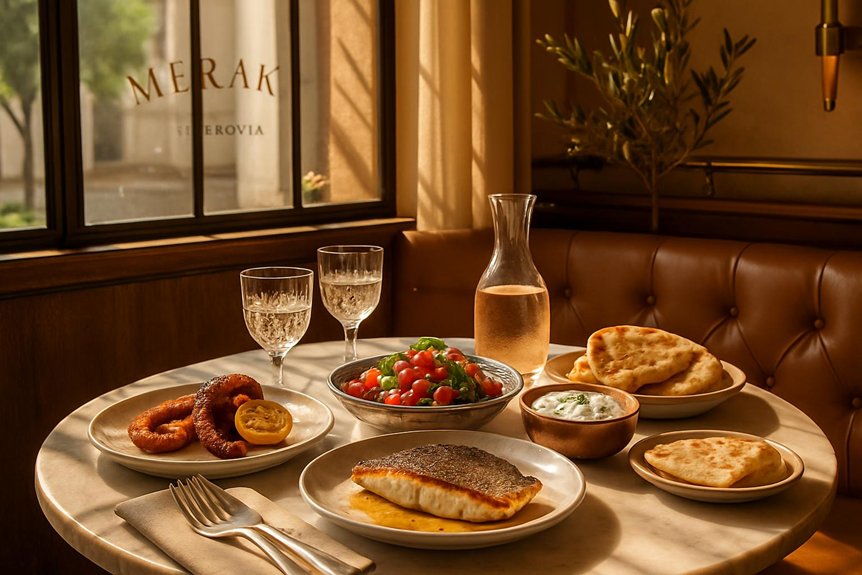
At Meraki Luxury Restaurant, guests can savor the influence of Greek cuisine crafted by celebrity chef Athinagoras Kostakos, blending exquisite flavors with international flair.
Seasonal Tasting Innovations
Two seasons define the arc; four recalibrate it. In London’s Michelin orbit, tasting menus pivot with the calendar, turning scarcity into focus.
Spring leans verdant—asparagus, morels, and dairy with clean acidity—while summer tightens into saline notes, raw shellfish, and tomatoes. Autumn concentrates: game, smoke, and orchard fruit. Winter refines roots, brassicas, and long-braised depth.
Farm to table is not rhetoric but logistics, translating micro-seasons into calibrated progressions.
Chefs script brevity and climax: a single pristine vegetable; a precise roast; a subtle custard. Saucing lightens as produce brightens, then darkens with the year.
Wine pairing follows tempo—minerals to orchard, then forest and spice—often interrupted by sake, cider, or fortified accents.
The result: menus that breathe, not just impress.
Seasonal British Produce, Elevated With Global Flair
The narrative shifts to hyper-seasonal tasting menus that track Britain’s microseasons with precision.
Chefs recast British staples—such as scallops, lamb, and heritage roots—through restrained plating and exacting sourcing.
Global techniques and accents—fermentation, koji, citrus cures, and spice infusions—elevate familiar flavors without obscuring provenance.
Hyper-Seasonal Tasting Menus
How does a menu capture the fleeting character of a British season while speaking in a global accent?
In London’s hyper-seasonal tasting menus, chefs build narratives course by course, pivoting weekly to reflect market stalls and day-boat landings. Farm to Table intentions are made vivid through micro-harvests—first-of-spring asparagus, coastal samphire, hedgerow berries—treated with precision and restraint.
Culinary Fusion appears not as novelty but as lens: yuzu brightens Kentish crab; miso deepens Scottish langoustine; vadouvan lifts roasted cauliflower from a Surrey plot. Portions are calibrated, textures layered, and sauces reduced for clarity of flavor.
Wine and non-alcoholic pairings track the arc of the season, favoring mineral whites, skin-contact bottlings, and herb-led infusions. The result is time-stamped luxury—memorable, nimble, and unmistakably London.
British Staples, Global Techniques
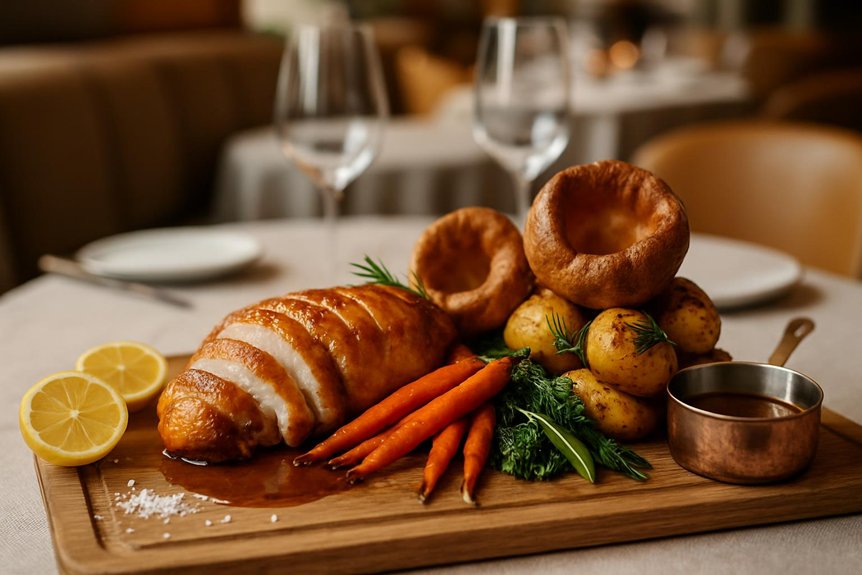
From those time-stamped tastings, attention shifts to British staples recast through a wider toolkit. Chefs interrogate historic recipes, then refine them with precise technique: a Cornish pasty laminated like Viennoiserie, eel pie clarified into a shimmering consommé, or kedgeree reimagined with basmati perfumed by makrut lime. The anchor is always locally sourced produce—Isle of Wight tomatoes, Yorkshire grouse, Orkney scallops—handled with discipline and restraint.
Sauces travel: miso enriches onion gravy, black-garlic XO lifts roast cauliflower, and dashi frames native oysters without masking their salinity. Fermentation, koji curing, and binchotan grilling introduce depth while preserving British character.
Desserts follow suit: custard tart lightened with yuzu, treacle transformed through smoked honey. The result is comfort reframed, memory intact, horizons widened.
Theatrical Service and Tableside Craftsmanship
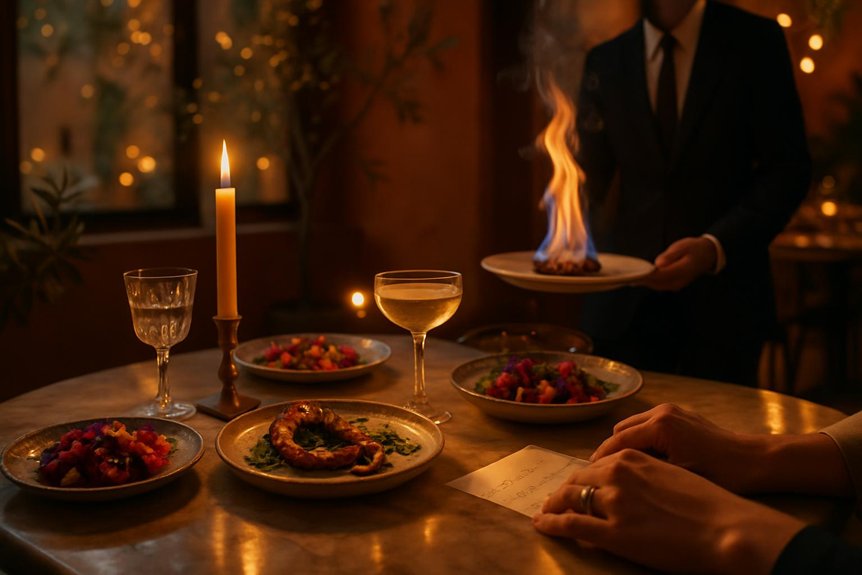
While plates arrive with polished precision, attention shifts to the choreography unfolding at the table—flambé flames, carved roasts, and cocktails shaken to a cadence.
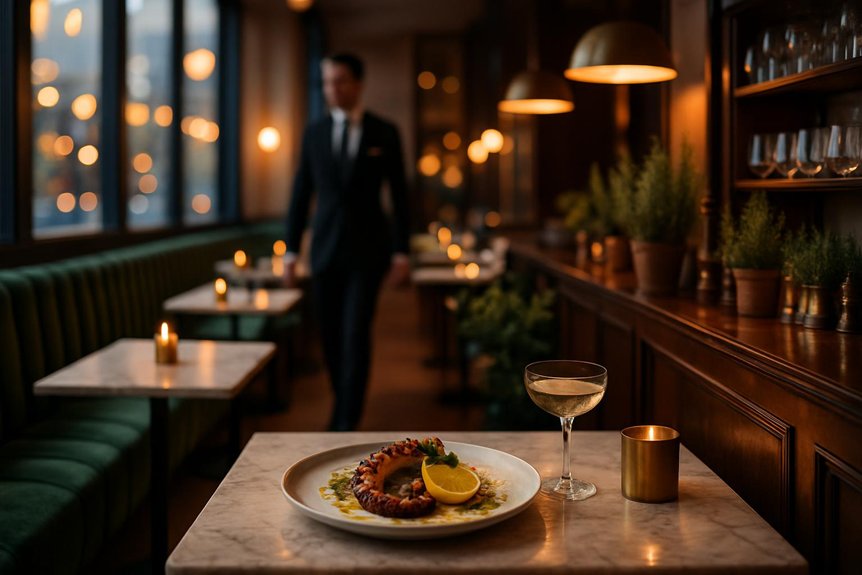
Servers move with measured assurance, turning service into performance without eclipsing the cuisine. In London’s top rooms, theatrical presentation is purposeful: sauces are finished in copper pans, bone marrow is torched to a glisten, and soufflés are split with a quiet flourish.
This is tableside artistry as a promise of freshness and control. Cuts are measured, temperatures monitored, seasonings adjusted in view, aligning technique with trust.
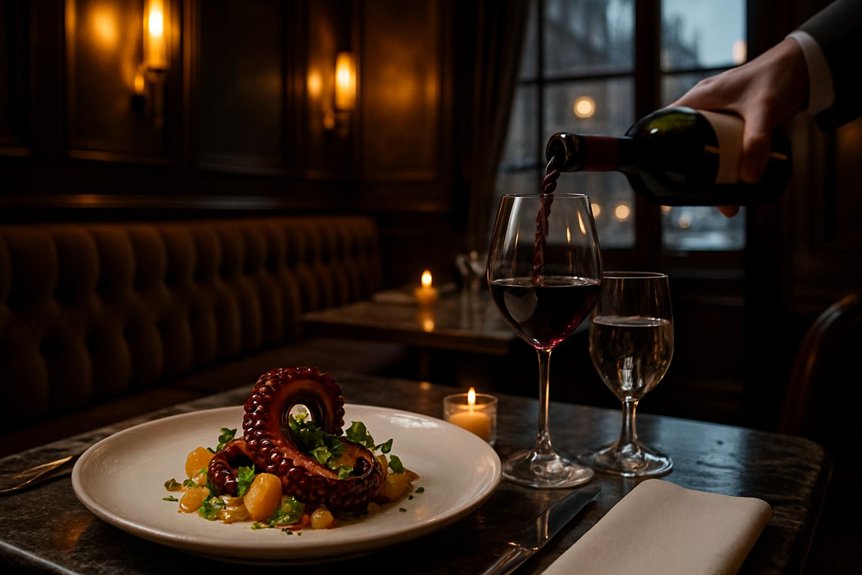
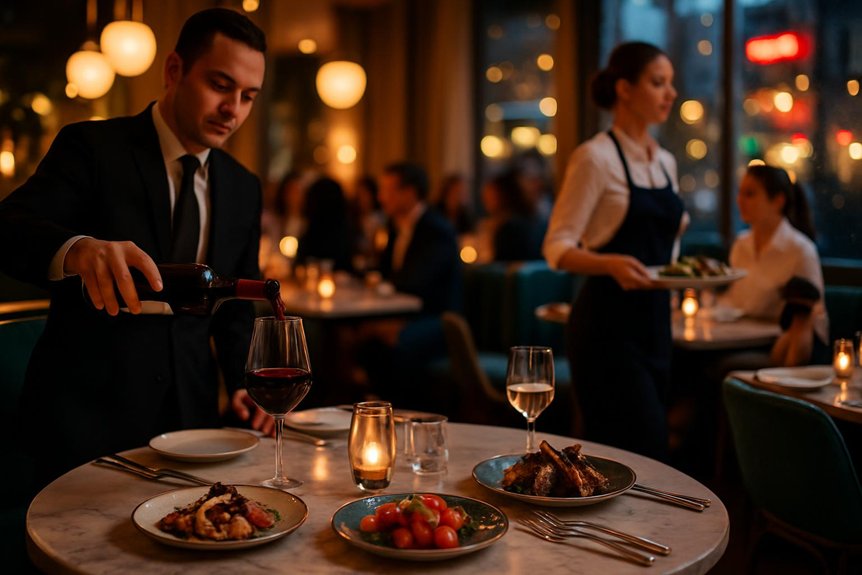
Sommelier decanting becomes a study in patience; tea service, a precision ritual. Guests witness craft, not gimmick, as chefs’ intent is translated tableside into aroma, texture, and timing—culinary theater with disciplined restraint.
Design-Forward Spaces That Double as Art
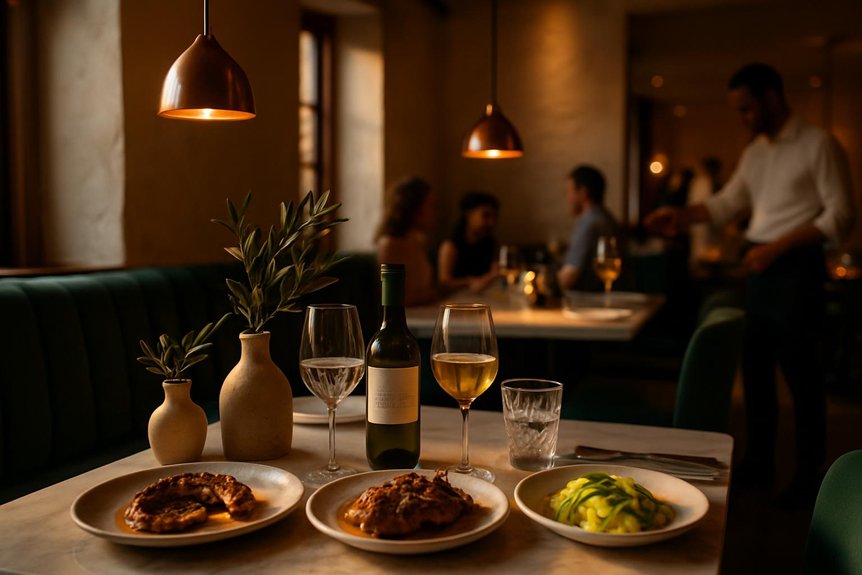
A dining room can function as a gallery, where architecture, light, and materiality frame the meal as meticulously as the menu. In London’s high-end scene, design-forward spaces assert that visual narrative shapes taste.
Bespoke stone, patinated metals, and tactile woods set a calibrated rhythm; sightlines are composed like canvases, guiding attention from aperture to plate. Interior aesthetics operate as a curatorial act, distilling brand identity into form.
Ambiance enhancement arrives through layered lighting—pendants as sculpture, hidden wash to soften edges, and warm color temperatures that flatter cuisine. Acoustic panels discreetly tune conversation.
Seating proportions and table geometry choreograph intimacy without isolation. Art commissions integrate with architecture rather than decorate it, allowing the room to perform as an immersive object—harmonizing context, comfort, and culinary intent.
Sustainability at the Heart of Fine Dining
In London’s luxury dining landscape, sustainability has shifted from peripheral gesture to operational core. Top restaurants now measure success by footprint as much as flavor, embedding Farm to table principles into procurement and planning.
Menus pivot with seasons; chefs prioritize ethical sourcing, low-waste techniques, and transparent supplier relationships. Kitchens track energy use, reduce plastics, and adopt circular practices—bones become broths, peels become powders.
Investment extends beyond ingredients. Dining rooms feature reclaimed materials, efficient lighting, and water-saving systems, while wine programs highlight biodynamic and low-intervention producers.
Staff training codifies sustainability standards, ensuring consistency from reservation to receipt. Diners encounter provenance notes and carbon awareness alongside tasting descriptions, signaling accountability.
The result is luxury redefined: rigorous craft, reduced impact, and a resilient London culinary ecosystem.
Rare Ingredients: From Wagyu to Butter-Aged Beef
Few symbols of culinary extravagance speak louder than meticulously sourced beef, from snow-flecked Japanese Wagyu to butter-aged ribeyes with velvet-soft texture. In London’s elite dining rooms, chefs frame these cuts as studies in provenance and process. Artisanal sourcing underpins every choice: bloodlines are documented, feed is controlled, and aging regimens are calibrated to micrometers of fat.
Butter-aging, a luxurious twist on dry-aging, seals meat in cultured butter, encouraging gentle enzymatic breakdown and a nuanced dairy sweetness. Fermentation techniques further refine flavor, from miso-brushed crusts to koji-primed maturation that deepens umami without overpowering delicacy.
Service remains minimalist: precise sears, restrained seasoning, and attentive temperature gradients. The result is clarity—a focused expression of texture, marbling, and terroir that defines contemporary luxury.
Sweet Finales: Desserts as Edible Sculpture
Though the meal’s arc narrows toward sweetness, dessert in London’s luxury dining rooms expands into architecture: calibrated layers, tensile sugarwork, and temperature-play compose plates that read like maquettes. Chefs cast mousses into geometric volumes, brace soufflés with latticed caramel, and hinge quenelles against shards that crack on cue.
Precision drives spectacle; flavor sequences are mapped like floorplans.
Fortified pastries deliver structure and longevity—laminated shells infused with aged spirits or enriched creams—so the build holds as sauces warm. Citrus gels, saline crumbs, and bitter cacao balance weight, steering the palate rather than saturating it.
Service becomes choreography: liquid nitrogen fogs, warm glazes set gloss, and tableside fractures reveal hidden textures. The result is edible art, engineered for narrative, contrast, and clean finish.
Conclusion
In closing, the city’s culinary skyline shimmers: sky-high sanctuaries, sculptural spaces, and sensorial storytelling shape each course. Chefs champion seasonal British bounty, spun with global subtlety and sustainable sincerity. Theatrical tableside touches, butter-aged bravura, and wagyu wonders weave a tapestry of wonder. Michelin masterminds marry mastery with mindfulness, while sweet finales stand as edible sculptures. London’s luxury dining delivers a luminous, lingering lullaby—where craft, conscience, and creativity converge, leaving discerning diners dazzled, delighted, and determined to return.