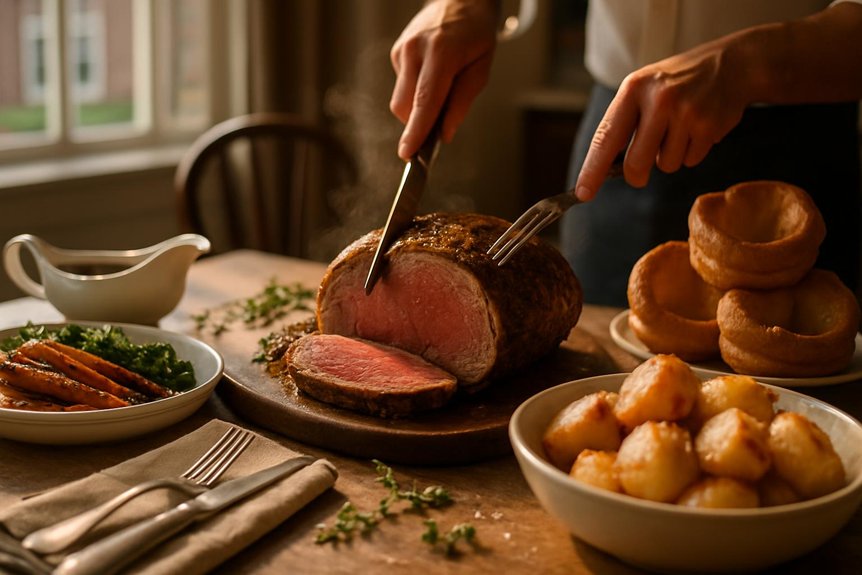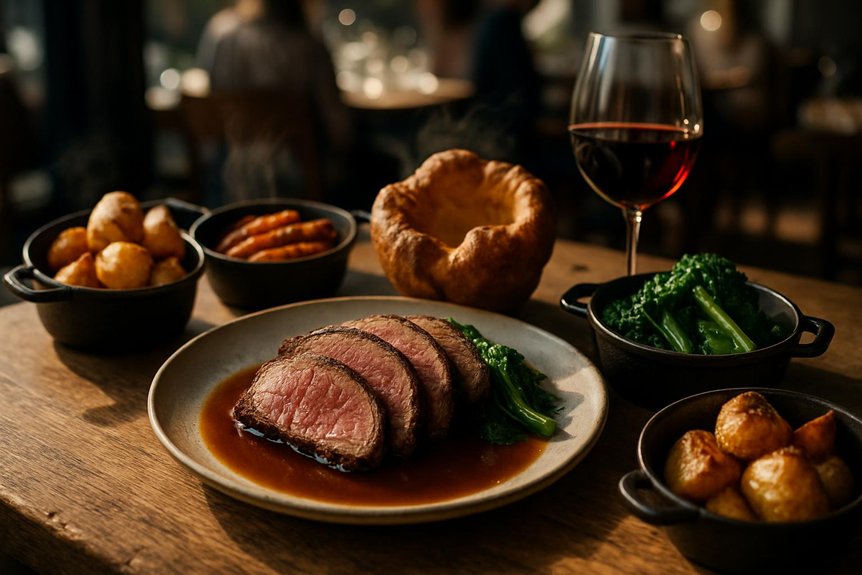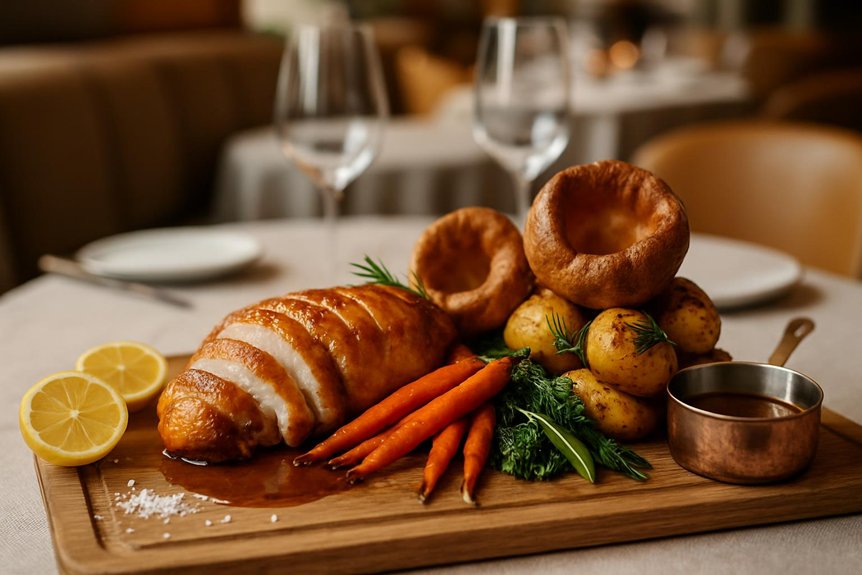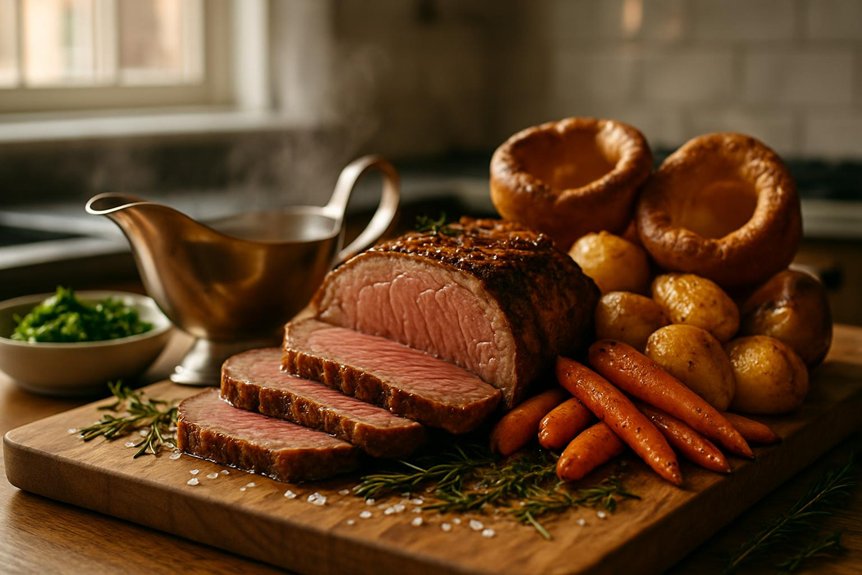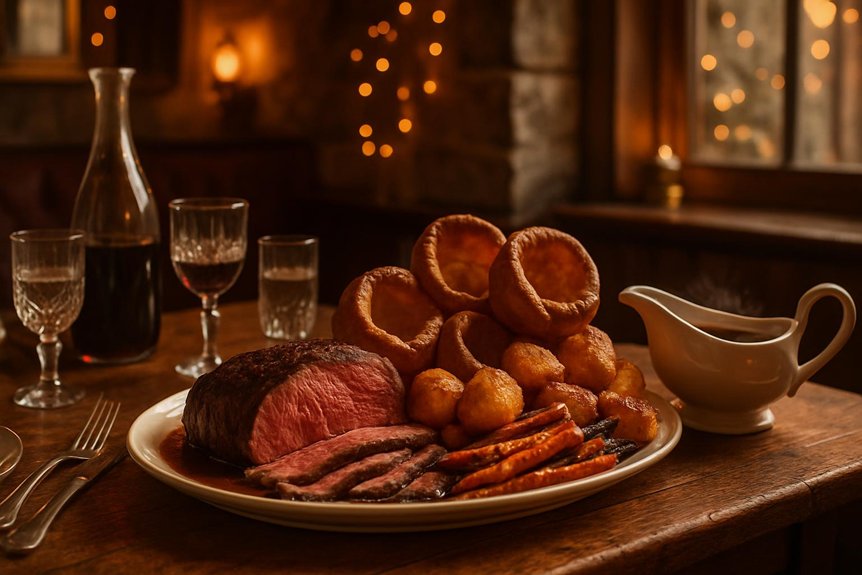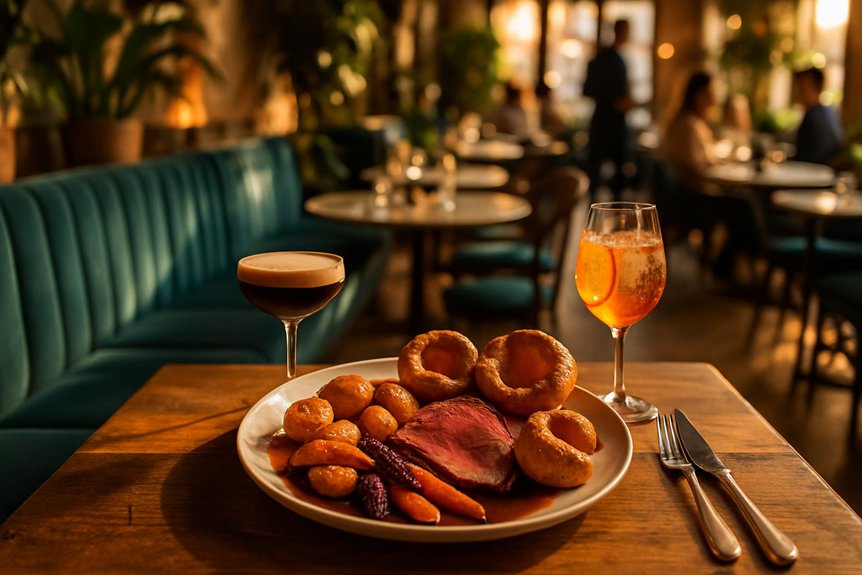

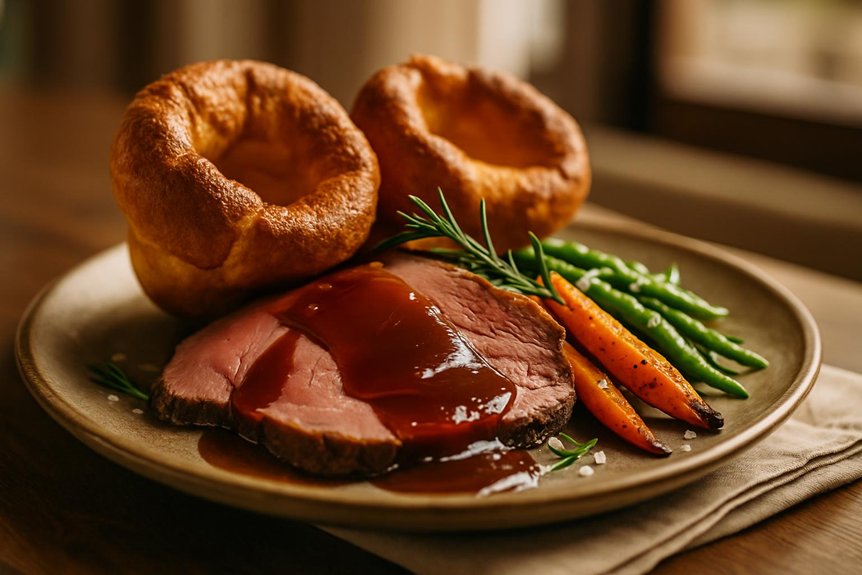
At Meraki in London, the Sunday roast balances polish with comfort. Yorkshire puddings arrive tall and crisp, their centers soft. Gravy is glossy, drawn from pan drippings and roasted bones. Beef blushes, chicken stays succulent, lamb rests tender beside seasonal greens. Horseradish and mint are precise, not loud. Service moves at an unhurried pace, with thoughtful wines and ales. It feels measured, almost ritual. What follows reveals why this tradition lingers long after the plates clear.
The Setting: Modern Elegance With a Cozy Soul
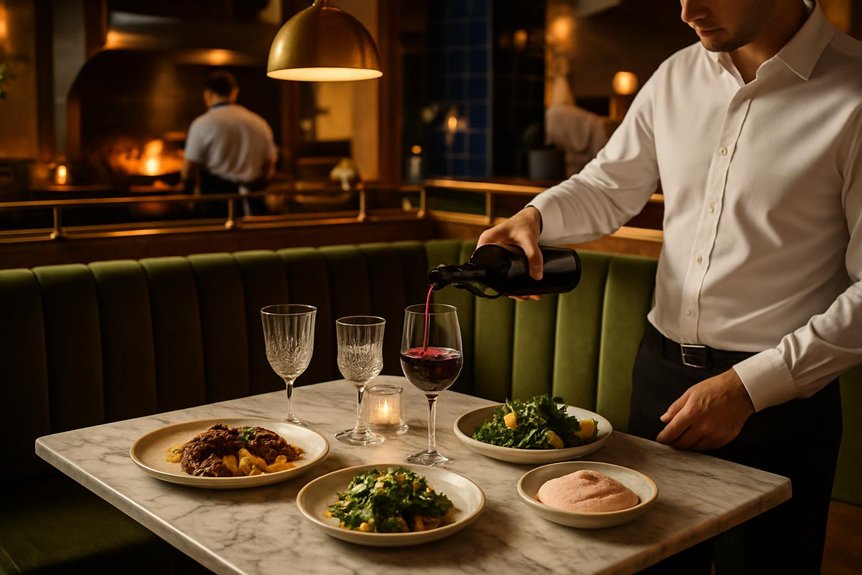
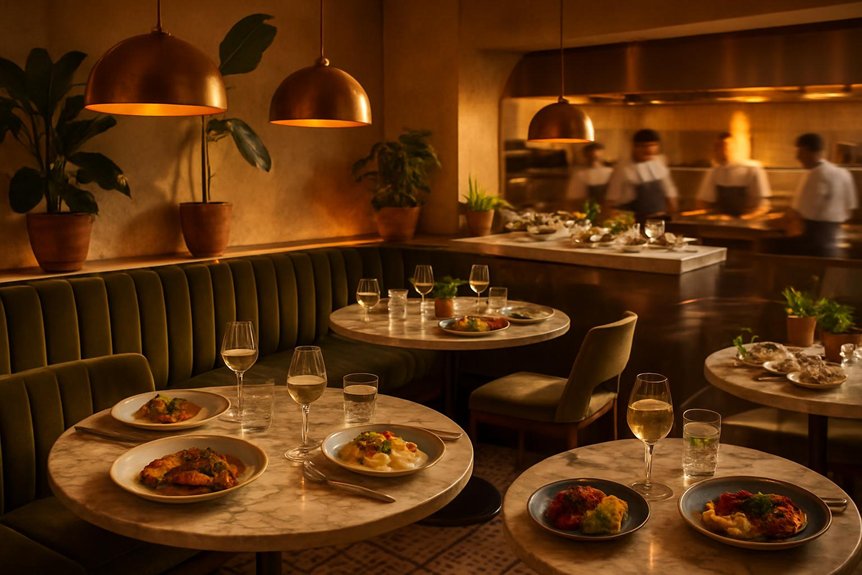
Although sleek on first impression, the dining room balances clean lines with warmth. Pale oak, matte brass, and soft charcoal tones create a calm frame for conversation, while low lighting settles gently on linen-dressed tables.
The chic decor favors restraint: sculptural banquettes, stoneware vases, and a curated art wall that nods to London’s modern edge without noise.
A long marble counter anchors the room, guiding the eye to an open service pass where plates move with unhurried rhythm.
Textured curtains soften acoustics, and a subtle herbal scent threads through the space.
Desserts cue the mood, too; a strawberry soufflé passing by adds a whisper of color and anticipation.
The setting feels composed yet approachable, inviting slow meals and easy, unforced connection. The Mediterranean cuisine highlights reflect the restaurant’s commitment to vibrant tastes and textures, creating a delightful culinary experience.
The Ritual: What Makes a Sunday Roast at Meraki Special
As the room’s calm settles, ritual takes the lead. Service unfolds with measured cadence: bread warmed, butter flecked with sea salt, then a carafe of gravy presented like a vintage. The sequence nods to historical origins—post-service gatherings, hearthside roasts—while the restaurant frames the ceremony with contemporary restraint. Plates arrive synchronized: roast carved to order, seasonal vegetables arranged by color and texture, jus tasted first, then shared. Staff describe regional variations without lecture—Midlands-style root veg sweetness, London’s preference for sharper brassicas, coastal rosemary on the lamb. Timing governs everything; heat is preserved, silence breaks only for approval. The table becomes a small stage for civility: knives glide, glasses rise, and conversation steadies, each course reinforcing a lineage refined for today. At Meraki, modern twists on classic flavors create a vibrant dining experience that honors British culinary heritage while introducing unexpected elements.
Yorkshire Puddings: Crisp Edges, Cloud-Soft Centers
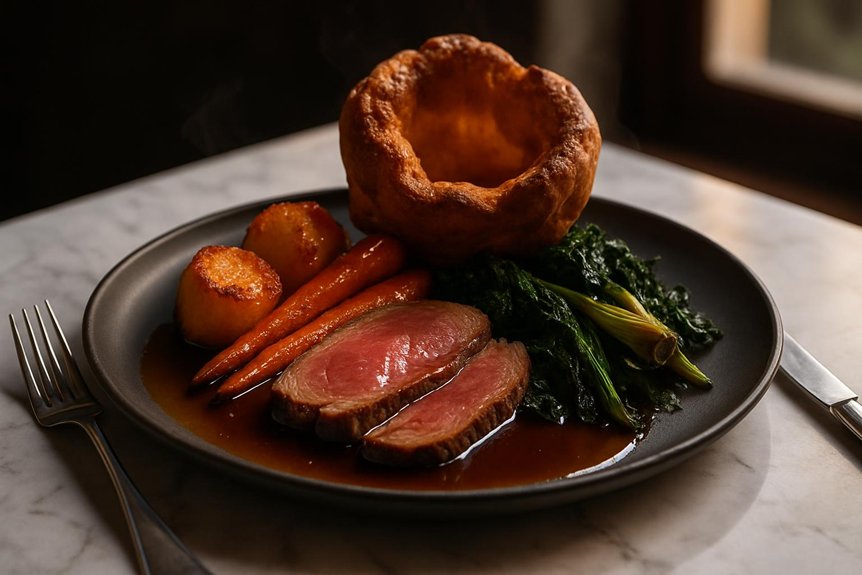
At Meraki, the rise and texture of Yorkshire puddings begin with precise batter ratios—equal parts egg, milk, and flour measured to the gram. Success then hinges on heat: tins smoking hot with fat before a swift pour. Timing seals the deal, with an uncompromising bake that sets crisp edges while preserving a cloud-soft center. The cosmopolitan Greek atmosphere at Meraki enhances the dining experience, making it an exceptional choice for savoring traditional dishes with a modern twist.
Batter Ratios Matter
Even before the tin hits smoking fat, Yorkshire pudding success is decided by ratio. At Meraki, proportion is treated as doctrine: flour, eggs, and liquid balanced to engineer batter consistency that pours like single cream, not paste. Too much liquid slackens structure; excess flour yields stodgy interiors. Eggs bridge the two, supplying lift and color while binding starch.
In culinary chemistry terms, hydration governs gluten development and starch gelatinization, the twin forces behind crisp edges and cloud-soft centers. A near-equal mass of eggs to flour supplies protein without heaviness; milk, cut with a touch of water, lightens crumb and aids expansion. Salt seasons and strengthens proteins; a whisper of starch (or higher-protein flour) sharpens architecture. Measured ratios, not intuition, create repeatable grandeur.
Heat and Timing
While ratios set the stage, heat cues the performance and timing calls the curtain. At Meraki, the oven preheats to a fierce surge, then settles into temperature consistency that keeps fat smoking and cups blistering.
Trays go in scorching; batter follows without hesitation. The shock lifts the crowns, steam hollows the centers.
They watch for color, not the clock, yet timing precision governs each move. Doors stay shut until rims bronze and sound hollow when tapped.
A brief, hotter start crisps the edges; a measured, steadier phase sets the interior to cloud-soft. Any dip—an opened door, a cool tray—collapses lift. Resting the tins between batches is avoided; heat must be relentless.
Service synchronizes roasts, gravy, and puddings so crunch meets softness on cue.
The Meats: From Blushing Beef to Succulent Chicken
How does Meraki signal confidence before the first carving knife falls? By resting joints until juices settle, parading silver-domed platters, and slicing to order.
Beef arrives blushing, edged with caramelized fat; chicken, bronzed and taut-skinned, releases clean steam. Lamb wears a rosé center, its cap of herbs crackling lightly. Portions respect tea etiquette pacing—unrushed, tidy—and the menu nods to vegetarian options without diluting the carnivorous focus.
1) Beef: seared hard, then slow-finished; slices hold a ruby core, fibers aligned for tenderness, seasoned to underscore minerality rather than mask it.
2) Chicken: dry-brined, air-dried skin; the cut reveals pearly juices, thyme and lemon whispering instead of shouting.
3) Lamb: herb crust, gentle heat; measured pinkness, balanced fat, and a decisive, clean carve.
The Gravy: Deep, Rich, and Properly Glossed
Most truths of a Sunday roast live or die in the gravy. At Meraki, the pot speaks in low, concentrated tones: a reduction built from pan fond, roasted bones, and a precise deglaze.
The kitchen privileges classic gravy techniques—patient caramelization, measured flour to fat ratios, and incremental stock additions—to achieve depth without heaviness. Heat is controlled to coax silk rather than sludge, finishing with a restrained glaze that catches light.
Flavor enhancement comes from judicious layering: a wink of Madeira, a scrape of marmite-dark drippings, and aromatics softened to sweetness rather than noise.
Seasoning arrives late, calibrated for the meats’ salinity. The result is glossy, supple, and clingy enough to coat without drowning, a conductor binding plate elements into a single, resonant line.
Seasonal Sides: Vegetables That Steal the Spotlight
Meraki’s seasonal sides step forward with a roast root medley caramelized at the edges and fragrant with thyme.
Alongside, buttered greens flourish—snappy beans, tender kale, and cabbage glossed lightly to keep their bite.
Together, they balance the roast with sweetness, freshness, and clean texture.
Roast Root Medley
A roast root medley anchors the plate with earthy sweetness and gentle char. At Meraki, the kitchen cubes carrot, parsnip, beetroot, and celeriac, then roasts them until edges caramelize and centers turn plush.
The result nods to Lancashire traditions while fitting the city’s Sunday brunch rhythm, where balance matters as much as indulgence. Salt, thyme, and a whisper of orange zest brighten the sugars; a final drizzle of browned butter deepens savor without heaviness.
- Texture: crisp rims, tender cores, and a subtle chew from roasted beetroot keep each bite varied.
- Contrast: faint bitterness from celeriac offsets carrot and parsnip sweetness; thyme adds resinous lift.
- Sauce affinity: the vegetables’ glossy surfaces catch gravy, amplifying roast aromas without overshadowing the main.
Buttered Greens Flourish
Though the roast roots set a sturdy base, the plate lifts when the greens arrive glossed and vivid.
At Meraki, buttered greens are treated as a centerpiece, not a courtesy garnish. Spring cabbage ribbons and tender-stem broccoli carry a clean bite under a restrained sheen of cultured butter. A squeeze of lemon and a flick of sea salt keep the edges bright.
The kitchen chases texture: snap, wilt, gloss. Parsley and chive thread freshness without crowding the roast’s deeper tones. This creates a precise flavor contrast, sharpening the beef’s richness and the gravy’s depth.
Portioning is deliberate—enough to refresh every forkful, never to flood. In a meal devoted to comfort, these greens supply lift, pace, and a final, quietly decisive polish.
Sauces and Extras: Horseradish, Mint, and More
While the roasts anchor the plate, the condiments define its character. At Meraki, Sauce varieties are treated with the same rigor as the meats: horseradish grated to a nasal-tingling heat, mint sauce bright with vinegar and garden herbs, and a glossy gravy reduced to a savory sheen. Extra condiments appear with purpose, never clutter: tart cranberry for poultry, sharp mustard for pork, and a mellow bread sauce when the kitchen nods classic.
1) Horseradish: freshly grated, folded into cream for balance, delivering a clean, assertive lift to rare beef.
2) Mint sauce: finely chopped mint leaves, sugar, and malt vinegar, calibrated to cut through lamb’s richness.
3) Gravy: pan juices reduced with stock, a whisper of wine, strained silk-smooth to bind every element.
Drinks Pairings: From Bold Reds to Classic Ales
Attention turns to the glass, where bold reds are poised to elevate the roast’s richness and deepen its savory notes.
Classic ales, meanwhile, offer a balanced counterpoint, revitalizing the palate between bites.
Together, they map a pairing strategy that tracks each course from beef to pudding.
Bold Reds Elevate Roast
How best to amplify roast beef or lamb? At Meraki, bold reds step in with firm tannins and ripe fruit, cutting through fat while echoing caramelized edges. The dining room’s colorful plating and elegant tableware frame these wines as purposeful companions, not afterthoughts, aligning texture with texture and savor with structure.
1) Cabernet Sauvignon: Blackcurrant, cedar, and graphite bring backbone; tannins cleanse after bites of roast, Yorkshire puds, and glossy gravy.
2) Syrah/Shiraz: Dark berries and pepper add lift; savory notes mirror herb rubs, while a sleek finish guards against palate fatigue.
3) Rioja Reserva: Tempranillo’s dried cherry and subtle oak knit with jus; acidity brightens root veg and confit garlic.
Each bottle clarifies flavors, sharpening focus without overwhelming the roast’s essential comfort.
Classic Ales Complement Courses
Even as bold reds hold court, classic British ales step in with a softer frame, stitching malt sweetness and gentle bitterness through each course.
At Meraki, a best bitter meets the Yorkshire puds, its biscuit notes echoing roast drippings while carbonation lifts rich gravy.
A nutty brown ale shadows roasted carrots and parsnips, complementing caramelized edges without crowding herbs.
With beef, a robust porter brings cocoa and toasted grain, steadying umami and peppered crust.
For diners inclined toward craft beer, a dry-hopped pale introduces citrus lift for creamed greens, yet keeps tannins off the stage.
Lighter courses accept a golden ale—clean, faintly honeyed.
Cocktail pairings remain present, but ales offer steadier pacing, temperature-friendly service, and a breadth that respects the roast’s cadence.
Service and Ambience: Unhurried Hospitality
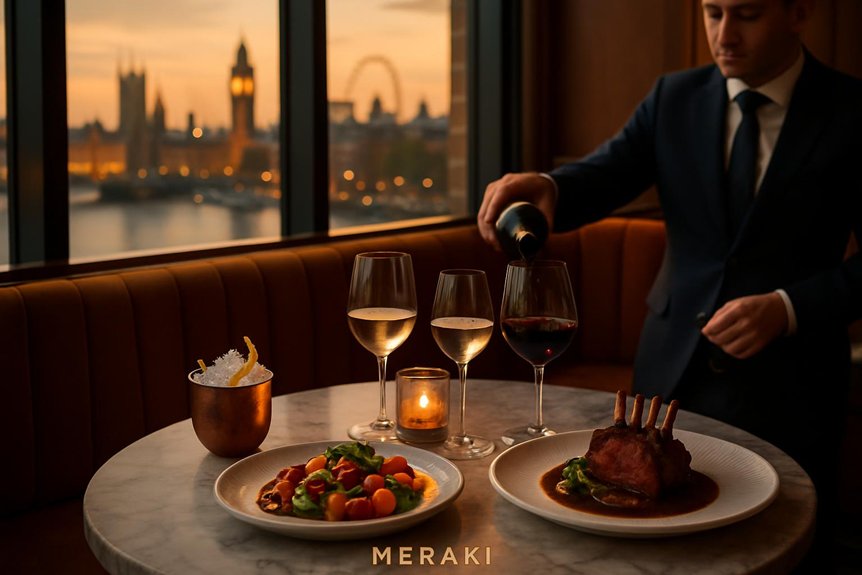
While the kitchen anchors the experience, the tone of Meraki’s Sunday roast is set by its unhurried hospitality. Service proceeds at a measured pace, allowing courses and conversation to breathe.
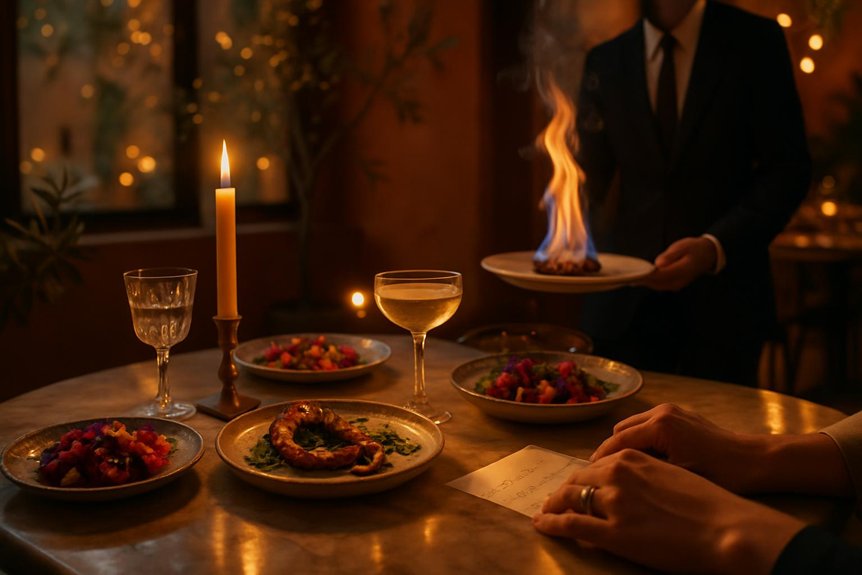
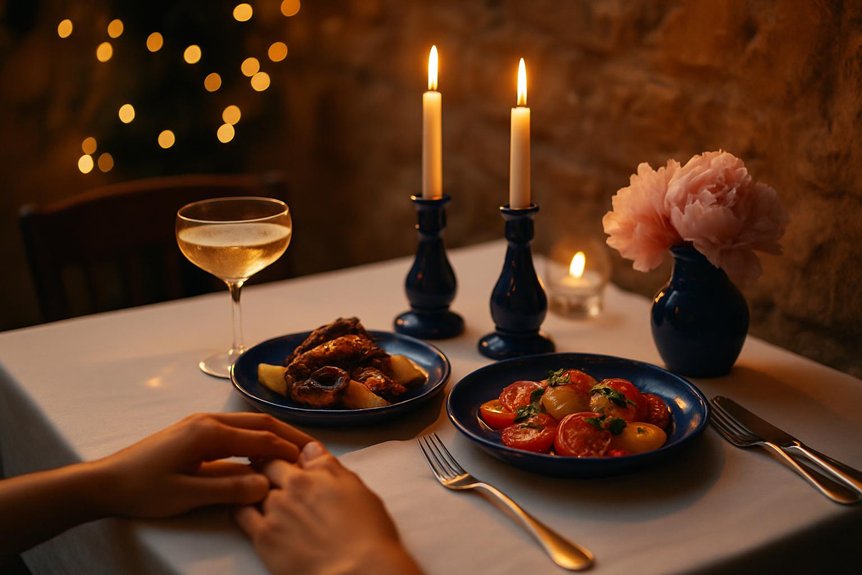
Staff read the room with calm assurance, guiding choices without haste, a quiet demonstration of service nuance. Ambient lighting softens edges, drawing attention to plates and faces rather than spectacle.
1) Seating and flow: Tables are spaced to dampen noise, and service routes are discreet, keeping movement fluid without intruding.
2) Timing: Plates arrive with consistent intervals, neither rushed nor idle, maintaining warmth and texture integrity.
3) Communication: Servers anticipate needs—water refreshed, gravies topped—yet hold back when silence suits the table.
The result is composure: a roast framed by steadiness, not speed.
How to Book and When to Go
Preferably, reservations are made a week ahead, as Sunday slots fill quickly once the menu is posted midweek.
Online booking opens seven days out, and prime sittings around 1–3 p.m. disappear first.
Early birds at noon or late tables after 4 p.m. see better flexibility, with clearer guidance on dietary notes.
For spontaneity, limited walk-in availability exists at the bar; arriving before noon improves odds, especially outside peak weather.
Larger groups should prepay or provide card details to secure space and avoid waitlists.
Budget options are easier at off-peak times: smaller roasts and add-ons occasionally feature mid-afternoon, and drinks packages appear seasonally.
For a quieter room, choose the last hour of service; for full bustle and freshest trays, target the first turn.
Conclusion
In the end, Meraki’s Sunday roast feels less like a meal and more like a quiet ritual polished to a sheen: Yorkshire puddings that rise like promises, meats carved with restraint, and gravy that ties everything together with a glossed, savory hush. The drinks deepen the mood, the service extends time. What else should a Sunday be if not this? For those seeking comfort refined—not reinvented—Meraki offers a lingering invitation to return, and to bring good company along.