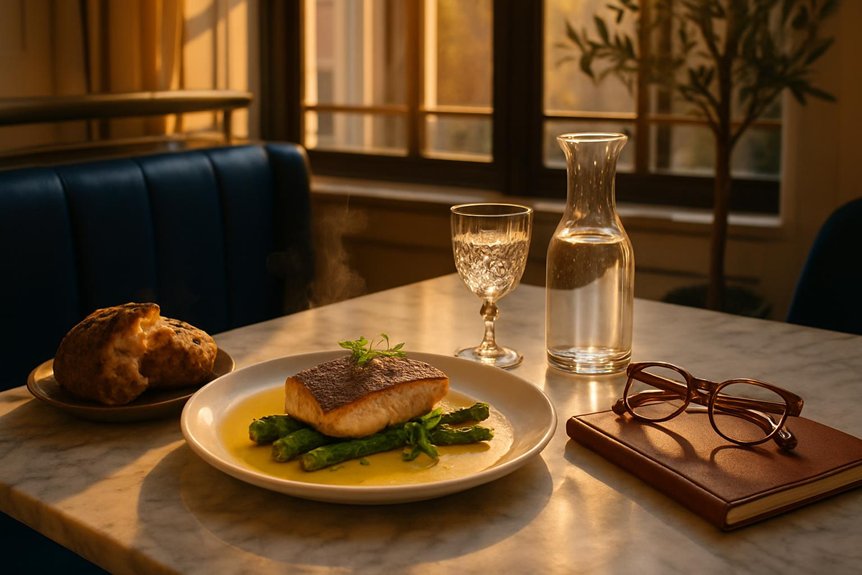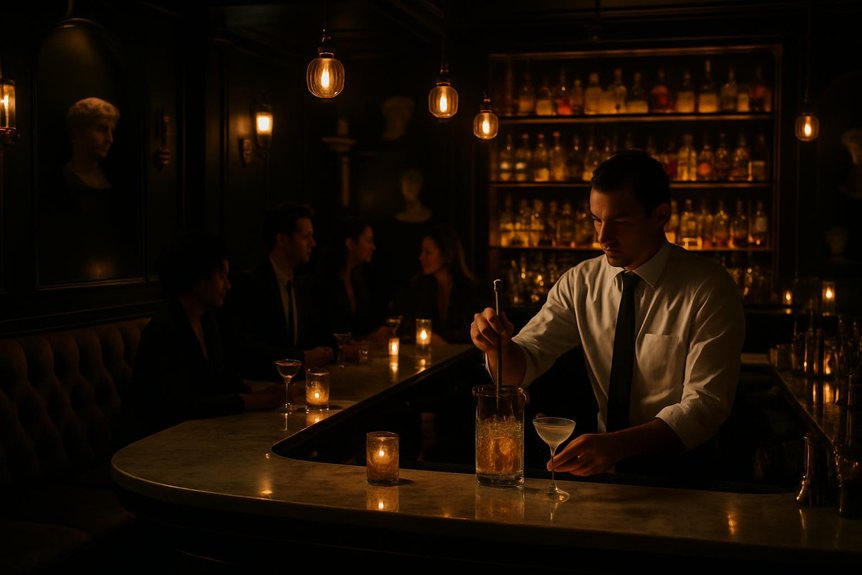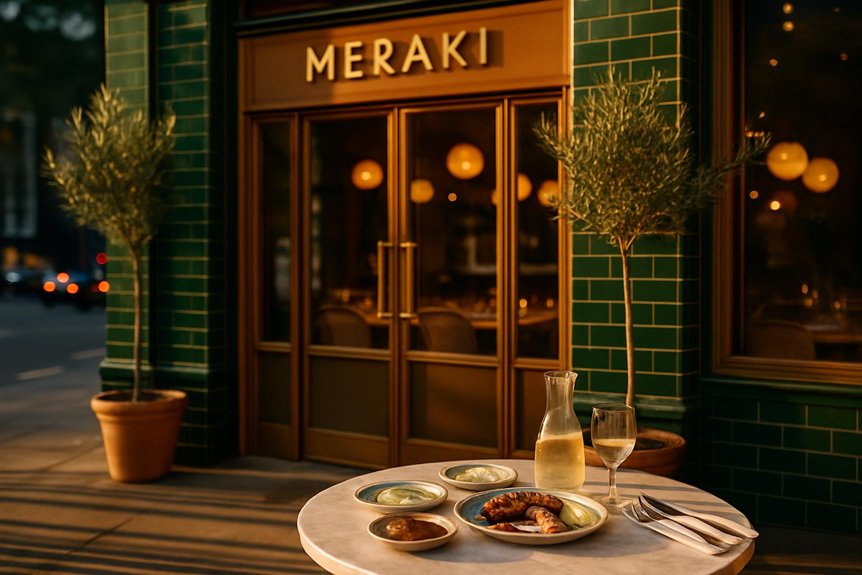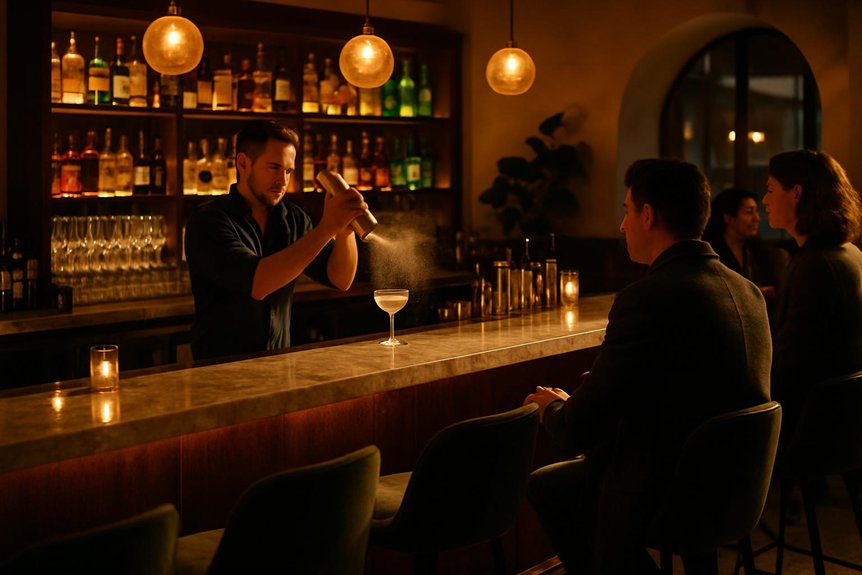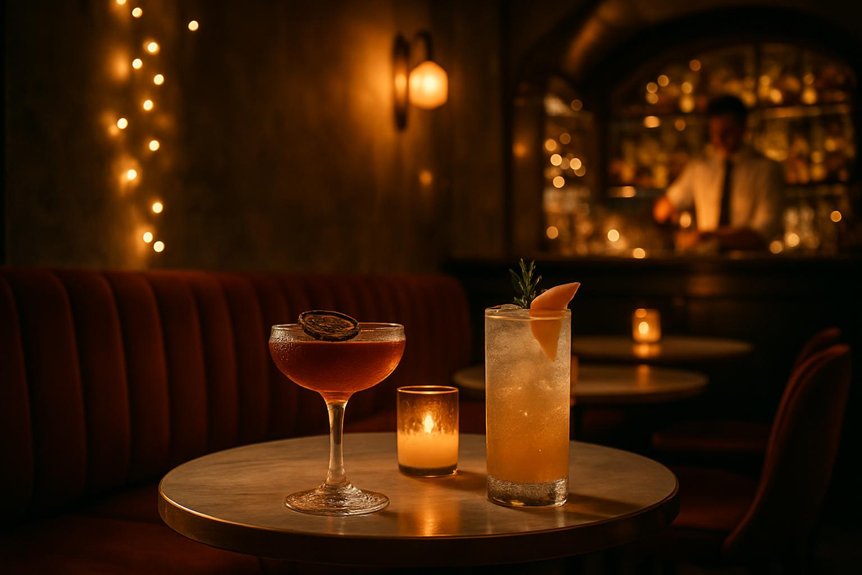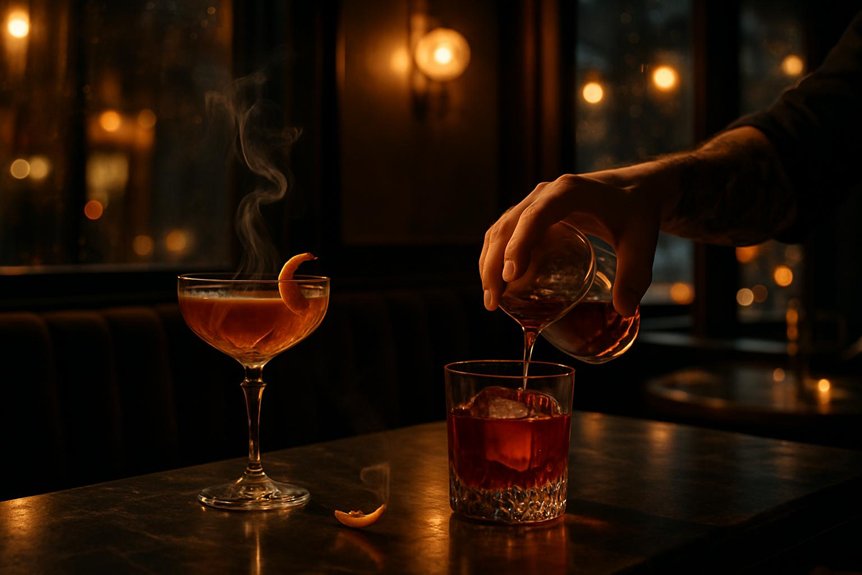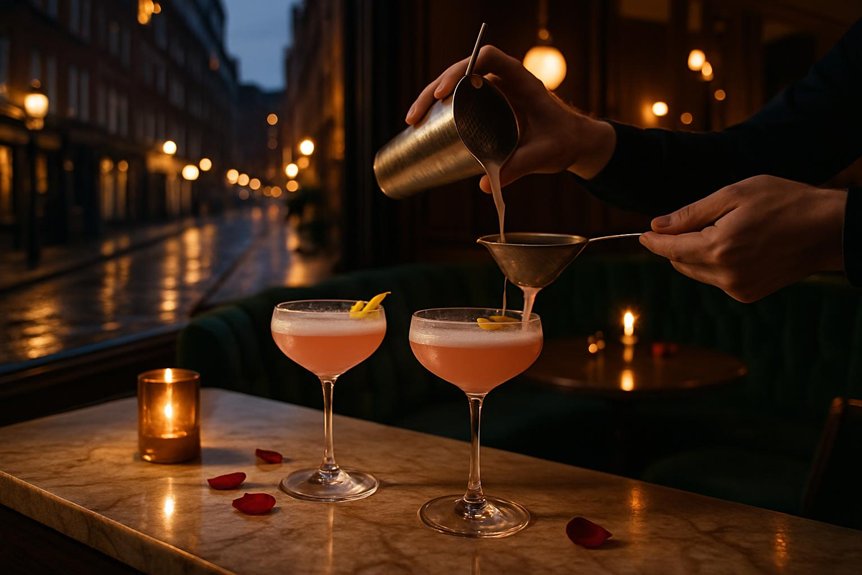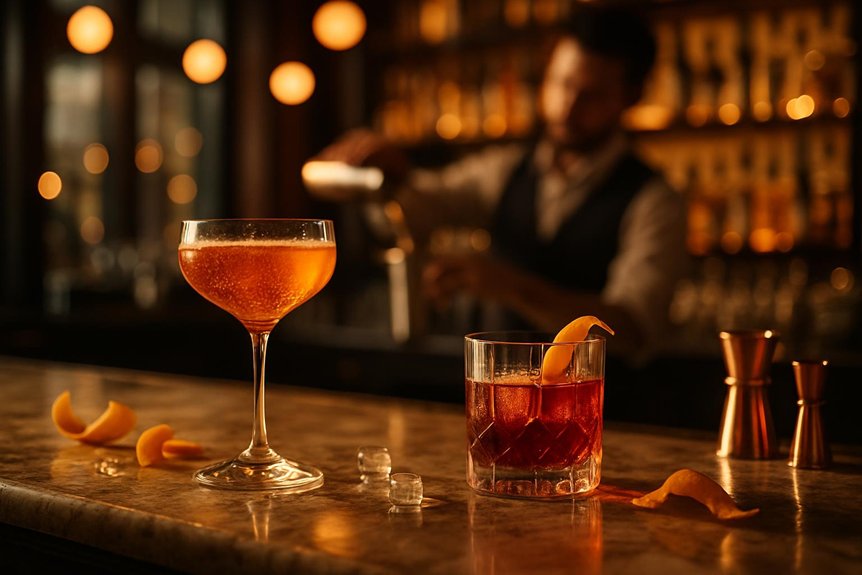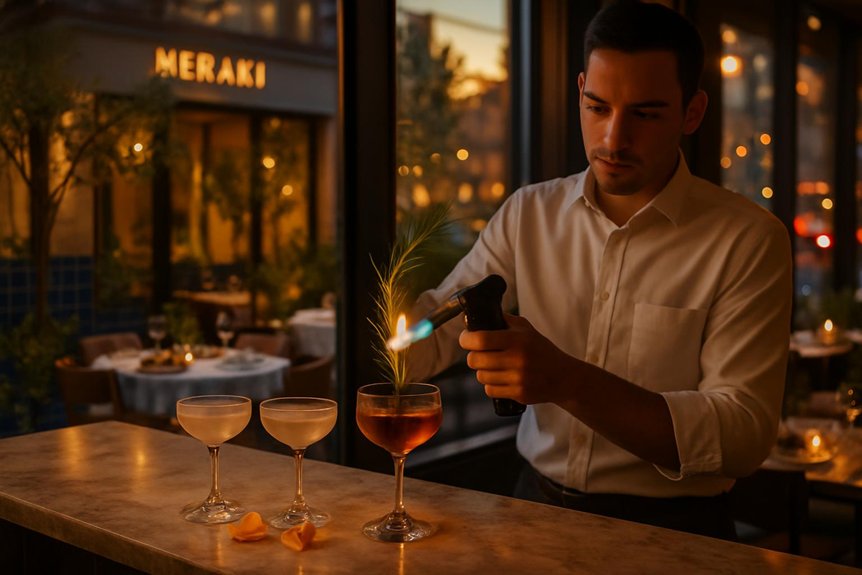

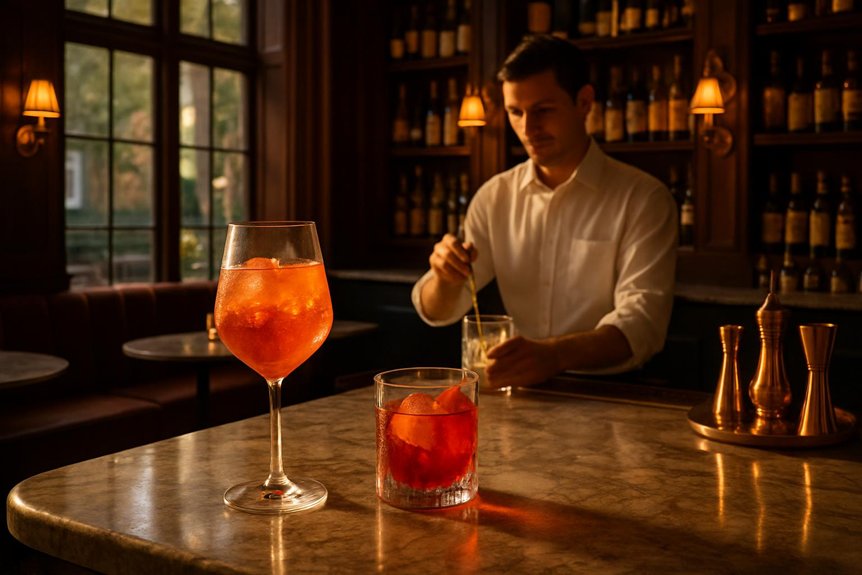
Bloomsbury hides a bar worth finding. Meraki offers Italian staples—spritzes at golden hour, measured Negronis after dark—served with restraint and purpose. Lanterns warm velvet corners, while cicchetti anchor the glass in hand. Local spirits and seasonal infusions keep familiar profiles sharp. There are unmarked doors nearby, bartenders with off-menu opinions, and quiet banquettes that reward patience. For those mapping a night from terrace to nightcap, the route begins here, but the decisions get harder.
Mapping the Mood: How to Bar-Hop Bloomsbury
Although compact on a map, Bloomsbury shifts mood block by block, so an efficient bar-hop starts with a simple axis: east–west along Russell, Bedford, and Charlotte Streets, with north–south pivots at Lamb’s Conduit and Tottenham Court Road.
From Russell’s scholarly hush, begin with classic builds and measured cocktail technique; spirits-forward menus suit an unhurried opener.
Cut south to Bedford for creative house twists and precise drink presentation—glassware, garnish, and temperature dial the tone.
Slide to Charlotte for busier rooms and faster pacing, where stirred-and-boozy gives way to shaker tins and brighter profiles.
Use Lamb’s Conduit as a reset: quieter stoops, smaller lists, attentive pours.
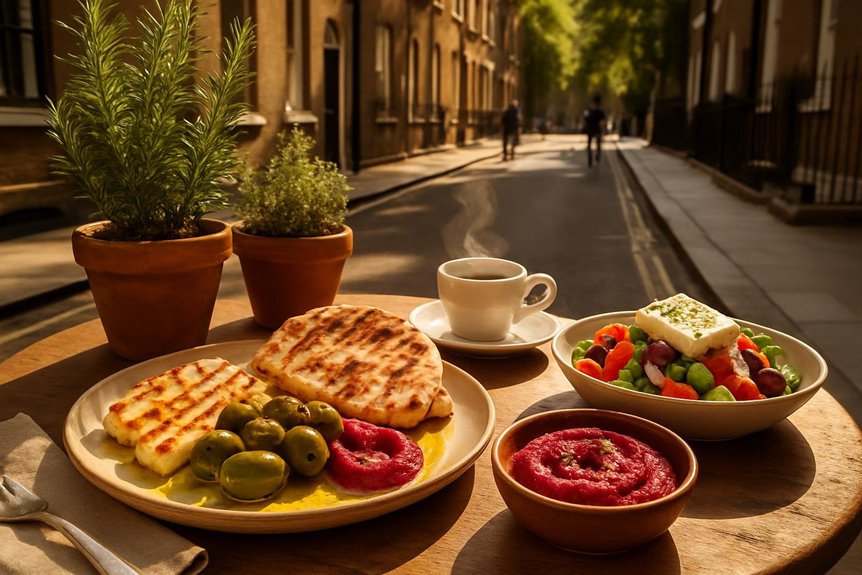
Finish near Tottenham Court Road, where late-night energy rewards confident palates and steady legs. Experience a taste of unique ingredients like goat cheese in tomato salad at Meraki, a new addition to the area’s vibrant dining scene.
Golden Hour Spritzes and Sunlit Terraces
As the route angles toward late afternoon, the map’s east–west rhythm becomes a hunt for sun. Terraces tilt toward lingering rays, where spritzes arrive crisp and mineral, bright with citrus and herbs. Observers note cocktail craftsmanship in restrained garnishes, well-chilled glassware, and careful dilution that keeps bubbles alive through unhurried conversations. Chairs scrape softly on flagstones; façades throw warm light that flatters vintage ambiances without nostalgia tipping into theme. Aperitivo boards lean simple—salty almonds, shaved fennel, briny olives—calibrated to lift bitterness and fruit. Service stays brisk, the ice always clear, the pour measured. As shadows lengthen, the palette shifts: blood-orange spritz, bergamot highball, a thyme-scented Americano. The neighborhood breathes out, and the terraces hold the last, golden notes. For a taste of Greece in London, Meraki’s extensive wine menu features Greek wines that perfectly complement the cocktail offerings, adding depth to the experience.
Speakeasy Hideaways Behind Unmarked Doors
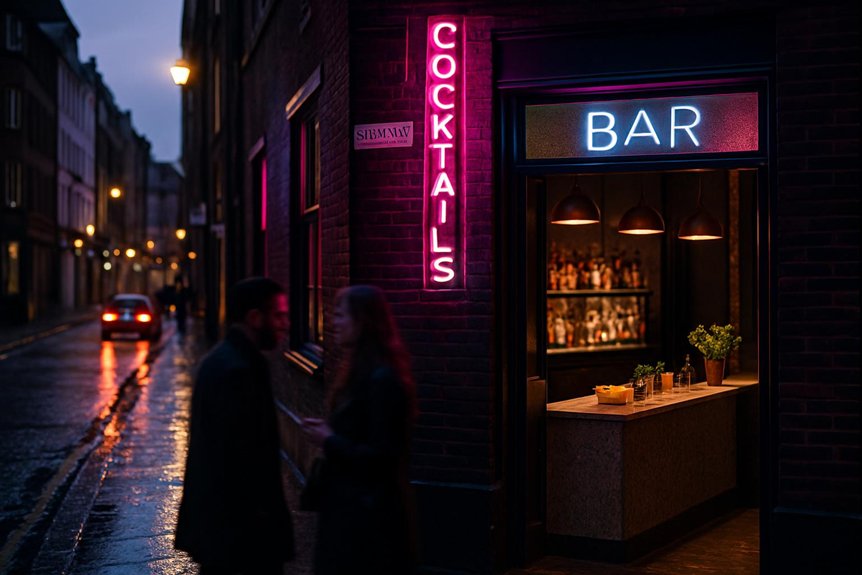
Whispered directions and unmarked doorways are mapped here for those seeking Bloomsbury’s hidden entrances. Inside, bartenders pour signature clandestine cocktails—think off-menu martinis, smoked bitters, and era-styled nightcaps. Expect low-lit ambience with softly enforced dress codes: smart-casual at minimum, no athleisure. Nearby in Fitzrovia, Meraki Luxury Restaurant offers an exquisite Greek dining experience, ideal for those looking to complement their cocktail adventure with award-winning cuisine.
Secret Entrances Mapped
Even seasoned Bloomsbury flâneurs can miss the city’s quietest doors, the ones that yield to a sly knock or a discreet bell and open onto dim, well-curated bars. This map treats hidden entrances as waypoints: a bookshop’s staff door, a mews arch with a brass buzzer, a hotel service corridor marked “deliveries,” each masking secret passages to snug lounges.
A discreet sequence helps: look for unnumbered doorframes, antique doorbells, and muted signage above eye level. Side streets off Russell Square and lanes behind Theobalds Road conceal the most reliable portals. Stairwells descend beneath ordinary cafés; a lift coded with a chess knight icon opens to velvet banquettes. Trust the hush, not the crowd; if the pavement is quiet, linger and listen.
Signature Clandestine Cocktails
Three cocktails define the hush behind Bloomsbury’s unmarked doors: a smoked lapsang old fashioned served under a cloche, a gorse blossom martini that trades olive brine for saline and thyme oil, and a cacao-amaro boulevardier tightened with fino sherry.
Each reads like a study in cocktail chemistry: smoke binds tannin to citrus oils; saline sharpens florals without muting juniper; sherry reins in sweetness while extending finish.
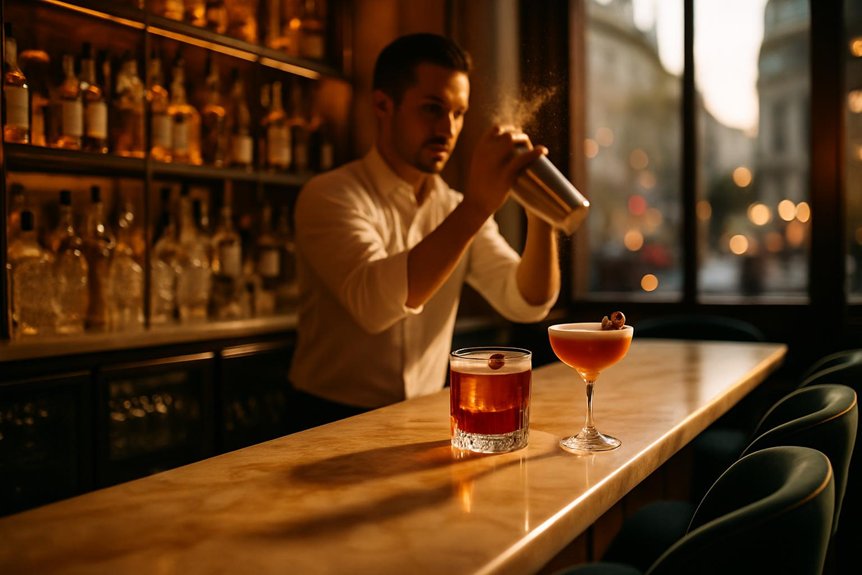
Bartenders privilege precision—single large cubes for the old fashioned, frost-clear stirring for the martini, and a brisk, short stir for the boulevardier to protect structure.
Glassware etiquette is exacting: a heavy rocks glass to ground smoke, a Nick and Nora to lift botanicals, and a chilled double Old Fashioned to frame the sherry-bitters dialogue.
Ambience and Dress Code
Precision at the bar extends to the room itself. In Bloomsbury’s speakeasy hideaways, shadowed corridors open into candlelit dens where velvet banquettes meet low brass lamps, and hushed jazz frames quiet conversation.
Hosts favor reservation names murmured at unmarked doors, then guide guests to intimate corners. The dress code bends toward dressing elegance—tailored jackets, sleek silhouettes—yet some rooms welcome refined casual attire, provided shoes and attitude respect the craft.
- Velvet-lit nooks and soft playlists keep voices low, inviting longer stays and second rounds.
- Door policies vary: elegance preferred late evenings; smart casual attire often accepted early week.
- Lighting and service cadence slow the night, ideal for stirred classics and discreet rendezvous.
Italian Classics: Negroni, Sbagliato, and Beyond
While Bloomsbury’s bars chase modern trends, their foundations rest on Italian classics poured with quiet confidence. Bartenders lean on time-tested ratios: equal parts bitterness, botanicals, and spirit-driven poise.
A Negroni arrives ruby and restrained, its orange oils bright against cut crystal; the Sbagliato softens the edge with sparkling lift, ideal for terraces with garden ambiance.
Americano service remains brisk, a lighter prelude that still honors aperitivo logic.
House technique prioritizes cocktail artistry over gimmickry: precise dilutions, frosted glassware, and bitters measured like cologne.
Vermouth selections skew herbal and dry, giving Campari a disciplined partner.
Gin styles rotate from juniper-forward to citrus-led, but structure holds.
For guests seeking depth, Boulevardiers substitute bourbon, turning duskier and plush without losing that elegant, Italian backbone.
Local Twists: London Spirits and Seasonal Infusions
How do Bloomsbury bartenders localize classic profiles without losing balance? They lean on local spirits—London dry gins, small-batch vermouths, malt-forward whiskies—and thread them through seasonal infusions that alter texture and aroma rather than overpower.
Rhubarb, hedgerow berries, and garden herbs bring a brisk British accent to spritzes and bitters-led builds; honey, quince, and cobnut lend rounded depth for cooler months. Technique stays restrained: brief macerations, split bases, and measured bitters keep equilibrium intact.
- Crisp spring Martini: London dry gin, fennel-frond infusion, dry vermouth, lemon oil
- Late-summer Americano: bitter aperitif, English rosé vermouth, blackberry-leaf soda, orange zest
- Autumn Old Fashioned: single malt, cobnut-honey syrup, walnut bitters
The result is familiarity with a postcode: classic blueprints, tuned by terroir and time.
Bartenders’ Picks: Off-Menu Sips Worth Asking For
Those seasonal tweaks set the stage for another quiet pleasure in Bloomsbury: the drinks that never make the menu. Regulars know to ask what the staff are testing—refinements built on cocktail history and honed through patient bartender techniques.
One bar might offer a chilled Martinez riff with amaro and marmalade bitters; another whispers about a smoky white Negroni, softened by saline and a grapefruit mist.
Off-menu, proportions shift minutely, glassware changes, and texture matters—split-base spirits, rapid infusions, and clarified citrus shape a cleaner finish.
The script is simple: name a preferred classic, a spirit, or a mood, then let the station lead. What arrives is purposeful rather than showy: quiet balance, fidelity to lineage, and a sense of something made for this moment.
Small Plates to Pair: From Cicchetti to Late-Night Bites
Bloomsbury’s bars are pairing thoughtful cocktails with Venetian-style cicchetti—think bite-size crostini, marinated seafood, and fried morsels.
As the night stretches, menus shift to midnight bar snacks that favor salt, crunch, and heat. Readers can expect where to find the best small plates and which drinks they flatter next.
Venetian-Style Cicchetti
Although the cocktails command attention, the bar’s Venetian-style cicchetti quietly set the pace for the evening. Served on slate under soft art deco lighting, each bite balances salinity, acidity, and texture to complement precise cocktail techniques.
Gilded anchovy toasts, saffron arancini, and marinated olives arrive in measured waves, encouraging unhurried conversation and steady sipping. The selection reads like a map of the lagoon—briny, herbal, citrus-lifted—designed to frame a spritz or tame a bracing Negroni without stealing the spotlight.
- Gilda skewers with guindilla, olive, and anchovy, sharpening bitters and brightening aromatics.
- Baccalà mantecato on crostini, its silkiness echoing stirred classics’ polished mouthfeel.
- Soft-shell crab fritto with lemon and fennel salt, offering crunch that resets the palate between rounds.
Midnight Bar Snacks
When the clock edges past eleven, the menu shifts from lagoon whispers to late‑night punctuation.
In Bloomsbury’s snug corners, small plates arrive with decisive purpose: salt cod fritters with lemon aioli, anchovy toasts, grilled romano peppers slicked with olive oil. Each bite is tuned to amplify the glass.
Bartenders recalibrate with stealth, weighing cocktail ingredients against texture and heat: a martini beside smoked almonds, amaro highballs flanking chili‑dusted crisps, a Negroni cutting through truffle pecorino.
Barware essentials clink—julep strainers, weighted tins, frosted coupes—conducting a quiet cadence of service.
There is order in the night: crisp, saline, umami, then sweet.
A final plate—honeyed figs over ricotta—signals the close, inviting one more stir, one last sip.
Date-Night Nooks and Quiet Corners
Even in a neighborhood teeming with scholarship and bustle, pockets of intimacy await those seeking a softer hum. Tucked behind book-lined alleys and Georgian façades, small bars favor candlelit booths, low ceilings, and velvet banquettes. The mood leans conversational; bartenders curate menus that nod to cocktail history while keeping flavors restrained and balanced.
Thoughtful bar decor—amber glass, patinated mirrors, and shaded lamps—steers attention toward the glass and the person across the table.
- Whisper-close tables with sightlines shielded by plants and screens invite longer conversation without eavesdroppers.
- Two-seat counters give a front-row view to measured stirring and precise garnishing, a quiet theatre of craft.
- Cellar hideaways offer softened acoustics, restrained playlists, and service paced to match unhurried, attentive evenings.
Late Service: Nightcaps and Last-Call Rituals
As the academic crowds thin and Bloomsbury’s pavements gloss under streetlight, bars pivot to a gentler cadence suited to nightcaps. Bartenders close ranks, menus shrink, and attention settles on neat pours, stirred classics, and low-ABV finales.
A measured Old Fashioned or a precise Adonis nods to cocktail history without demanding conversation. Espresso Martinis yield to silky porters and quietly confident craft beer, poured with an eye on last call.
Regulars know the rituals: a final water, the bill presented with soft authority, lights inching brighter. Ice wells are drained, music warms to vinyl textures, and service becomes unhurried but decisive.
Those lingering choose contemplative drinks—amaro flights, Madeira, a single-malt nightcap—ending the evening with balance, not bravado, and leaving Bloomsbury hushed yet awake.
Conclusion
As Bloomsbury’s lamps flicker to life, glasses bead with citrus and clove, and velvet shadows gather like a whispered secret. A spritz glows amber at dusk; the Negroni burns ruby in the hush beyond. Behind unmarked doors, ice cracks, amaro breathes, and cicchetti arrive like postcards from Venice. Lovers lean into alcoves; nightcaps linger, unhurried. Map the mood, follow the glow—here, the city softens, and every pour becomes a compass pointing home.