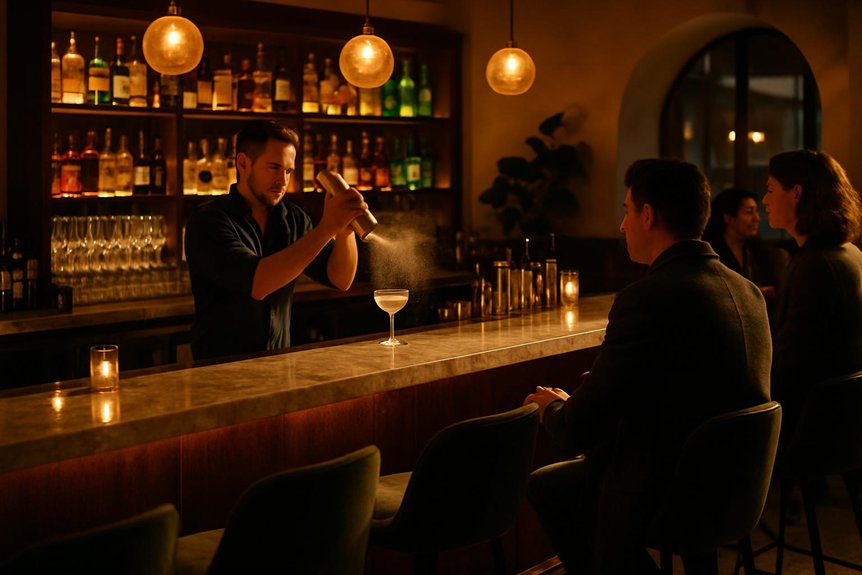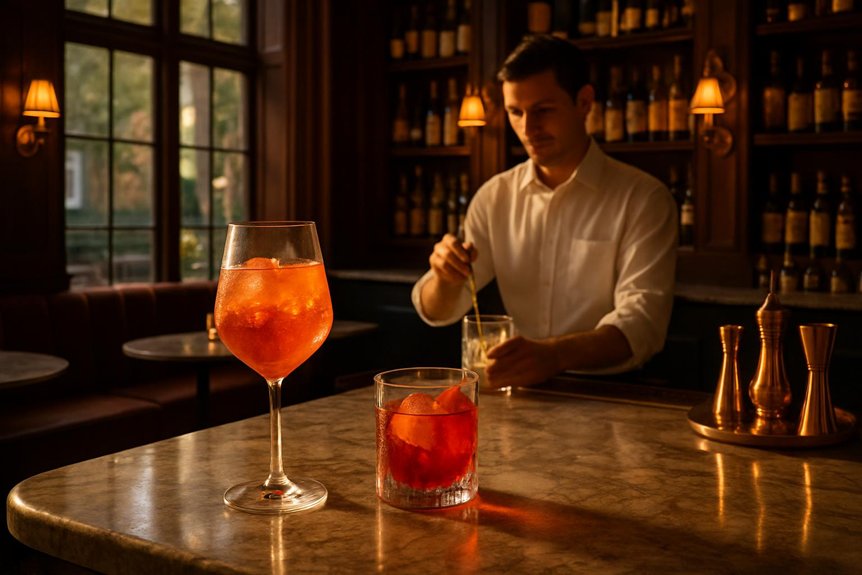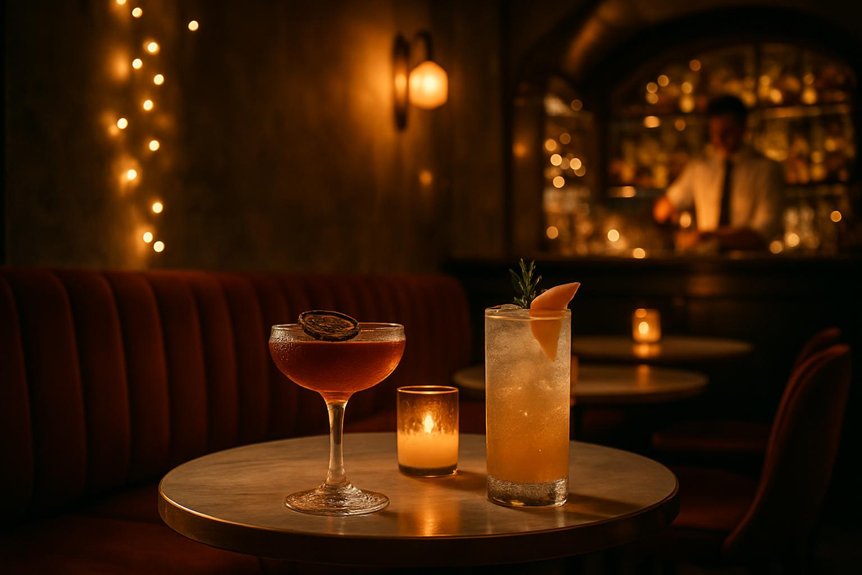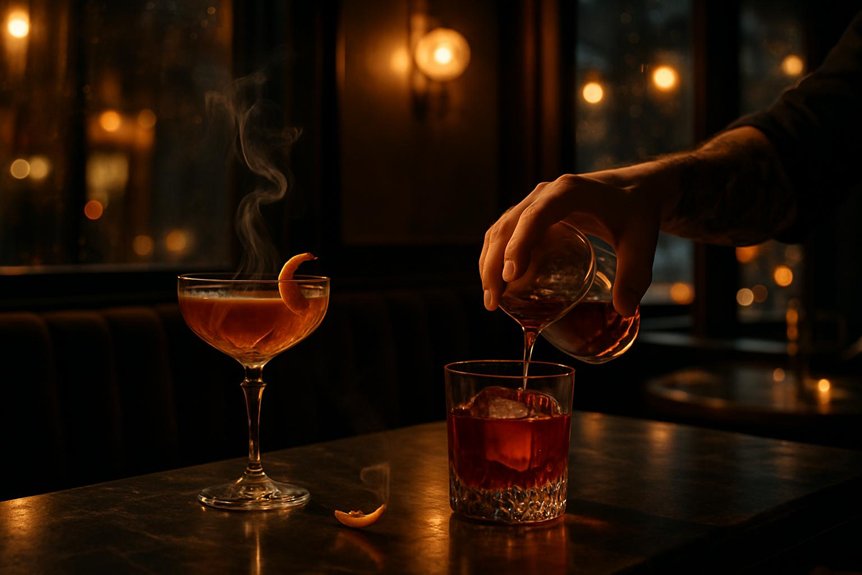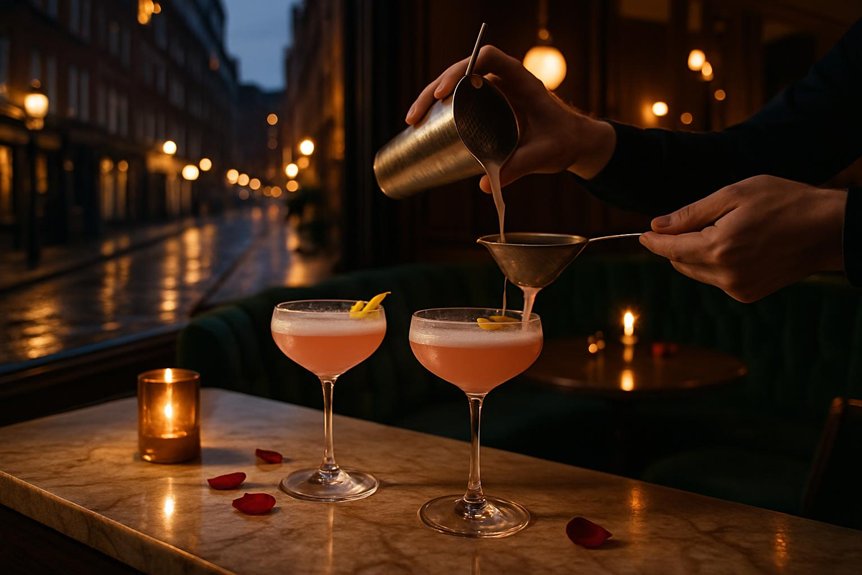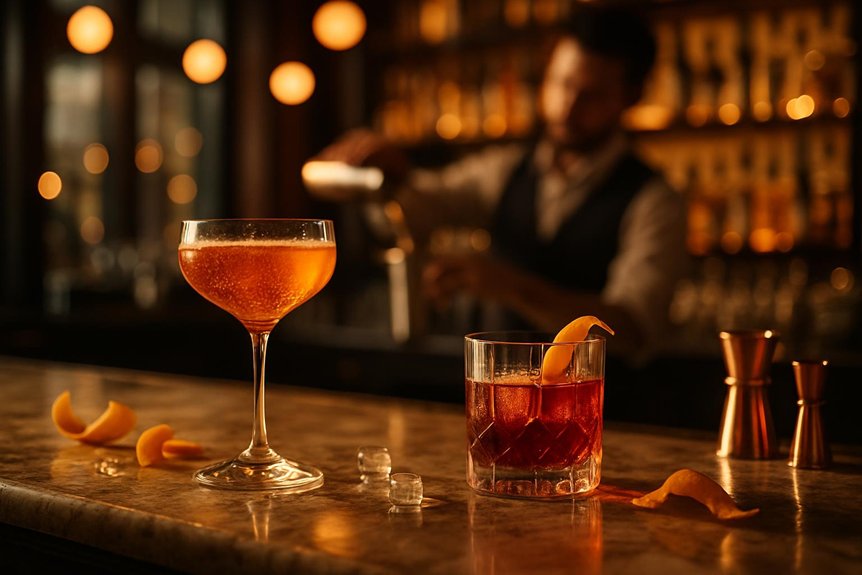

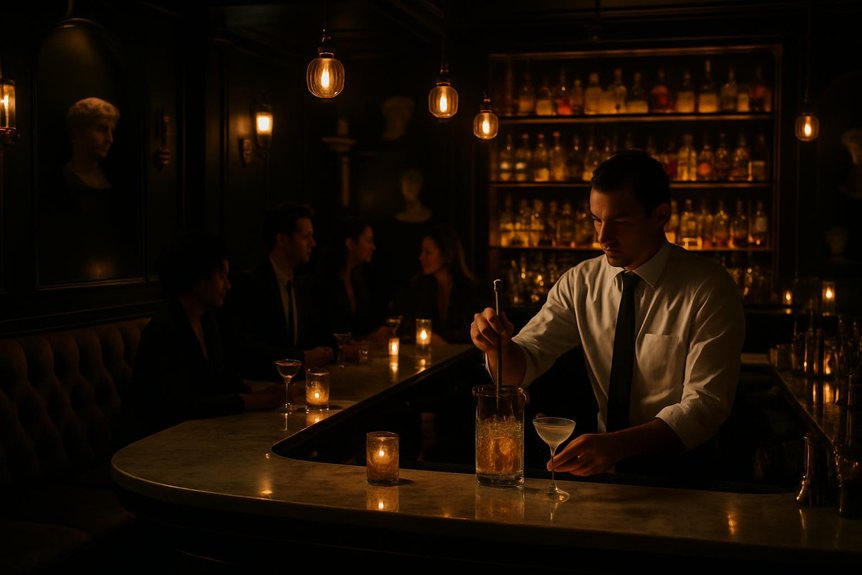
Fitzrovia’s cocktail scene balances polish with personality, and Meraki stands at its center. Greek-inspired spirits meet London technique, shaped by botanicals and precise craft. The room is minimalist yet warm, designed for conversation and late-night ease. Aperitifs lead smoothly into reimagined classics and thoughtful low-ABV options, paired with smart small plates. Nearby galleries and side streets add context and charm. What to order—and when to arrive—can make all the difference.
Meraki’s Signature Cocktails: Greek Spirit, London Edge
Although rooted in Greek tradition, Meraki’s signature cocktails lean decisively modern, pairing Mediterranean botanicals with London’s experimental flair. The bar treats ouzo, mastiha, and grape-based spirits as anchors, then layers citrus, saline, and herbaceous notes with calibrated precision.
Bartenders apply fusion techniques—clarification, rapid infusion, and controlled smoke—to keep flavors bright and textures polished without masking provenance. Meraki’s commitment to quality and sustainability ensures authentic flavors by sourcing the finest ingredients from trusted suppliers and local farmers.
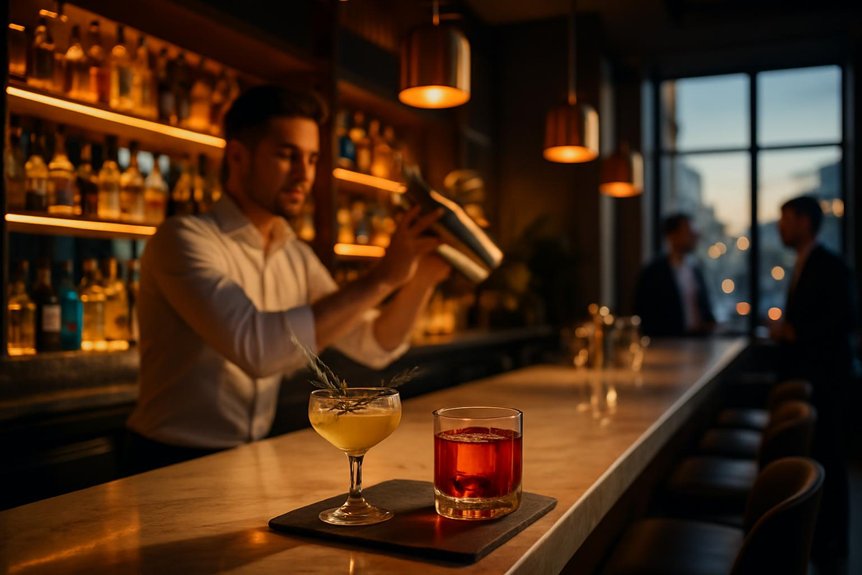
Seasonality guides produce, but balance remains the priority: bitter edges are tuned with floral sweetness; mineral accents lift richer bases. Presentation underscores intent. Glassware essentials—Nick and Nora for aromatics, highballs for length, and chilled coupes for silkier builds—focus temperature, effervescence, and aroma.
Garnishes are purposeful: olive leaf, thyme sprig, or candied lemon, each amplifying a thread in the profile rather than decorating it.
The Art of the Aperitif: Where to Start Your Evening
Fitzrovia’s aperitif culture favors classics—think a crisp Negroni, spritz, or dry Martini to set a balanced tone. Bartenders often steer guests toward low-ABV options that awaken the palate without overwhelming it. Light bites such as olives, anchovy toasts, or citrus-cured seafood provide clean, briny counterpoints that sharpen each first sip. At Meraki, the culinary philosophy emphasizes traditional Mediterranean ingredients with an innovative twist, making it an essential stop for those seeking a unique aperitif experience.
Classic Aperitif Choices
Where to begin when the evening calls for a light, appetite‑sharpening sip? Classic aperitifs set the tone with bright bitterness, citrus lift, and restrained sweetness.
In Fitzrovia’s refined bars, the Martini, Negroni, and Spritz remain essential—crisp, reliable, and quietly theatrical. Attention to Gourmet ice and evolving Glassware trends heightens aroma, dilution, and visual poise, signalling craft before the first taste.
1) Dry Martini: London dry gin, whisper of vermouth, lemon twist; served in chilled stemware to focus botanicals and maintain temperature without over‑dilution.
2) Negroni: Equal parts gin, bitter aperitivo, and sweet vermouth; thick-cut ice tames intensity while preserving texture and perfume.
3) Spritz Variations: Bitter liqueur, sparkling wine, soda; balloon or stemmed glassware amplifies bubbles, citrus oils, and herbaceous notes for an effortless prelude.
Meraki in London is known for its Mediterranean Martini, a signature cocktail that enhances the dining experience with vibrant flavours.
Light Bites Pairing
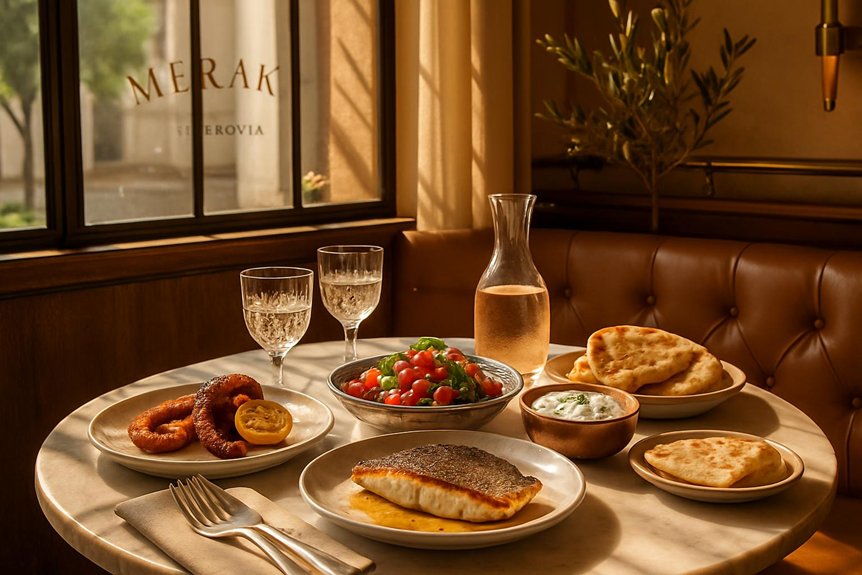
Even before the first sip, the right small plate sets tempo and texture for the aperitif hour. In Fitzrovia, Meraki leans on crisp, saline, and citrus-led bites that mirror the lift of spritzes and dry martinis.
A snack platter of marinated olives, smoked almonds, and lemon-dressed anchovies primes the palate without dulling sparkle.
For pairing cheese, they steer toward brined and bright styles: young feta with thyme honey beside a white Negroni, or tangy manouri against a bitter orange spritz.
Razor-thin taramasalata crostini underline mineral notes in a Champagne cocktail.
Herb-drizzled grilled prawns echo a rosemary gin tonic.
Salt, acid, and gentle fat rule here: calibrate intensity to alcohol strength, keep portions modest, and let texture—crunch, cream, brine—cue the next sip.
Design-Forward Spaces: Interiors That Set the Tone
Muted marble, brushed brass, and leather accents signal minimalist luxe without overshadowing the glass in hand.
Layered lighting—glow from sconces, pools at tables, a softened bar halo—calibrates mood from whisper to buzz.
Clear sightlines and gentle thresholds guide an artful spatial flow, keeping conversations intimate while movement remains effortless.
Minimalist Luxe Materials
A quiet opulence defines Fitzrovia’s most design-forward cocktail bars, where minimalist palettes meet luxe materials to set an immediate tone. Marble, honed concrete, and burnished brass are chosen not for show, but for touch and longevity. These materials align with sustainable choices that elevate minimalist decor without excess.
Edges are crisp, junctions precise, and textures do the speaking: velvety stone, oiled timber, and patinated metal create a restrained richness.
Material honesty is key: unsealed stone reveals mineral veining, while brushed brass warms neutrals, ensuring authenticity over ornament.
Purposeful contrast enhances the design: soft leather against cool terrazzo sharpens silhouettes and frames the bar as a sculptural anchor.
Longevity is considered a form of luxury: responsibly sourced woods, recycled metals, and low-impact finishes demonstrate indulgence through endurance.
These choices give form and conscience equal weight in Fitzrovia’s quietly confident spaces.
Ambient Lighting Layers
Though restrained at first glance, lighting in Fitzrovia’s design-led cocktail bars is layered with intent, treating illumination as architecture. Designers build atmosphere through ambient lighting that softens edges, calibrates warmth, and lets materials speak.
Layered illumination begins with concealed coves and wall washes that establish a calm base, then adds mid-level glow from smoked-glass sconces, and pinpoints highlights on textured plaster or veined marble.
Table lamps with dimmable opacity create intimate pockets without glare.
Color temperature is tuned to cocktails: amber hues amplify spirits’ tones; cooler notes lift botanicals. Lighting controls shift scenes from aperitif hour to late-night hush, maintaining visual comfort and consistent contrast. Reflection is managed—matte finishes absorb, mirror fragments subtly shimmer—so the room feels composed, never overlit.
Artful Spatial Flow
Before a drink is mixed, the room choreographs the experience through deliberate circulation and calibrated thresholds.
At Meraki, artful spatial flow acts as the silent host, guiding guests from street to stool without friction.
Clear sightlines, measured bottlenecks, and acoustically tuned zones create a rhythm that supports conversation, privacy, and anticipation.
This interior design ethos treats movement as material—shaping pauses, pivots, and reveals that elevate each cocktail’s arrival.
1) Processional entry: a compressed vestibule opens into a generous lounge, resetting pace and priming senses.
2) Layered seating: perches near the bar, mid-height banquettes, and tucked alcoves modulate energy and dwell time.
3) Service choreography: concealed back-of-house paths and radial bar stations minimize cross-traffic, ensuring swift pours, calm aisles, and an uninterrupted social current.
Classics Reimagined: Timeless Drinks With Modern Twists
While Fitzrovia’s cocktail scene leans contemporary, its most compelling bars revisit the canon with precision and wit. The neighborhood’s best menus trace historical cocktail evolution, then apply modern bartending techniques to sharpen balance and texture.
A Martini gains minerality from saline micro-doses; a Manhattan shifts with oloroso depth and cocoa bitters; a Daiquiri tightens through clarified lime and calibrated dilution.
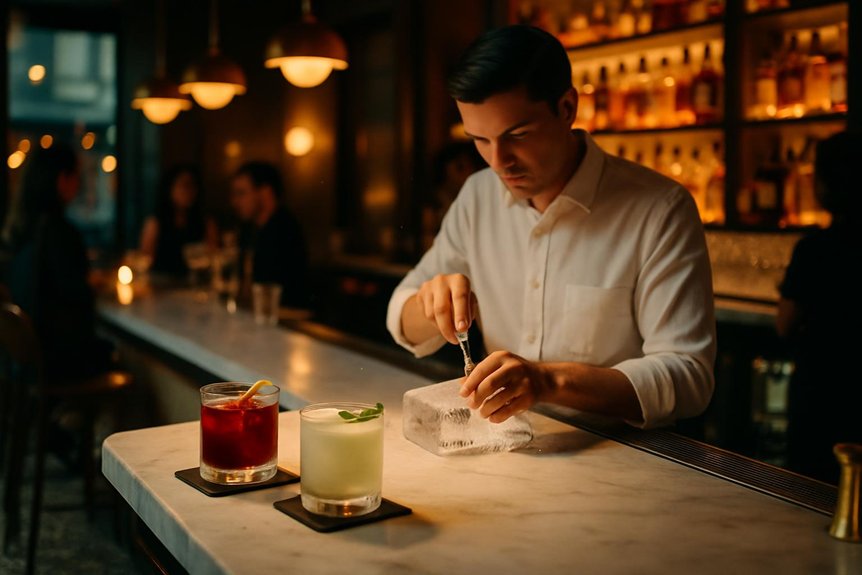
Bartenders build structure first—spirit, sugar, acid, bitter—then layer nuance: split bases, perfumed atomizers, lacto-ferments, and rapid infusions. Ice becomes an ingredient, not a vessel, with directional freezing and exacting cuts.
Classic garnishes turn functional: expressed peels measured by gram, olive brines standardized. The result respects origin stories yet drinks cleaner, drier, and more articulate—heritage translated, not overwritten.
Low- and No-ABV Sips: Flavor Without Compromise
Precision isn’t reserved for boozy builds; the same rigor now shapes Fitzrovia’s low‑ and no‑ABV lists. Bartenders lean into health trends without sacrificing craft, calibrating texture, temperature, and aroma to deliver depth. Citrus oleo, verjus, and saline amplify structure; distillate-free spirits and tea reductions supply spine. The result is refreshment with intention, built on layered flavor profiles and clear purpose.
1) Techniques: clarification for brightness, carbonation for lift, and micro-dosing bitters to contour length without alcohol weight.
2) Ingredients: smoked lapsang, roasted pineapple shrub, Seedlip-style bases, and herb hydrosols deliver complexity and clean finishes.
3) Experiences: pairing menus match low‑ABV aperitivos with briny small plates, while zero‑proof highballs show snap, minerality, and restraint.
Balance, not buzz, defines the sip—and keeps curiosity returning.
Late-Night Energy: Bars for After-Dinner Drinks
After dinner, Fitzrovia shifts gears: lights dim, playlists warm up, and bars trade pre-theatre polish for nocturnal pulse. The mood favors close-knit booths, glowing backbars, and bartenders who can read a table’s energy at a glance.
Late night ambiance is measured in textures—velvet seats, candle halos, low-bass tempos—built to keep conversations unhurried.
Menus pivot toward richer spirits and precise chill, with cocktail innovation driving the second wind: clarified nightcaps, saline-kissed sours, amaro-forward spritzes. Ice becomes architecture; garnishes whisper instead of shout.
Service remains brisk yet unobtrusive, steering guests from bold first pours to softer landings—split pours, mini-Martinis, deft highballs. The promise is simple: calibrated momentum, flavors that stretch past midnight, and a room that holds its hush without losing its heartbeat.
Neighborhood Highlights: Fitzrovia Spots Worth the Stroll
Even without a map, Fitzrovia rewards a slow wander: compact streets fold into pocket-sized squares, and standout bars cluster within easy turns. Between elegant townhouses and brick mews, the neighborhood’s rhythm blends Fitzrovia history with nimble, modern energy.
Murals, galleries, and independent studios thread local art through side streets, offering pre- or post-bar detours that feel spontaneous yet curated.
1) Glance upward on Charlotte Street: carved cornices, blue plaques, and café terraces hint at literary chapters that predate today’s cocktail buzz.
2) Slip toward Rathbone Place: small galleries rotate emerging shows, and windowfront sculptures set the tone for a cultured stroll.
3) Cut across Newman Street to Fitzroy Square: Georgian symmetry frames quiet benches, ideal for pausing between venues and tracing the neighborhood’s layered timeline.
What to Order: Bartender-Backed Picks
While menus shift with seasons and supply, a few bartender favorites consistently show the room at its best. At Meraki, a clarified Paloma—crystalline, grapefruit-bright, lightly saline—signals Mixology mastery without grandstanding.
A saffron gin Martini, stirred cold and expressed with lemon oils, offers an elegant, textural finish. For agave devotees, a smoky‑citrus Oaxaca Old Fashioned balances roasted depth with orange bitters.
Those chasing Cocktail culture classics should seek a split-base Negroni, built with London dry and barrel-aged components for layered bitterness.
A zero‑proof basil gimlet, snapped with verjus, keeps pace without compromise. To close the loop, order the bartender’s seasonal Highball: house cordial, precise carbonation, and featherweight alcohol.
Each choice reveals technique, restraint, and the bar’s point of view—no gimmicks required.
How to Soak Up the Scene: Tips for Style and Timing
Though Fitzrovia rewards spontaneity, the scene shines with a little intent. Observers note that the right timing and look ease access, elevate comfort, and sharpen the experience. Meraki’s neighborhood favors polished ease: smart shoes, tailored layers, and a confident silhouette align with a flexible Dress code that still expects care.
Arrivals just before peak hours—typically 6:30–8:30 p.m.—catch the early hum without the wait, while late seats after 10 offer intimacy and sharper bartender attention.
1) Dress with contrast: one statement piece, restrained elsewhere; avoid loud logos, prioritize texture and fit.
2) Time entry: pre-peak for energy without queues; post-peak for deeper conversations and better bar seats.
3) Read the room: lower voices, phone away, brief compliments; tip promptly to secure consistent service.
Conclusion
As night folds over Fitzrovia, glasses gleam like lanterns, and citrus oils drift through soft jazz and low conversation. At Meraki, botanicals bloom over ice, small plates land like postcards from the Aegean, and candlelight sketches gold along marble. Outside, art-brushed streets hum with footsteps and promise. Inside, time loosens—an aperitif becomes a signature, a signature becomes a story. For those chasing a polished pulse and effortless connection, the evening waits, bright and beautifully poured.