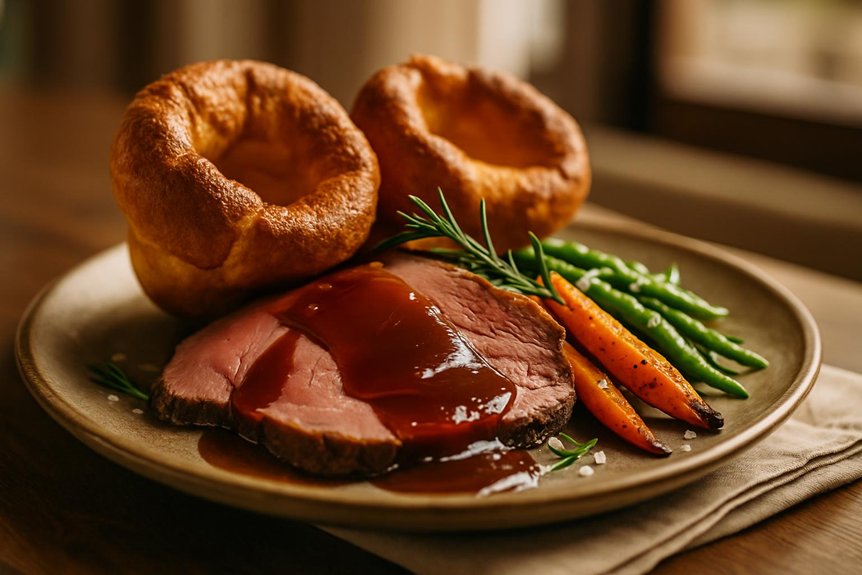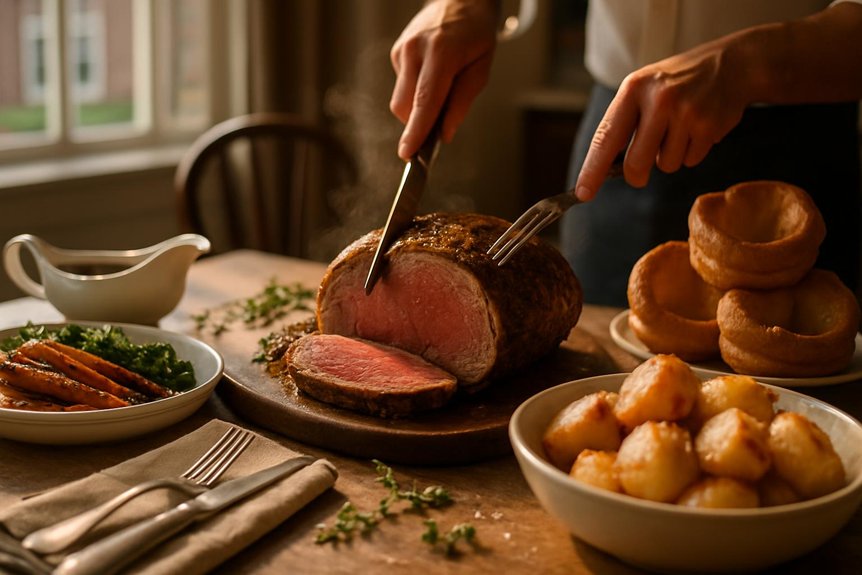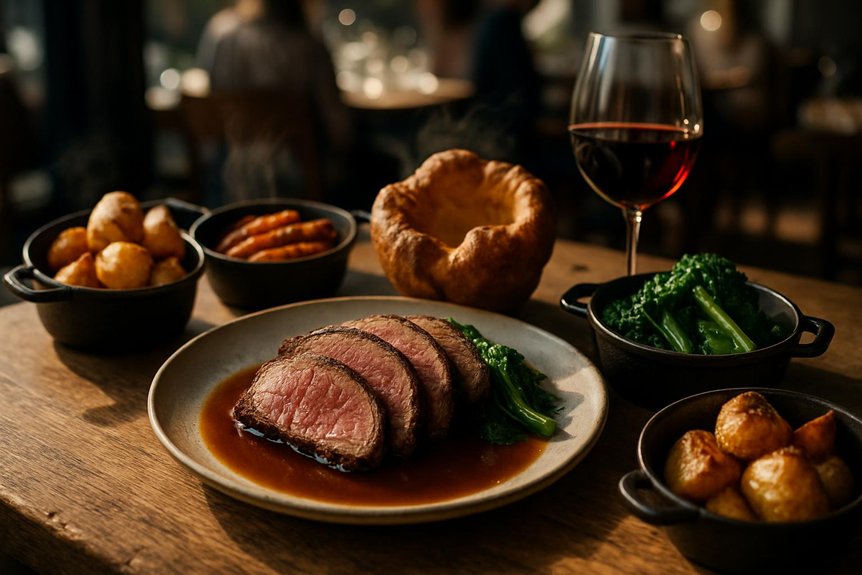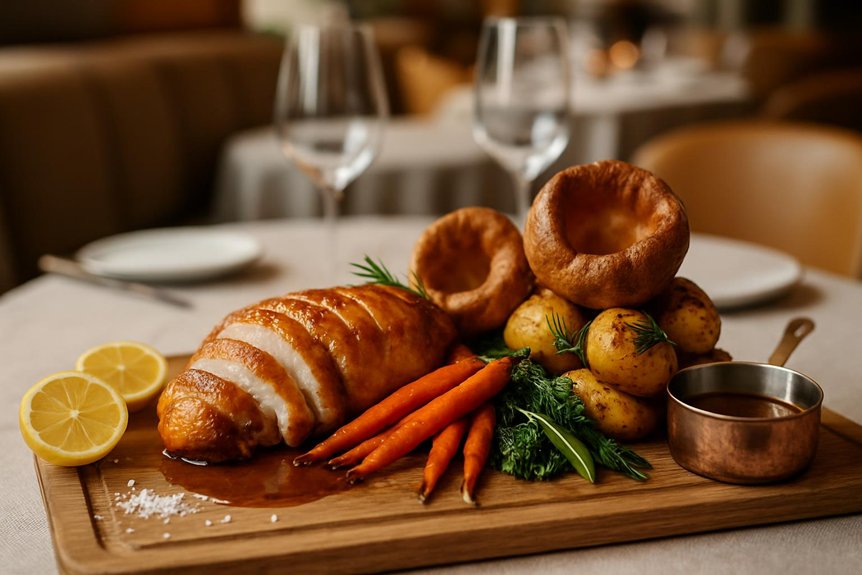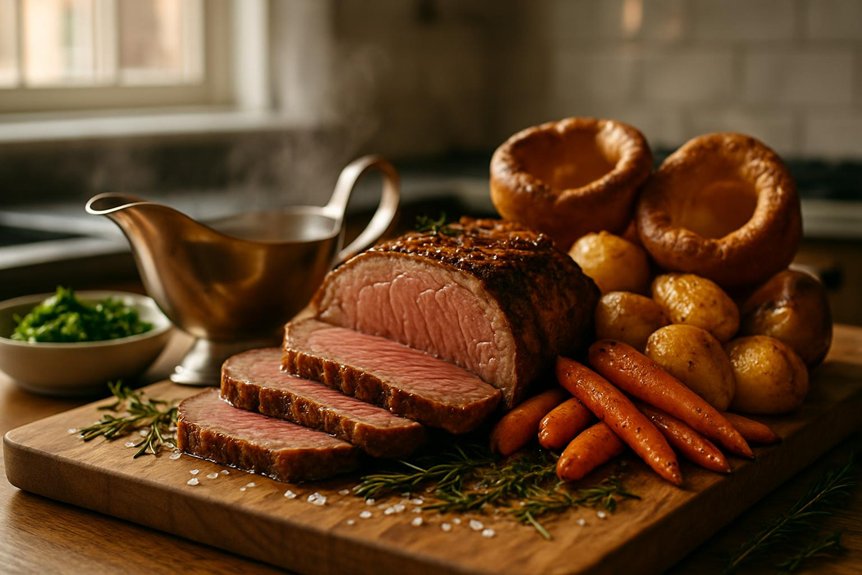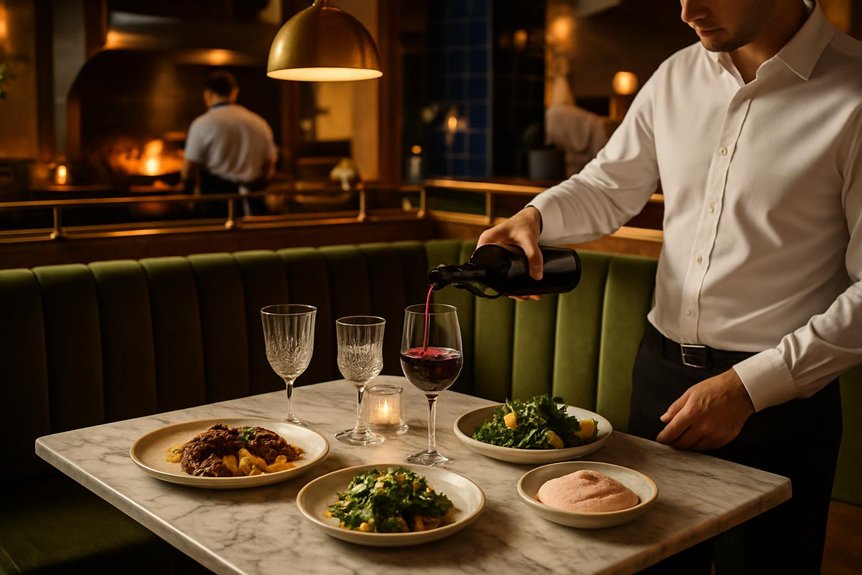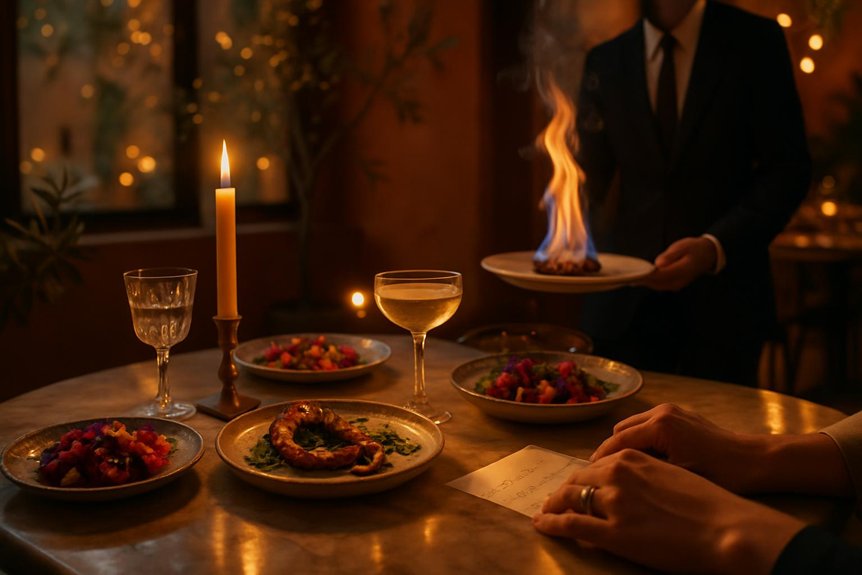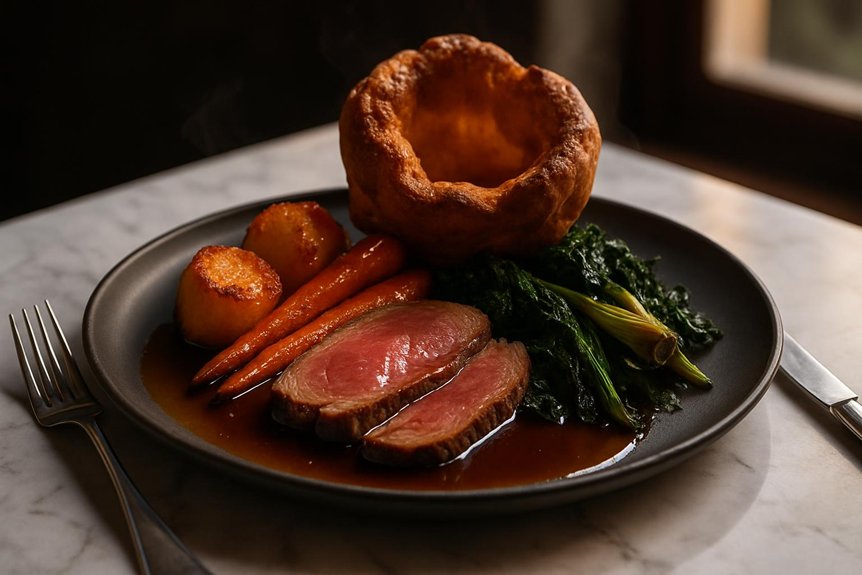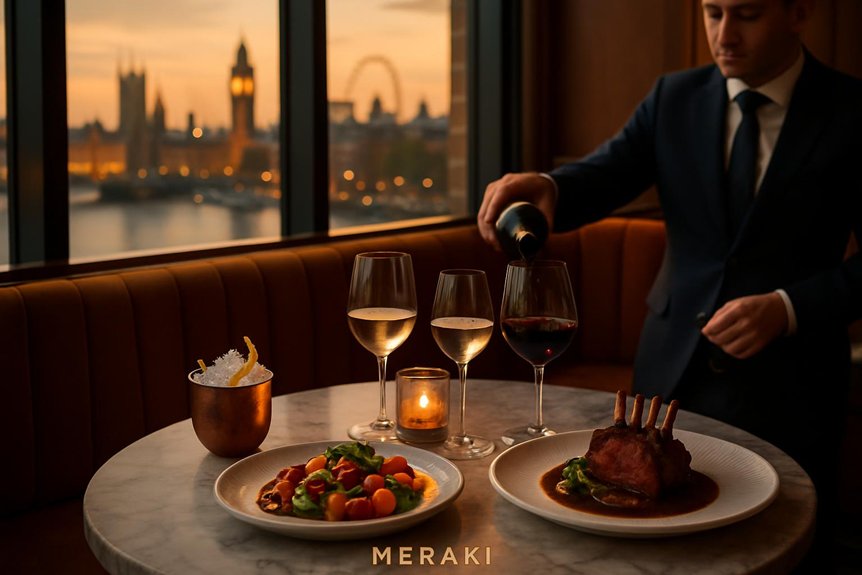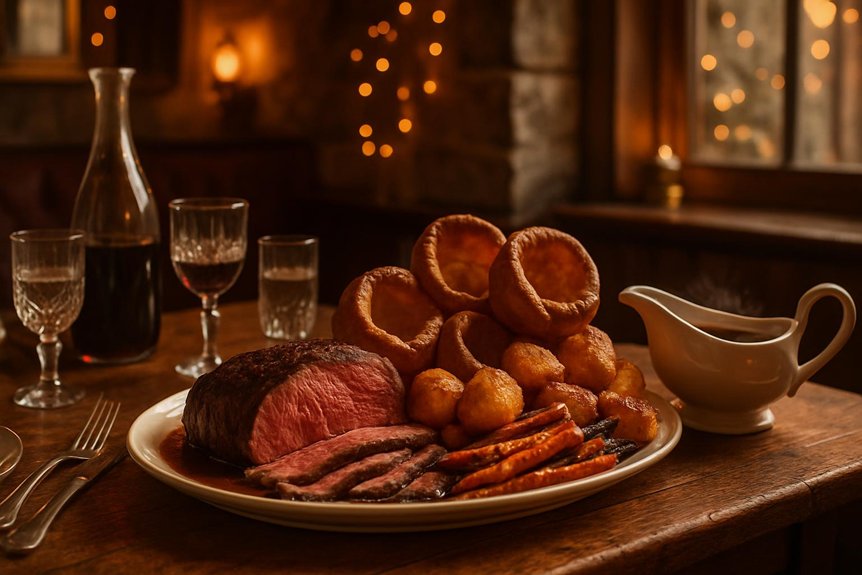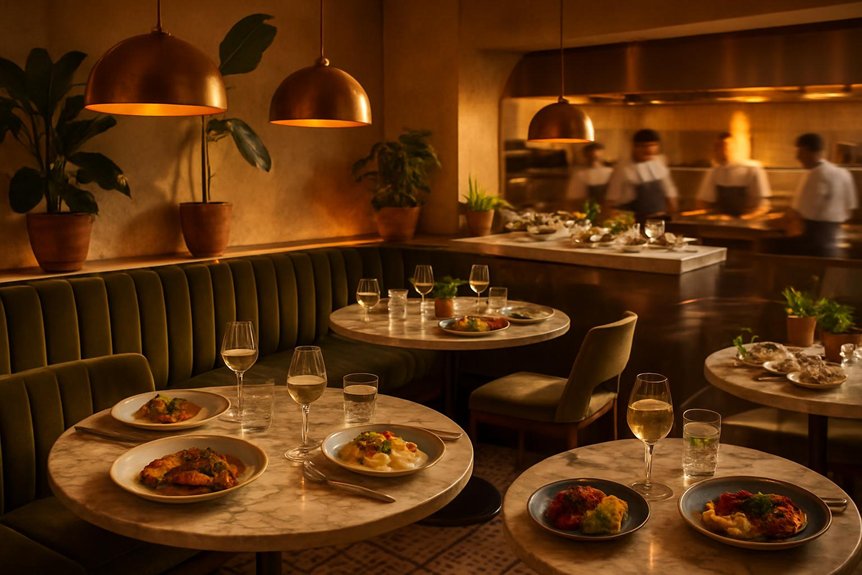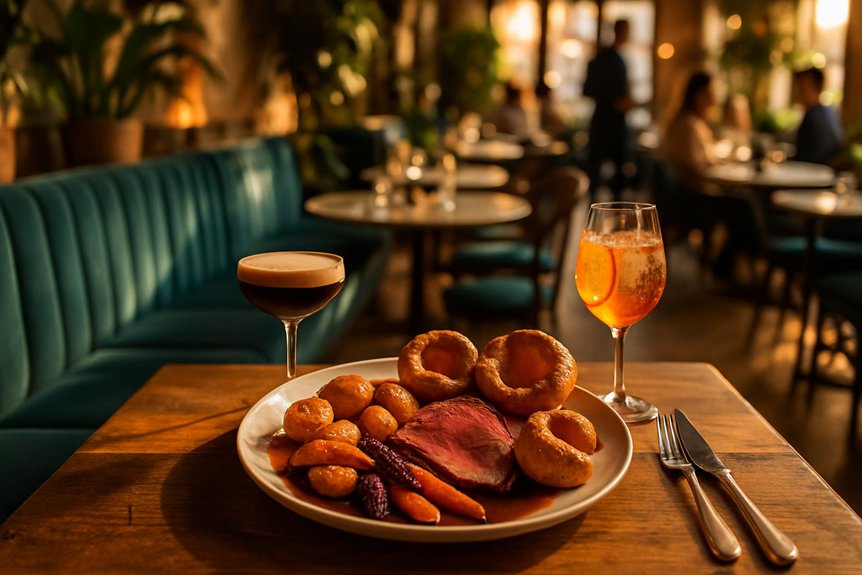

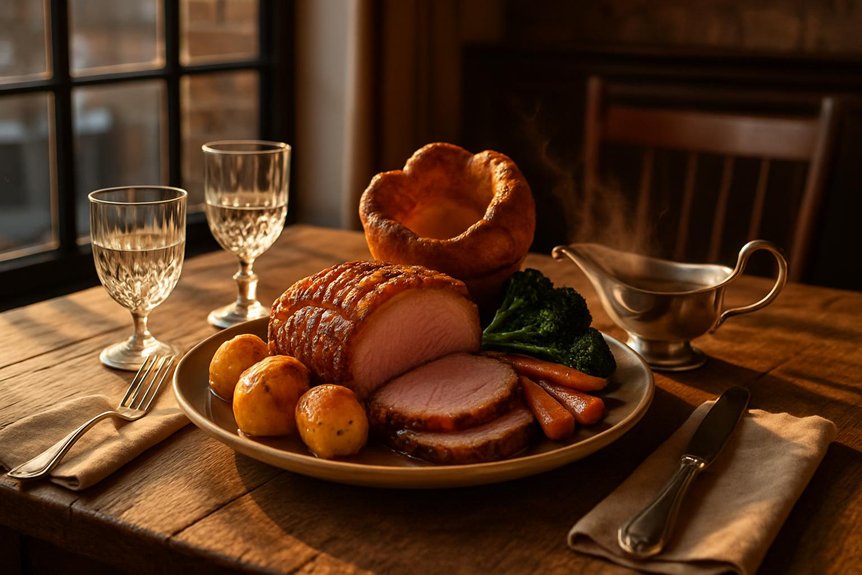
Sunday at Meraki in Fitzrovia is about measured comfort and confident craft. Slow-roasted meats arrive with crisp-edged, fluffy-centered potatoes and seasonal vegetables that hold their own. The gravy is glossy and purposeful. Lighting is warm, conversation relaxed, and service attentive without fuss. Families and groups settle in; couples do too. Wines and cocktails are chosen to support, not distract. There’s a balance here—of texture, pace, and care—that suggests what comes next matters.
A Sunday Ritual in Fitzrovia
How does Fitzrovia settle into Sunday? The neighborhood loosens its pace, letting quiet streets and late mornings set the tone.
Residents and visitors gravitate toward familiar tables, renewing Sunday traditions that frame the week with steady comfort. In this cadence, Meraki emerges as a meeting point, where conversation softens and expectations sharpen around precise hospitality.
The ritual is measured, not hurried.
Doors open to the scent of herbs and citrus, an understated prelude to culinary craftsmanship.
Glassware catches the midday light; service moves with unobtrusive rhythm.
Families, couples, and solitary readers take their places, acknowledging a shared habit without ceremony.
Fitzrovia’s Sunday is not about spectacle, but about reliable touchpoints—neighborhood warmth, considered menus, and a setting that makes time feel deliberately unstacked.
Meraki’s inspiration from the Aegean islands, creating a cosmopolitan Greek atmosphere, adds a unique flair to the typical Sunday experience.
The Art of the Slow Roast
Though time stretches gently in Fitzrovia, the kitchen at Meraki treats it as an ingredient to be shaped. The cooks commit to slow cooking not as nostalgia, but as technique: controlled heat, measured basting, and patient rests. Cuts are seared briefly, then eased into low ovens where collagen yields and juices settle. Seasoning is incremental, a quiet practice of flavor layering. Aromatics—thyme, rosemary, garlic—enter at distinct stages so their oils bloom without bitterness. Stock brushes the surface, evaporating into a glaze that concentrates rather than overwhelms. Fat is rendered deliberately, coaxing richness while preserving clarity in the meat’s character. Precision governs the finish: internal temperatures are checked, juices reabsorbed, and the roast presented at peak tenderness, balanced and intensely savory. Meraki’s commitment to sustainability and creativity is evident in their approach, incorporating eco-friendly practices and ensuring each dish is a flavorful masterpiece.
Potatoes: Crisp Edges, Fluffy Centers
Meraki’s roast potatoes earn their texture from duck fat roasties that shatter at the edges and stay light within. A precise triple-cook technique—parboil, rough-up, then roast—locks in that contrast. Finishing with assertive seasoning and singed herbs adds aromatic snap and clean salinity. Smart dress code is required for all guests at Meraki, creating a stylish and enjoyable dining environment.
Duck Fat Roasties
While the roast’s centerpiece draws the eye, the duck fat roasties quietly steal the plate. Their burnished skins fracture with a fork’s touch, revealing cloud-light centers that absorb gravy without collapsing. The aroma signals intent: richness tempered by restraint.
Served alongside prime cuts, they demonstrate culinary innovation applied to comfort food. Each potato is chosen for firmness, cut for even heat, and treated so edges blister and crackle. They arrive hot, never greasy, a balance that respects dining etiquette by keeping fingers clean and plates composed.
Seasoning is precise—salted to amplify sweetness, flecked with herbs that lift rather than mask. Diners notice the whisper of duck’s depth, an accent rather than a headline, leaving a satisfying, savory echo that anchors the meal.
Triple-Cook Technique
Attention shifts from flavor to method: the potatoes earn their texture through a disciplined triple-cook. First, they are cut to uniform chunks and simmered until the exterior just begins to soften, promoting a starchy surface that later crisps. Drained and lightly roughened, they rest to steam off moisture, a quiet step that prevents sogginess.
The second stage is a controlled blanch in hot fat, setting the exterior and creating micro-fissures that promise crunch. Timing is strict; color remains pale, structure secured. After cooling, the final roast completes the transformation—high heat rendering edges glassy-crisp while interiors stay cloud-light.
This cadence resembles slow cooking without delay, maximizing flavor infusion from the fat and pan drippings, and ensuring consistent contrast: shatter outside, softness within.
Seasoning and Herbs
How best to season a potato engineered for contrast?
He observes that crisp edges crave aggressive seasoning, while fluffy centers reward aromatic restraint. Salt is applied twice: a fine layer post-parboil to roughen surfaces, then flaky crystals after roasting. Pepper waits until the end to avoid bitterness. Spice blends—smoked paprika with coriander or Aleppo with cumin—cling to the starchy roughed exterior, intensifying crunch.
Herbal infusions—rosemary warmed in oil, thyme bruised in butter, bay steeped in stock—perfume the interior without scorching.
- Toss parboiled potatoes in hot fat with salt; add spice blends only for the final 20 minutes.
- Steep herbs in oil, strain, then finish with fresh leaves.
Balance acidity: lemon zest or malt vinegar post-roast.
Finish with flaky salt and warm garlic oil.
Seasonal Veg That Steals the Spotlight
Meraki’s plate turns to seasonal produce, with farm-fresh winter roots offering sweetness and earth.
Heritage greens bring minerality and bite, a counterpoint to the roast’s richness.
Kept simply prepared—roasted, blanched, or butter-glazed—their character leads.
Farm-Fresh Winter Roots
While the roast commands the plate, winter roots quietly deliver the character. At Meraki, the winter harvest determines the palette: parsnips caramelize to honeyed edges, carrots retain snap beneath glossed butter, and celeriac offers a nutty bass note.
Root vegetable prep favors restraint—slow-roasting, light glazing, and precise seasoning—so sugars bloom and textures hold. The result is balance: earthy sweetness meets the roast’s savory depth without crowding it.
- Roasted parsnips with thyme and lemon zest brighten the plate without added sweetness.
- Carrots finished with brown butter and cumin seed provide warmth and lift.
- Celeriac wedges, roasted then brushed with verjus, cut through richness neatly.
- Swede coins, charred and dressed with smoked salt, add subtle campfire notes.
Nothing else needs flourish; timing and heat do the talking.
Heritage Greens, Simply Prepared
Even as the roast anchors the meal, heritage greens bring the clean, vivid counterpoint. At Meraki, the plate leans into seasonality: cavolo nero wilted with lemon, sprouting broccoli kissed by smoke, and buttered hispi cabbage with sea salt. Their restraint signals confidence.
Nothing obscures the bite and chlorophyll sweetness; heat and acidity do the work.
These greens trace a line from urban gardening plots to enduring culinary traditions. Seed choices favor old cultivars for texture and mineral depth. Preparation stays spare—brief blanch, quick char, a splash of good oil—so each leaf keeps structure.
The result is balance, not garnish. Fat from the roast finds a fresh foil, gravy gains lift, and diners register why simplicity, applied with care, lets vegetables lead.
Gravy Worth Lingering Over
How does a roast earn its reputation without a gravy that lingers on the palate? Here, the sauce is more than garnish; it is the anchor of the plate. Observers note a silken pour, the kind that clings without cloying, signaling thoughtful gravy consistency.
Flavor moves in measured steps: roasted bones, vegetable sweetness, and a restrained hit of acidity. Nothing shouts; the seasoning balance holds the line, letting meat and greens stay center stage. One spoonful invites another, not with novelty, but with quiet depth.
- Slow-reduced stock delivers body without starchy heaviness.
- A final skim removes bitterness, keeping flavors clean.
- Controlled salinity supports, rather than masks, roasted notes.
- Gentle gloss amplifies texture, ensuring every bite finishes warm and savory.
Greek Spirit Meets British Comfort
Though rooted in Sunday tradition, the plate carries a quiet Athenian accent: lemon-bright jus cutting through rich drippings, oregano-laced crumbs lending lift, and olive oil softening edges where butter might shout.
This is British comfort reframed with Mediterranean flavors, not a rewrite of the roast but a tuned harmony. Roast lamb leans into thyme and garlic; potatoes catch citrus and sea salt; greens find smoke from the grill rather than cream.
The restaurant ambiance furthers the dialogue—light woods, white stone, and an easy glow that feels island-clear while remaining London-grounded.
Plates arrive with restraint: crisp fat, tender centers, a finish of wild herbs. The result is satisfying without heaviness, a Sunday roast that refreshes the palate while honoring the familiar cadence of tradition.
Perfect for Families and Gatherings
Why do shared platters and unfussy pacing make this roast feel built for a crowd? Because the service encourages passing dishes, second helpings, and conversation without rush.
Meraki’s Indoor dining layout supports long tables, prams, and multigenerational seating, aligning with Sunday traditions that prize togetherness.
Portions arrive family-style—crisp potatoes, seasonal veg, and carved meats—so no one negotiates plate space or timing.
Staff pace courses sensibly, allowing late arrivals to settle and children to reset between bites.
The atmosphere remains lively yet controlled, ideal for birthdays, reunions, or easygoing catch-ups.
- Generous sharing boards reduce ordering friction for large parties
- Kid-friendly sides and mild sauces keep everyone included
- Flexible seating adapts to strollers and highchairs
- Relaxed timing supports conversation and second rounds
Wines and Cocktails to Match the Roast
With the table set for sharing, the drinks list follows suit, offering bottles and batches that suit a communal roast. The approach favors flexibility: magnums of robust reds for beef, lighter reds or fuller-bodied rosés for lamb, and mineral-driven whites for chicken.
These wine pairings lean on balance—acidity to cut richness, tannin to frame char, and aromatics to lift herb-laced sides.
Cocktail options keep pace without overwhelming the plate. A clarified whisky highball offers smoke and brightness; a gin-based spritz brings citrus and herbs; a sherry-tonic adds savory depth.
For gravy-forward bites, a lightly bitter Negroni variation delivers grip, while an apple-forward, low-ABV spritz refreshes between courses.
Non-alcoholic versions mirror structure, ensuring every guest finds a complementary sip.
Cozy Atmosphere With Modern Flair
Soft lighting and natural textures establish warm, inviting interiors that welcome lingering conversation.
Clean lines and subtle coastal hues introduce contemporary Mediterranean touches without overwhelming the room.
Together, they set a relaxed stage that complements the roast’s comfort and elegance.
Warm, Inviting Interiors
Although the menu draws diners in, the room keeps them lingering: Meraki’s dining space balances warmth and modernity with low, amber lighting, textured wood, and clean-lined furniture. The interior decor favors tactile materials and restrained color, creating an ambiance setting that feels calm yet alive.
Upholstered banquettes soften acoustics, while polished surfaces reflect a gentle glow rather than glare. Sightlines remain open, so the dining room reads as spacious without losing intimacy.
Subtle greenery and curated art add personality without visual noise. Every element supports relaxed conversation and unhurried Sunday meals, inviting guests to settle in and savor.
- Soft lighting that flatters plates and faces
- Comfortable seating with supportive backs
- Thoughtful table spacing for privacy
- Natural textures that warm modern lines
Contemporary Mediterranean Touches
Warmth extends beyond the lighting into details that nod to the Mediterranean: sun-bleached oak, chalky plaster, and bronze accents evoke coastal restraint without pastiche. The room’s palette stays muted, letting textures speak—linen banquettes, stoneware vessels, and discreet greenery suggest breeze and shoreline rather than theme.
This atmosphere supports the menu’s gentle flavor fusion: rosemary and citrus zest mingle with Mediterranean spices, yet the Sunday joint remains recognizable. Ceramic plates with matte glazes frame the food without glare; tapered candles and low-slung pendants control sightlines and tempo.
The space features contemporary lines that keep the setting crisp, so the roast’s tradition sits comfortably beside modern cues. Service choreography is unhurried but efficient, reinforcing calm. The result is a composed stage where comfort reads modern, and modern reads inviting.
How to Book and When to Go
When is the best time to secure a table for Meraki’s Sunday roast? Peak demand lands between 1–3 p.m., so reservations should be made 10–14 days ahead, especially for groups.
Early seating at noon offers calmer service and faster kitchen cadence. Late afternoon provides a quieter room and lingering desserts.
Online booking opens rolling two weeks out, with a few walk-in seats held for off-peak arrivals.
- Book with a note for menu customization to accommodate dietary needs without compromising roast essentials.
- Ask about sustainable sourcing on the day; seasonal sides rotate based on market availability.
- Choose early slots for families and sharper pacing; late slots suit unhurried conversations.
- Set an alert for cancellation releases 24–48 hours prior; prime tables often reappear.
Conclusion
As the last forkful fades, Meraki’s Sunday lunch feels like a warmly lit postcard from the Mediterranean, sealed with rosemary and good company. Slow-roasted aromas linger like a gentle chorus, while triple-cooked potatoes crackle with quiet applause. Seasonal vegetables glow in autumnal hues, and glossy gravy draws the scene together like velvet ribbon. Families lean in, laughter rising like steam. In Fitzrovia’s soft glow, Sunday finds its stride—unhurried, generous, and elegantly undone—an invitation to return before the week begins.