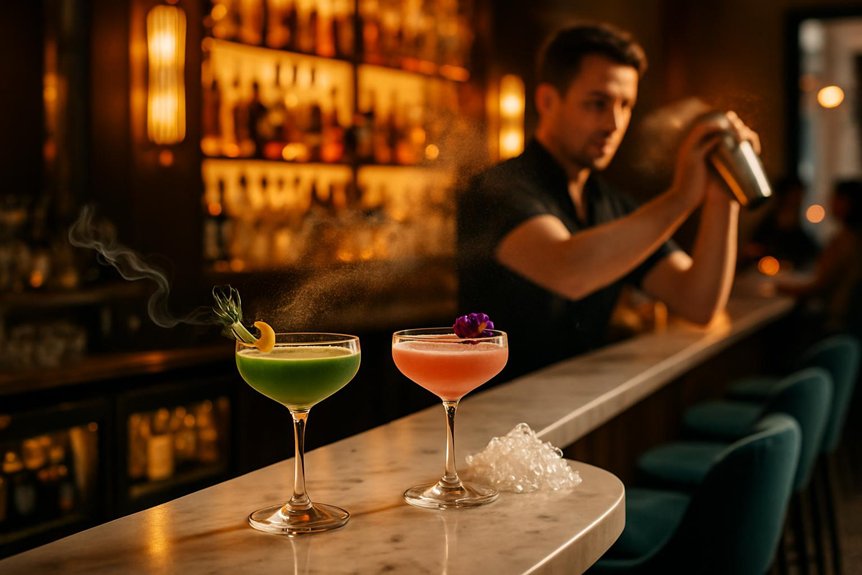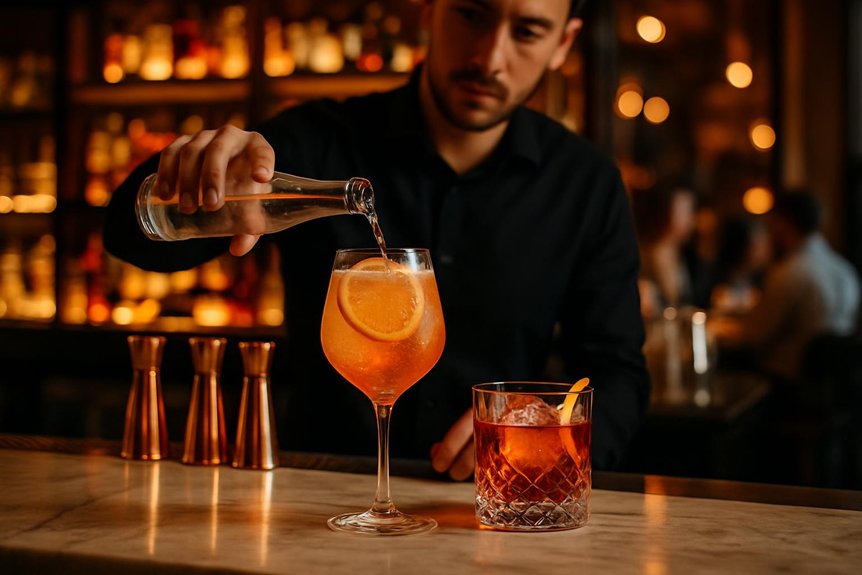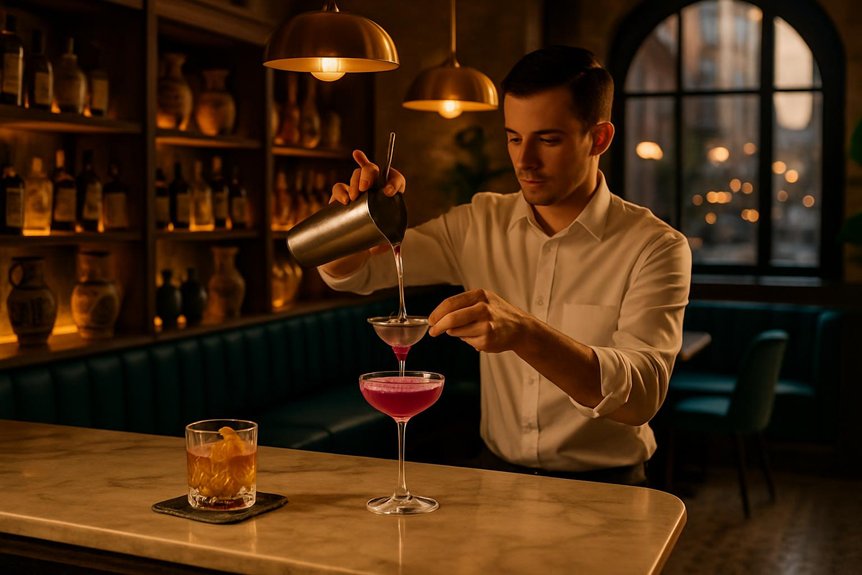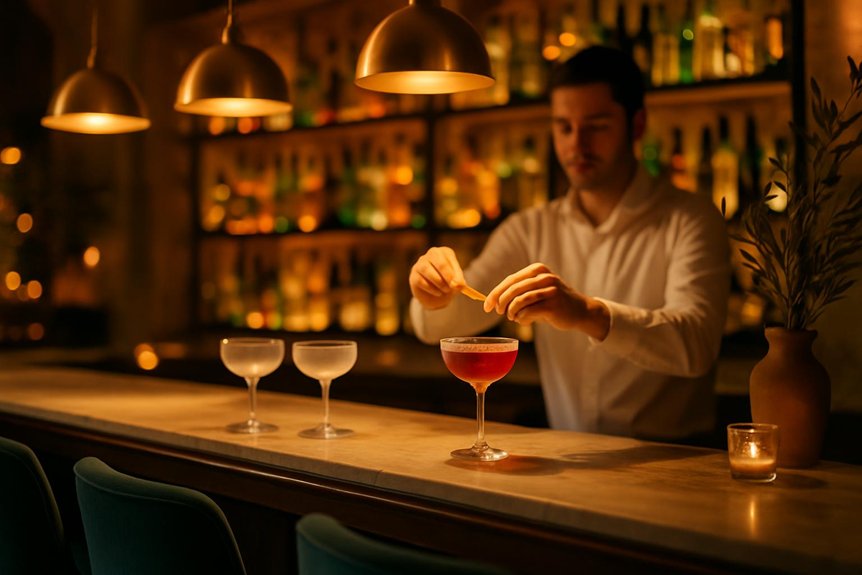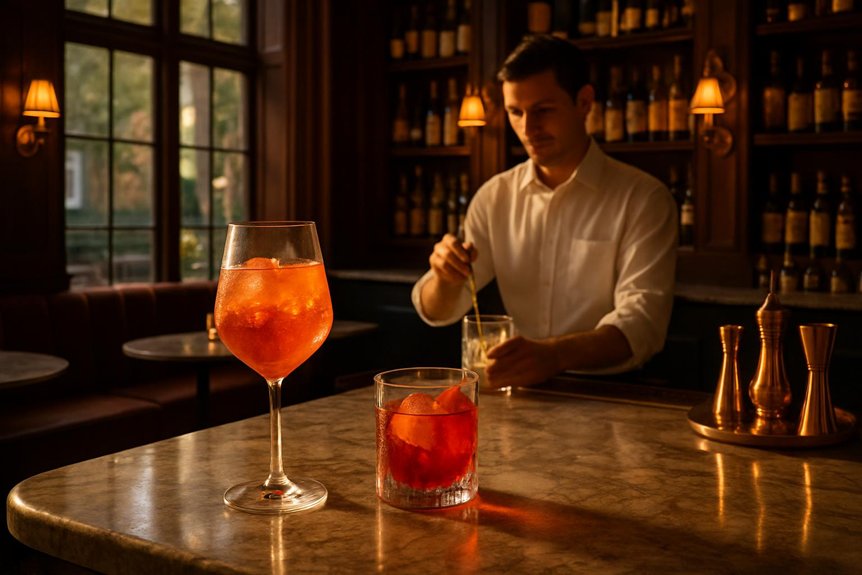

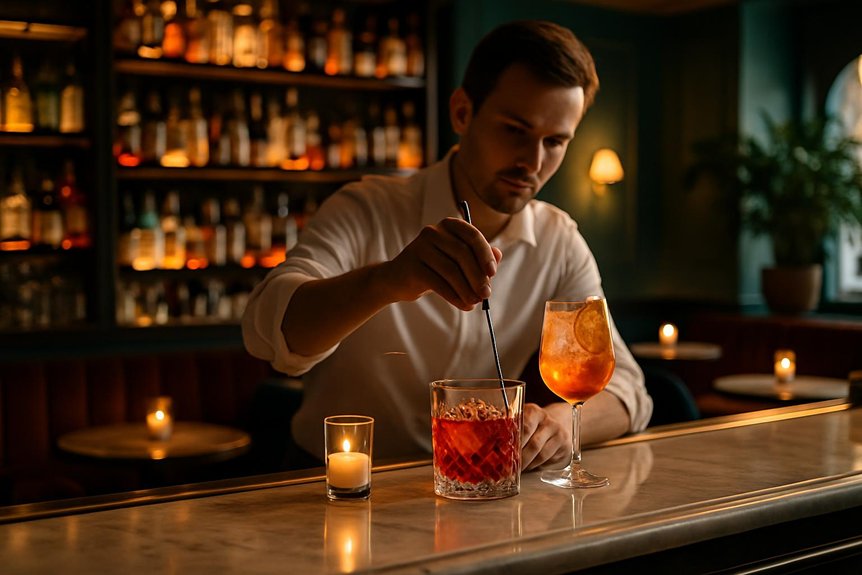
Fitzrovia’s cocktail scene favors restraint over spectacle. Discreet doorways, low light, and attentive pours set the tone. Spritzes arrive crisp, often clarified, while Negronis lean precise and bitter-sweet. Bartenders refine classics with quiet technique—botanical infusions, clean citrus, measured dilution. The mood suits an unhurried night that starts softly and deepens by the glass. With peak-hour tactics, seasonal menus, and a few names to note, the map draws itself—almost.
The Fitzrovia Mood: Where to Start Your Night
Although Fitzrovia sits between Soho’s thrum and Bloomsbury’s calm, its own nightlife opens with a measured confidence: low-lit rooms, polished bars, and bartenders who prize balance over bravado. The mood invites a considered beginning—arrivals at twilight, unhurried conversation, and an eye for detail.
Fitzrovia history lingers in quiet corners, where converted townhouses and discreet basements frame intimate stools and marble counters. Local art punctuates walls, guiding patrons toward seats that feel intentional rather than performative.
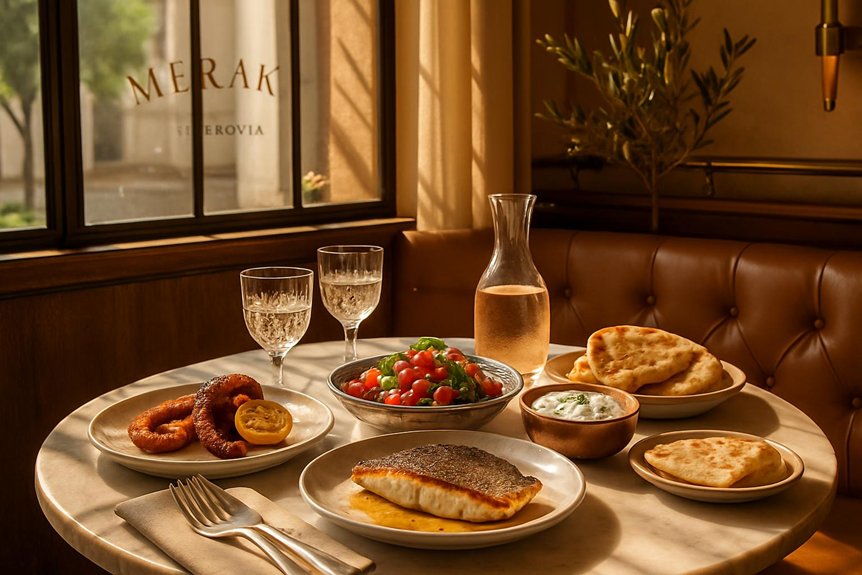
Start with venues that favor restrained playlists and graceful service, the kind that lets glassware sing softly against wood. Choose a first stop near Charlotte Street or Rathbone Place, then drift by foot; the neighborhood rewards short walks, measured steps, and an appetite for nuance. Experience the cosmopolitan Greek atmosphere at Meraki, where the open kitchen and sophisticated ambiance enhance your dining experience.
Essential Sips: Signature Spritzes Worth the Hype
Fitzrovia’s spritz game leans sharp and bright with seasonal citrus leading the charge. For easy sipping, low‑ABV aperitivo options keep the pace without sacrificing flavor. Those seeking complexity find bittersweet botanical blends that balance herbaceous bite with sparkling lift. Guests can unwind in the cozy atmosphere at Meraki, which enhances the overall dining experience.
Seasonal Citrus Spritzes
When the city tilts toward brighter skies, attention shifts to citrus-driven spritzes that balance sparkle with bite. Fitzrovia bars lean into Citrus flavor profiles with laser focus: Amalfi lemon for lift, pink grapefruit for saline tang, blood orange for mellow sweetness, yuzu for perfumed zip. Texture matters; high-pressure carbonation and precise dilution give orchard notes a clean runway. Cocktail ingredient innovations keep the format fresh. Clarified citrus blends sharpen hue and brightness; saline solutions outline bitterness; oleo saccharum adds peel depth without pith. Many bars split bases—vermouth with bitter aperitif, or dry sherry with citrus amaro—to frame zest while keeping bubbles energetic. Garnishes are purposeful: expressed peels, citrus leaf, or a dusting of dehydrated zest to tether aroma to effervescence. Meraki’s commitment to quality ensures that each cocktail is crafted with the finest ingredients, highlighting seasonal flavors and innovative combinations.
Low-Abv Aperitivo Picks
A handful of low-ABV aperitivo spritzes define the neighborhood’s early-evening rhythm, favoring nuance over knockback.
Fitzrovia’s bars lean into lighter pours—vermouth-forward, fortified-wine spritzes, and citrus-kissed amaro substitutes—keeping conversation bright and palates alert.
Bitter edges are softened by bubbles; saline and orchard notes ride alongside precise cocktail aromatics.
Mocktail pairings mirror profiles without sacrificing structure, letting nondrinkers track the same journey.
- Vermouth & Tonic: bianco vermouth, tonic, lemon oils; crisp herbal lift and subdued sweetness.
- Sherry Spritz: fino or amontillado with soda and green olive; dry, nutty, eminently snack-friendly.
- Aperitivo Rosato Highball: pink aperitif, grapefruit peel, charged water; floral, zesty, clean.
- Bergamot Americano: gentler aperitif, bergamot twist, lengthened with soda; perfume-led refreshment.
Service favors chilled stemware, measured dilution, and unfussy garnish.
Bittersweet Botanical Blends
Though sweetness brushes the rim, bitterness carries the melody in these headline spritzes—botanical cores stretched with precise bubbles and salt-lean garnishes.
Across Fitzrovia’s bars, clarity rules: Infused spirits deliver depth without weight, while restrained sweetness lets herbal edges speak. Citrus oils, saline mists, and tonic textures frame vermouths and amari, ensuring stamina from first sip to fade.
Menus favor bitter-orange, gentian, and wormwood builds, lifted by cool fizz and tight ice. Botanical garnishes—rosemary skewers, bay leaves, pink peppercorns—signal intent and modulate aroma on contact.
Bartenders lean on clarified liqueurs, grapefruit bitters, and measured effervescence to keep profiles linear, not loud. The result: spritzes that refresh yet linger—clean, mineral, and quietly complex—made for unhurried intervals between daylight and neon.
Negroni Nirvana: Bars Nailing the Bitter-Sweet Balance
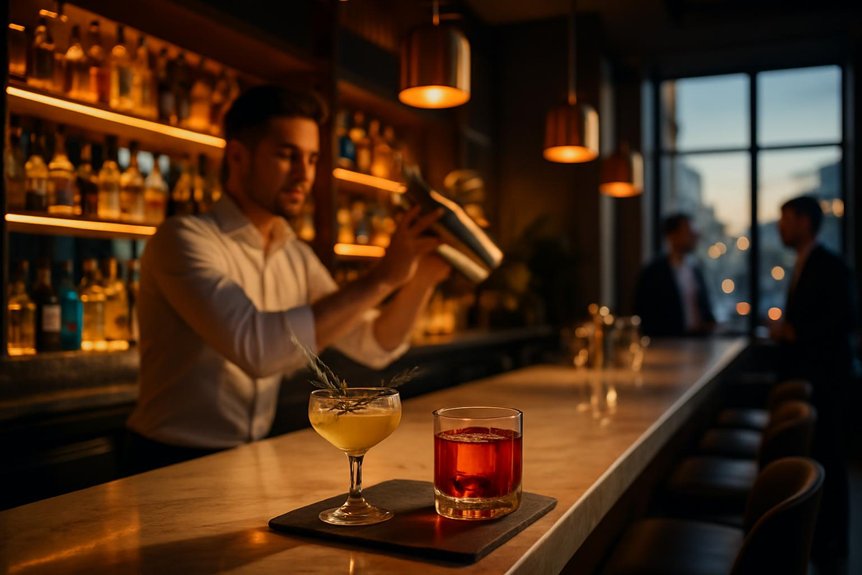
Even before the first sip, the city’s bitter-sweet benchmark reveals itself in Fitzrovia’s meticulous Negronis: measured pours of robust gin, assertive Campari, and vermouth chosen for spine rather than sweetness.
Bartenders privilege dilution, temperature, and texture, letting orange oil frame the bite. Some studios apply molecular mixology—clarified vermouths, fat-washed gins, saline mists—to emphasize clarity without softening the bitterness.
Others lean into barista collaborations, integrating cold-brew reductions or cascara syrups to underscore Campari’s citrus-pith resolve.
Ice is sculpted, not scooped; garnishes are disciplined, never decorative.
1) Ratio discipline: 1:1:1 remains the control, with vermouth swapped for drier, oak-influenced bottlings.
2) Texture first: dense, single cubes ensure slow bloom.
3) Citrus strategy: pared peels, no pith.
4) Bitterness management: saline and coffee elements amplify structure, not sweetness.
Hidden Counters and Candlelit Corners
In Fitzrovia, certain bars hide behind speakeasy-style entrances, rewarding the observant with a discreet welcome.
Inside, intimate nooks offer small groups privacy without sacrificing atmosphere.
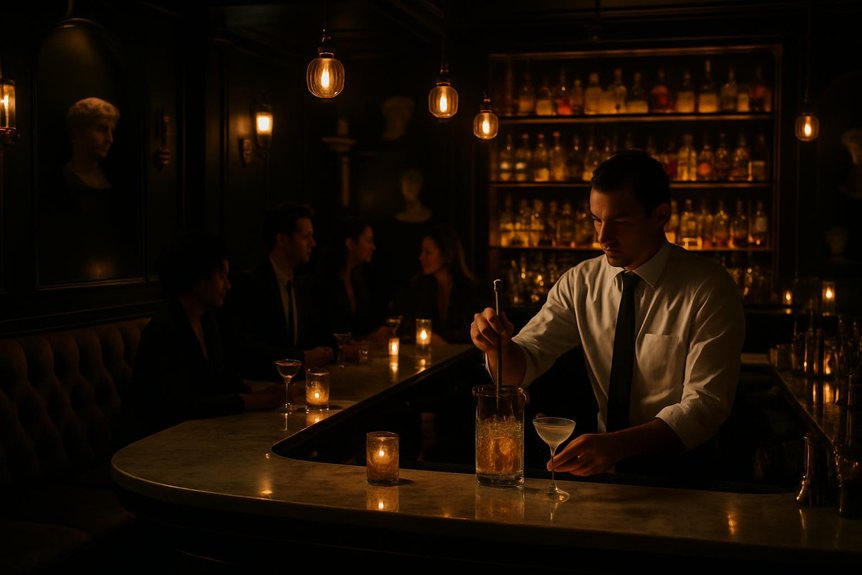
Low-light ambience ties it together, softening edges and setting a measured, unhurried pace.
Speakeasy-style Entrances
While Fitzrovia hums with visible cocktail spots, its most compelling bars hide behind unmarked doors, velvet curtains, and discreet stairwells.
The district favors hidden entrances that turn arrival into ritual: a buzzer beside a blank facade, a basement hatch beneath a shuttered shopfront, a bookshelf that swings to reveal a bar glowing in speakeasy decor. These thresholds frame the sip that follows, filtering bustle into hush and spotlighting craft over spectacle.
- Scan for subtle cues: a brass plaque, a dimly lit bell, or a doorman guarding “private” stairs.
- Expect misdirection—false corridors and decoy rooms heighten discovery.
- Mind booking notes; entry instructions often hide in confirmation emails.
- Dress with intent; door teams reward composed guests and small groups.
Intimate Nooks
A hush settles where Fitzrovia’s bars taper into alcoves: two-stool counters tucked behind pillars, banquettes masked by drapes, and corner tables lit by a single votive.
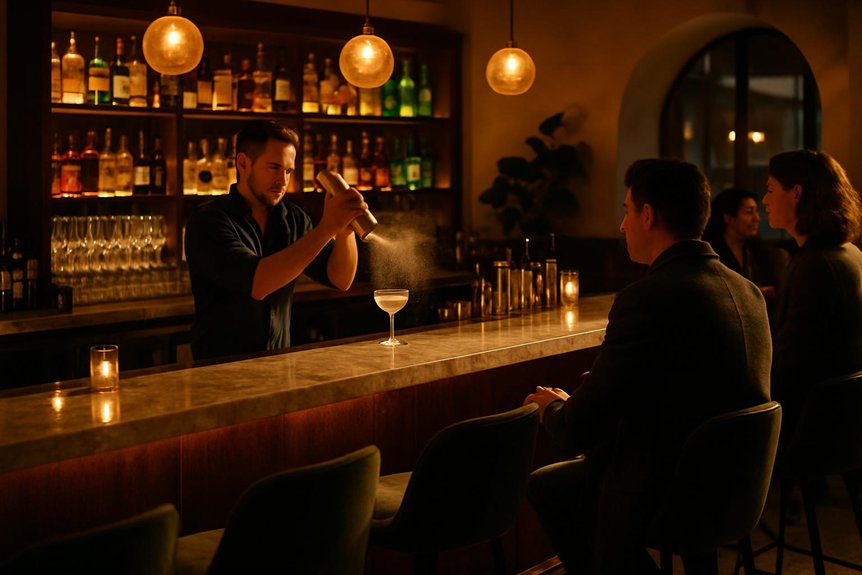
From these hideaways, the scene narrows to essentials: measured pours, soft exchanges, and the disciplined grace of bartending techniques revealed at close range.
Here, cocktail presentation is scrutinized—frosted glassware beading delicately, citrus oils expressed with intent, and garnishes placed for balance rather than flourish.
These intimate nooks invite focus.
Guests watch a stir build to clarity or a shake snap to chill, then pause as the drink rests and settles.
The bartender’s proximity becomes part of the ritual, a quiet choreography that rewards attention.
Privacy isn’t spectacle; it’s precision made visible, one carefully made drink at a time.
Low-Light Ambience
Though the street outside blurs into neon and headlight, Fitzrovia’s low-light bars compress the world to pools of amber and shadow. Here, ambient lighting guides the eye to hidden counters, where glassware glints like small constellations. Candlelight skims marble and wood, mapping quiet territory for unhurried conversation. Cozy furnishings absorb the city’s clatter, softening edges; velvet and leather invite stillness while bartenders work in half-tones.
- 1) Dimmer-set ambient lighting shapes pace, encouraging slower sips and measured dialogue.
- 2) Cozy furnishings anchor posture, allowing attention to settle on aroma, texture, and finish.
- 3) Concealed backbars keep focus on the glass, not the spectacle.
- 4) Candlelit corners create micro-stages, isolating each drink as the scene’s central actor.
Bartenders to Know and the Classics They’re Rewriting
Fitzrovia’s bar scene is shaped by a handful of exacting bartenders who treat the canon as a blueprint, not a cage. They move with quiet authority, enforcing bar etiquette without fuss: no hovering elbows at service stations, clear signals when ordering, and a respectful pause for the stir.
Their reputations rest on concise rewrites of classics. One trims a Negroni with cacao-washed gin, balanced to dry restraint. Another builds a Martini with saline and lemon oils, favoring cold clarity over theatrics.
Cocktail garnishes are purposeful: grapefruit mist for lift, briny olives for tension, a restrained cherry only when sweetness earns it.
Conversation skews technical—dilution, texture, proof—yet remains hospitable, proof that innovation thrives when manners and method align.
Seasonal Menus and Experimental Flavor Detours
Each quarter brings tight, theme-led menus that test boundaries without losing balance. Meraki’s Fitzrovia circuit prizes seasonal ingredient pairing, treating produce like a rotating palette: spruce tips meet gin in spring; roasted stone fruit deepens agave come late summer.
Experimental detours favor controlled risk—acid-adjusted juices, saline tweaks, and clarified bases keep textures clean while flavors pivot. Bartenders lean on innovative garnish techniques to telegraph intent: vapor-scented peels, dehydrated tincture chips, and micro-herb dustings cue the palate before the first sip.
- Citrus migrations: yuzu to bergamot trace winter to early spring.
- Fermentation accents: kefir whey, tepache, and shio koji for quiet umami.
- Low-waste cords: candied pith, shrub stems, spent-spice syrups.
- Textural play: nitro-whipped foams, milk-wash silk, and fine bubble calibration.
How to Navigate Peak Hours, Reservations, and Walk-Ins
While the neighborhood hum builds early, the true crush lands Thursday to Saturday from 7–10 p.m., when counter seats and snug banquettes turn over slowly. Savvy guests book a week ahead for larger parties; duos can often secure bar perches by arriving before 6 or after 10. Walk-ins should check digital waitlists and accept standing sips near the pass—bartenders sequence orders efficiently.
Reservations typically hold for 10–15 minutes; confirm policies on grace periods and maximum stay. Preorders help during peak hours, especially for stirred classics and botanical infusions that require measured dilution.
Keep pairing etiquette simple: order lighter cocktails with snacks first, progress to bolder builds with mains, dessert last. For swift exits, settle tabs per round rather than at close.
Conclusion
In Fitzrovia, the night hums softly: spritzes sparkle while negronis brood. Discreet doors invite, yet secrets unfold in plain sight. Precision meets ease—clarified citrus in a room of scuffed floors, botanical whispers under low lamps. Bartenders rewrite classics gently, the seasonal detours exact but unhurried. Crowded hours narrow time; intimate corners widen it. Tradition anchors, experimentation drifts. Here, drinkers chase clarity and complexity, discovering that the simplest sips—like the quietest rooms—hold the longest echo.