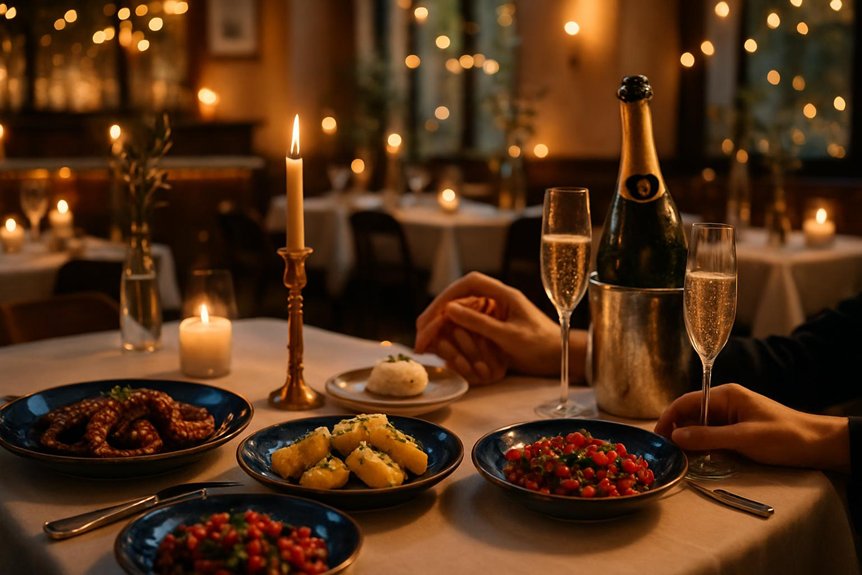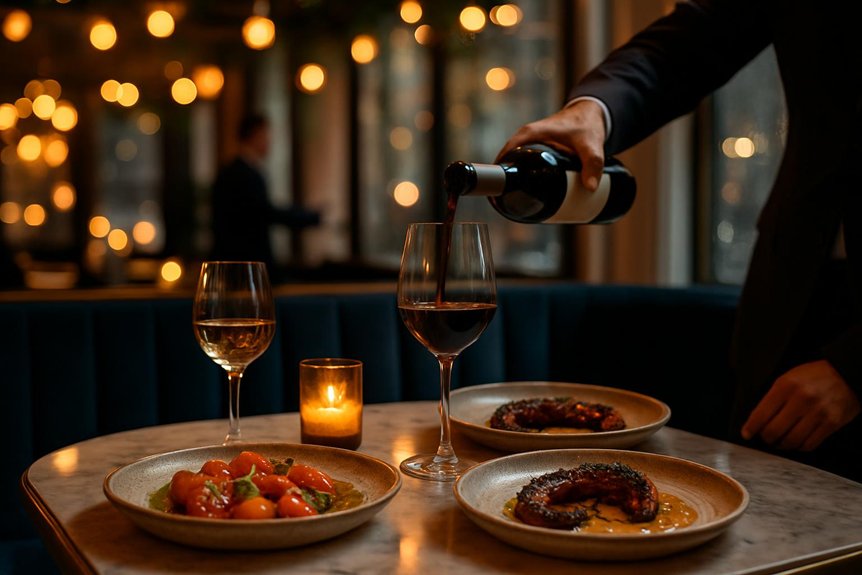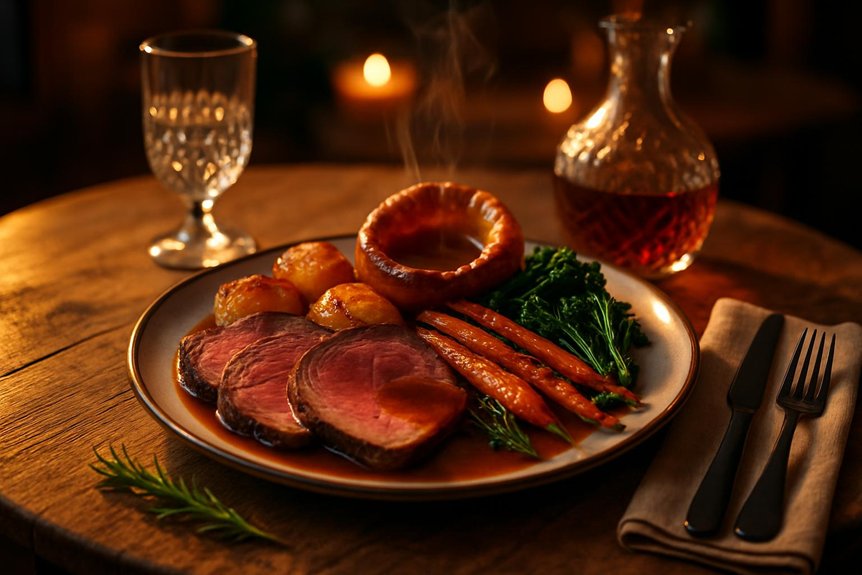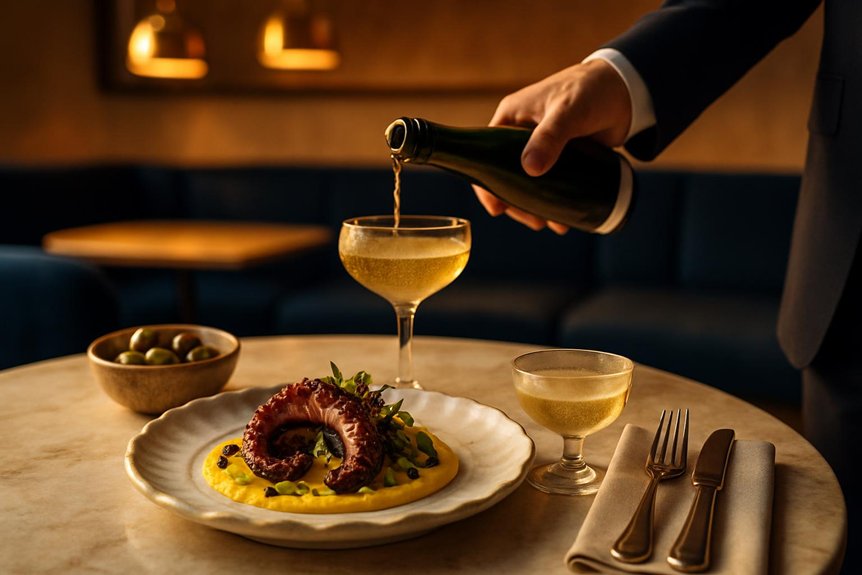

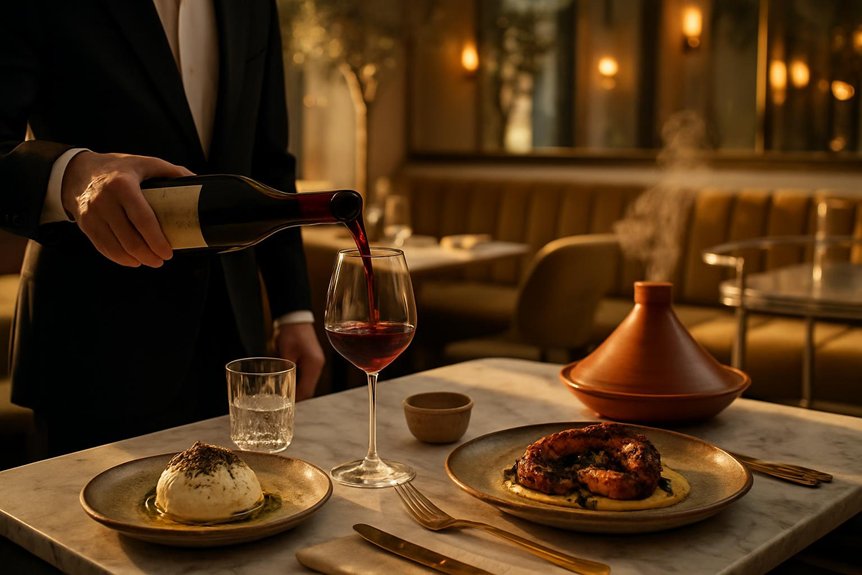
London’s luxury dining, seen through a Meraki lens, values craft over spectacle. Hosts read micro-signals and move with quiet precision. Plates honour seasons, provenance, and restraint. Textures, linen, and layered light shape a calm, disciplined mood. Rituals of sharing and measured mixology anchor the experience. Heritage techniques meet modern clarity. Settings shift from discreet townhouses to sky-high salons. Service follows the pace of pleasure, not the clock. What happens when design, story, and patience align?
Soulful Hospitality: Where Warmth Meets Refinement
Although the city’s grand dining rooms often dazzle with spectacle, London’s true luxury emerges in the quiet choreography of attentive, human service. In this setting, soulful hospitality balances gracious warmth with refined restraint, allowing guests to feel seen without feeling staged.
Hosts read micro-signals—pace of conversation, posture, tone—and respond with precise timing, a hallmark of service innovation that privileges intuition over scripted ritual.
This approach reflects London’s cultural influence: diverse teams interpret courtesy through multiple traditions, translating them into a unified, elegant manner.
Menus, rooms, and lighting may set mood, yet it is the cadence of welcome, the calibrated memory of preferences, and the respectful stillness at key moments that define excellence.
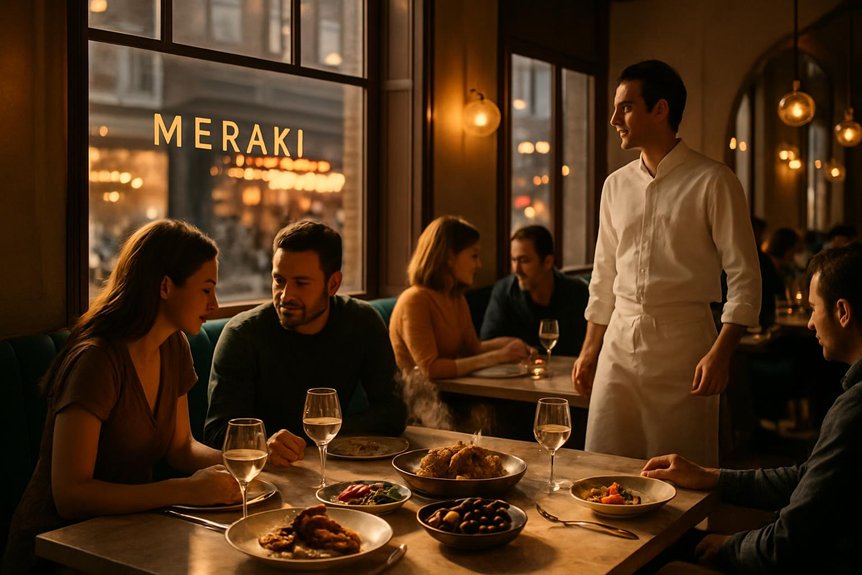
Here, refinement isn’t opulent; it is empathic, measured, and unmistakably human. At Meraki in Fitzrovia, diners experience a cosmopolitan Greek atmosphere, where the love and soul put into the work is palpable through both the sophisticated ambiance and exceptional service.
Provenance on the Plate: Seasonal Sourcing and Story
London’s top tables now foreground seasonal terroir, letting British microclimates shape texture, aroma, and tone.
Menus name traceable farmer partnerships, turning supply chains into narratives guests can verify.
Heritage recipes are revived with exacting technique, linking regional memory to contemporary luxury.
Meraki’s commitment to sustainability ensures that the luxury dining experience is harmonized with ecological responsibility, setting a new standard in the industry.
Seasonal Terroir Spotlight
Even before menus are read, provenance frames expectation: London’s luxury dining rooms now treat seasonality as narrative, not garnish. The plate becomes a brief on time and place: early spring shoots against late-season root sweetness, coastal crustaceans mirrored by saline herbs. Chefs edit rigorously, favoring micro-windows when flavor peaks, then pairing with vintage wines that echo the year’s character. Artisanal cheeses arrive at precise maturation, aligning texture and acidity with market-fresh fruit and hearth-warm breads. The spotlight falls on terroir as experience design. Menus shift like galleries, rotating exhibits of soil, aspect, and weather. Guests read tasting notes that map moor, marsh, and chalk down. Meraki offers a blend of intimacy and elegance, setting itself apart as a cherished destination for special occasions. Technique remains restrained, allowing origin to speak in crisp, unblurred lines—a disciplined celebration of the deliciousness of now.
Traceable Farmer Partnerships
While chandeliers and silver service set the tone, credibility now rests on names and coordinates. In London’s luxury rooms, provenance has become performance: producers are introduced like guest artists, their plots mapped, their methods detailed.
Traceable farmer partnerships let diners follow a scallop to a specific cove, a beet to a certified field, reinforcing local sustainability and ethical sourcing with auditable proof.
Menus cite farm codes, QR trails, and harvest dates, tightening the chain between soil and plate. Chefs commit to long-term contracts, guaranteeing fair prices, agreed practices, and shared risk when weather turns.
Transparency elevates trust and flavor; it also disciplines procurement, aligning rarity with responsibility. The result is luxury measured not only by finesse, but by accountable relationships.
Heritage Recipes Revived
From the certainty of mapped supply chains comes a renewed confidence to reach backward in time. In London’s luxury dining rooms, heritage recipes are revived not as replicas but as precise interpretations, anchored by provenance. Chefs source heritage grains, native breeds, and orchard fruit at peak season, then layer restrained echoes of medieval spices to reveal lineage without pastiche.
Dishes reference royal traditions through careful ceremony—silver carving, tableside sauces—while ingredients remain transparently modern in welfare and sustainability.
Narrative accompanies each plate: the mill’s stone grind, the woodland cure, the day’s tide. Technique is contemporary—gentle poaching, charcoal finishing—yet flavors honor ancestral patterns: honey, malt, quince, mace.
The result is temporal clarity: history articulated through seasonal sourcing, memory calibrated by evidence, indulgence justified by traceable truth.
Design as Dialogue: Lighting, Linen, and Atmosphere
A layered ambient glow sets the scene, guiding the eye without stealing attention from the plate or guest.
Tactile linen tells its own story—grain, weight, and fold signaling craft and care before a bite is taken.
Atmosphere emerges through contrast: warm light against cool stone, crisp napery beside dark wood, hush balanced with a measured hum.
Layered Ambient Glow
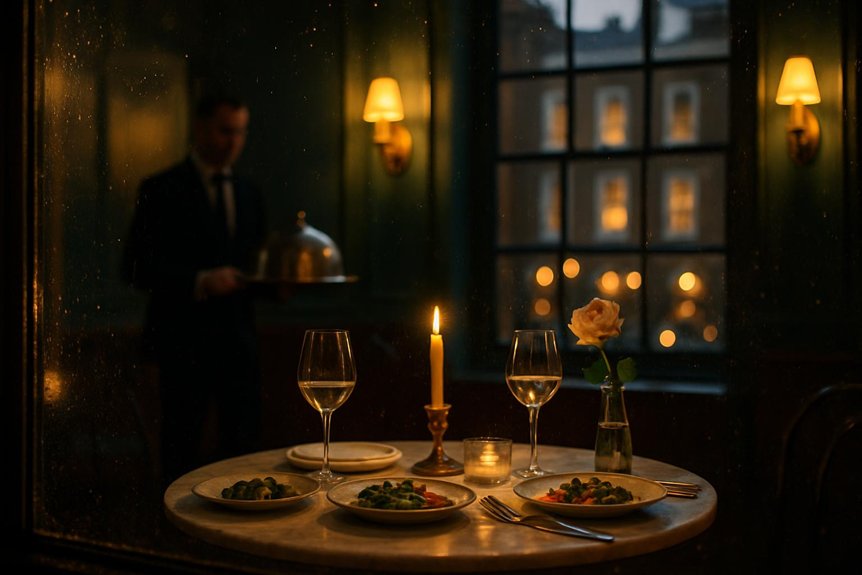
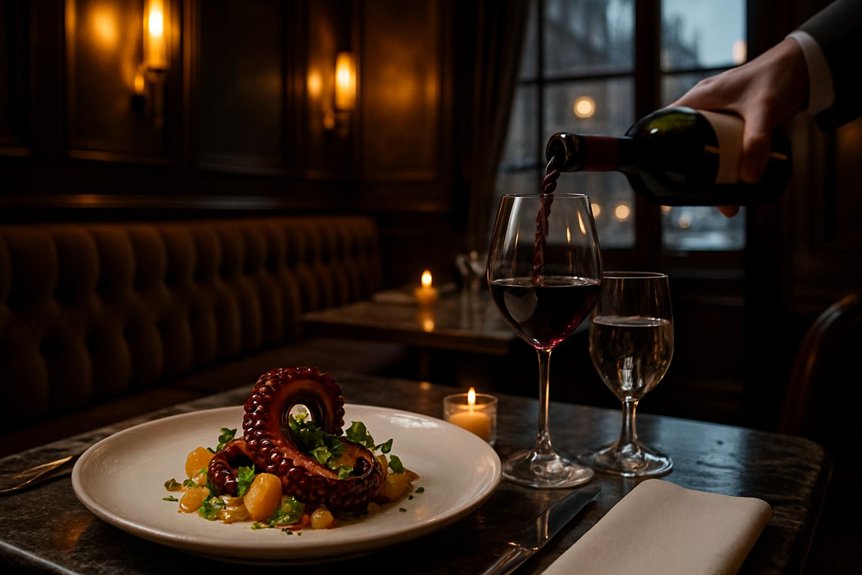
How does a dining room communicate luxury without a word? Through layered ambient glow, it frames every gesture and plate with intent. London’s most elegant rooms orchestrate light in tiers: concealed coves wash walls, pendant halos anchor tables, and candle points soften edges.
This abstract artistry sculpts depth without glare, guiding eyes from architecture to plate.
A Meraki perspective prioritizes temperature and dimming control: warm cores at 2,700K, cooler accents for form, and micro-adjustments that shift mood across courses.
Reflections are curated—glints on glassware, a satin sheen on porcelain—so the room becomes a quiet proscenium for culinary storytelling.
Shadows are purposeful, never harsh. Sightlines remain calm, brightness ratios disciplined. Luxury emerges as a measured dialogue between glow, silence, and anticipation.
Tactile Linen Stories
Even before a plate arrives, linen sets the register of the room. In London’s luxury dining rooms, fabric choice becomes a quiet manifesto: the grain of Irish damask, the cool discipline of crisp percale, the relaxed drape of stonewashed flax. Each thread calibrates formality and warmth.
Servers choreograph the reveal—folds aligned, edges squared—so touch precedes taste. Textures guide behavior: fine-weave napkins suggest poise; heavier cloth encourages languor. Linen mediates sound, tempering clatter and shaping conversation, while framing textured tableware with a soft, light-absorbing field that heightens silhouette and hue.
Menus join the dialogue. Bound in suede or embossed leather, tactile menus echo the cloth beneath, signaling care before reading begins. In this sequence, fabric becomes memory, and memory, anticipation.
Atmosphere Through Contrast
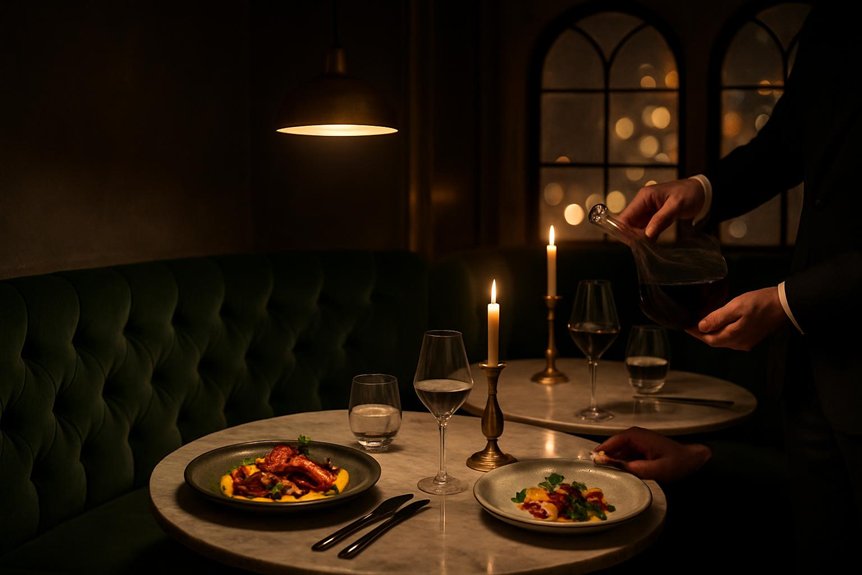
While linen sets a tactile baseline, contrast animates the room. Here, darkness and glow negotiate mood: a matte table meets a mirrored utensil, candlelight grazes porcelain, and shadows articulate edges like punctuation.
Lighting is edited, not abundant; pools of warmth define zones, preserving intimacy without obscuring detail. Botanical influences temper the palette—deep greens against ivory cloth, petals reframing steel with organic softness.
Contrast also guides pacing: a whisper of music after a moment of silence, a chilled plate following a warm aroma. Each shift sharpens attention, making artistic presentation feel inevitable rather than ornamental.
The dialogue between elements is disciplined, ensuring memory holds onto difference, not excess.
- Light courts shadow; intimacy emerges in the interval.
- Texture opposes sheen; touch precedes taste.
- Nature softens metal; botanical influences calm rigor.
- Artistic presentation clarifies, never competes.
Mezze to Mixology: Rituals of Sharing and Sipping
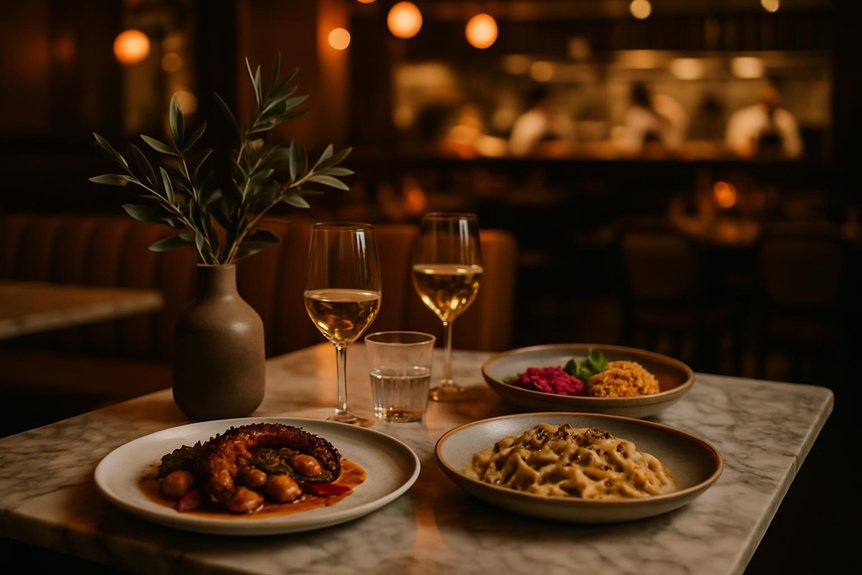
Why do London’s most coveted dining rooms lean into the theater of sharing and sipping? Because luxury now signals connection: mezze platters invite reach, response, and return. Plates land center-table, building momentum through shared rituals that favor conversation over possession.
The choreography is deliberate—textures staggered, temperatures contrasted—so each bite resets the palate for what is poured next.
Mixology follows suit. Bartenders pace service like sommeliers, observing sipping etiquette: short pours for aromatic cocktails, chilled stems for spirit-forward blends, low dilution for slow dialogue. Garnishes become navigational cues, guiding the order of taste.
Groups split flights to map flavor topographies, aligning small plates with shifting profiles. In this setting, generosity reads as sophistication; the experience is communal, precise, and quietly theatrical.
Heritage Reimagined: Classic Techniques With Modern Flair
Conversation at the table sets the pace, but the kitchen sets the tone: London’s luxury rooms are reclaiming heritage techniques and refining them with quiet ingenuity.
Chefs weigh tradition with precision, treating the stove as an atelier where ancient techniques become instruments of contemporary fusion. Fermentation, live-fire roasting, and clarified stocks gain new clarity through controlled temperatures and exacting cuts.
The result is cuisine that honors lineage while sharpening focus—flavor-forward, restrained, and deeply tactile. Butter-based sauces are lightened; pickles cleanse rather than dominate; pastry work prioritizes texture over ornament.
Craft becomes narrative, not nostalgia, and provenance is paired with discipline. The palate reads history without feeling burdened by it, and luxury emerges as intentional craft rather than excess.
- Respect lineage, reject imitation
- Elevate scarcity through technique
- Translate memory into structure
- Let precision reveal soul
Elevated Settings: From Townhouse Hideaways to Skyline Views
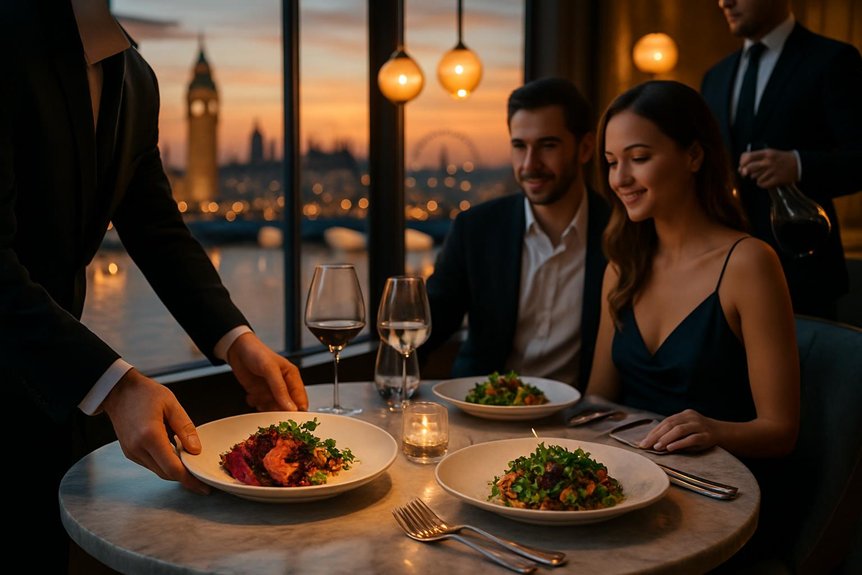
Though plates carry the story, setting frames the experience: London’s high-end dining moves fluidly from discreet townhouse salons to glass-wrapped eyries above the Thames.
In restored terraces, velvet banquettes face marble fireplaces, while candlelit corridors open onto private gardens where apertifs meet clipped hedges and perfumed borders.
The city’s vertical stage contrasts with penthouse pavilions, their panoramic glazing catching twilight and river shimmer, making the skyline part of the mise-en-scène.
Design acts as a silent service partner.
Curated art installations punctuate corridors and alcoves, guiding movement and shifting mood without words.
Materials matter: patinated brass, honed stone, and smoked oak soften acoustics and spotlight craftsmanship.
From hush to horizon, these rooms choreograph anticipation, ensuring cuisine converses with architecture and view.
The Pace of Pleasure: Slow Dining and Intentional Service
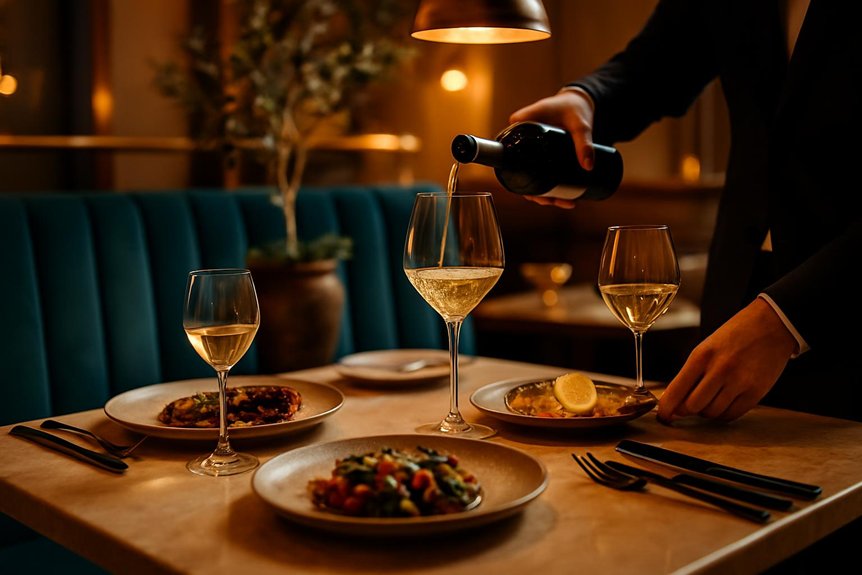
How does time become an ingredient? In London’s luxury rooms, it is measured in pauses: menus narrated without haste, courses sequenced with mindful pacing, and service attentive yet invisible.
The rhythm encourages sensory immersion; aroma, temperature, and resonance of the room are given space to register. Servers read the table’s breath, not the clock, orchestrating a tempo that lets conversation, appetite, and anticipation align.
Pleasure arrives not only on plates, but in the calibrated intervals between them.
- Silence used as seasoning, allowing flavors and feelings to settle without interruption
- Timing as choreography, aligning kitchen readiness with the table’s evolving mood
- Attentiveness without intrusion, offering presence that supports rather than directs
- Ritualized progressions—clearing, pouring, presenting—signaling advancement while preserving calm
Craft in Every Course: Detail, Texture, and Balance
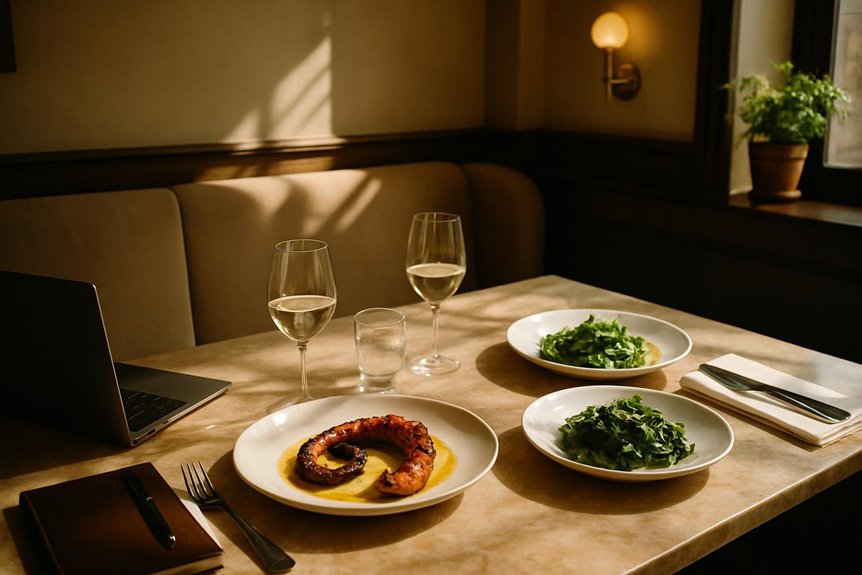
A plate in London’s luxury dining rooms is built with exacting intent: cuts measured to the millimeter, heat controlled to the degree, and seasoning calibrated to the grain.
Each course demonstrates restraint and control, where minimalist plating clarifies the chef’s logic and puts texture at the forefront. Crisp meets velvet, char brushes silk, and the palate moves through gradients rather than jolts.
Precision leans on color harmony, not decoration. Greens echo herbaceous lift, umbers signal roasted depth, and a single acid-bright note resets the frame.
Portions are proportioned to sustain appetite without fatigue. Sauces are tightened for clarity; garnishes are functional, not ornamental.
Balance becomes the quiet architecture: temperature, crunch, salinity, and aroma aligned so that nothing lingers too long, yet nothing departs unfinished.
Conclusion
In London’s luxury dining, viewed through a Meraki lens, every detail serves a quietly resonant purpose. Service reads the room, provenance anchors flavor, and design moves like a soft-spoken duet between light and linen. From mezze rituals to crafted cocktails, heritage is sharpened, not shelved. Elevated settings frame slow, intentional pacing, where craftsmanship speaks in textures and restraint. When the final course lands, the experience proves more than the sum of its parts—hitting the nail on the head.