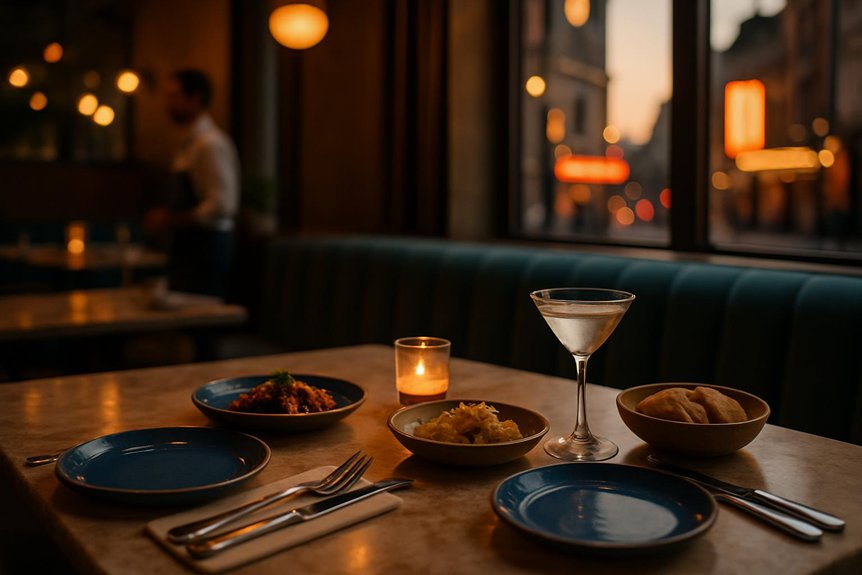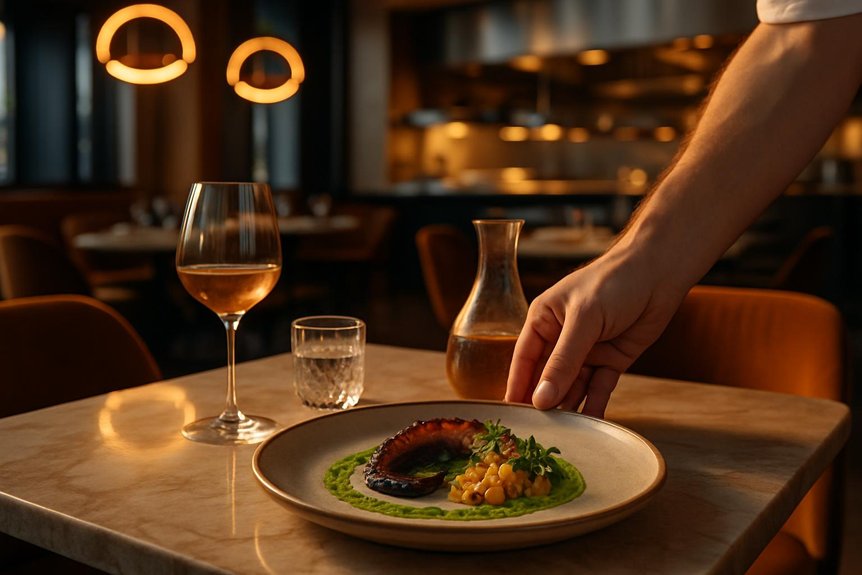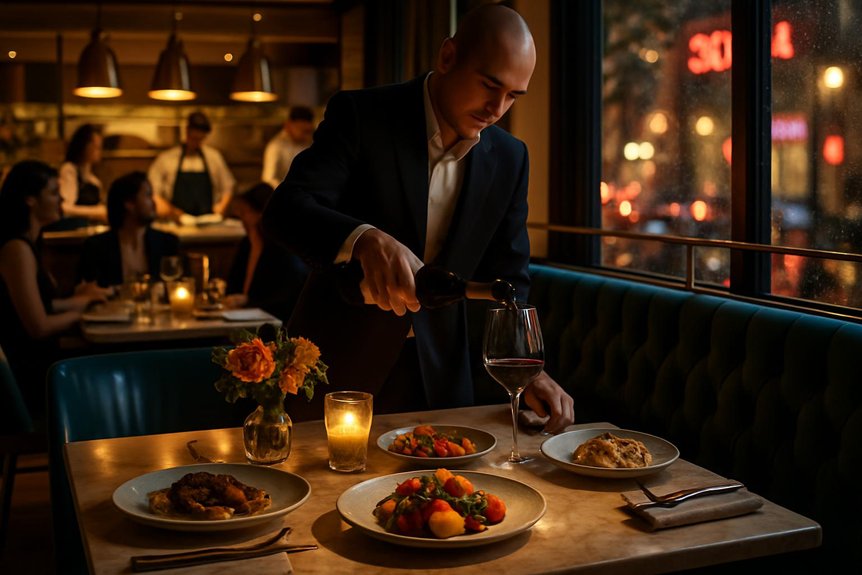

In Fitzrovia, Meraki balances Cycladic restraint with London polish. The room is calm, sun-washed, and quietly confident. Plates move from bright mezze to precise seafood, sourced with intent. Greek whites and sparklers carry a saline edge that suits the kitchen’s line. Service is measured, never fussy. Reservations matter. For those mapping a luxury shortlist, the details—best seats, peak hours, and what to order now—make all the difference.
The Allure of Fitzrovia’s Contemporary Greek Darling
A contemporary Greek restaurant in Fitzrovia draws discerning diners with a minimalist aesthetic, polished service, and a menu that reframes Hellenic flavors through seasonal British produce.
It has become a byword for Cultural fusion, where Ionian traditions converse with London’s pantry in quietly confident dishes.
The kitchen privileges clarity and restraint, letting citrus, mountain herbs, and pristine seafood meet Kentish vegetables and native lamb with measured balance.
Technique signals Artisan craftsmanship: precisely grilled proteins, deftly cured fish, and pastry work that honors classic forms while tightening textures and sweetness.
Service operates with calm efficiency, guiding selections without theatrics.
The wine list favors Greek terroirs alongside thoughtful European benchmarks, emphasizing minerality and freshness.
Reservations are competitive, yet walk-ins sometimes succeed.
Located at 80-82 Great Titchfield St, the restaurant’s location in Fitzrovia adds to its allure, providing a cosmopolitan Greek atmosphere.
Design, Atmosphere, and That Effortless Aegean Glow
Whitewashed, Cycladic-inspired interiors set a calm frame, softened by rounded edges and sculptural plaster.
A warm, sunlit palette—sand, chalk, and honey—casts a flattering glow from lunch to late.
Stone, linen, and bleached wood echo textures of the Aegean, grounding luxury in tactility.
Guests can enjoy the relaxed dining experience that Meraki offers, complemented by the open kitchen led by celebrity chef Athinagoras Kostakos.
Cycladic-Inspired Interiors
Though miles from the Aegean, certain London dining rooms distill Cycladic serenity into precise, contemporary luxury. The geometry is disciplined: whitewashed planes, softened corners, and sculpted niches echo Mediterranean architecture without resorting to pastiche.
Surfaces appear hand-troweled, gently matte, absorbing glare and refining reflections. Seating lines remain low and unobtrusive, encouraging uninterrupted sightlines and a calm spatial rhythm.
Coastal inspired decor is interpreted with restraint: bleached timber, woven rush, and ceramic vessels with honest, tactile glazes.
Stone thresholds delineate zones while keeping circulation fluid. Lighting stays architectural—concealed coves and pinpoint accents model volumes rather than objects.
Textiles are breathable, weightless, and minimal in pattern, prioritizing texture over graphic statements. The result is atmosphere through proportion and material integrity, not ornament. Meraki Bar in London exemplifies this fusion of Cycladic-inspired design with modern luxury, offering a unique and intimate setting beneath a modern Greek restaurant.
Warm, Sunlit Palette
Because light is the true luxury here, palettes lean warm and mineral, translating London’s pale sun into an Aegean glow without theatricality. The eye reads quiet radiance: Sunlit interiors temper brightness with honeyed whites, soft terracottas, and diluted ochres that feel lived-in rather than staged.
Gradient palettes move gently from sand to amber, then cool to linen-cream, allowing daylight to glaze surfaces without glare.
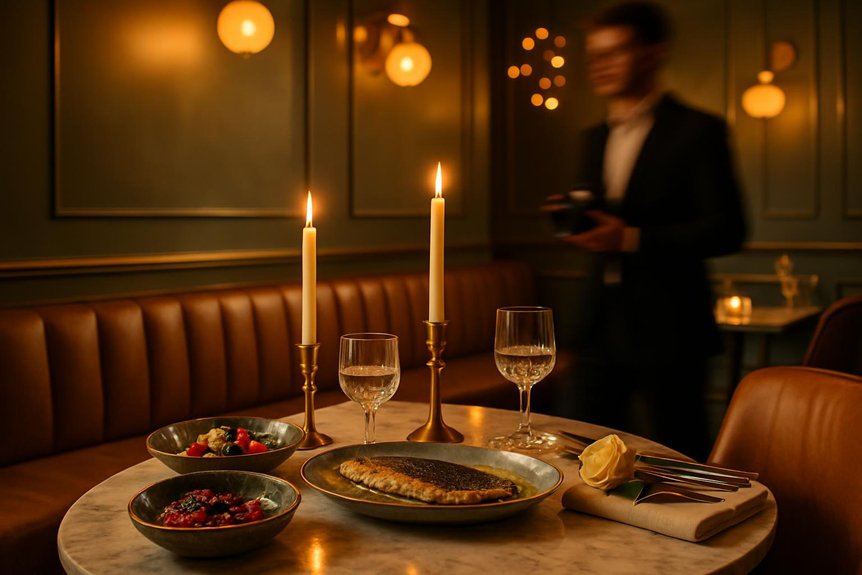
Color is paced, not shouted. Ceilings lift with pale tones; corners deepen slightly to anchor the room. Candlelit evenings warm the spectrum, preserving the same measured calm.
Metals stay brushed, woods mellow, and any blue appears as a distant echo, not a motif. The result is composure: a calibrated warmth that flatters faces, food, and conversation without drawing attention to itself.
Textures of the Aegean
If light sets the tone, texture delivers the story: surfaces reference the Aegean without resorting to pastiche.
Plaster walls are lime-washed to a quiet matte, catching shadows like ripples. Stone underfoot feels sun-baked yet restrained, a nod to Mediterranean architecture without clichés.
Pale timber, rope, and woven cane soften edges, while brushed brass adds a salt-kissed gleam.
Tabletops are deliberately tactile, inviting the hand before the fork. Linen breathes; ceramics show faint ridges, echoing shoreline strata.
The result is a calm register that frames coastal culinary detail—grilled fish smoke, citrus oils, oregano heat—without visual noise.
Lighting grazes surfaces rather than floods them, producing that effortless Aegean glow. In this texture-forward scheme, luxury is sensed first, then seen, and finally tasted.
Signature Mezze and Standout Seasonal Plates
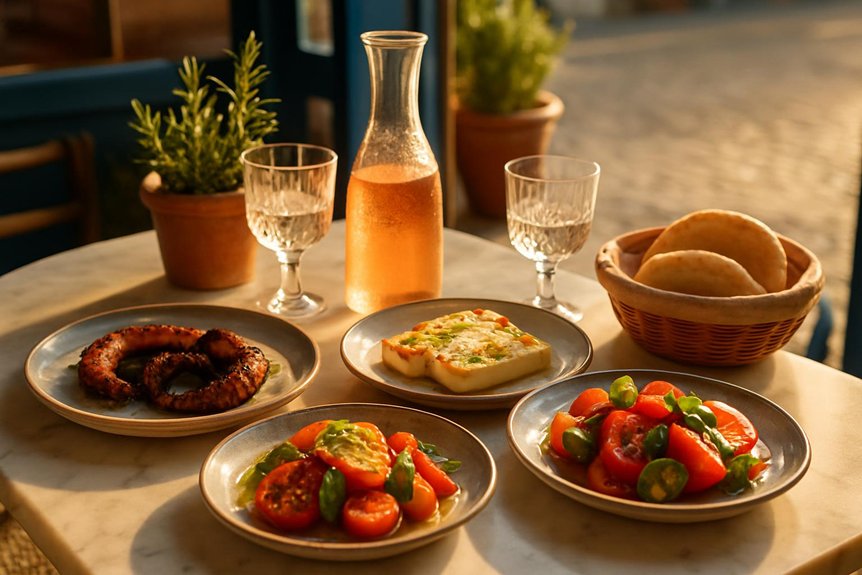
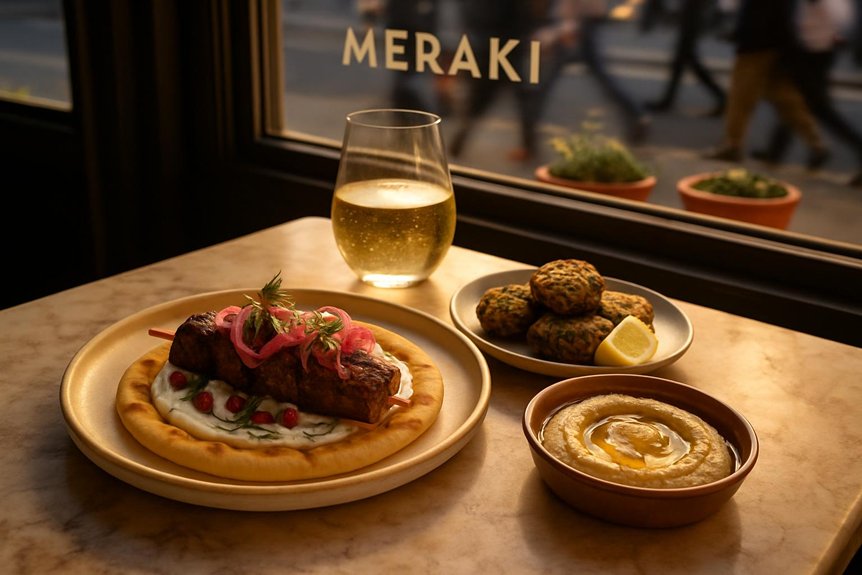
A precise mezze program signals intent: small plates arrive with crisp pacing and clear flavors, designed to open the palate without fatigue. At Meraki, the sequence favors contrast—smoky aubergine beside herb-bright salads, tahini lifted with citrus, and warm flatbreads that carry spice without heaviness.
The minimalist decor keeps focus on temperature, texture, and acidity, while fusion cocktails mirror the plates with saline, herbal, and stone-fruit notes that cleanse rather than crowd.
Standout seasonal plates rotate with discipline. Early spring might feature grilled lamb with wild oregano and charred lemon; late autumn pivots to pumpkin with brown butter and pine honey.
Technique is restrained, letting produce express peak character. Portions are calibrated for sharing, encouraging progression without derailment or palate fatigue.
Seafood Mastery: From Market-Fresh to Memorable
In London’s top dining rooms, seafood excellence starts with daily market sourcing that prioritizes peak freshness and provenance.
Chefs then apply signature techniques—precise curing, charcoal grilling, or slow poaching—to amplify texture and natural sweetness.
The result becomes a benchmark: clean flavors, polished presentation, and consistency across the menu.
Daily Market Sourcing
Each dawn, chefs canvass Billingsgate and select coastal suppliers, judging sheen, scent, firmness, and gill color to secure peak-season catch.
Decisions hinge on tide charts, boat provenance, and handling logs, ensuring traceability from quay to kitchen.
Buyers negotiate small lots to prioritize immediacy over volume, minimizing time on ice and maximizing flavor.
Daily market sourcing also aligns with sustainable sourcing commitments.
Teams verify quotas, gear types, and bycatch records, favoring day-boat landings and MSC-certified fisheries.
Relationships extend beyond the docks: local farmers provide sea herbs, coastal vegetables, and dairy that frame the seafood without overshadowing it.
Logistics move fast—pre-dawn pickups, temperature-controlled transport, swift intake checks—so inventory turns within hours, not days, preserving texture, aroma, and the honest character of the sea.
Signature Seafood Techniques
Though ingredients arrive pristine, technique determines transcendence.
At Meraki, chefs translate market vitality into depth by balancing saline purity with controlled heat, smoke, and acidity.
Precision brining firms texture; low-temperature poaching preserves sweetness; quick charcoal kisses add maritime perfume.
Fusion techniques appear as judicious accents, not distractions, aligning with sustainable sourcing that respects the ecosystem and seasons.
- Dry-age line-caught fish to concentrate umami, then sear on carbon steel for crisp skin and custard-like flesh.
- Cure scallops lightly with citrus salt, torch for a whisper of caramel, and glaze with miso-butter emulsion.
- Steam shellfish over kombu broth, finishing with fennel oil to lift brine without masking terroir.
- Smoke octopus gently, then confit and char, pairing with chickpea tahini for Mediterranean resonance.
The Wine Program: Island Breezes in a Glass
While the plates speak of precision, the wine program whispers escape—curated to evoke island breezes without leaving Mayfair.
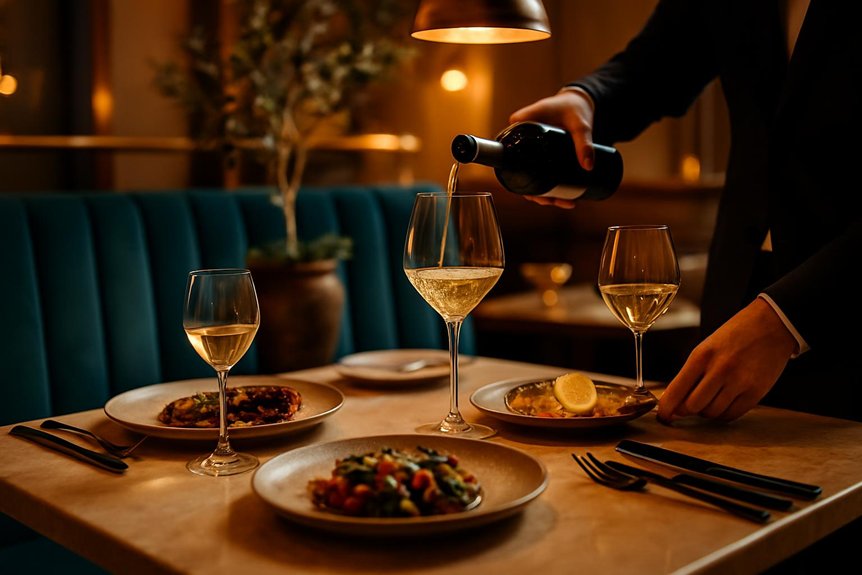
The list favors coastal expression: saline Greek Assyrtiko, citrus-lifted Santorini blends, and mineral rosés that cool the palate. Sparkling selections lean toward crisp méthode traditionnelle, primed for seafood brightness.
Attention to glassware elegance heightens aromatics; tulip bowls for texture-driven whites, narrower flutes for tension, generous stems for layered reds.
Temperature is tuned to coastal clarity, serving whites a touch colder to sharpen seashell notes.
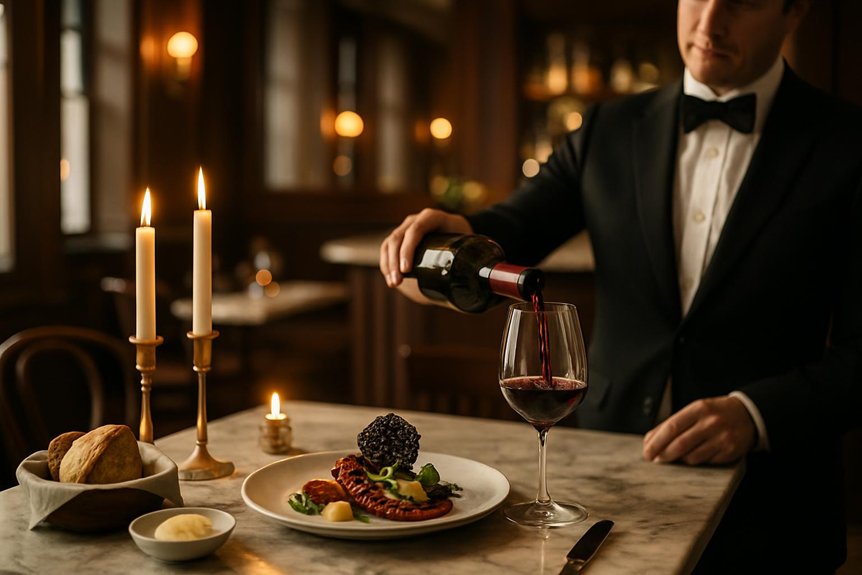
Wine pairings are calibrated, not theatrical—clean acidity for crudo, sun-ripe fruit for charred octopus, and herb-kissed reds for lamb. Fortified and dessert entries carry Mediterranean botanicals, finishing the arc with a salt-kissed, windward grace.
Service, Hospitality, and Greek Philoxenia Refined
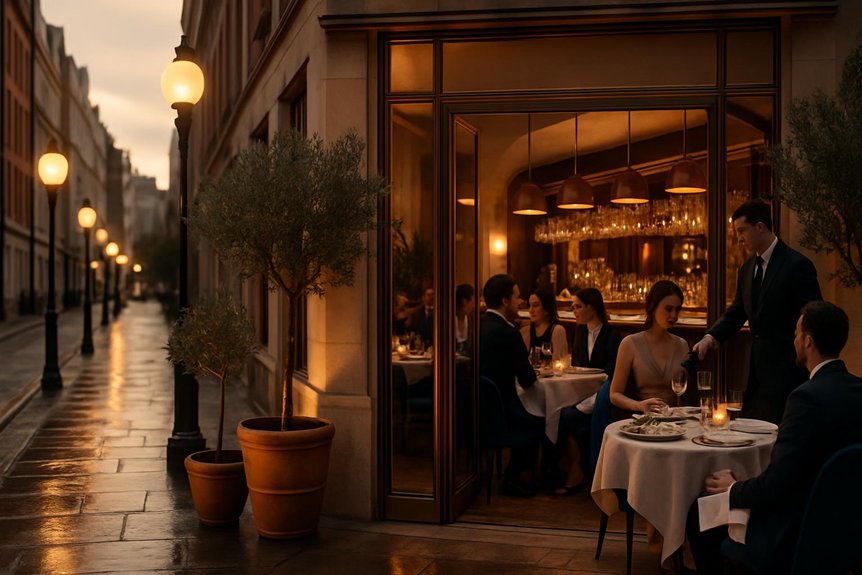
Because refinement here is inseparable from warmth, service channels Greek philoxenia through disciplined poise. Staff move with quiet precision, anticipating needs without ceremony, letting hospitality feel inevitable rather than staged.
Courtesies reference cultural traditions—small welcomes, thoughtful farewells, and a gentle cadence of care. Training favors calm eye contact, confident pacing, and unobtrusive timing, so conversation breathes while the table remains flawlessly maintained.
During seasonal festivities, gestures become slightly more celebratory, yet restraint prevails.
- A host’s greeting sets tone: gracious, efficient, and memorably personal.
- Servers translate menus fluently, matching dishes to mood and appetite.
- Captains read the room, guiding tempo from first pour to last bite.
- Discreet adjustments—tableware, lighting, temperature—occur seamlessly, affirming craft without spectacle.
Best Seats, Peak Times, and How to Book Like a Local
Even in a city that dines late, the most coveted London tables reward foresight and specificity.
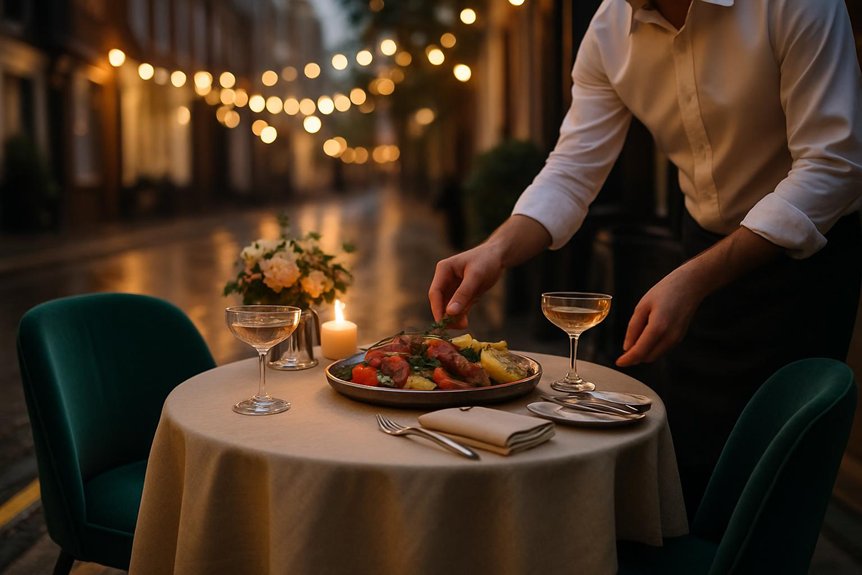
At Meraki, insiders request the corner banquette in the main dining room for atmosphere without crowd spill, or the chef-facing counter for choreography and pacing control. Al fresco seats are best at sunset; windbreakers and heaters matter on cooler evenings.
Peak times cluster between 7:30 and 9:00 p.m., with pre-theatre 5:30–6:30 p.m. and late 9:30–10:15 p.m. offering smoother service cadence.
Book two weeks out for weekends; midweek can clear with 72 hours’ notice.
For hidden gems, ask for bar-only dishes and off-menu Greek specials.
Local tips: use the restaurant’s site before platforms, reconfirm the morning of, note dietary needs succinctly, and leverage cancellations via polite waitlist calls at 11 a.m. and 4 p.m.
Nearby Attractions to Pair With Your Meraki Visit
Steps from Meraki in Fitzrovia, art and architecture cluster within a 10–15 minute walk: the Wallace Collection’s Old Master trove in Manchester Square, the John Soane–inspired Sir John Soane’s Museum in Lincoln’s Inn Fields, and the Photographers’ Gallery off Oxford Circus.
Post-lunch or pre-dinner, guests can stitch culture, design, and calm into one route, with local street art along Rathbone Place and Soho backstreets, plus nearby parks for a breather.
1) Start at the Wallace Collection; its free-entry galleries reward a focused hour.
2) Cut via Marylebone Lane boutiques, then track local street art toward Carnaby.
3) Drift to the Photographers’ Gallery for contemporary shows and a concise bookstore.
4) Finish in nearby parks—Fitzroy Square or Soho Square—for greenery, benches, and a reset before returning to Meraki.
Conclusion
As the evening wanes, Meraki lingers like sea salt on warm skin—Cycladic light distilled into a London night. Glasses catch a final glimmer; plates gleam with the memory of citrus and thyme. Soft linen whispers, olive wood cools to the touch, and a hush of Aegean blue hangs in the air. Here, Fitzrovia feels coastal: measured, luminous, unhurried. Guests step back into the city carrying a quiet tide—mineral, bright, and infinitely repeatable.