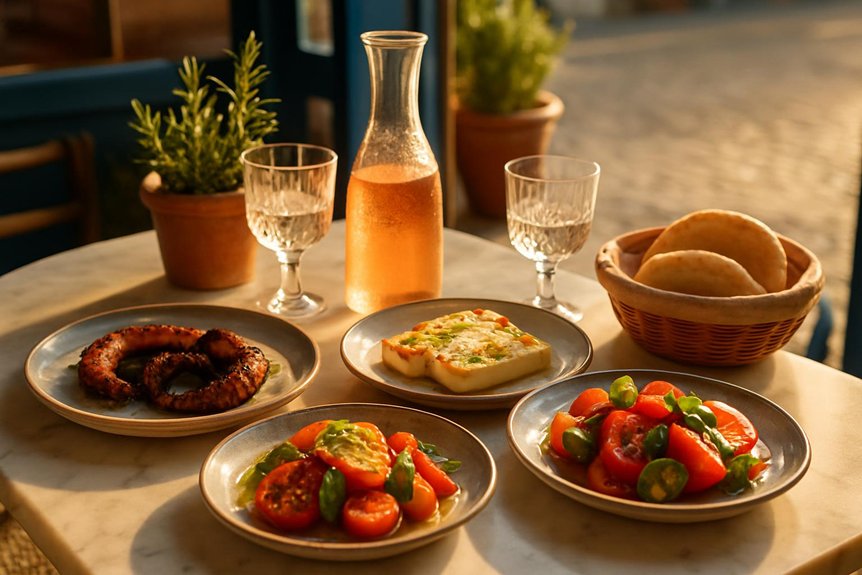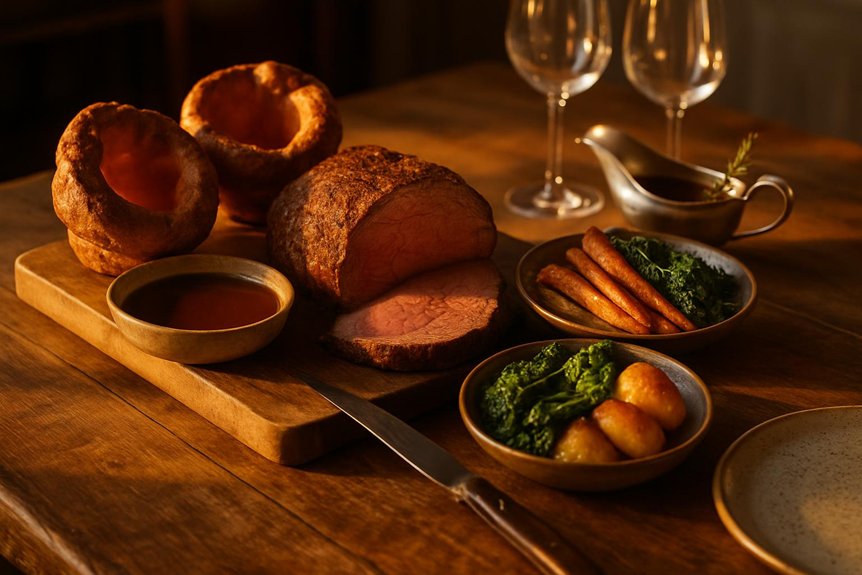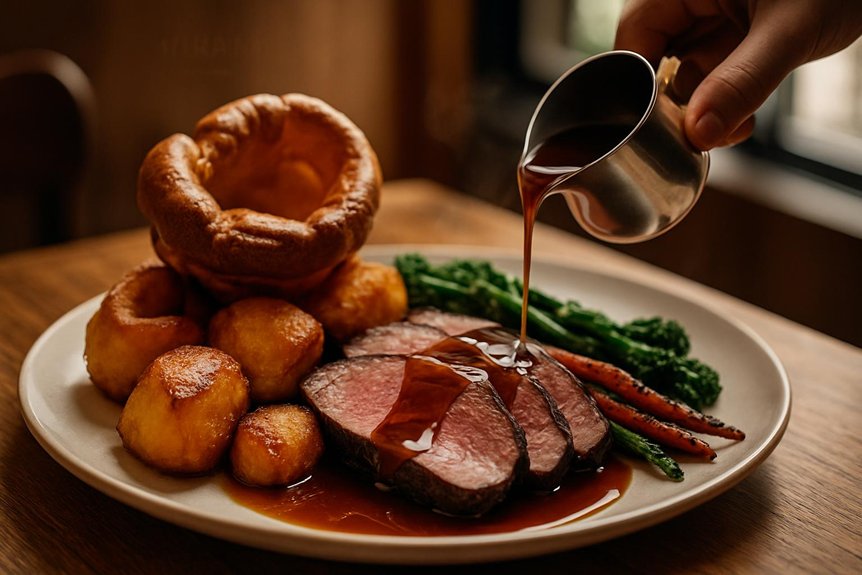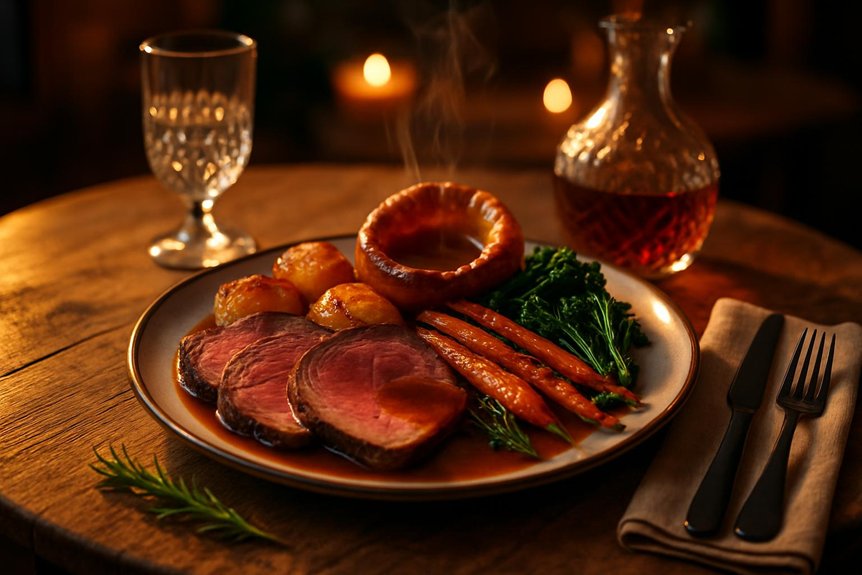

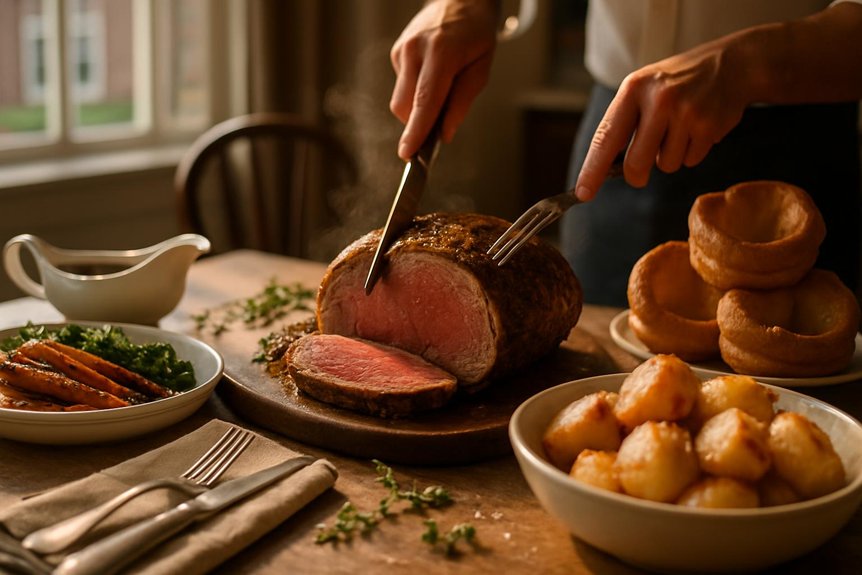
Sunday in Fitzrovia finds Meraki’s Kitchen reworking a British ritual with Greek ease. The room glows softly. Plates carry blushing meats, citrus-bright jus, and roasties that crackle. Seasonal veg arrive vivid and assertive. Staff use names, not numbers. Sharing boards invite a pause, then another. It feels unhurried, yet precise. But what makes their gravy gloss without heaviness—and why do the sides threaten to outshine the roast?
The Ritual of a London Sunday Roast, Reimagined
Two traditions meet at one table: the familiar cadence of a London Sunday roast and the Mediterranean verve of Meraki’s kitchen.
The ceremony remains recognisable—roasted joints carved with measured grace, crisp potatoes, seasonal greens—yet the accents shift. Citrus-kissed jus replaces heavy gravies, herbs lift the palate, and olive oil edges the roast to a brighter finish. Yorkshire puddings arrive airy, primed for savor rather than sheer heft.
Service moves at an unhurried tempo that invites Sunday reflections: conversations unfurl, plates punctuate the afternoon, and tea traditions anchor the close with a calming rhythm.
There is restraint in the composition, warmth in the pacing, and a sense that comfort can be both classic and illuminated, the roast reframed without losing its soul. The cosmopolitan Greek atmosphere of Meraki enhances the dining experience, offering an inspired take on tradition.
Sourcing With Soul: From British Farms to a Greek Larder
Meraki sources meat and produce from ethical British farms, prioritizing provenance and welfare alongside freshness. In the kitchen, these ingredients meet a restrained Greek pantry—wild oregano, Cretan olive oil, mountain honey, and aged feta—instead of heavy sauces. The result is a menu where local integrity is framed by Greek clarity, each element selected for purpose rather than ornament. With its exceptional roast beef paired with Yorkshire puddings, Meraki is a culinary gem in London, offering a modern twist on classic British flavors.
Ethical British Sourcing
In a city defined by global palettes, the kitchen’s Greek soul is anchored by rigorously British roots: vegetables from regenerative farms, native breeds raised to high welfare standards, day-boat seafood from responsibly managed waters, and dairy traced to small herds. Ethical sourcing here is not a label but a method: seasonal purchasing, supplier transparency, and minimal transport to preserve freshness.
Farm relationships shape the roast. Dry-aged beef from pasture-led systems is selected for depth of flavor and traceable lineage, while heritage lamb reflects biodiversity gains. Waste is reduced through whole-animal butchery and careful stock-making, aligning modern twists with enduring culinary traditions.
Shellfish arrive via low-impact fisheries; root vegetables are chosen for soil health outcomes. The result is integrity on the plate, measured and accountable.
Meraki Restaurant offers a vibrant atmosphere for both dining and dancing, creating a unique nightlife experience titled “A Night in the Living Room.”
Greek Pantry Influences
Though the sourcing is British, the larder thinks in Greek. In Meraki’s kitchen, native produce—Hereford beef, Norfolk potatoes, Kent carrots—meets a pantry stocked with Greek herbs, wild oregano, and thyme that frame the roast with Mediterranean flavors.
Cold-pressed olive oil replaces heavy gravies, brightening pan juices with citrus and mountain honey. Capers and Kalamata olives punctuate roasted roots, adding salinity and depth without masking provenance.
Lemon, garlic, and rosemary cure lamb shoulders before slow roasting, while vinegars from Crete finish Yorkshire puddings with a discreet tang. Feta crumbs stand in for traditional sauces, lending creamy contrast to charred brassicas.
The result reads as a dialogue: British terroir articulated in a Greek accent, disciplined, aromatic, and faithful to ingredient truth.
Prep and Technique: Crispy Roasties, Blushing Meats, Glossy Gravy
While service hums beyond the pass, the kitchen’s focus narrows to fundamentals: potatoes blistered into shattering roasties, meats rested to a tender blush, and gravy coaxed to a lacquered sheen.
Method governs everything: steam-dried potatoes are roughened, then flashed in hot fat until edges frill; joints are brought to temperature with sous vide techniques before searing, locking in juices; bones and trimmings render a stock that reduces to gloss.
- Roasties: par-cooked, shaken, and roasted in dripping for crackle and lift.
- Meats: gentle heat, decisive caramelization, unhurried rest to settle fibers.
- Gravy: double reduction, vinegar brightness, butter-mounted for silk.
- Plating presentation: hot plates, clean lines, jus ribbons, salt last.
Each element tastes deliberate, built for Sunday, engineered for memory.
Seasonal Veg That Steal the Show
In Meraki’s winter rhythm, roots are roasted until their sugars caramelize and edges char.
Brassicas arrive with zing—think blistered sprouts or shaved cabbage jolted by citrus and chile.
Herbed seasonal sides, from thyme-kissed carrots to parsley-flecked parsnips, round out plates with clean, aromatic lift.
Winter Roots Roasted
Against the chill outside, the kitchen turns to winter roots—carrots, parsnips, celeriac, beets—roasted until their sugars deepen and edges caramelize. Heat draws out earthy perfumes; salt and a brush of oil do the rest. The tray returns with concentrated sweetness, a counterpoint to the roast’s savory core, and a reminder that restraint can be generous.
- Carrots gain lacquered tips, lifted by thyme and orange zest, echoing subtle herbal infusions.
- Parsnips crisp at the ridges, their nutty core balanced by a whisper of honey and white pepper.
- Celeriac cubes turn buttery inside, ideal companions or bases for next-day root vegetable soups.
- Beets bleed ruby, kissed with vinegar to sharpen their jammy depth, finished with dill and cracked seed.
Brassicas With Zing
How do brassicas earn the spotlight? In Meraki’s kitchen, they arrive blistered and bright, treated with quick heat and sharp accents.
Charred sprouting broccoli hits the pass with a squeeze of lemon and a whisper of chili, its edges smoky yet tender. Brussels sprouts are halved, seared cut-side down until mahogany, then glossed with a light sherry reduction that keeps sweetness in check.
Cauliflower appears in crisp florets, tossed with capers and toasted almonds for bite and brine.
Each plate lands on vintage crockery that frames the greens’ vibrancy beneath ambient lighting, giving a subtle theater to their color and texture.
The result is not heaviness but lift: clean flavors, crisp finishes, and a decisive zing that refreshes the pace of the roast.
Herbed Seasonal Sides
Though the roasts anchor the table, it’s the herb-laced sides that set the rhythm. In Meraki’s kitchen, vegetables arrive dressed with restraint and precision, guided by herb blends and restrained citrus accents.
The cooks chase texture: snap, velvet, and char, each bite coursed like a quiet drumbeat beside the meat.
- New potatoes smashed, tossed with dill-parsley herb blends, lemon zest, and warm olive oil; skins crisp, centers creamy.
- Charred carrots brushed with thyme honey and citrus accents, then finished with toasted cumin and pickled coriander stems.
- Butter-braised leeks layered with tarragon and chervil, capped by breadcrumbs kissed with garlic and lemon.
- Roasted courgettes folded with mint, basil, and grilled scallion oil, brightened by grapefruit zest and flaky salt.
Each side steals attention without shouting.
The Carving Board Moment: Service, Sides, and Sharing
While the roasts rest, the ritual shifts to the carving board, where precision and pacing define service. Knives are honed, joints turned, and slices measured to balance tenderness with texture. Classic carving techniques guide the angle and grain, ensuring pink centers for beef, crisped crowns for pork, and neatly parted birds.
Portions land on warmed platters beside disciplined sides: glossy gravy, horseradish bite, mustard heat, and Yorkshire puddings ready to catch juices. Roots, previously herbed and roasted, provide sweetness and ballast without crowding the meat.
Servers coordinate timing so each plate reads as a complete thought.
Sharing traditions govern the table. Platters circulate, guests serve one another, and seconds are negotiated politely. The result is unfussy abundance, organized, generous, and calm.
Fitzrovia Vibes: Warm Hospitality and a Long, Lazy Lunch
Plates settled and platters shared, the room’s mood shifts from ceremony to ease. In this Fitzrovia atmosphere, time slackens; conversation softens; service glides without intrusion. Meraki’s team reads the table with quiet precision, refilling, retreating, returning at the right moment.
What follows is a long, lazy lunch that treats Sunday tradition as a gentle ritual rather than a timetable.
- Soft light on stone and wood, a setting that invites one more story, one more pour.
- Servers who remember names and preferences, guiding without fuss or flourish.
- Pace that encourages lingering, letting roasts and sides anchor the afternoon.
- A low hum from the street, reminding diners they’re in London, not lost to it.
Hospitality holds steady; the roast simply gives it shape.
Conclusion
As plates are cleared and glasses linger half-full, Meraki’s Kitchen leaves a final impression of comfort sharpened by sunshine-bright Mediterranean notes. The roast is ritual, yes, but also a conversation—between British fields and a Greek larder, between crisp potatoes and citrus-kissed jus. Service remembers names, platters invite reach, and time loosens its grip. Isn’t this what a Sunday should feel like—a long, lazy arc of warmth, where tradition hums in a modern, joyful key?