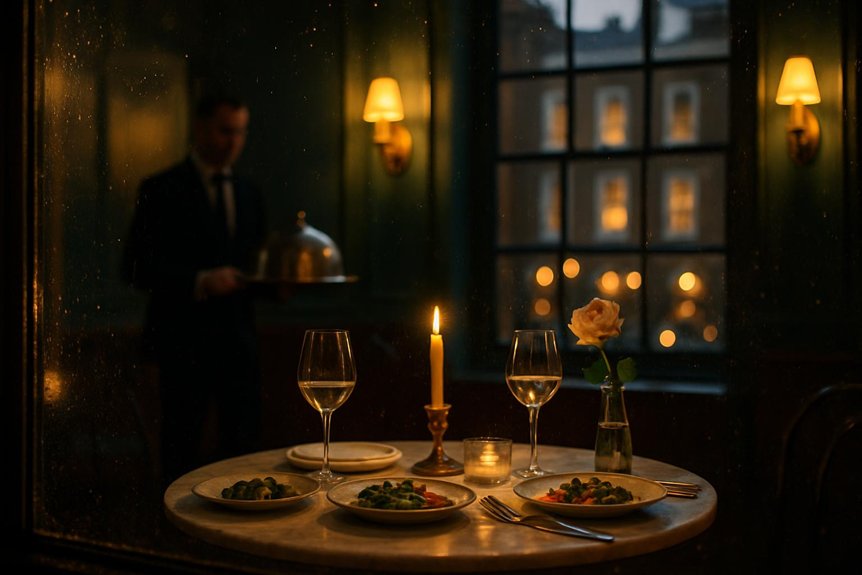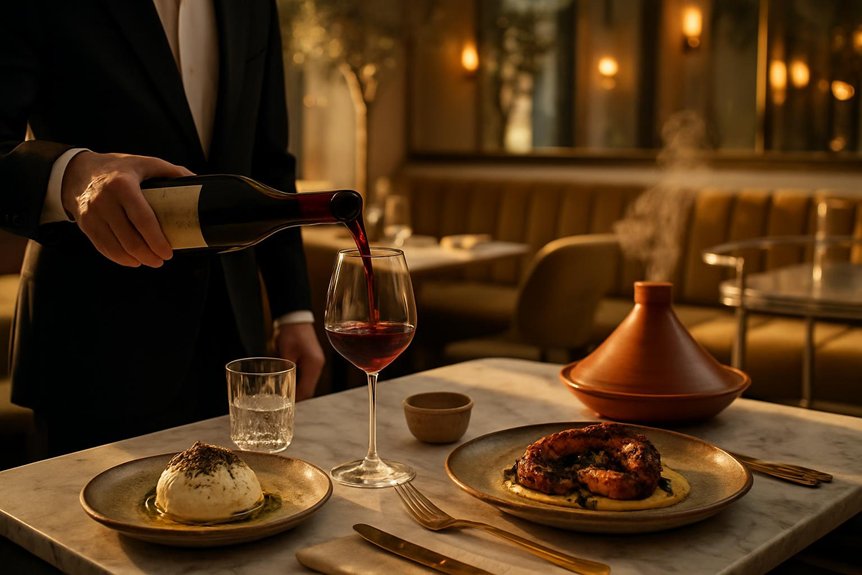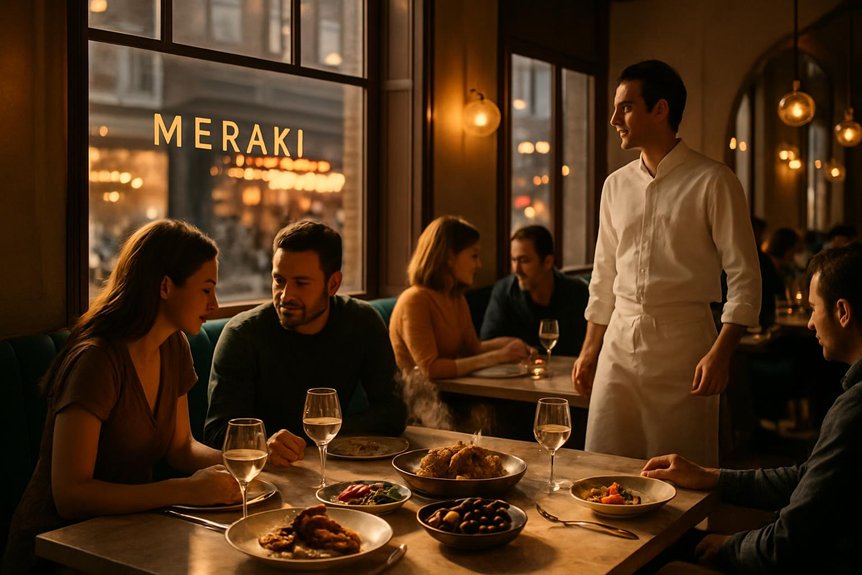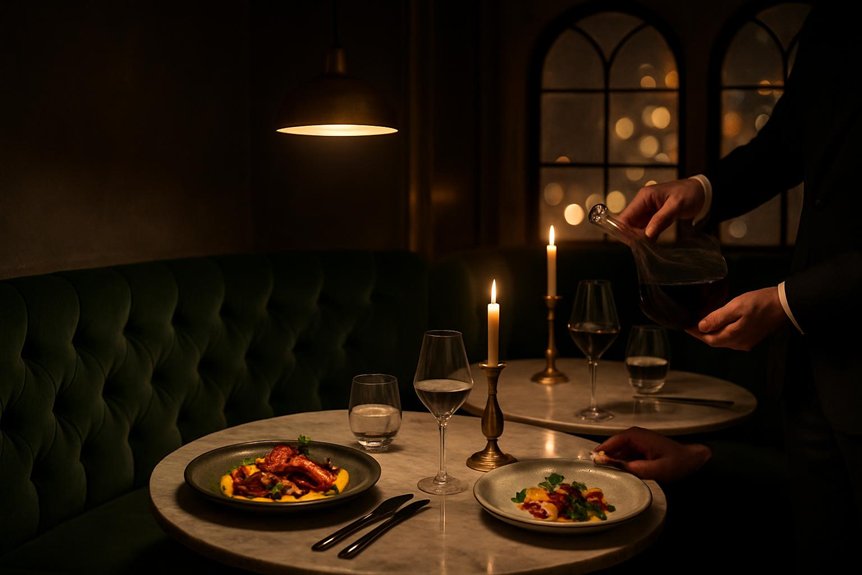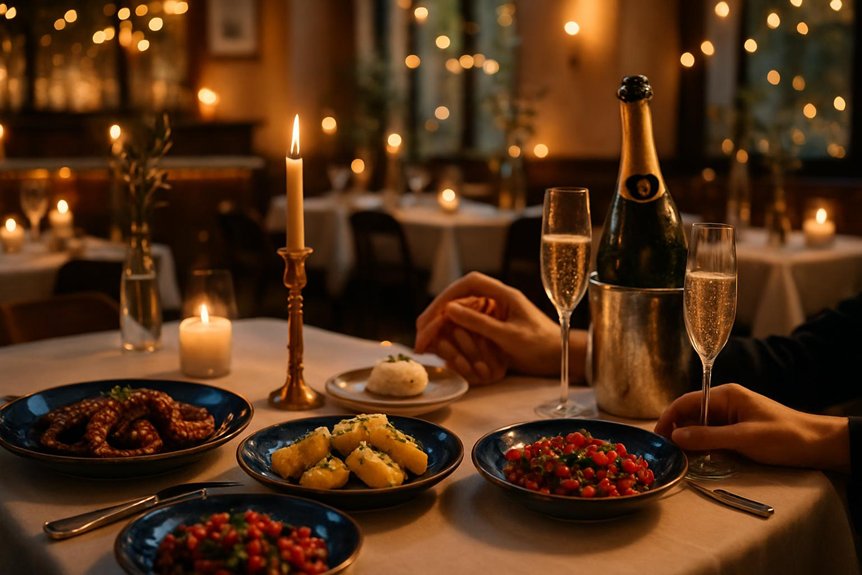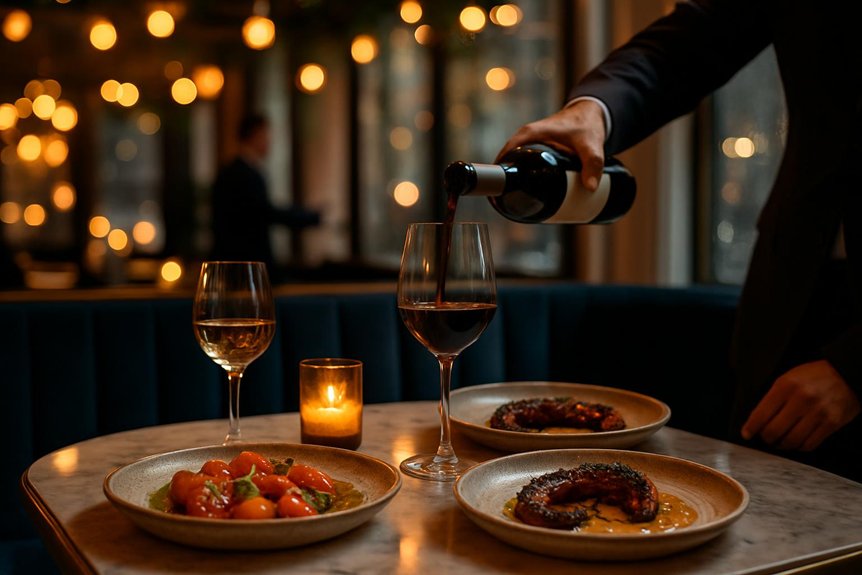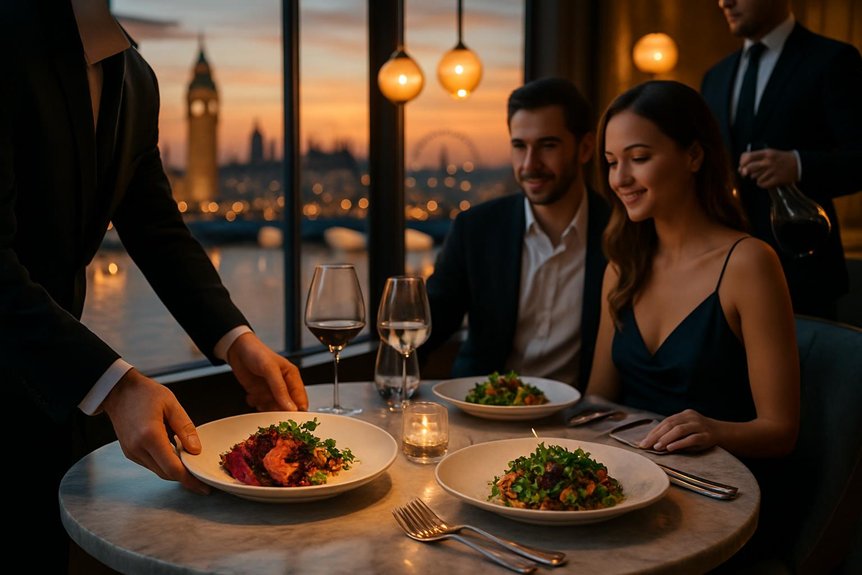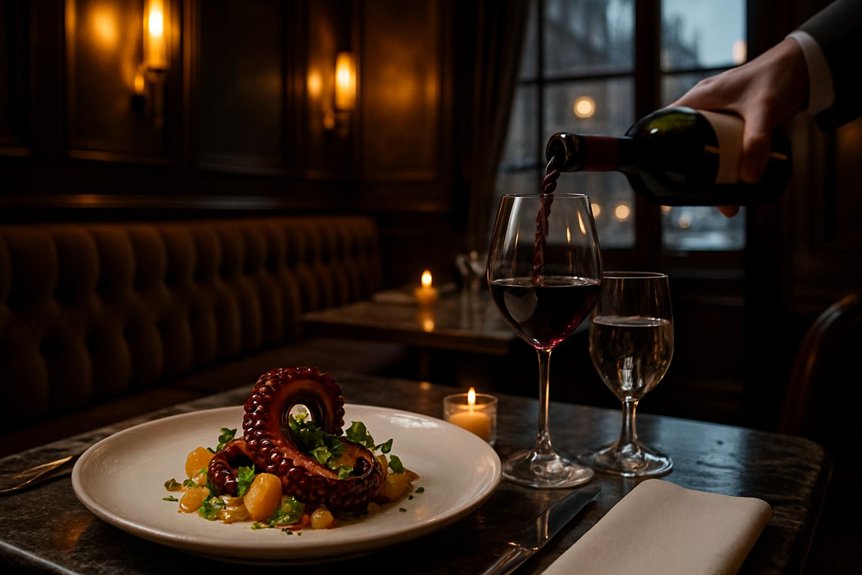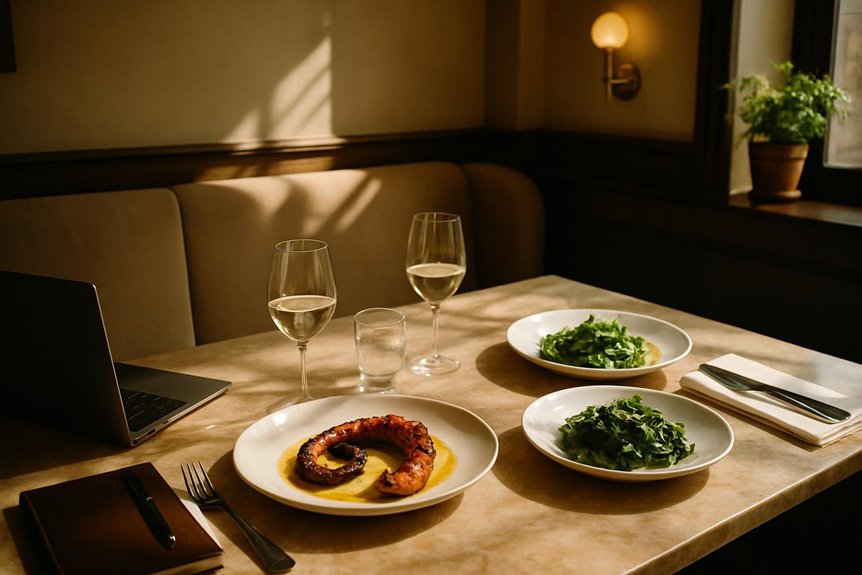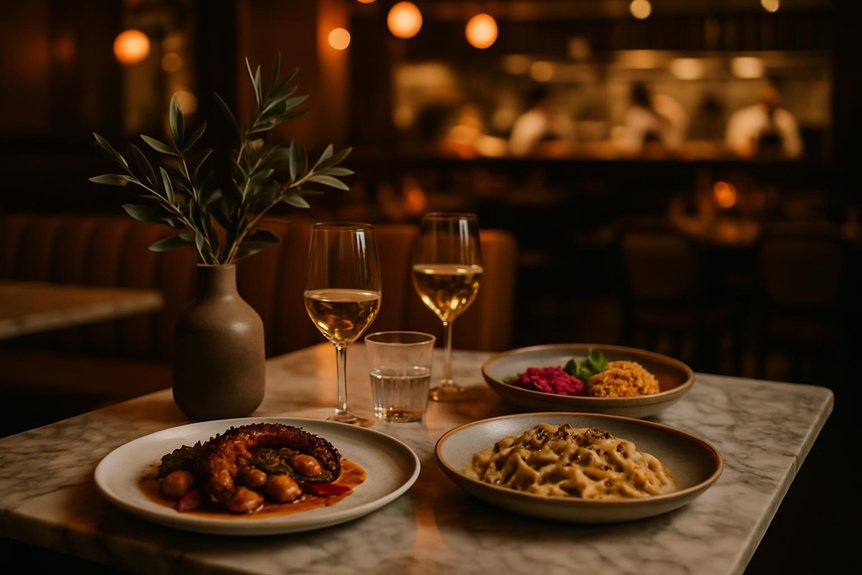

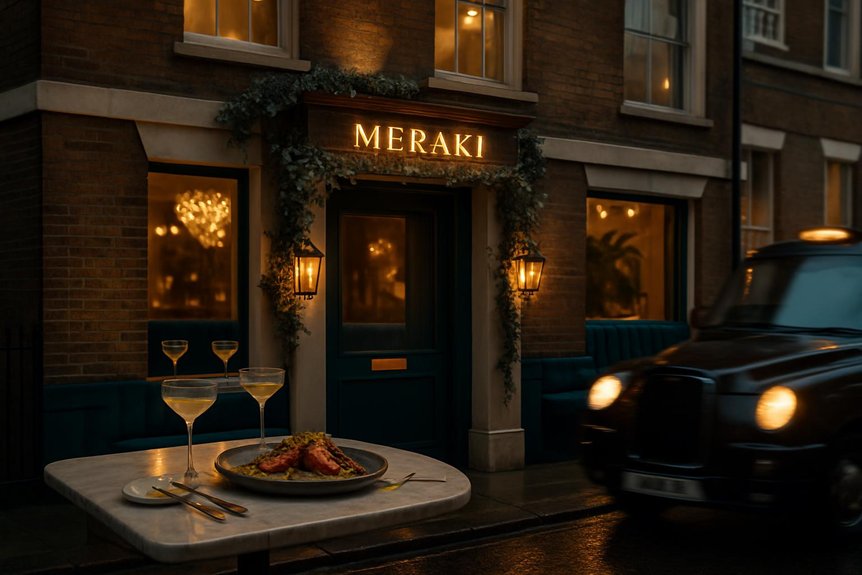
In Fitzrovia, Meraki frames Mediterranean glamour with quiet confidence. Its tasting menus unfold like theatre, guided by sommeliers who favor subtle drama over spectacle. The rooms are luminous, the plates seasonal and precise, the service instinctive. Beyond Meraki, London’s luxury dining offers cellar rituals, chef signatures, and night-out polish from Soho to Mayfair. The question is not where to go, but how to secure the moments that matter most.
Meraki: Mediterranean Glamour in the Heart of Fitzrovia
How does Meraki distill Mediterranean glamour into a London address? In Fitzrovia, the restaurant frames a serene stage of Mediterranean elegance: pale stone, sun-washed woods, and softened light create calm without theatrics.
Service moves with quiet assurance, guiding guests through a menu that celebrates precision over flash.
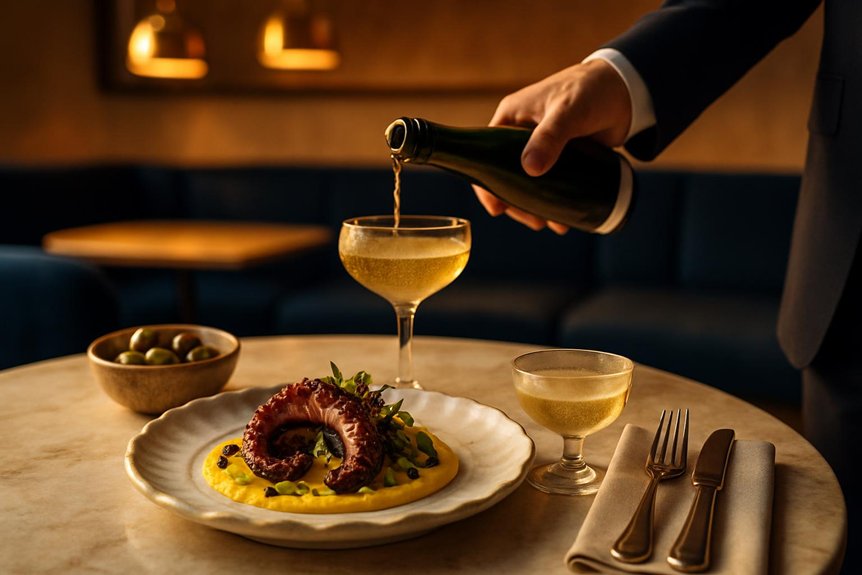
Coastal flavors anchor the experience. Briny crudo, charcoal-kissed octopus, and oregano-scented lamb speak to shoreline simplicity elevated by technique.
Vegetables are treated with equal respect—tomatoes glossed with green olive oil, courgettes brightened by lemon and mint—showing balance rather than excess.
The wine list leans toward mineral whites and elegant reds from the region, reinforcing place.
Meraki’s glamour is not spectacle; it is restraint, texture, and clarity, translating sunlit ease into an urban dining room.
Guests consistently praise the romantic atmosphere and exceptional service quality, making Meraki a cherished destination for special occasions.
Tasting Menus as Theatre: London’s Most Dazzling Courses
London’s tasting menus unfold as multi-sensory journeys, where aroma, texture, sound, and staging heighten each course. Chefs act as narrators, structuring sequences that build tension, deliver contrasts, and resolve with measured finales. The result is dining as theatre, orchestrated with precision to guide perception and memory. At Meraki, this experience is complemented by exquisite cocktails that showcase innovation and tradition, crafted by skilled mixologists.
Multi-Sensory Course Journeys
Why do some tasting menus feel like immersive theatre rather than dinner? In London, multi-sensory course journeys orchestrate sensory engagement beyond taste: lighting dips as a shell cracks, scent diffusers release sea spray, and porcelain warms the fingertips before a chilled gel lands.
Soundscapes—soft vinyl, a whisper of waves—prime expectation, while flavor fusion ties disparate textures into a single arc. The experience is paced like acts, each course a cue.
Meraki and peers deploy temperature gradients, volatile aromatics, and calibrated crunch to manipulate memory and anticipation. Servers present dishes with gestural precision, but the plate remains the protagonist.
Smoke is used sparingly, carbonation brightens oils, and acidity resets the palate. The result is choreography that heightens perception, turning a sequence of bites into a lucid, time-bound journey.
Meraki’s commitment to sustainability enhances the dining experience, merging luxury with ecological responsibility through innovative eco-friendly practices.
Chef-Led Culinary Narratives
What happens when a chef treats a tasting menu as script and stage? In London’s luxury rooms, courses arrive as scenes, each plate a line of dialogue shaping pace, tension, and release.
Chefs frame origin stories with farm to table precision, letting artisanal flavors act as protagonists rather than garnish. A hush falls; the first course sets character, the mid-menu twist recalibrates expectation, and a final sweet coda resolves the arc without sentimentality.
At Meraki, narrative clarity governs composition: saline notes meet citrus brightness, lamb is trimmed to a single decisive gesture, and herbs underscore rather than shout.
Elsewhere, fire, smoke, and fermentation provide leitmotifs, linking oysters to aged poultry. Service cues—lighting, plating, silence—tighten focus, turning dinner into measured dramaturgy.
Cellar Secrets: Sommelier-Led Wine Journeys
Though the dining rooms upstairs command attention, the most revealing experiences often unfold below ground, where sommeliers guide intimate, curated journeys through vaulted cellars.
Here, London’s luxury restaurants, Meraki among them, turn wine education into theater: guests trace terroir, technique, and time with glasses calibrated to express nuance. Rare verticals emerge from vintage collections, each pour contextualized—climate, vineyard lineage, and cellar craft delivered without sermon.
Tastings move with quiet choreography: a saline Assyrtiko beside herb-laced mezze; an aged Barolo unveiling truffle shadows; a grower Champagne sharpening citrus-driven courses. Decanting becomes an interpretive act, temperature a brushstroke.
The goal is resonance, not display—matching mood, palate, and memory. When the final glass settles, stories linger longer than tannin.
Design-Forward Dining Rooms With Cinematic Allure
London’s most design-forward dining rooms stage a scene where sculptural lighting casts deliberate drama across every table.
Velvet-and-brass palettes set a tactile, opulent tone that reads both contemporary and timeless.
Panoramic sightline staging guarantees each seat fields a cinematic view, from open kitchens to skyline vignettes.
Sculptural Lighting Drama
How does light become the lead actor in a room designed for lingering? In London’s luxury dining scene, illumination is orchestrated with the control of a stage director. Pendants descend like avant garde sculptures, calibrating sightlines and pace, while layered lighting installations choreograph mood shifts between aperitif and dessert.
At Meraki, the glow reads like dialogue: a warm wash on stone, a crisp highlight on plateware, a soft halo framing faces.
Cinematic tension arrives through contrast. Pools of brightness punctuate shadowed perimeters, creating depth without distraction. Dimmers refine the narrative arc, letting service adjust tempo without breaking atmosphere.
Materials—glass, patinated metal, alabaster—translate color temperature into texture. The result is focused intimacy: spatial drama that flatters cuisine, clarifies circulation, and sustains conversation without glare.
Velvet-And-Brass Palettes
When velvet meets brass, the palette signals intent: cinematic poise with tactile depth.
In London’s design-forward dining rooms, this pairing reads as a visual signature—rich, light-absorbing surfaces set against gleaming edges that choreograph atmosphere.
Velvet banquettes and chairs supply plush furnishings that temper acoustics while inviting unhurried meals; brushed or patinated brass frames bar fronts, architraves, and table bases, catching glints that guide the eye.
The scheme favors luxury textures over ornament, using material contrast to define zones and rhythms.
Jewel-toned upholstery anchors the room; slender brass lines articulate movement without clutter.
Touchpoints are deliberate: a rail cool to the hand, a seat with quiet give.
The result is composed glamour—neither ostentatious nor austere—where comfort, proportion, and cinematic allure align.
Panoramic Sightline Staging
From tactile luxury to spatial choreography, the focus shifts to how rooms stage the view. Panoramic sightline staging treats the city as co-author, aligning tables, banquettes, and balcony rails so the eye moves cleanly from plate to horizon. Designers favor low-profile seating, mirrored soffits, and tapered mullions for precise skyline framing, letting glass read as edge rather than barrier.
Lighting is calibrated: warm pools on the table, cool washes at the perimeter to deepen dusk and amplify panoramic vistas. Materials remain matte to prevent glare; reflective moments are disciplined, directing glints toward the Thames or a steeple line.
Circulation paths arc subtly, revealing landmarks in sequence. The result is cinematic pacing—courses timed to sunsets, cocktails to constellations, and conversation to the city’s quiet shimmer.
Seasonal Craft: Plates That Celebrate Provenance
Though London’s skyline is steel and glass, its finest kitchens move to the rhythm of the hedgerow and tide. Here, seasonal craft is not a slogan but a working discipline: day-boat landings, orchard windfalls, and foraged shoreline herbs decide the plate. Chefs treat provenance as narrative, revealing terroir through restraint, artistic plating, and sustainable sourcing that privileges integrity over excess.
- Study menus that name growers, fishers, and mills; specificity signals real seasonality rather than trend.
- Choose tasting courses aligned with micro-seasons—first peas, last game—so textures and sugars peak.
- Observe garnish logic: coastal plants with shellfish, woodland notes with venison, creating geographic coherence.
- Pair wines from similar climates; cool-climate acidity frames spring greens, while mature reds steady late-autumn richness.
Mayfair’s Discreet Temples of Indulgence
Behind Mayfair’s grand facades, hidden townhouse dining rooms host quiet, invitation-only suppers.
Guests are ushered to private chef’s tables where menus are shaped in real time and service is near-silent.
The setting prizes anonymity, precision, and the luxury of fewer eyes.
Hidden Townhouse Dining
While Mayfair’s grand hotels command attention, the borough’s quiet townhouses host its most guarded indulgences. Behind frosted fanlights and discreet brass knockers, intimate salons serve calibrated luxury: whisper-soft service, candlelit rooms, and menus that favor precision over spectacle.
Courses arrive with artistic plating that frames seasonal ingredients—chalk-stream trout, Kentish morels, bitter leaves—composed like still-life studies. Wine pairings lean toward restrained Old World bottles, chosen for texture and length rather than volume.
- Arrive slightly early to absorb the room’s hush and note the art; it signals the kitchen’s aesthetic.
- Request the day’s off-menu seasonal ingredients to gauge the chef’s intent.
- Choose half pours to track the meal’s progression.
- Reserve corner banquettes; sightlines matter when the theatre is scent, light, and pause.
Private Chef’s Tables
How does Mayfair conceal its most meticulous stages of dining? Behind unmarked doors and hushed corridors, private chef’s tables operate like ateliers, where precision eclipses spectacle.
Guests witness chefs compose plates with jeweler’s focus, each gesture calibrating temperature, texture, and timing. Menus evolve in real time, guided by season, mood, and the rhythm of the room.
Food presentation becomes narrative: bone-white porcelain framing caviar-laced custards, lacquered sauces drawn into disciplined lines, a flash of citrus mist.
Table aesthetics mirror the craft—matte linens, stemware tuned to varietal, cutlery weighted to the gram, lighting engineered to flatter glaze and garnish.
Conversation softens; attention sharpens. In these discreet temples, indulgence is measured not by volume but by the exactitude of experience.
Soho’s Buzzy Icons for Night-Out Elegance
Amid the neon hum and late-night footfall, Soho’s signature dining rooms balance swagger with exacting craft. The mood is electric yet polished: a choreography of velvet banquettes, low-lit corners, and a bar scene that signals intent.
Guests drift from aperitif to late night cocktails, threading between DJ-led lounges and discreet alcoves, finding a pace that suits both celebration and conversation. Service is swift, discreet, and impeccably timed, granting the evening a sense of cinematic ease.
- Reserve counter seats to watch the room—ideal for people-watching and pacing courses.
- Start at the bar; align cocktail strength with the night’s tempo before moving to the table.
- Time arrivals post-9pm for peak atmosphere without queue fatigue.
- Mix venues: cocktail-first, dinner-second, digestif-late to extend the arc.
Chef-Driven Stories: Signature Dishes to Seek Out
Beneath London’s gloss, chef signatures reveal the city’s true persuasion: dishes that distill provenance, technique, and personality into a single plate. At Meraki, a charcoal-kissed octopus with Aegean olive oil narrates Cycladic restraint, while lemon-dressed herbs echo Farm to table urgency.
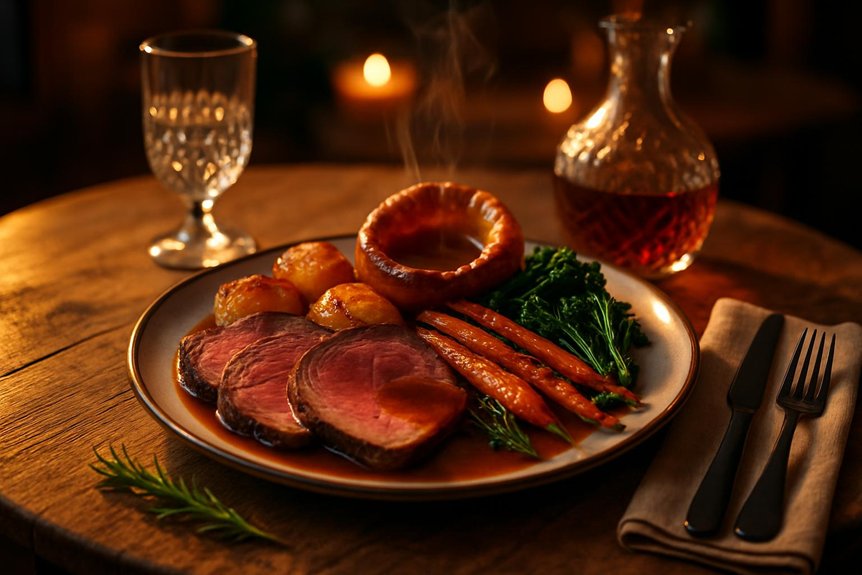
Across town, a tasting of aged native beef, brushed with seaweed glaze, frames British terroir through quiet precision. Fusion cuisine speaks fluently at a Japanese-Peruvian counter where yuzu leche de tigre sharpens line-caught scallop, balancing silk and voltage.
A pastry chef’s hay-infused custard, poured into brittle caramel, turns countryside notes modern. Each plate reads like a chapter: ingredient integrity first, technique as grammar, memory as motif—guiding diners toward signatures that justify the reservation and define London luxury.
Service as Art: Hospitality That Anticipates Every Need
Plates may tell stories, but London’s finest rooms guarantee the narrative unfolds without friction. Service operates like choreography: unobtrusive, precise, and attuned to rhythm.
At Meraki and its peers, the Artful ambiance sets tempo while staff read micro-cues—pace of conversation, glass angles, temperature preferences—to deliver personalized experiences without prompting. Menus arrive timed to appetite, not the clock; courses pivot to dietary nuances seamlessly.
Hospitality here is anticipation, not interruption.
- Observe the room’s cadence; allow staff to guide pacing while signaling preferences succinctly.
- Share essential details once; refined teams disseminate information to avoid repetition.
- Trust silent service cues—crumbing, glass rotation, and napkin folds indicate readiness.
- Engage with sommeliers; their calibrated pairings heighten texture, aroma, and memory, completing the arc of service-as-art.
How to Book the Best Tables and Time Your Visit
Securing London’s most coveted seats starts with timing, leverage, and specificity. The discerning diner identifies reservation strategies months ahead—particularly for launches, chef residencies, and seasonal menus—while remaining flexible across dates and seating types.
Peak dining hours are 7:30–9:00 p.m.; aiming for first or last sittings increases access and service attention. Direct contact often outperforms apps: a concise email noting occasion, preferred table location, and willingness to accept short notice signals intent.
Weekday lunches offer calmer rooms and easier allocations, especially at Michelin addresses.
For hot lists, joining newsletters, loyalty programs, and concierge platforms yields pre-release inventory. Waitlists work when paired with proactive follow-up the day of.
Parties of two are prioritized; odd numbers should accept banquettes. Always reconfirm 24 hours prior.
Conclusion
In the end, London’s luxury dining thrives on immersion—Meraki’s Mediterranean poise, theatrical tasting menus, and sommelier-led revelations distill the city’s appetite for spectacle and substance. Design-forward rooms and seasonal craft invite lingering, while chef signatures and anticipatory service turn meals into narratives. One savvy statistic: diners who book midweek early seatings report 20–30% shorter wait times between courses, enhancing pacing and enjoyment. Time the visit, request counter seating, and let the city’s finest moments unfold with cinematic grace.