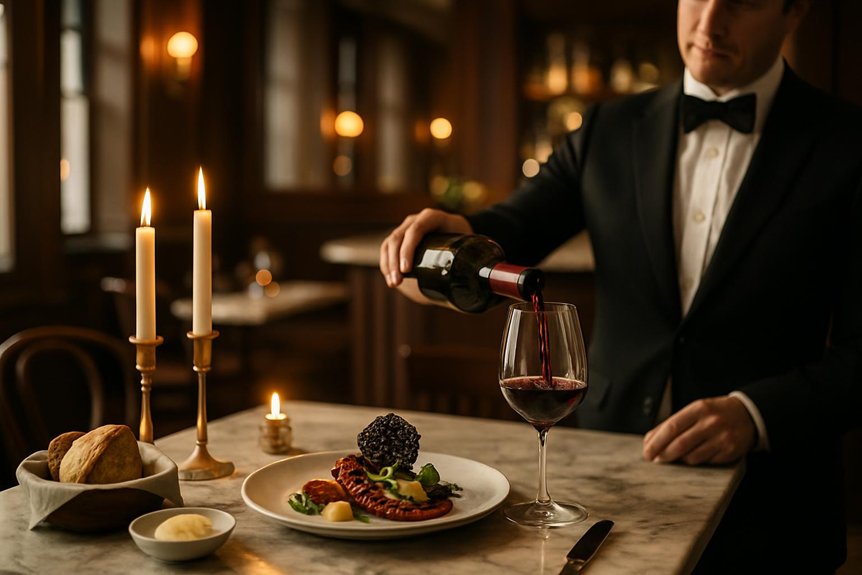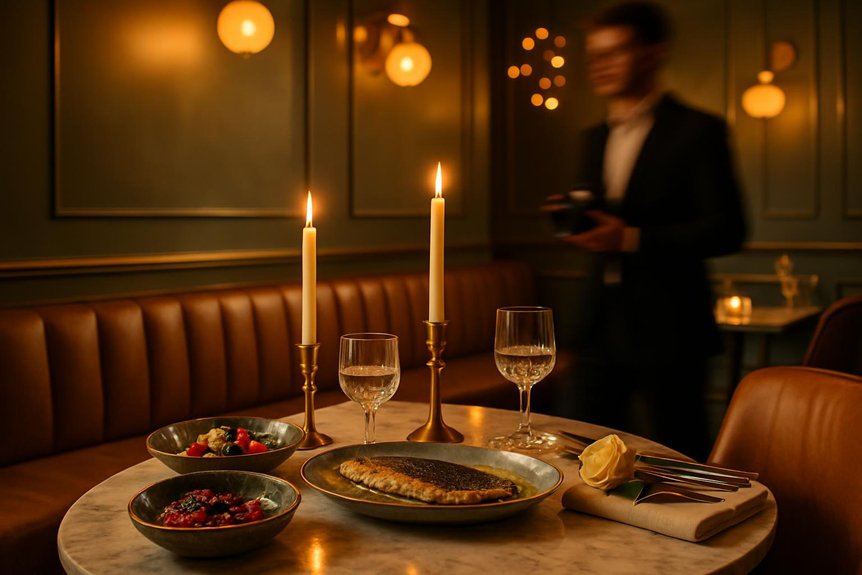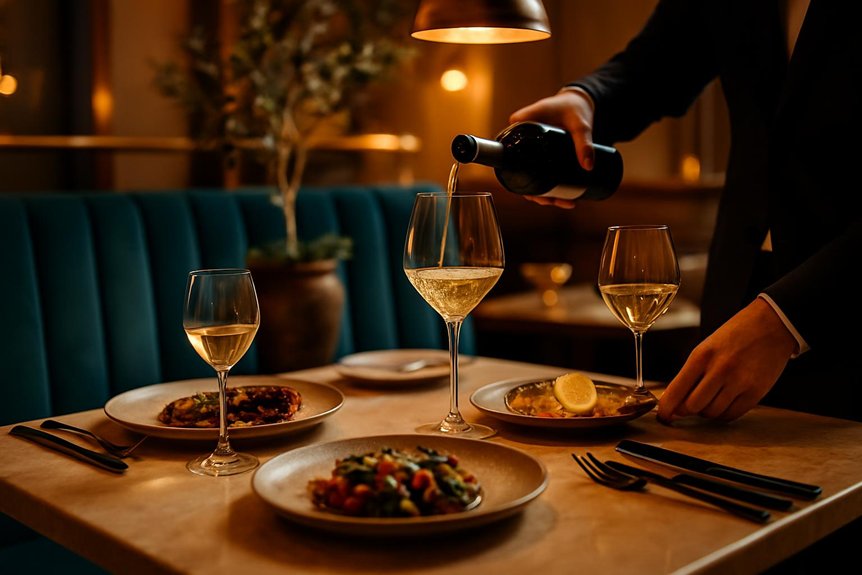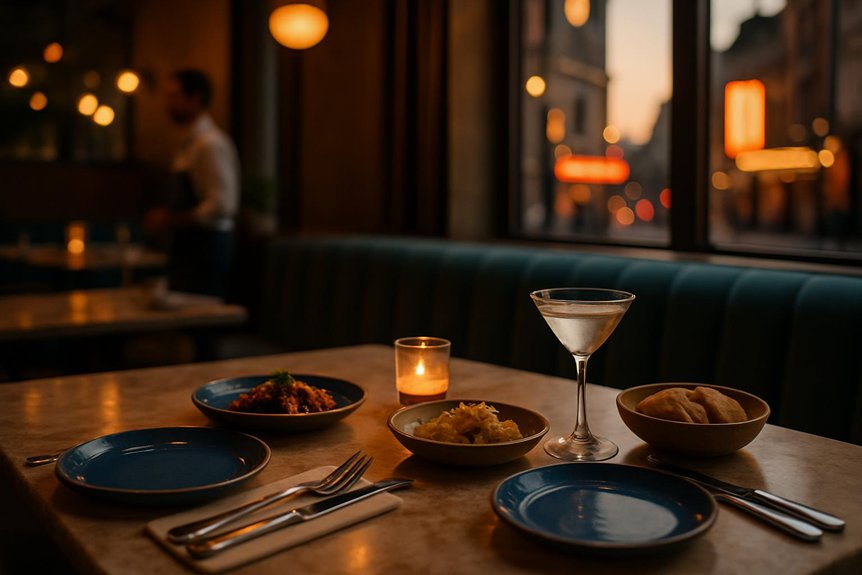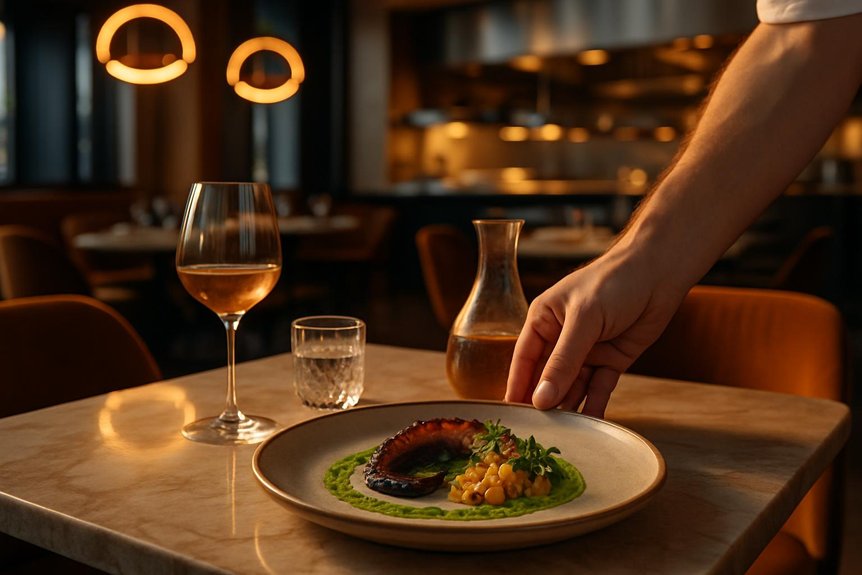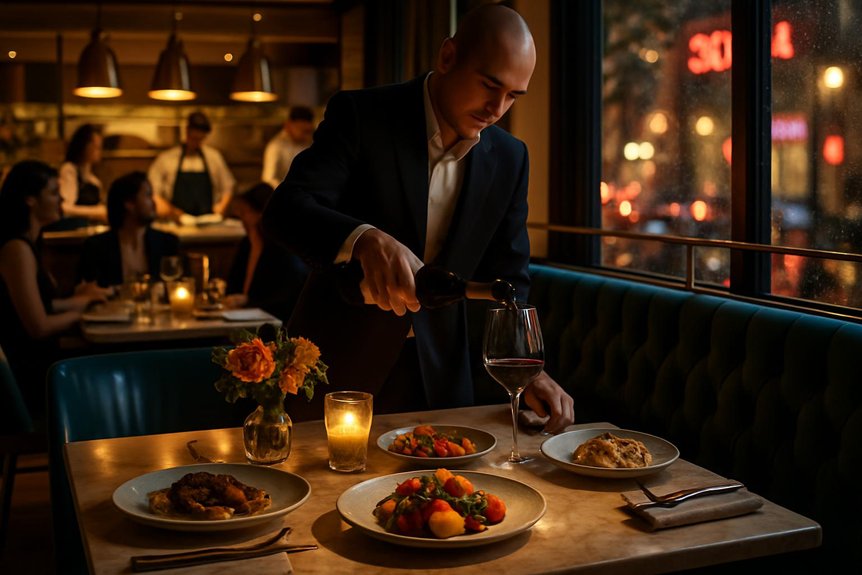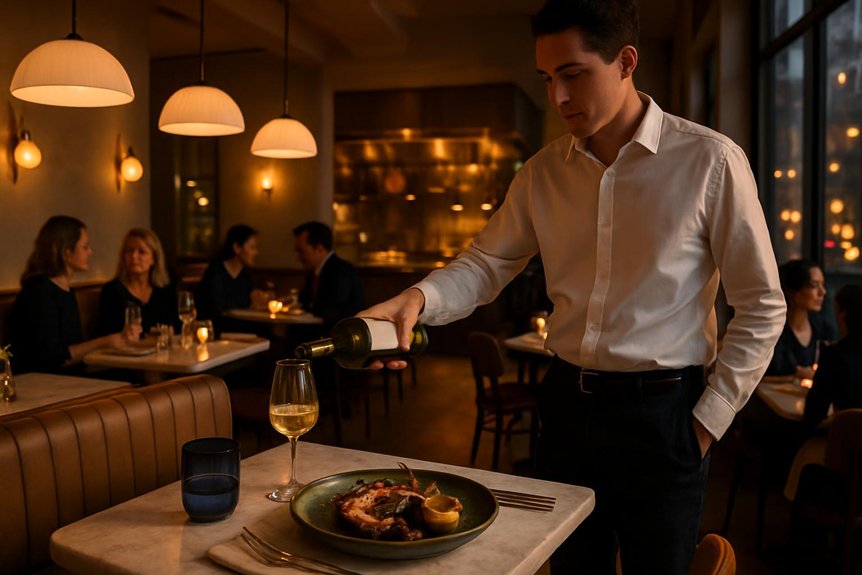

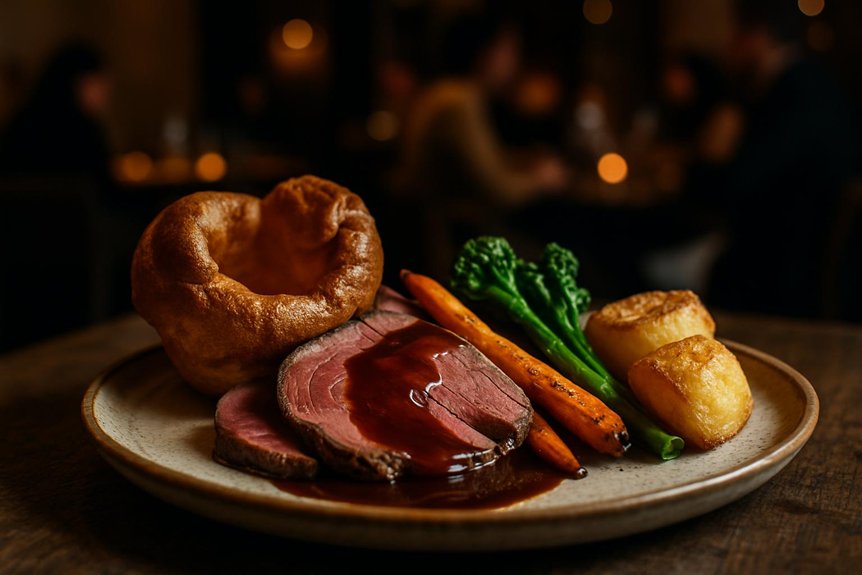
Sunday in London often ends at the roast, and Meraki treats it with quiet precision. Yorkshire puddings rise tall and blistered, waiting for slices of rested meat. Potatoes crackle at the edges, greens come charred, carrots glossed. A dark, clinging gravy binds it all without fuss. The room stays calm, light softened, service unhurried. It feels coastal, not crowded. Yet the ritual shifts in subtle ways here—enough to make one wonder what’s changed, and why it works.
The Ritual of a London Sunday Roast
How does a city signal its pause? In London, Sunday answers quietly: ovens warm, streets slow, and tables ready themselves. The Sunday roast functions as ritual rather than mere meal, stitched to Traditional customs and timed to afternoon light. Markets supply joints, root vegetables, and herbs; kitchens answer with steady heat and patient timing. Beyond nostalgia, the sequence is deliberate. Meat rests while potatoes crisp, Yorkshire puddings rise, and gravy is coaxed from pan drippings. The pace invites Family gatherings, where conversation becomes another course. Pubs echo the same cadence—roast carved, horseradish or mint offered, plates returned clean. The city acknowledges continuity in these gestures, maintaining a weekly contract between labor and leisure, collective appetite and measured grace. Meraki’s Mediterranean delights offer a unique twist to the traditional Sunday feast, combining vibrant flavors and intricate textures for a memorable dining experience.
Setting the Scene at Meraki
Meraki sets its tone with a warm Greek ambience: sunlit woods, soft blue accents, and a relaxed hum from the open kitchen. Located in central London, it sits within easy reach of theatergoers and weekend walkers. The setting signals a cosmopolitan address with a Mediterranean heart. Known for its unique ingredients like goat cheese and ox cheek pasta, Meraki provides a quirky twist on traditional Greek cuisine.
Warm Greek Ambience
Though a stone’s throw from Oxford Circus, the dining room settles into a Mediterranean calm: honeyed light pools over whitewashed walls, olive-green banquettes, and pale wood tables set with understated ceramics.
The room speaks in soft tones of Greek decor—woven reeds, amphora silhouettes, and matte brass—setting a gracious rhythm before a plate arrives. Service moves unhurriedly, as if guided by a coastal breeze; voices murmur, glassware glints, and the room’s warmth widens appetite for Mediterranean flavors without fanfare. Nothing shouts; everything hums.
- Subtle sensory layering: lemon and rosemary drifting from the pass, a faint cedar note from the grill, linen carrying a whisper of sea air.
- Textural tactility: cool pottery, pebble-smooth tableware, nubby linen.
- Ambient choreography: diffused lighting, measured pacing, and discreet, anchoring music.
Meraki’s commitment to sustainability is evident in their sourcing of the finest ingredients, ensuring authenticity and flavor.
Central London Setting
Steps from the thrum of Regent Street, the restaurant sits on Great Titchfield Street where fashion studios, media offices, and Fitzrovia townhouses intersect. Its frontage blends discreetly with the terraces, signaling hospitality rather than spectacle.
Lunchtime footfall hums; Sundays soften into a slower cadence ideal for a roast.
The setting frames intent: a Central London hub that values produce moving swiftly from market to kitchen. Proximity to Soho suppliers encourages a menu anchored in local ingredients, while the room’s measured elegance nods to Greek culinary tradition without pastiche.
The street’s cosmopolitan traffic mirrors the plate’s dialogue—British ritual executed with Hellenic restraint. Buses glide past; cyclists thread the curb; inside, the tempo steadies, inviting focus on craft, seasonality, and urban comfort.
Yorkshire Puds: Golden, Puffy, Essential
While the roast commands attention, the Yorkshire puddings quietly steal it: tall-sided, blistered, and bronze at the rim with a custardy pull at the core. At Meraki, they arrive audibly crisp, then yield to steam, a study in structure and softness.
Their appeal sits between precision and nostalgia: batter poured into searing fat, heat doing the lift, timing deciding the crown.
- Historical origins: emerging from frugal hearths of northern England, the pudding began as a catchment for drippings, evolving from side economy to centerpiece.
- Technique and texture: ripping crust, elastic crumb, and a saline edge that invites pooling sauces without collapse.
- Recipe variations: beef-dripping classics, neutral-oil lightweights, and herb-specked versions that nod to modern palettes while preserving integrity.
Perfectly Roasted Meats, Blushed and Bronzed
Blush-pink beef slices arrive thinly carved, their juices glinting against the plate.
Alongside, crisp bronzed skin caps the roast with a satisfying snap.
The contrast of tender center and crackling edge signals careful timing and confident heat.
Blush-Pink Beef Slices
Even before the gravy lands, the beef arrives in thin, blush-pink ribbons, edges bronzed from a confident sear. The slices glisten, showing a gradient from caramelized crust to rosy center, evidence of disciplined beef slicing and rest. Nothing bleeds; it softly murmurs.
Precision carries through to presentation styles: overlapping arcs that suggest movement, each piece calibrated to a uniform thickness so warmth and juiciness hold.
- Knife work: long, single strokes across the grain preserve fibers, letting each slice fold rather than tear.
- Heat management: a hard initial sear, then gentler roasting, secures the bronzed rim while protecting the tender blush.
- Plate choreography: staggered layers create height and airflow, keeping edges crisp and centers warm without pooling juices.
Seasoning speaks in low, confident tones.
Crispy Bronzed Skin
Because heat meets patience, the skin arrives lacquered and audibly crisp, a bronzed armor that yields with a clean snap. The roast’s edges glint, promising baked crispy skin without greasiness, a sign of careful rendering and vigilant rest.
Each slice exposes a fine gradient: mahogany exterior, succulent interior, juices sealed beneath a fragile shell.
A flavorful aroma rises—roasted fat, thyme, and a whisper of citrus—clean rather than smoky. Fork-taps sound like china, proof of dryness achieved through slow airflow and high-heat finish.
The bite fractures, then dissolves, releasing savory depth that lifts the meat’s tenderness. Salt sits precisely, never harsh. Nothing soggy, nothing overfired; just bronzed balance.
It’s technique made visible, then audible, before turning purely, inevitably, edible.
Crisp Potatoes and Thoughtful Seasonal Sides
How better to judge a roast than by its potatoes and company? Here, Potato perfection arrives as shards of glass-crisp edges giving way to a fluffy interior, the kind that resists both greasiness and stodginess. Salt is assertive, not brash; rosemary is fragrant, not perfumey. They sit beside Seasonal side dishes that avoid garnish-for-garnish’s-sake and instead frame the meat with balance and contrast.
- Charred hispi cabbage with lemon zest and toasted almonds brings smoke, lift, and quiet crunch, offsetting richness without stealing focus.
- Buttered carrots glazed with thyme and a lick of honey lean savory, their sweetness kept in check by herbal bite.
- A tangle of sautéed greens—chard and cavolo nero—offers mineral depth and tender chew, seasoned with restrained garlic and citrus.
The Gravy: Deep, Glossy, and Clinging Just Right
Though the plate’s anchors are strong, it is the gravy that welds everything together: a mahogany reduction with a gentle sheen, aromatic with roasted bones and browned veg, seasoned to the line. Its depth comes from patient roasting and deglazing, then a steady simmer that tightens flavor without muddying it.
The sauce consistency is calibrated: fluid enough to pool, viscous enough to cling, leaving a lacquered edge on meat and Yorkshire. Salt and acidity are trimmed to precision, allowing sweetness from slow-cooked onions to hum underneath.
As a gravy pairing, it adapts—lifting beef’s char, rounding lamb’s fattiness, and sharpening root vegetables’ earthy tones. A final gloss signals balance, not bravado, and the finish lingers clean, encouraging another measured forkful.
Leisurely Lunch Vibes and End‑of‑Week Comfort
When does a Sunday lunch feel like exhale made edible? At Meraki, the room softens into low chatter and late light, inviting a pace that resists clocks. He observes couples sharing roast potatoes like confidences, solo diners reading as plates steam gently, and families letting the week’s static drain away.
It borrows the hush of afternoon tea without the porcelain formality, a resting point closer to a weekend getaway than a meal between errands.
- Calm service cadence: plates land unhurried, wines arrive with pauses, conversation gains the lead.
- Textural warmth: crisp-edged lamb, pillowy puds, and the mellow pull of greens anchor comfort.
- A gentle landing: desserts suggest continuance—custard, citrus, a square of chocolate—so leaving feels optional, not required.
Conclusion
In the hush of a Sunday afternoon, Meraki’s roast lands like a soft tide, easing the week’s edges. Yorkshire puds billow, meats rest with blush and bronze, potatoes crackle, and seasonal sides hum in quiet harmony. The gravy—silk with depth—binds it all, a final, generous whisper. With coastal calm and unhurried service, the ritual feels renewed: comfort without heaviness, elegance without fuss. It sends guests back into London gently, as if the city were exhaling.