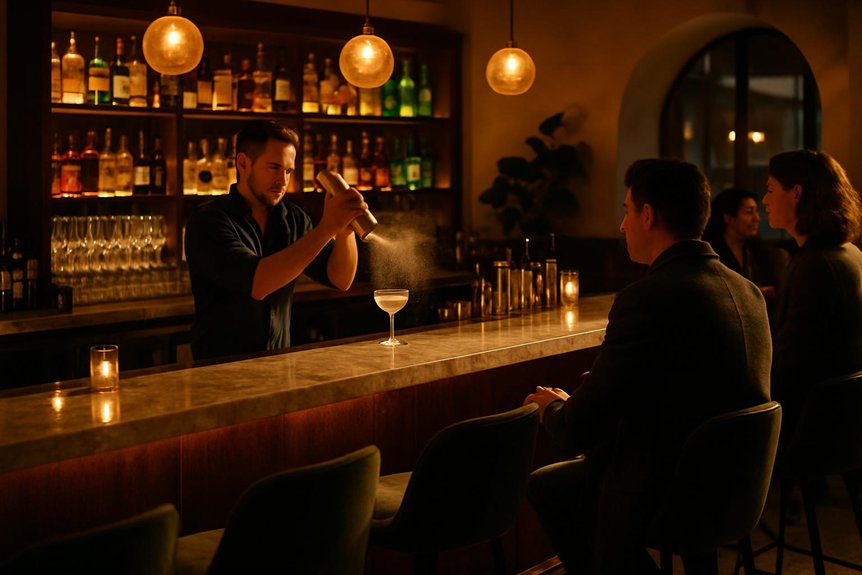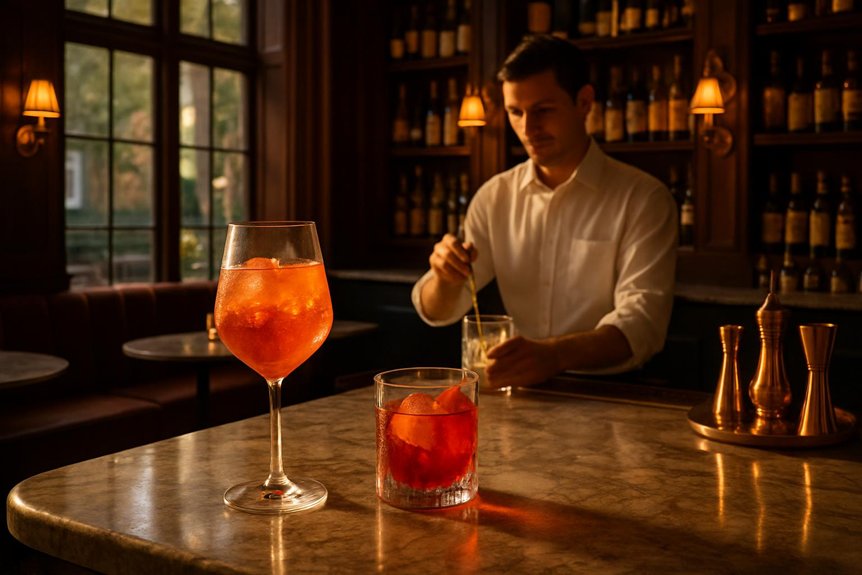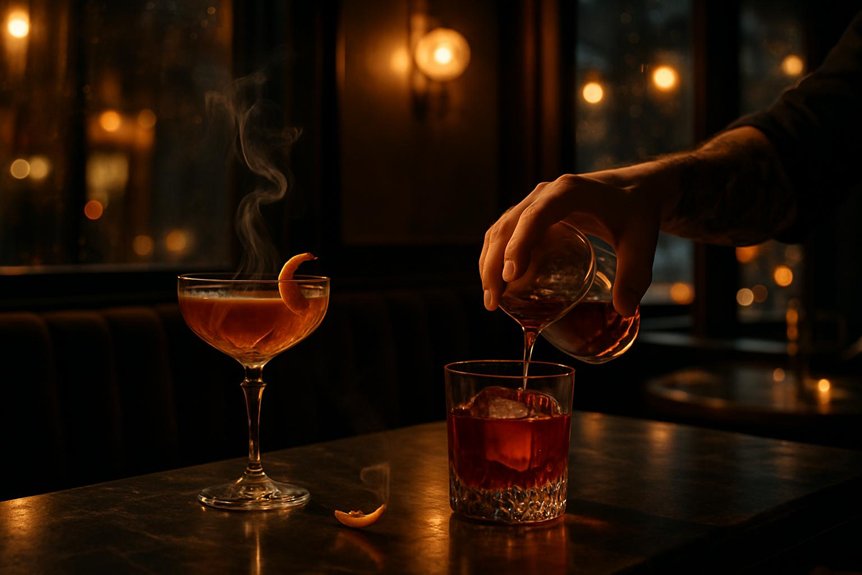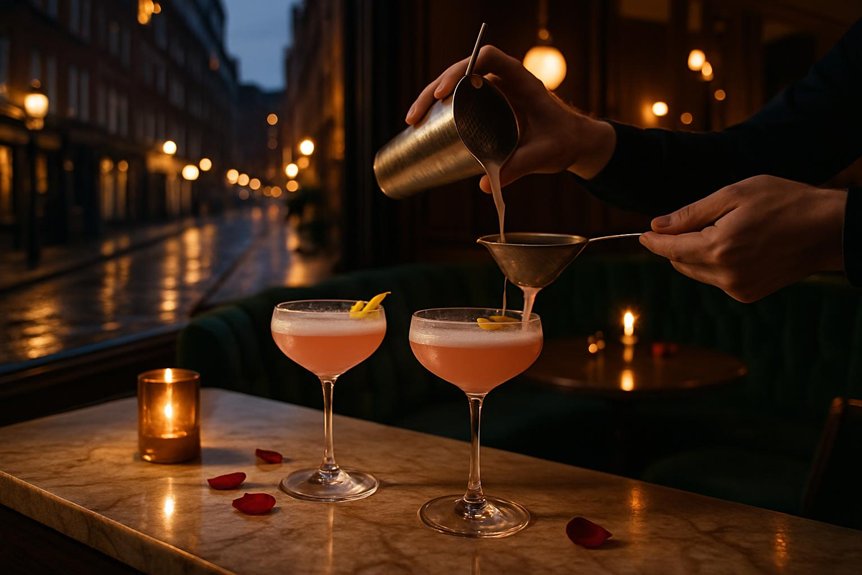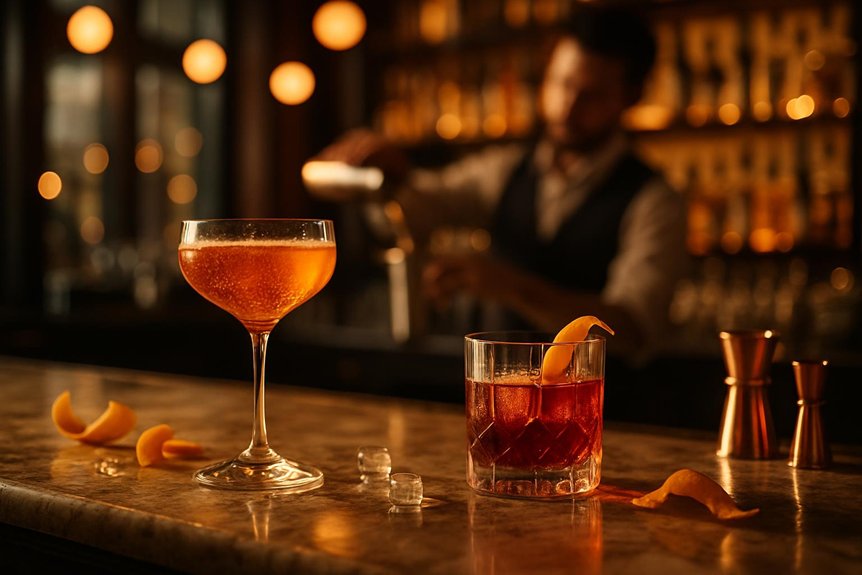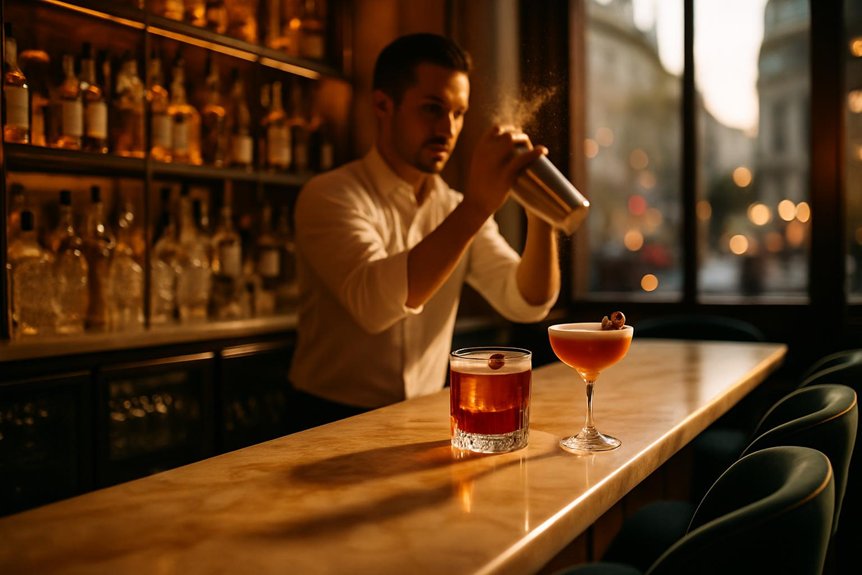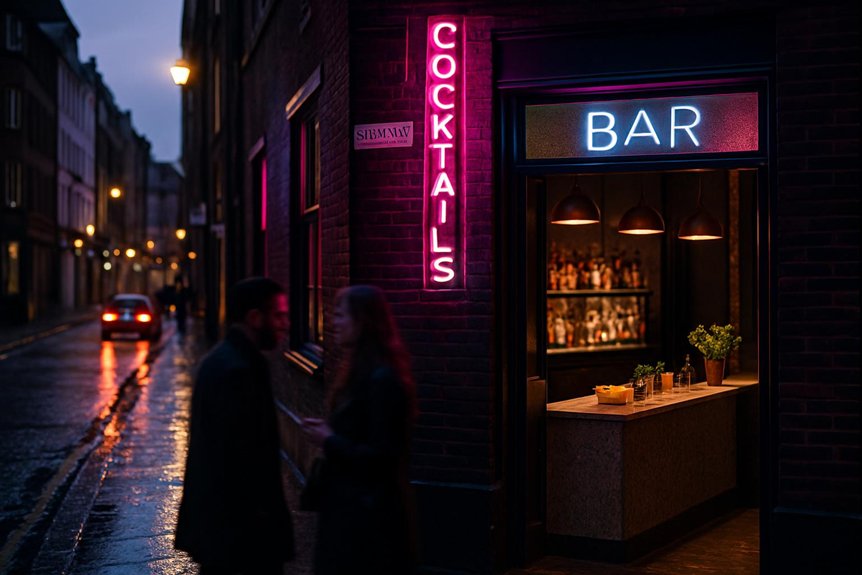

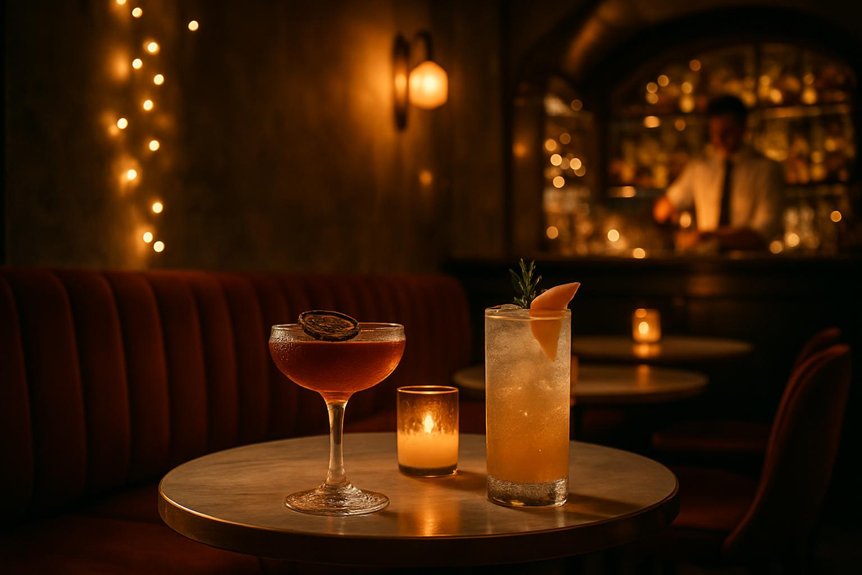
After midnight, Fitzrovia shifts into a quieter pulse, and Meraki becomes the place where that rhythm is felt. Warm light softens velvet corners. Jazz hums under a thin line of neon. Bartenders move with measured precision, turning aromatics into small theatre. Signatures change with the season. Classics arrive with quiet twists. Some guests choose the bar’s steady chatter; others fade into a booth. The mood suggests there’s more to uncover—if one knows where to look next.
The Allure of Fitzrovia After Dark
Though the day’s office lights fade, Fitzrovia gathers a quieter electricity: narrow streets glow with warm bar fronts, and late-hour drinkers drift between townhouse lounges and tucked-away speakeasies.
The fitzrovia nightlife develops its own pace, unhurried yet alert, guided by soft neon and discreet doorbells. A measured evening ambiance settles over brick facades, where bartenders weigh citrus and smoke with calm precision, and small groups choose booths over bustle.
Within this serene setting, Meraki’s intimate atmosphere offers a perfect backdrop for late-night cocktails, enhancing the romance and serenity of Fitzrovia’s nightlife. Conversation carries at low volume, punctuated by ice in mixing glasses and the muted thrum of curated playlists. Corners feel discovered, not advertised. Routes loop from Rathbone Place to Charlotte Street, linking intimate rooms with disciplined cocktails.
The effect is cohesive: a neighborhood that prizes craftsmanship, restraint, and after-hours civility.
Inside Meraki’s Velvet Glow
From Charlotte Street’s hush, Meraki’s entrance offers a low-lit promise: velvet banquettes, brass trim, and a bar that glows like amber behind ribbed glass.
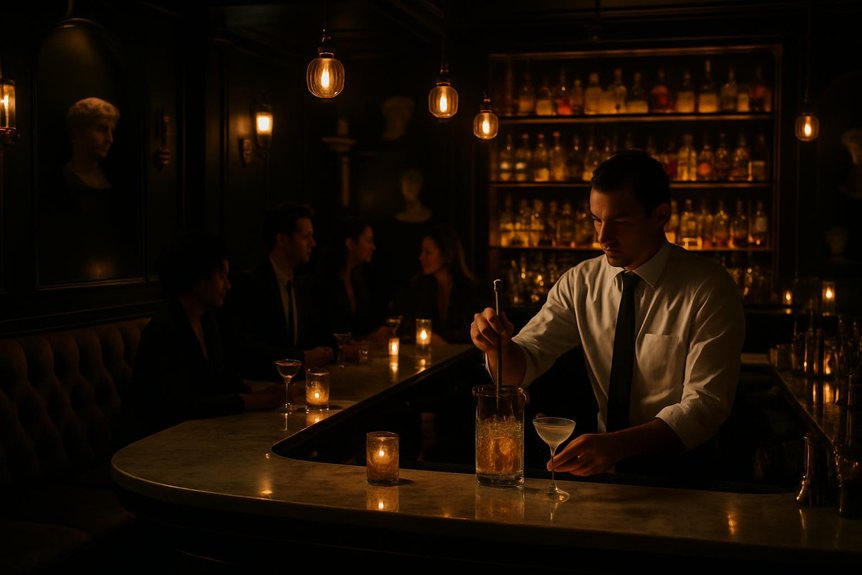
Inside, the palette leans midnight: inky walls, moody sconces, and tabletops with a discreet sheen. Upholstery swallows sound; conversations soften to a private murmur. Light pools deliberately, sketching silhouettes and leaving corners suggestive.
The room’s artistic craftsmanship is evident in stitched seams, weighted drapery, and bespoke metalwork that feels hand-finished rather than polished to anonymity.
A subtle soundtrack breathes at a measured tempo. Citrus zest and warmed spices thread the air, amplifying the sensory experience.
Service moves with quiet choreography—menus arrive, water is refreshed, candles steadied—so the space itself leads. Guests relax into tempo, the city paused outside.
Meraki is known for its exquisite cocktails that showcase innovation and tradition, crafted by skilled mixologists.
Mixology as Performance
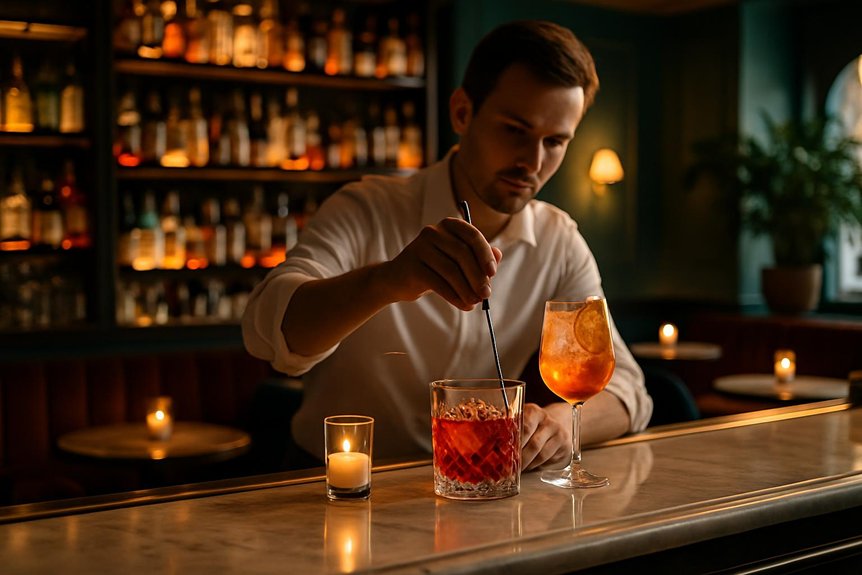
While the room settles into its hush, the bartenders take the stage with measured intent. Their choreography is spare: a calibrated shake, a silent count, the quick snap of a tin.
Precision becomes spectacle without noise. Each gesture is legible, like notation read aloud.
Tools glint under low light—jiggers, strainers, atomizers—deploying mixology techniques that privilege control over flourish. Ice is portioned, not guessed; dilution is timed, not hoped.
The arc of a pour recalls cocktail history, where classics set the grammar and innovation edits the line. Audience becomes witness, not participant, watching ratios turn into narrative.
Glassware is chosen for posture as much as function, and garnishes land like punctuation marks. The performance ends without bow; only aroma and balance remain.
Meraki offers a dedicated cocktail bar with citrus fruits from Naxos and a selection of Greek wines, enhancing the overall ambiance.
Seasonal Signatures and Aromatic Flourishes
As autumn cedes to frost, the menu pivots with a cool-breathed certainty toward what the markets yield and the nights demand.
Meraki narrows its focus to aromatics that travel lightly yet linger: ginger infusions, herbal nectars, and bright peels pressed to release winter oils.
The bar’s tempo slows; garnishes are functional, not decorative, and sweetness pulls back to let spice and resin speak.
- Smoked quince highball with ginger infusions, lengthened by chilled soda, tart and cedar-tinged.
- Pine and bay martini riff using herbal nectars, saline-washed for a brisk, needle-laced finish.
- Burnt honey and chamomile sour, egg-white soft, citric yet meadow-warm.
- Black cardamom old fashioned, cacao-bittered, orange-oil kissed, steady and late-hour calm.
Each pour favors clarity, aromatic lift, and weather-wise restraint.
Classics Reimagined at the Bar
At the bar, familiar blueprints are refitted with signature twists that signal intent rather than novelty for novelty’s sake. A Martini might trade olive brine for preserved lemon, while a Negroni leans on roasted rhubarb for depth.
Seasonal ingredients take the spotlight, shaping profiles that shift week to week without losing the classics’ backbone.
Signature Twists on Classics
Though the hour grows late, the bar’s focus sharpens on reinvention: familiar blueprints reframed with deft, modern cues. Observers note precision over spectacle, a measured cadence tuned to lounge ambiance and disciplined cocktail aesthetics.
Each pour signals respect for heritage while asserting a confident, late-night identity.
1) Martini, olive-smoked: a chilled, lean profile lifted by aromatic vapour, delivering brine without heaviness.
2) Negroni, cacao-edged: bitters balanced by dry cocoa tincture, adding length and a restrained duskiness.
3) Old Fashioned, saline-honey: mineral flicker meets amber warmth, tightening sweetness and brightening the rye.
4) French 75, yuzu-mist: citrus sharpened, bubbles taut, an urbane sparkle that resists excess.
Glassware proportions, dilution control, and quiet aromatics keep classics intact while rendering them unmistakably Meraki.
Seasonal Ingredients Spotlight
Precision with classics sets the stage for what the season brings to the back bar. Meraki’s bartenders select seasonal produce with a chef’s restraint, folding it into time-honored builds without blurring their structure.
A Martini leans mineral, then lifts with pear-skin aromatics; a Collins stays crisp, brightened by yuzu oils and a snap of thyme.
Fruit infusions are treated as accents, not blankets. Strawberry-washed vermouth sharpens a Negroni’s edges, while roasted quince brings quiet depth to a Whiskey Sour.
Citrus is handled by variety and ripeness, from Seville’s bitter glow to bergamot’s floral line. Herbs are trimmed to express one note—rosemary for resin, basil for pepper.
Each glass reads familiar on paper, yet lands with seasonal clarity and disciplined warmth.
The Soundtrack to a Slow-Burning Night
While the ice settles in the glass, the room tunes itself: low-slung bass, brushed cymbals, and a velvet run of piano that keeps conversation in the pocket. The soundtrack moves in gradients, never rushing, pulling focus to the hush between beats. Curated music selection shapes time—tempo dips as the night lengthens, harmonies soften edges, and space opens for quiet laughter.
Ambient lighting syncs with the mix, dimming a fraction when melodies turn dusky, brightening on a brushed snare.
- Warm jazz standards segue into neo-soul slow burns, pacing the evening.
- Sub-bass remains tactile, present but never domineering.
- Playlists arc in sets, inviting lingering rather than haste.
- Pauses are intentional, letting glasses rest as reverb fades and the room exhales.
Glassware, Garnishes, and the Art of Presentation
In Fitzrovia’s late hours, the glassware shapes the mood before a sip is taken, from cut-crystal coupes to slender highballs chosen with intent.
Elevated garnish techniques—charred citrus oils, brittle herbs, precision peels—signal craft without showboating.
Visual storytelling pours complete the scene, with layered hues and controlled dilution charting a narrative from first glance to last sip.
Signature Glassware Choices
Though the hour grows late, Fitzrovia’s bars stay exacting about presentation, using glassware and garnish as quiet signatures of intent.
Signature Glassware Choices start with disciplined glass design and deliberate stemware selection, matching vessel to build, temperature, and aroma. Meraki leans on clarity, weight, and proportion to telegraph style without noise, letting light, contour, and rim geometry shape perception before the first sip.
- Nick & Nora: concentrates aromatics while preserving chill; ideal for stirred, spirit-forward pours.
- Double Old Fashioned: heavier base and wider diameter, suited to large-format ice and slow dilution.
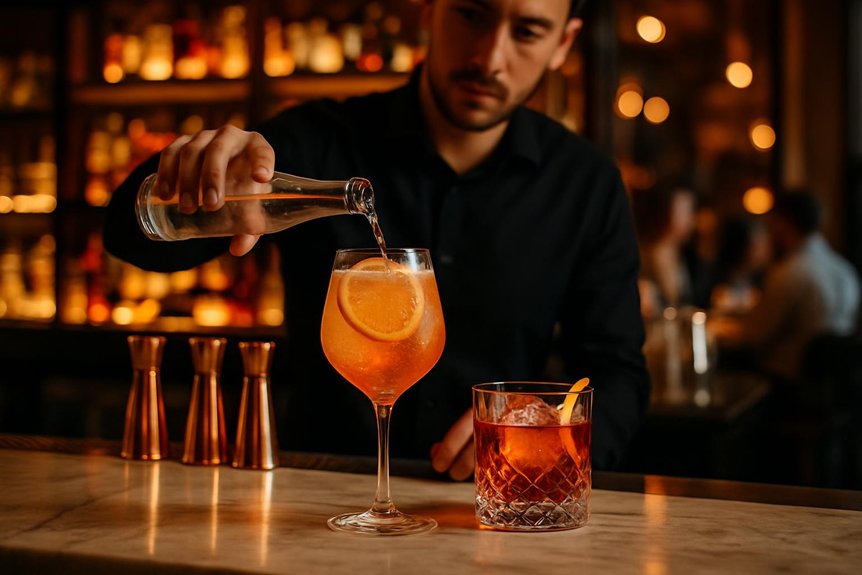
- Highball: tall, narrow silhouette protects effervescence and directs carbonation-driven aromatics.
- Coupette: shallow bowl sets a relaxed posture for citrus-led, shaken classics.
Each piece underscores pace, balance, and intent—quiet authority in the hand.
Elevated Garnish Techniques
Glass choice sets the stage; garnish delivers the message. At Meraki, elevated garnish technique means function first, flourish second. Citrus oils are expressed with measured precision, then anchored by salt rims calibrated to the drink’s acidity. Herb sprigs are flash-clapped to awaken aroma, placed where the nose meets the rim.
Creative plating principles guide the bar top: micro-clusters of candied peel, tempered chocolate shards, and brittle sesame crisps sit on slate to ready service without clutter.
Ingredient layering determines sequence and height. Heavier elements rest low—dehydrated wheels or brûléed figs—while airy accents like yuzu foam crown the pour. Skewers are counterbalanced to avoid torque on stemware. Crushed ice gets defined contours, preventing dilution creep while spotlighting clarity and disciplined texture.
Visual Storytelling Pours
While the recipe defines flavor, presentation frames meaning: every pour at Meraki is staged as a narrative cue.
The bar’s visual grammar relies on glassware silhouettes, garnish architecture, and a disciplined color palette that guides the eye before the palate. Stemware height, rim width, and clarity control surface optics, while lighting design sculpts reflections into mood.
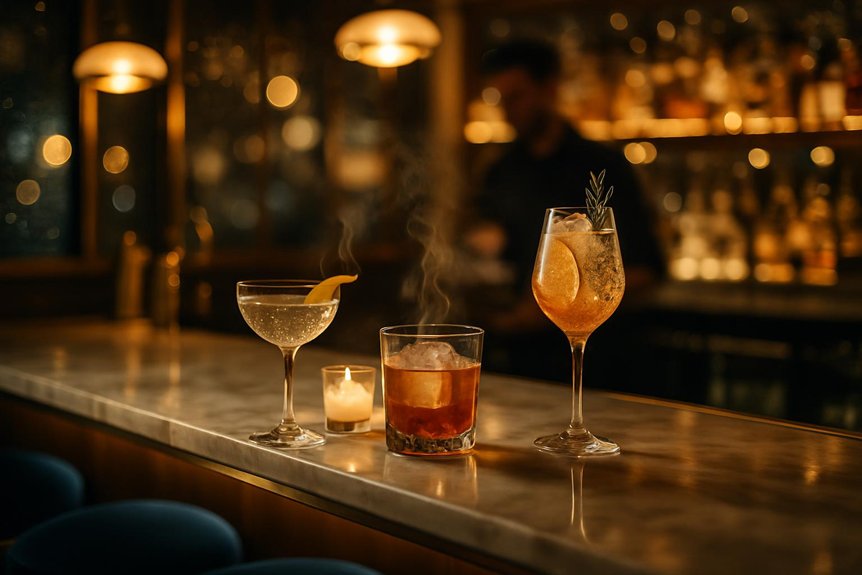
- Crystal Coupes: Fine-bubbled effervescence read against cut facets, amplifying pale golds and blush.
- Nick & Nora Focus: Narrow bowls concentrate aromatics; citrus oils trace a luminous meniscus.
- Highball Geometry: Linear ice and vertical herbs emphasize lift, channeling brisk, mineral gloss.
- Dark Rocks Drama: Smoked glass, block ice, and charred zest create chiaroscuro depth.
Garnishes signal plot: edible florals for romance, saline rims for tension, feathers of expressed peel for closure.
Pairing Small Plates With Late-Night Sips
Even after midnight, the best Fitzrovia bars treat food as a strategic partner to the drink. At Meraki, pairing begins with balance: bracing, citrus-driven cocktails meet saline bites, while richer, spirit-forward pours lean on acidity and crunch.
The garden ambience informs choices—herb-led spritzes echo dill-laced tzatziki, and floral gins sharpen feta-stuffed peppers. Late night snacks are scaled for pacing, not heaviness, so textures stay crisp and temperatures hold.
Salt cod croquettes underline a Martini’s dryness; smoked aubergine brightens a mezcal sour; lemon-drizzled halloumi tempers a bitters-forward Negroni. Chili heat is moderated with honeyed notes or yogurt, keeping proof in check.
Sweet finishes avoid cloying: thyme syrup with baklava, or a fig compote alongside whiskey. The result is rhythm, not excess.
Where to Sit: Bar Stools, Booths, and Corners
Though the hour creeps past midnight, seat choice still shapes the night. At Meraki, the room guides the experience: bar, booth, or shadowed niche. Comfortable barstools pull guests toward the action—bartenders shaking, spirits poured with finesse.
Booths soften the pace, insulating conversation and keeping glassware steady. Cozy corners whisper discretion, ideal for hushed talk or a contemplative pour.
- Bar Stools: Best for solo sippers and cocktail-watchers; swift service and lively rhythm.
- Booths: Group-friendly, sound-dampening, perfect for sharing plates without jostle.
- Cozy Corners: Intimate, low-light, slower cadence; the drink leads, not the crowd.
- Perch Strategy: Start at the bar for discovery, migrate to a booth or corner for lingering.
Each seat edits the soundtrack, the tempo, and the finish.
Planning Your Perfect After-Hours Visit
Timing sets the tone: arriving just before the late rush secures space while keeping the room lively.
From smoky Old Fashioneds to herb-led spritzes, choosing a signature night cocktail shapes the pace of the evening.
Lighting, music levels, and seating proximity to the bar are key ambiance checks before committing to a second round.
Best Visiting Hours
While Fitzrovia hums all day, the late-night cocktail scene peaks between 9:30 p.m. and 12:30 a.m., when bars balance atmosphere with attentive service before the post-midnight swell. Arriving early within this window secures seats, measured pacing, and room for conversation under city lights.
After 12:30 a.m., energy rises, waits lengthen, and music surges; those seeking moonlit strolls between venues should plan buffers.
- 9:30–10:00 p.m.: glide in without queues; ideal for decompressing and setting the night’s cadence.
- 10:00–11:00 p.m.: social sweet spot; lively yet navigable, with staff fully in stride.
- 11:00–12:00 a.m.: bolder ambience; best for groups and celebratory toasts.
- 12:00–12:30 a.m.: high energy, limited seats; commit to one venue or pivot quickly.
Post-12:30 a.m., expect standing room and tighter door policies.
Signature Night Cocktails
Arriving in that 9:30 p.m. to 12:30 a.m. sweet spot sets the stage for Fitzrovia’s signatures to shine—drinks designed for low light, late hours, and steady conversation. The list leans on cocktail history yet avoids museum-piece stiffness: clarified classics meet modern aromatics, and high-proof spirits get tempered with saline, tea, or smoke.
Each build respects balance, favoring length over sugar.
At Meraki, bartending techniques drive nuance. Fat-washed rye yields velvet Old Fashioneds; split-base Martinis pair London dry with umeshu for a mineral edge. Citrus cords are pre-batched for consistency, then brightened to order. Stirred-and-strained serves land cold without shards, while pebble ice supports longer sips. Garnishes add intent—lemon oils expressed tableside, toasted sesame mist, discreet bitters atomized—quiet signals of precision.
Late-Night Ambiance Tips
How best to tilt a late-night in Fitzrovia toward calm rather than chaos? Observation suggests that ambiance starts before arrival: timing, seating, and sensory cues shape the mood more than any garnish. Meraki’s glow favors quiet conversation, yet small choices refine the experience—where to sit, what to hear, how to pace.
Think moonlit serenades, not a blaring soundtrack; think nighttime whispers, not hurried rounds.
- Choose timing: slip in just after the late dinner rush; the bar breathes, staff have bandwidth, and playlists settle.
- Select seating: banquettes for privacy, bar perches for bartender guidance, terrace for soft city hush.
- Calibrate sound: request lower volume or corner speakers; protect the table’s voice.
- Pace rituals: alternate cocktails with water, share small plates, linger between pours.
Conclusion
And so, under Meraki’s velvet glow, everyone pretends they came for just one drink. The jazz is coincidental, the neon accidental, the glassware merely practical sculpture. Aromas circle like promises as bartenders “measure” with theatrical precision, and somehow the hour grows later without consulting a clock. Fitzrovia after dark offers restraint in generous pours, intimacy in crowded corners, and reflection that starts fizzy and finishes neat. Of course, they’ll leave early—right after the final, absolutely last, perfect sip.