
London’s luxury dining scene blends Meraki’s Greek-inspired warmth with modern elegance. Sculptural interiors, Calacatta marble, and brushed brass set a composed tone. Seasonal tasting menus meet artful theatrics at the table. Sommeliers guide low‑intervention wines with quiet precision. Chef’s counters offer proximity without spectacle. Desserts arrive as polished finales, not distractions. Securing a seat is part strategy, part timing—yet the true question is which rooms and menus justify the anticipation.
Michelin-Starred Icons Redefining British Fine Dining
Few cities showcase Michelin-starred ambition like London, where legacy institutions and bold newcomers recalibrate British fine dining with technical precision and seasonal rigor.
From Mayfair townhouses to discreet Shoreditch counters, the city’s icons balance heritage and innovation without theatrics. They mine local culinary history to ground contemporary technique, tracing influences from historic markets, royal larders, and immigrant spice routes.
Service choreography matches kitchen discipline, while wine programs emphasize British fizz and benchmark Old World depth.
Critics note how clarity of flavor replaces ostentation. In exclusive chef interviews, leaders describe apprenticeships under classical masters alongside collaborations with biodiverse farms, fisheries, and urban growers.
The result is a confident, quietly radical canon: British produce framed with restraint, exact textures, and elegant pacing, setting global benchmarks for metropolitan refinement. At events like the recent Travellers Tales with Victoria Hislop, the city’s culinary landscape is further enriched by global influences and storytelling through food.
Artful Tasting Menus Showcasing Seasonal Craft
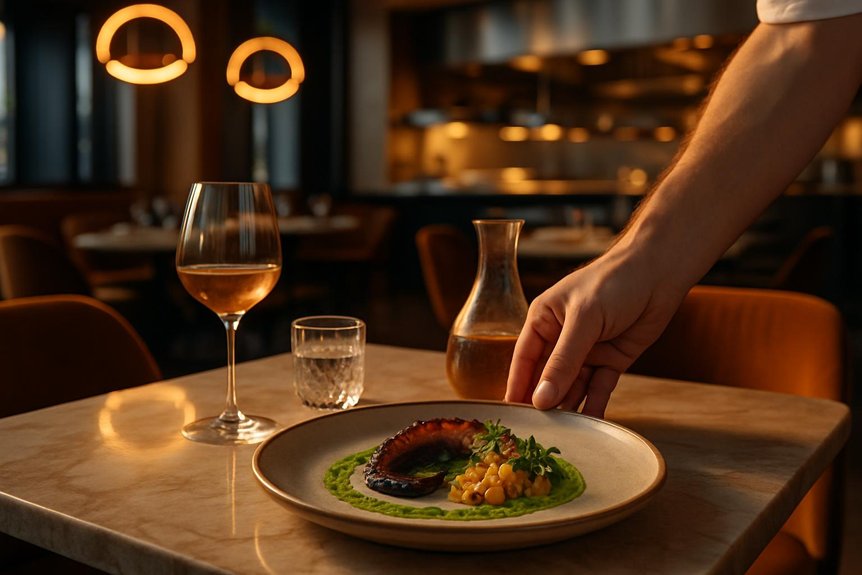
While the city’s grandeur hums outside, tasting menus in London’s luxury dining rooms distill the season into disciplined sequences of craft. Chefs move with measured intent, presenting garden inspired flavors that pivot with each week’s harvest—sweet peas snapped at dawn, coastal herbs, and orchard fruit sharpened by discreet acidity.
Courses arrive with minimalist plating, emphasizing negative space and precision cuts, allowing textures and temperature to articulate narrative more than ornament.
- Time: Each course marks a vanishing moment—short-season produce captured, then replaced—turning dinner into an edible calendar.
- Balance: Vegetal brightness, subtle fats, and saline notes intersect, letting the palate reset while momentum builds.
- Memory: Familiar British ingredients reappear transformed; restraint and technique anchor nostalgia to the present, leaving a clear, lingering finish.
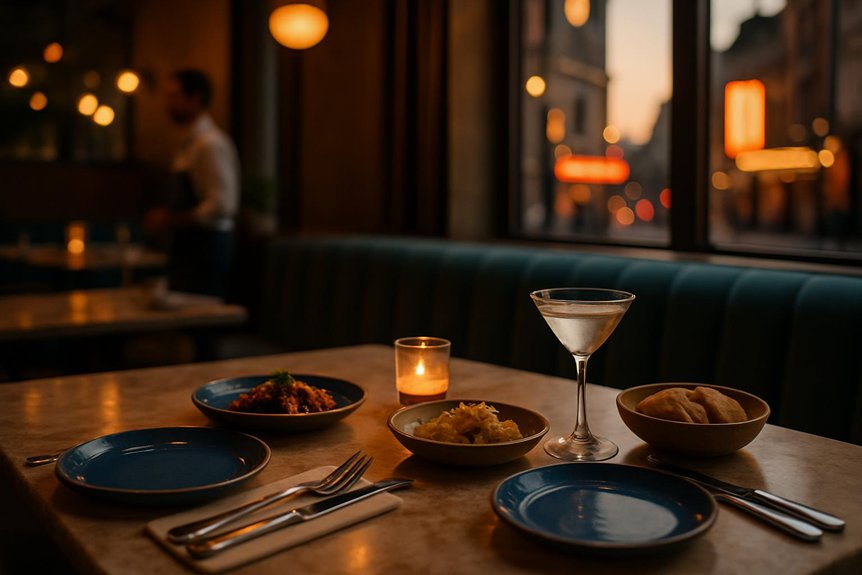
In the heart of London, Meraki’s innovative cocktail scene exemplifies the blend of tradition with modernity, offering a unique culinary journey that complements the city’s luxury dining experiences.
Design-Forward Dining Rooms With Statement Style
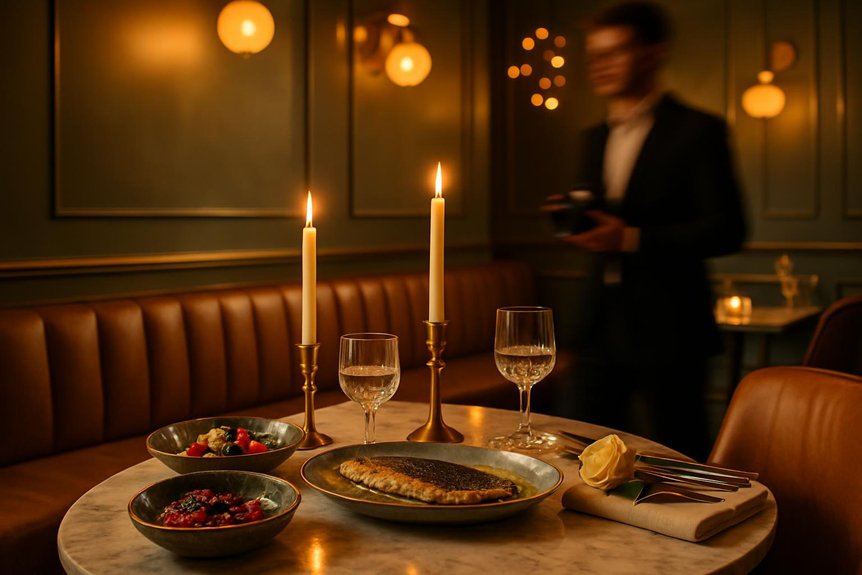
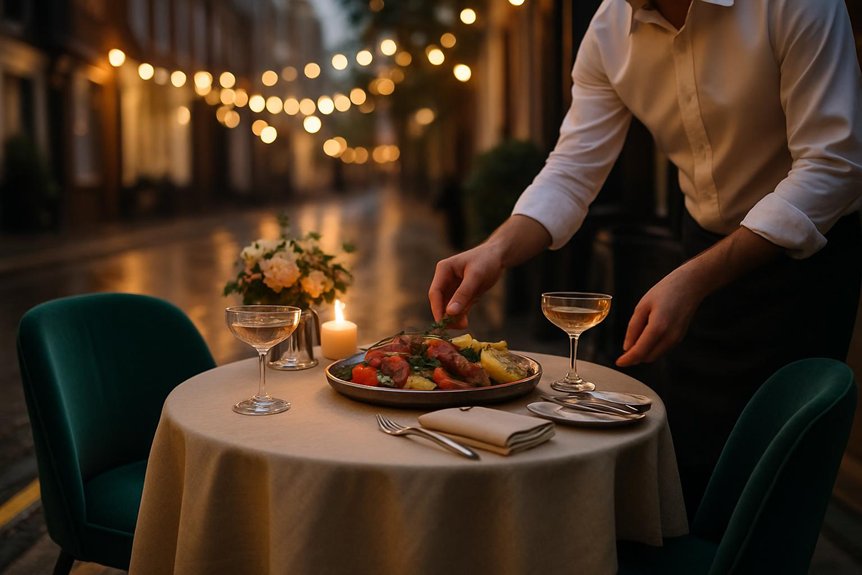
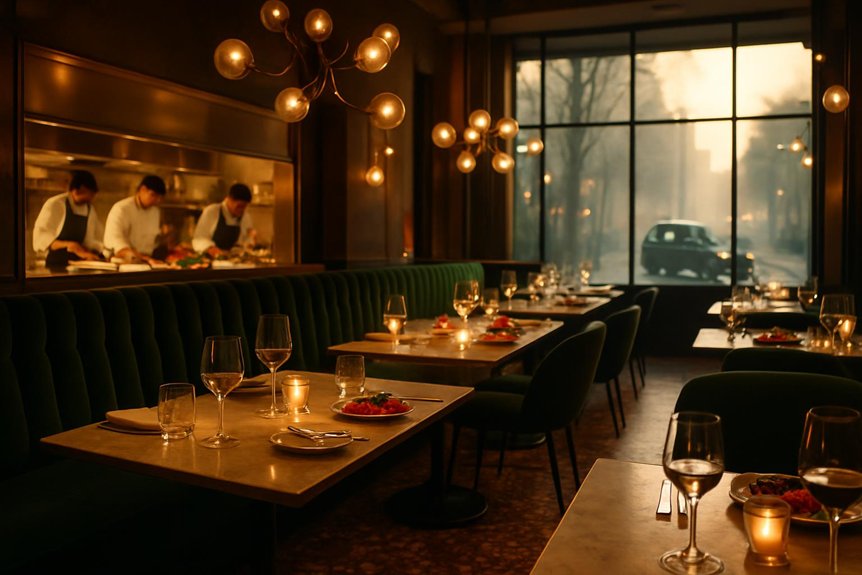
Even before a menu is read, London’s luxury dining rooms assert identity through design that stages the meal. Statement style arrives through architectural drama: sculptural ceilings, custom marquetry, and mirrored planes that elongate perspective. Neon lighting, used judiciously, sketches silhouettes and signage, while candlelit pools soften contours and invite hush.
Minimalist décor plays counterpoint to lavish materials—Calacatta marble, smoked oak, and brushed brass—allowing textures to speak without clutter. Color is strategic: moody charcoals, midnight blues, or a single saturated accent guiding the eye from entrance to banquette.
Seating geometry controls tempo, from intimate alcoves to gallery-like vistas. Art is curated, not crowded; installations become quiet protagonists. Service choreography aligns with sightlines, ensuring plates arrive as part of the room’s visual cadence.
Meraki Restaurant offers a relaxed dining experience in London, with its inspired Greek cuisine and award-winning selections.
Elevated Wine Programs and Sommelier-Led Pairings
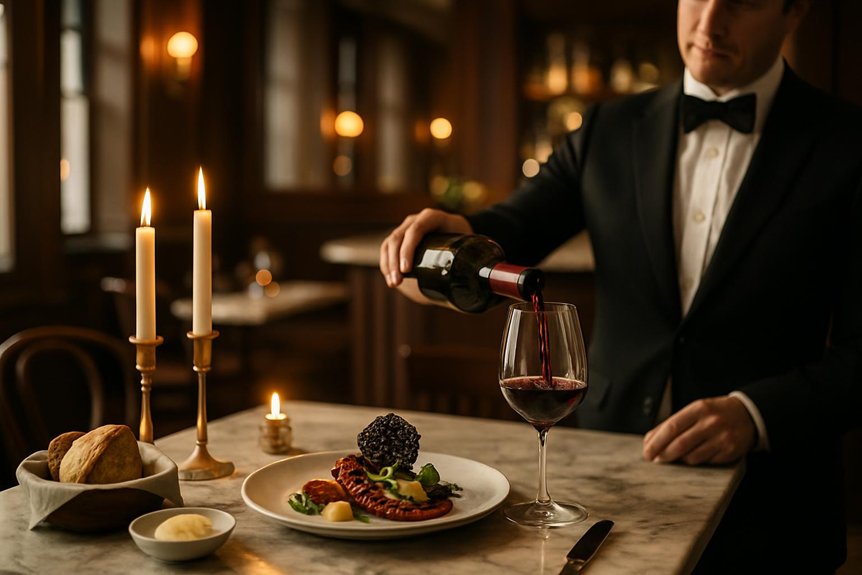
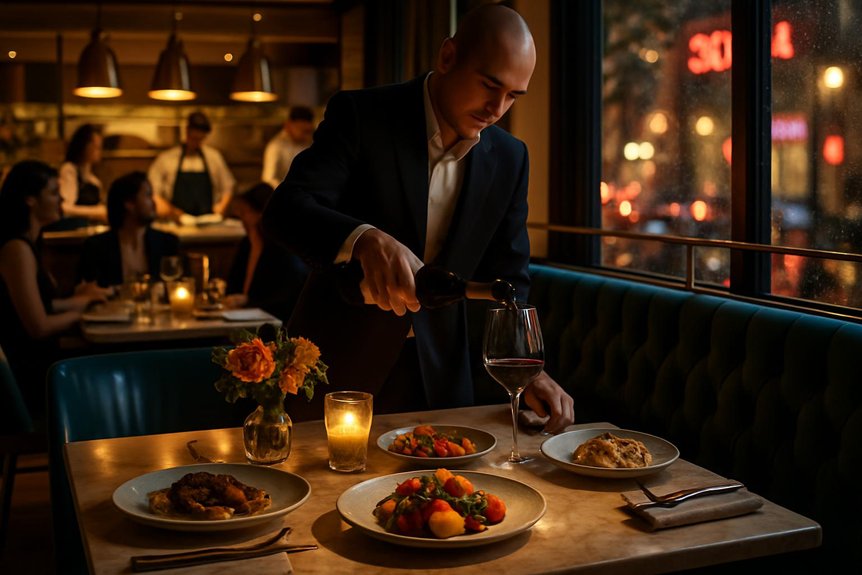
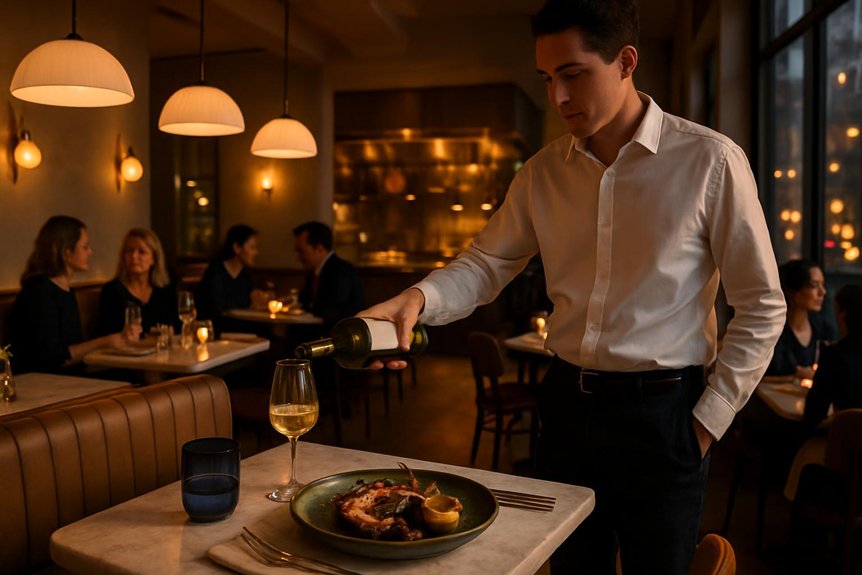
Because London’s top dining rooms treat the cellar as a stage, elevated wine programs are constructed with the rigor of a library and the agility of a bar.
Curated by master sommeliers, each list reads like cartography: vintages mapped by soil, elevation, and producer intent.
The Wine cellar becomes a narrative device, moving from restrained Chablis to oxidative Jura, then to new-wave English Sparkling varieties with razor-fine mousse.
Pairings privilege balance over spectacle, letting texture steer decisions—salinity against cream, phenolics against smoke.
1) Provenance as principle: transparent sourcing builds trust and educates palates while honoring growers.
2) Texture over taste alone: mouthfeel and tannin shape pairings more effectively than simple flavor echoes.
3) Sustainability signals luxury: low-intervention choices and shorter supply chains now define modern prestige.
Chef’s Counters and Intimate Chef’s Table Experiences
At London’s chef’s counters, guests watch front-row culinary theatre as tasting courses are plated à la minute.
Seasonal menus shift with market availability, spotlighting precision and rare produce.
Sommelier-paired courses align each progression with calibrated texture, acidity, and aroma.
Front-Row Culinary Theatre
While white tablecloths still signal ceremony, the city’s most electrifying luxury now happens inches from the pass: chef’s counters and intimate chef’s tables where craft, choreography, and seasonality unfold in real time. Here, precision becomes theatre—knives whisper, sauces gloss, and plates leave the pass like cues in a ballet.
Guests witness Chef collaborations that turn singular vision into layered dialogue, often framed by a subtle Garden ambiance or flicker of open flame. The proximity redefines hospitality: fewer barriers, more intent, and an unmistakable pulse of creation.
1) Proximity heightens trust: technique is transparent, timing is audible, and mastery is measurable.
2) Collaboration multiplies narrative: producers, sommeliers, and chefs interlace stories on each plate.
3) Space directs emotion: counter curves, lighting, and cadence choreograph anticipation.
Seasonal Tasting Menus
In the hush of London’s chef’s counters and private kitchen tables, seasonal tasting menus distill the year into a precise sequence of bites. Courses arrive like chapters: a fleeting forage of hedgerow herbs, a briny flash of day-boat shellfish, then root and game when the city turns cold. Precision is intimate here; the chef plates inches away, adjusting heat and acidity in real time.
The ethos is Farm to table, yet executed with metropolitan poise. Farmhouse chic notes surface in hand-thrown ceramics, linen, and bare woods that frame the food rather than shout over it. Menus shift weekly, sometimes daily, to respect ripeness and tide. Diners witness technique stripped of spectacle: measured fire, deft knife work, and flavor arcs designed to end in quiet satisfaction.
Sommelier-Paired Courses
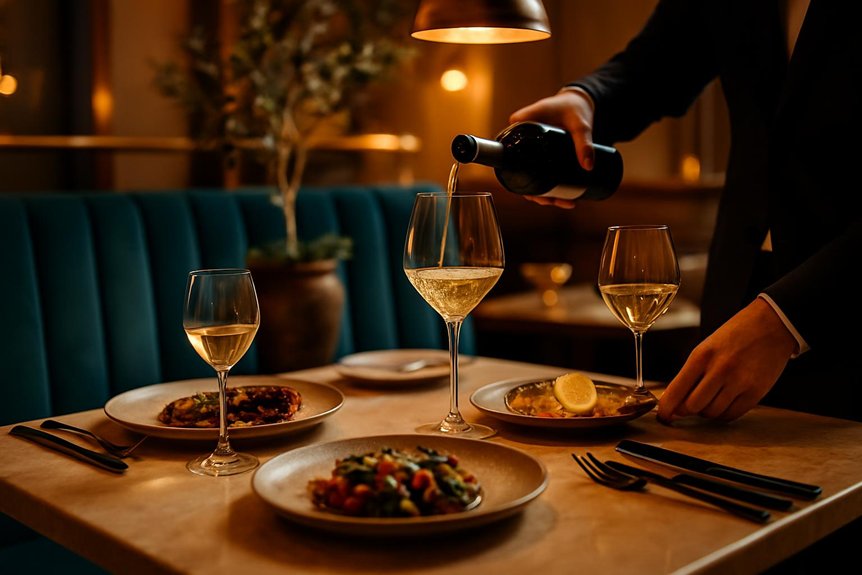
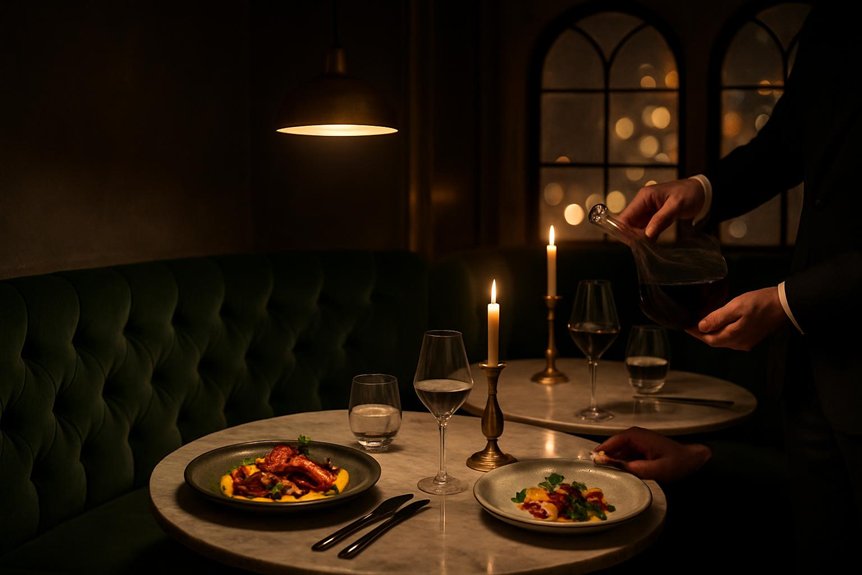
Glasses meet plates with the same quiet intent as the chef’s knife, extending the seasonal arc into the glass. At chef’s counters and intimate chef’s tables, pairings become choreography: a pour cues a sear, an aroma anticipates a garnish.
Here, wine connoisseurship is not display but direction, guiding textures, temperatures, and umami through calibrated acidity, tannin, and bloom. Sommelier expertise stitches vintages to micro-seasons—salt-baked beet with Jura, grilled turbot with mature Champagne, venison with mountain Nebbiolo—allowing nuance to surface without crowding the dish.
- Balance over bravado: pairings privilege clarity, aligning structure with the plate’s center of gravity.
- Time as seasoning: openings, decants, and temperatures pace the menu’s arc.
- Provenance speaks: soil, salt, and smoke echo through glass and flame.
Opulent Desserts and After-Dinner Indulgences
London’s luxury dining rooms close with spectacle as signature patisserie artistry turns plated desserts into sculptural statements.
Tableside dessert theatrics—flambéed fruits, liquid-nitrogen quenelles, hand-poured sauces—amplify drama and aroma.
Rare digestifs pairings, from vintage Armagnac to small-batch amaro, frame these finales with nuanced warmth and polish.
Signature Patisserie Artistry
How does a final course become a spectacle worthy of its own reservation? In London’s luxury dining rooms, signature patisserie artistry elevates endings into destinations. Precision-focused chefs refine artisan techniques—lamination, sugar work, tempering—until textures align with calibrated flavors.
Patisserie design is treated as architecture: aerodynamic glazes, disciplined geometry, restrained color, and temperature contrast shaping perception. Provenance matters; single-estate chocolate, heritage grains, and rare citrus guide composition without noise.
- Structure: Layers serve function—crisp base, yielding core, aromatic finish—delivering rhythm rather than excess.
- Material honesty: Ingredients are allowed to speak; sweetness is tuned, acidity placed, fat moderated for length, not volume.
- Memory: A dessert’s success rests on recall—clarity of idea, longevity of taste, and a silhouette recognizable before the first bite.
Tableside Dessert Theatrics
Even after the last savory bites fade, the room sharpens as trolleys roll and burners flare. Chefs arrive like stagehands, assembling finales with clinical poise.
Domes lift to reveal chocolate illusions that collapse into glossy pools, releasing hidden pralines and salted caramel.
A copper pan hisses as sugar is worked into ribbons, then snapped to crown a parfait.
Liquid nitrogen fog drifts across linen, flash-freezing berries into glassy jewels and churning custard into silken ice cream before attentive eyes.
Citrus peels are warmed and expressed over flame, misting zest onto soufflés that rise to perfect domes.
Crackable shells, molten centers, and calibrated temperatures turn sweetness into spectacle, delivering a precise crescendo that closes the meal with studied theatre and unapologetic decadence.
Rare Digestifs Pairings
A final act unfolds with rare digestifs calibrated to echo and counterpoint opulent sweets. In London’s luxury rooms, sommeliers choreograph Digestif infusions and Rare spirit pairings with surgical restraint: oloroso-kissed Madeira shadows hazelnut praline, vintage Chartreuse lifts saffron semifreddo, and old Armagnac steadies dark chocolate croustillant.
Bitterness, spice, and oxidized depth cleanse the palate, letting sweetness recede and texture speak. Precision replaces excess; glassware, temperature, and dilution become instruments of poise.
- Balance over bravado: use Digestif infusions to tether sugar, letting acidity and herbal tones reset perception.
- Memory as seasoning: Rare spirit pairings evoke terroir—rancio, peat, orchard—imprinting dessert with narrative.
- Finish as destination: length matters; a well-chosen digestif elongates flavor arcs without heaviness, concluding the meal with quiet authority.
Essential Tips for Securing Coveted Reservations
While prime tables may seem out of reach, a methodical approach dramatically improves the odds. The most reliable Reservation hacks begin with timing: set alerts on booking platforms, check releases at midnight or 7 a.m., and target lunch or late seatings.
Flexibility on date, party size, and counter seating multiplies availability. Join newsletters and loyalty programs; priority access often arrives quietly via email.
Contact the restaurant directly, briefly noting a special occasion without demanding perks. Offer alternative dates and accept waitlists, then reconfirm 24 hours prior.
Leverage concierge services from premium cards or hotels for high-demand venues. Maintain impeccable dining etiquette—punctuality, concise communication, and honoring cancellations—since good records influence future bookings.
Finally, track seasonal lulls; January, late August, and midweek slots frequently open.
Conclusion
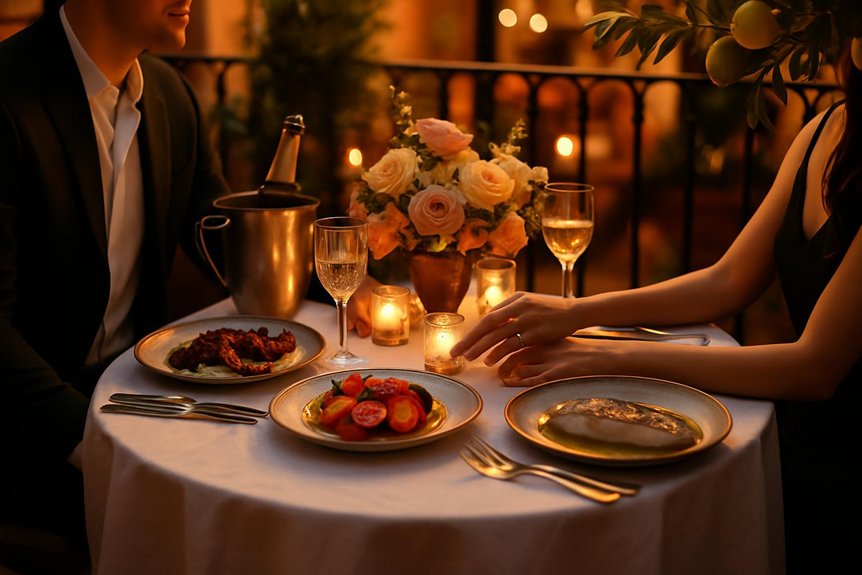
As night settles over London, the city’s most elegant dining rooms hum with quiet promise. Candlelight traces Calacatta veins, brass glows warm, and sommelier-led pours whisper of vineyards tended with care. Chefs lean in at counters, knives flashing, courses unfolding like secrets. A final flourish of opulence arrives—fleeting, flawless. And just as the last sip lingers, a question remains: which door to open next, which reservation to win, which moment of Meraki-fueled modern wonder to claim?