
In Covent Garden, Meraki’s bar pairs Mediterranean spirit with modern restraint. Clean lines, precise pours, and herb-forward aromas set a measured tone. Cocktails arrive in considered glassware, balanced and quietly inventive. Zero-proof options and Greek-accented bites signal range without fuss. Sustainability guides the back bar as much as seasonality. Pre-theatre timing shapes the pace. There is craft in every detail—yet the signature serves, and how they refine the classics, raise a quieter question.
A Covent Garden Cocktail Haven
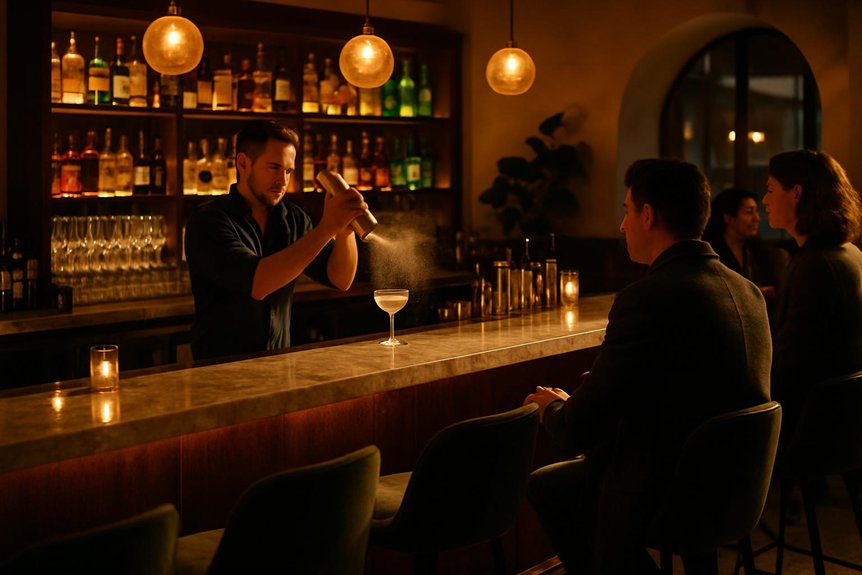
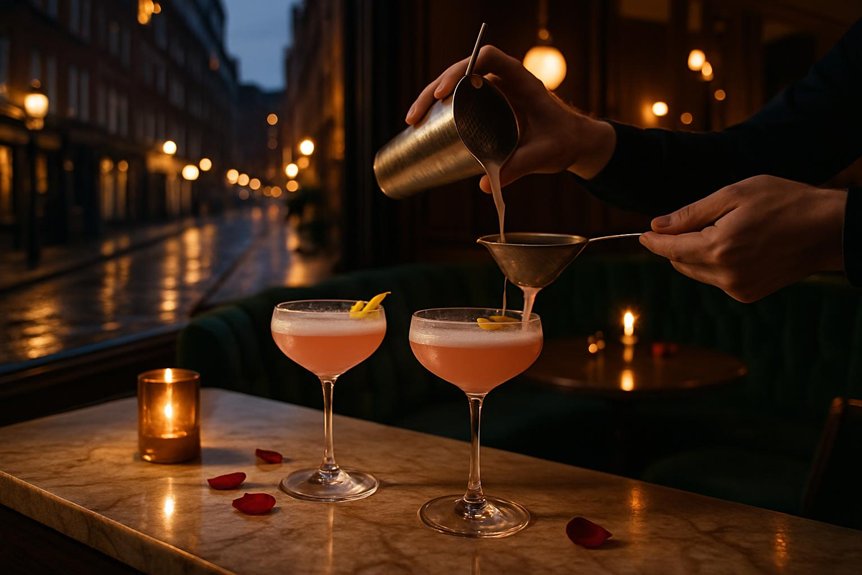
Two streets from the piazza, a discreet doorway leads to Covent Garden’s most assured cocktail refuge. Inside, measured lighting and low conversation set the tone for attentive service and confident craft.
The bar team draws from local mixology, treating London’s markets and seasons as a living pantry, while referencing cocktail history with disciplined technique and unfussy presentation.
Menus change with purpose: a few classics kept immaculate, a few originals anchored by precise bitters, house syrups, and disciplined dilution.
Shelves balance heritage spirits with small-batch British producers.
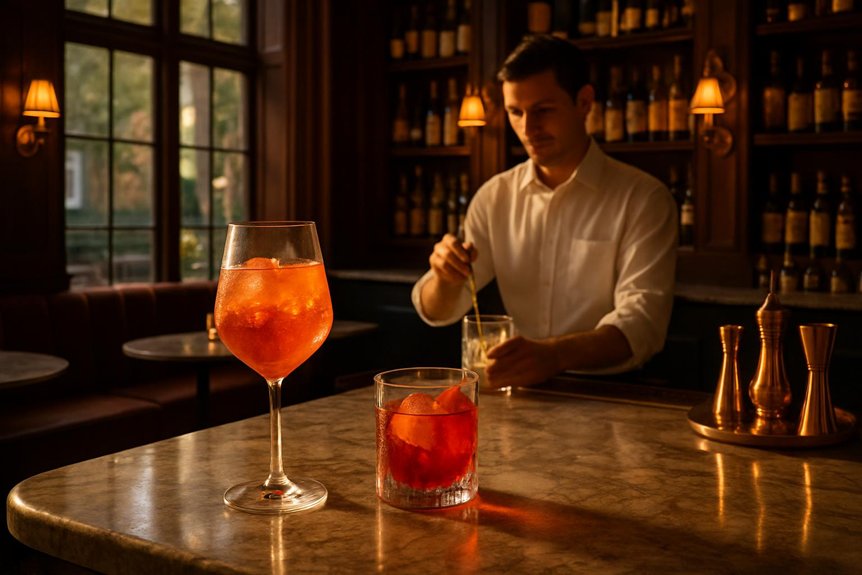
Glassware is chilled, garnishes trimmed to essential form, and ice selection is deliberate.
Guests find no theatrics beyond what serves flavor and texture.
It feels considered rather than concealed—a haven for those who prize intention over spectacle.
Meraki, located in Fitzrovia, has a dedicated cocktail bar that draws inspiration from Greek flavors and offers a selection of Greek wines, making it a standout choice in London’s dining scene.
Mediterranean Spirit Meets Modern Mixology
Though firmly rooted in London, the next chapter draws heat and herb from the Mediterranean: sunlit citrus, saline breezes, and pantry aromatics distilled into glass. The room favors restraint—clear lines, pale stone, and brass—so the palate can travel.
Here, modern technique interprets coastal markets, pairing olive-bright bitterness with orchard sweetness and a whisper of brine to frame fusion flavors without fuss.
Meraki’s bar history informs the approach: classic formulas serve as scaffolding, while vermouths, amaros, and resin-kissed spirits bring texture. Clarification softens acidity; controlled dilution lifts zest; low-waste prep honors seasonal yield.
The Mediterranean Sunset cocktail, a signature creation, exemplifies this blend of tradition and innovation with its harmonious flavor profile.
Nothing shouts; balance leads. The result is a dialogue between heritage and innovation, where Mediterranean spirit becomes method—measured, luminous, and urbane—anchoring Covent Garden’s bustle to a calmer shore.
Signature Serves: Herb-Laced Highlights
Urban bars are turning to garden-fresh infusions, letting basil, rosemary, and thyme shape the core profile of signature serves. Aromatic garnish artistry follows, where expressed oils, smoked sprigs, and bruised leaves calibrate the nose before the first sip.
The result is a precise harmony of flavor and fragrance that defines the city’s herb-forward cocktail identity. Meraki Bar and Living Room Bar offer after-work drinks that perfectly complement this trend, providing a unique experience for cocktail enthusiasts.
Garden-Fresh Infusions
While city bars chase ever-bolder spirits, the quiet revolution happens in the garnish garden: basil, rosemary, thyme, and mint are steeped, shaken, and split into clean, vivid infusions that redefine balance.
At Meraki’s Covent Garden outpost, bartenders treat Fresh herbs like prime produce, extracting chlorophyll-bright notes without bitterness. Vodka takes basil’s peppery lift; gin carries rosemary’s resin; tequila leans into thyme’s citrus edge; rum absorbs mint’s cooling snap.
Garden blooms guide the palette, but technique leads: rapid cold infusions keep aromatics crisp, while low-temperature sous vide teases nuance from delicate leaves. Clarification brings transparency and shelf stability, letting citrus-acid frameworks remain taut.
The result is precision—spirits that taste like the garden after rain, layered yet linear, ready for restrained, high-definition serves.
Aromatic Garnish Artistry
In the glass, garnish becomes architecture. At Meraki, the bartender treats herbs as structural cues, building an aromatic layer that guides the first inhale and the last sip. Mint fronds, charred rosemary, and citrus leaves aren’t decoration; they calibrate flavor balance, steering sweetness, acidity, and bitterness toward a clean finish.
The eye reads contours; the nose confirms intent.
- A coupe crowned with thyme, clipped short, releases resinous lift over lemon oil.
- Smoldering rosemary pinned to a highball threads smoke through cucumber and gin.
- Basil lattice on crushed ice shapes a peppery veil above ripe strawberry notes.
These precise accents turn familiar profiles into signatures. The garnish, measured and mindful, becomes a quiet conductor, pacing tempo, clarifying tone, and sealing memory.
Classics, Refined: Martinis and Beyond
Though trends come and go, the martini remains a litmus test for craft and restraint. At Meraki’s Covent Garden bar, bartenders treat this classic as a study in balance: chilled glassware, measured dilution, and a decisive twist or olive. The result is crystalline, aromatic, and purposeful.
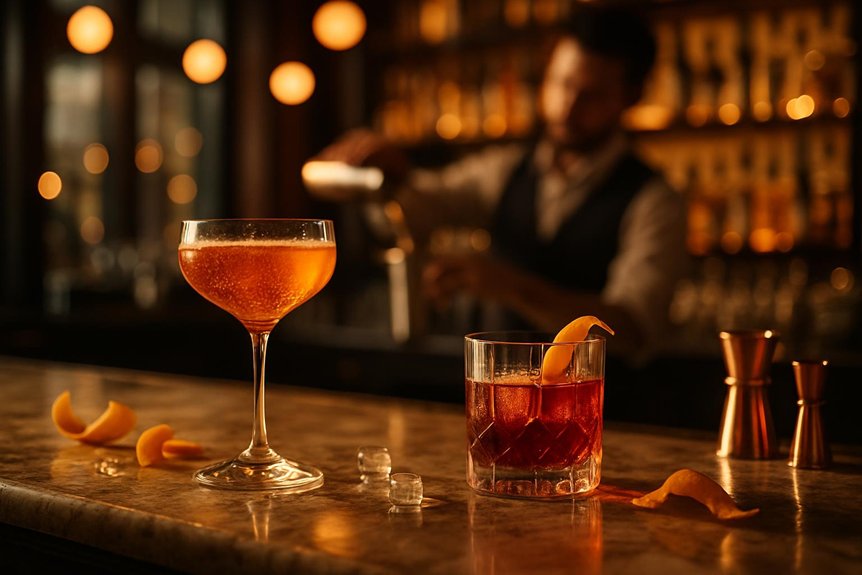
Drawing on Mixology history, the team refines stalwarts without theatrics. A 50/50 martini reads silkier, a Gibson gains depth from house brine, and a Vesper lands with clean citrus definition.
Precision extends “beyond” with a Rye Manhattan that favors bitters nuance over sweetness, and a sharp, cold Gimlet that preserves lime brightness.
Cocktail pairings underscore the point: saline oysters heighten a dry martini’s spine, charred lamb skewers amplify a Manhattan’s spice, while crudo flatters the Vesper’s clarity.
Seasonal Ingredients and Sustainable Sips
City bars turn to foraged British botanicals, letting hedgerow herbs and coastal plants shape fresh, place-specific flavors.
Low-waste cocktail crafting appears in citrus reuses, spent fruit cordials, and garnish upcycling.
Seasonal zero-proof options mirror these practices, offering crisp, complex profiles without alcohol.
Foraged British Botanicals
While hedgerows and coastlines shape the landscape, they also quietly stock the bartender’s larder. At Meraki, foraged British botanicals become the quiet architecture of flavour: gorse’s coconut whisper, sea buckthorn’s neon tartness, and meadow-sweet’s almond-honey lift.
The team treats urban foraging as a disciplined practice, sourcing with permits and seasons in mind, then translating finds through precise botanical blending—tinctures, hydrosols, and saline drops that nudge spirits rather than mask them.
- Chalky lanes yield wild fennel and alexanders, lending aniseed brightness to crisp, mineral martinis.
- Tidal margins offer rock samphire and sea purslane, folded into citrus-forward highballs for maritime snap.
- Woodland edges provide woodruff and nettle, expressed as verdant syrups that bracket juniper with soft vanilla and chlorophyll.
Low-Waste Cocktail Crafting
How does a bar balance indulgence with restraint? At Meraki’s Covent Garden hideaway, low-waste cocktail crafting answers the question with quiet rigor. Bartenders practice sustainable sourcing, planning menus around what growers have in surplus and what markets can supply at peak freshness.
Trims from citrus become cordials; spent grounds infuse liqueurs; herb stems are blitzed into saline; and peels are dehydrated for garnishes, reducing bin weight and cost.
Clear ice offcuts chill prep; vinegar replaces perishable acids in some builds; and rotary evaporation rescues aromatics from leftover fruit. Eco friendly techniques extend to batching, closed-loop dilutions, and reusable barware, minimizing single-use plastics. The result is a seasonally nimble list where every component earns its place—and almost nothing goes to waste.
Seasonal Zero-Proof Options
In the same spirit of restraint, the bar’s zero-proof offerings pivot with the calendar, treating abstention as an exercise in seasonality rather than sacrifice.
Recipes draw on surplus market produce, house ferments, and hydroponic herbs, resulting in drinks that feel rooted, not imitative.
Winter favors smoked quince and roasted citrus; spring leans into nettle tonic and rhubarb brine.
Summer brings cold-brew melon with fennel pollen; autumn, spiced pear with toasted buckwheat.
- Frosted glass beading with vapor, pale jade from nettle, a sprig of dill standing like a mast.
- A ruby rhubarb highball crowned with saline foam, light catching crystallized zest.
- Amber pear cordial over pebble ice, buckwheat aromatics rising in quiet curls.
Virtual tastings trace cocktail history while championing sustainable, zero-proof craft.
Pre-Theatre Perfection: Timing and Tips
A well-planned pre-theatre cocktail stop balances atmosphere, efficiency, and proximity to the venue. Savvy guests book a table 60–75 minutes before curtain, allowing a pair of drinks without rush and a five-minute buffer for the walk.
They choose bars with concise menus and seasoned bartenders; quick-service classics and house signatures keep timing predictable.
Attention to cocktail etiquette smooths the experience: order decisively, settle the bill with the second round, and avoid complicated custom requests near showtime.
A brief nod to bar history on the menu can guide selection—heritage recipes like Martinis or Manhattans are fast to execute and reliably balanced. Shareable water and a light pace prevent last-minute scrambles.
Finally, confirm the theatre’s door times to avoid queues and missed overtures.
Bar Bites With a Greek Twist
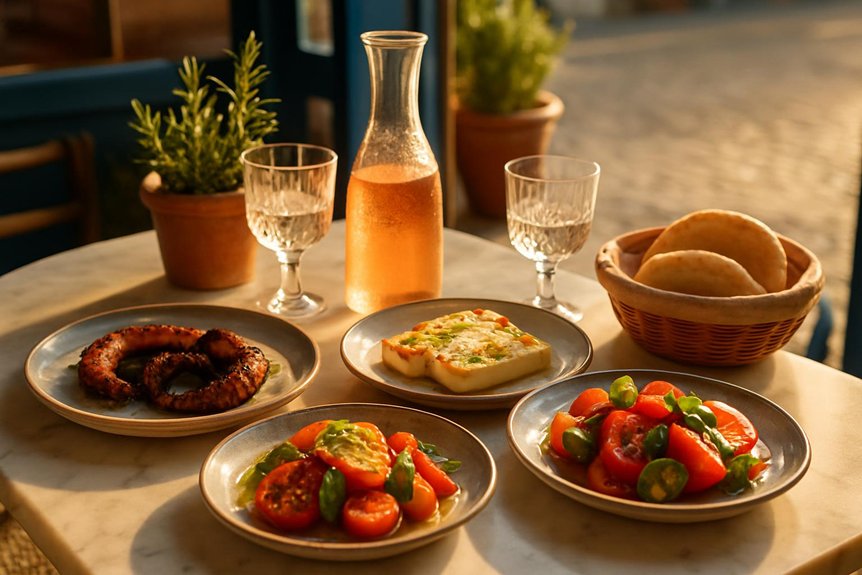
Though cocktails take center stage, Greek-inspired bar bites provide the chorus: crisp spanakopita triangles, lemony grilled octopus skewers, and sesame-crusted feta drizzled with thyme honey.
The kitchen leans into fusion flavors without losing the soul of the Aegean pantry. Citrusy marinades meet charcoal smoke, while briny olives and capers sharpen richness. Pitas arrive warm, ready to scoop tzatziki brightened with dill and grated cucumber.
Craft techniques keep textures precise: shatter-crisp filo, tender octopus, and feta sealed under a nutty sesame crust.
- Sunlit tomatoes and kalamata olives tossed with wild oregano, echoing island markets.
- Zesty lamb keftedes with cumin and mint, paired with a cool yogurt dip.
- Garlicky shrimp saganaki, tomatoes reduced to a sweet glaze, scattered with ouzo-kissed fennel fronds.
These bites anchor conversation and pace the evening.
Inside the Glassware: Aesthetic and Technique
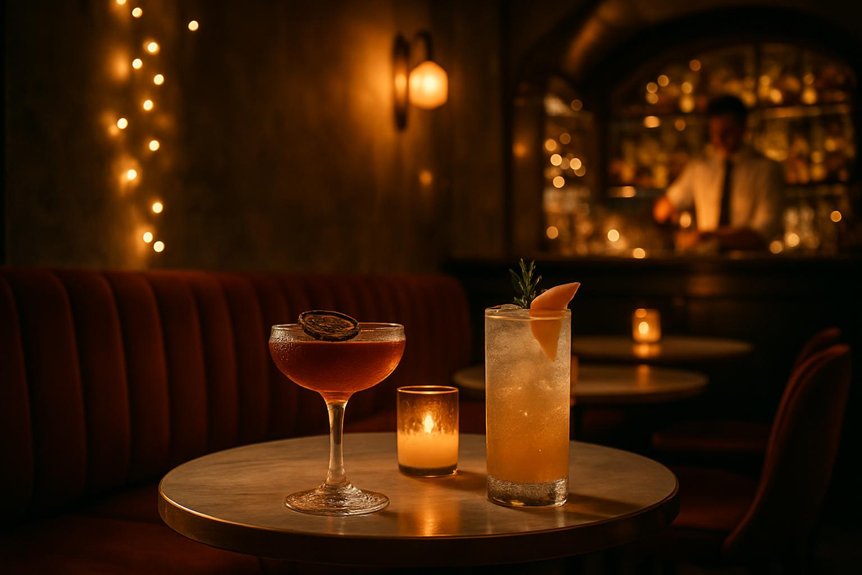
Plates cleared and fingers wiped of thyme honey, attention shifts to what the drinks wear. Stemmed coupes, ribbed highballs, and pebble-weighted rocks glasses frame Meraki’s intent: Glassware aesthetics act as silent hosts, controlling temperature, aroma, and light.
A frosted rim tightens citrus; a fluted lip concentrates botanicals. Etching catches candle glow, turning color into narrative.
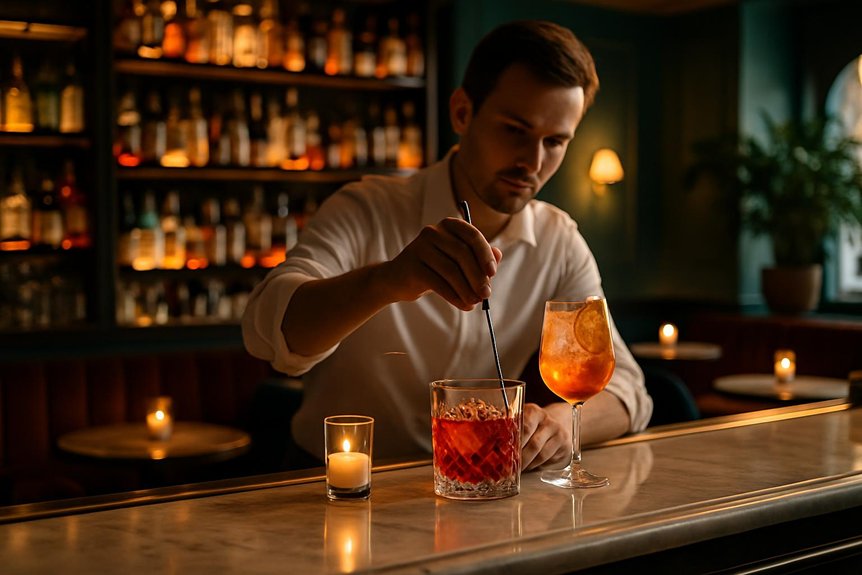
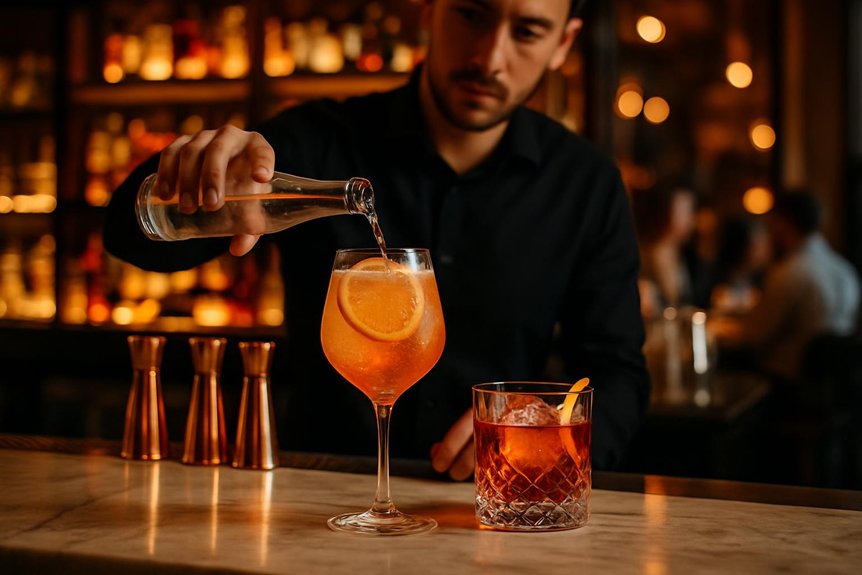
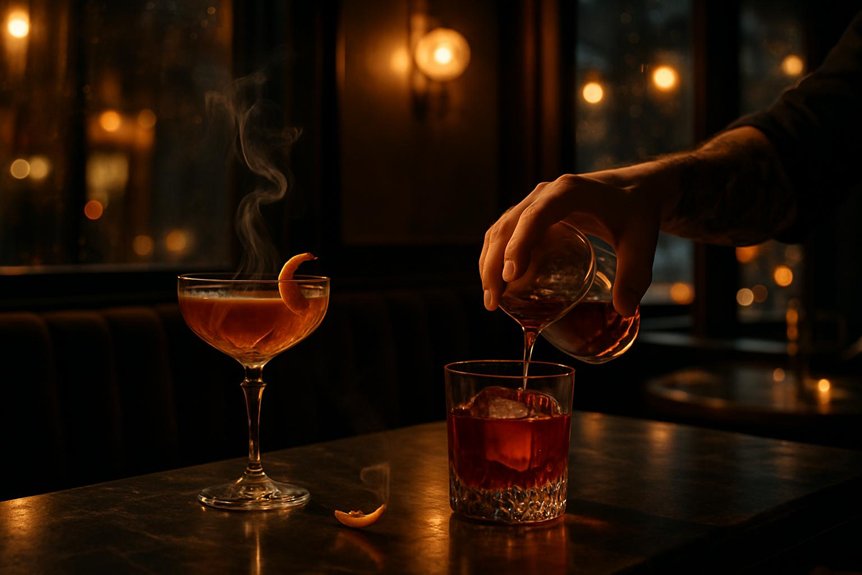
Technique completes the picture. The bar team measures chill through the sound of cracking ice, then finds the line between silk and dilution. Their Pouring technique is disciplined: a high, narrow ribbon to aerate sours; a low, steady descent to preserve texture in spirit-forward builds.
Garnishes are structural—twists sit above vapor trails, herbs clipped to release scent on the first tilt—ensuring form follows function sip by sip.
How to Book and When to Go
While spontaneity has its charm, securing a seat at Meraki is best done via its online reservation system, which opens two weeks in advance and releases prime bar slots at noon local time.
Visitors who monitor openings around midday often catch cancellations.
Walk-ins are accommodated at the counter early evening on weekdays, though waits grow after 7 p.m.
Pre-theatre hours suit a swift aperitif; late nights invite lingerers and experimental drink pairing.
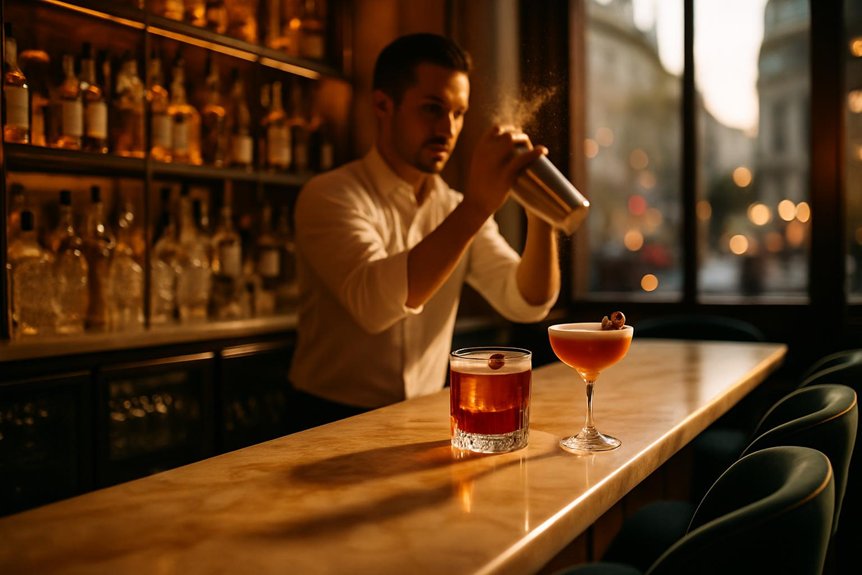
- Low-lit marble bar, bartenders calibrating stir and shake, a quiet hum before the dinner rush.
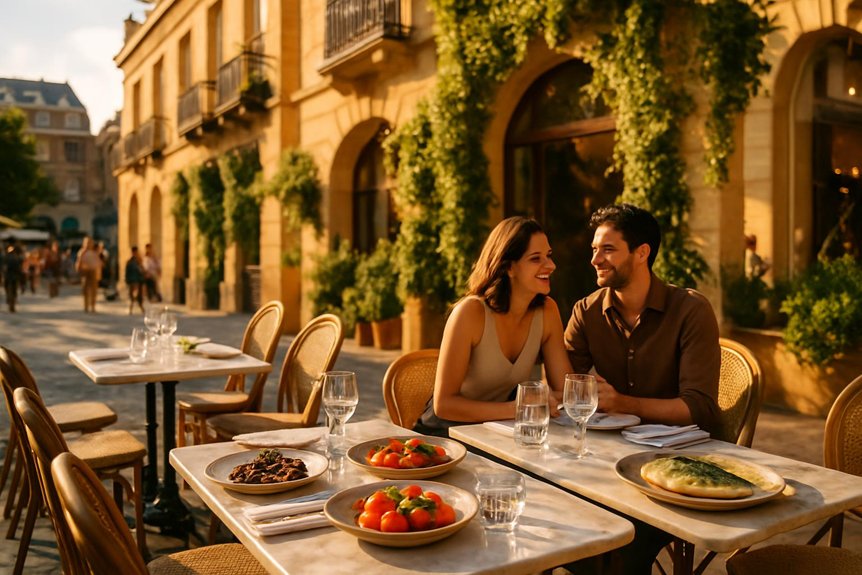
- Two-top near the window, ideal for cocktail etiquette lessons in whisper-level conversation.
- Midnight glow, final call aligning a citrus highball with a salty snack.
Planning respects pace; arrive ten minutes early to hold the reservation.
Conclusion
As twilight politely lowers the volume on the day, Meraki’s bar slips into its finest manners—whispers of rosemary, citrus, and sea air smoothing any rough edges. Glassware gleams like good intentions; garnishes behave impeccably; spirits keep their promises without raising their voice. Guests find their pace adjusted, appetites gently persuaded by Greek comforts, and time discreetly edited for pre-theatre departures. It is a place where restraint performs the heavy lifting, and pleasure arrives beautifully composed, never making a scene.