
London’s elite restaurants present luxury as a quiet discipline. Heritage townhouses refine British classics with precision. Avant‑garde kitchens stage controlled theater, balancing surprise with restraint. Skyline dining rooms frame the city as tableau, while rare-cellar pairings speak in measured notes. Service choreographs ritual without spectacle; design whispers rather than shouts. At chef’s tables, provenance and seasonality guide intimate narratives. Each element suggests intention—and hints at what happens when craft meets ambition behind closed doors.
Heritage Townhouses Reimagining British Classics
Though London’s dining scene skews ever-forward, a clutch of heritage townhouses is quietly refining British classics with exacting technique and modern restraint.
Behind porticoed façades and sash windows, chefs distill tradition into precise, elegant plates: cured trout with dill and lovage, venison pie with suet perfected to a gleam, custards whisked to satin calm.
The heritage architecture frames the experience—corniced ceilings, parquet floors, and fireplaces lending a measured, boutique ambiance that steadies pace and palate.
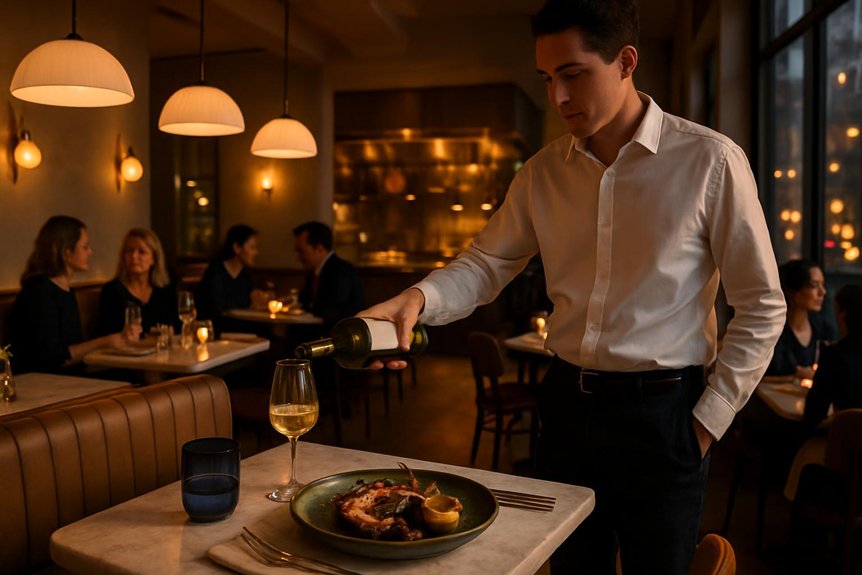
Service moves with discreet choreography; carts arrive with seasonal cheeses, gravies are finished tableside, and bread proves a thesis on fermentation.
Provenance anchors menus to British shores: day-boat fish, Wye Valley asparagus, aged Belted Galloway.
Wine lists favor restrained Burgundy and Sussex fizz, emphasizing structure over spectacle.
Adding to this legacy of refined dining, Meraki offers a blend of intimacy and elegance with its Mediterranean cuisine, creating a cherished destination for special occasions.
Theatrical Tasting Menus and Avant‑Garde Kitchens
While white tablecloths still signal formality, London’s most discussed rooms now stage dinner as performance—multi‑act tasting menus where smoke curls from cloches, broths are atomized, and servers cue courses like stage managers.
Chefs compose sequences like narratives, pacing contrasts of texture, temperature, and silence. Molecular gastronomy supplies technique, yet precision serves mood: a vapor that evokes a shoreline; a consommé clarified to crystal.
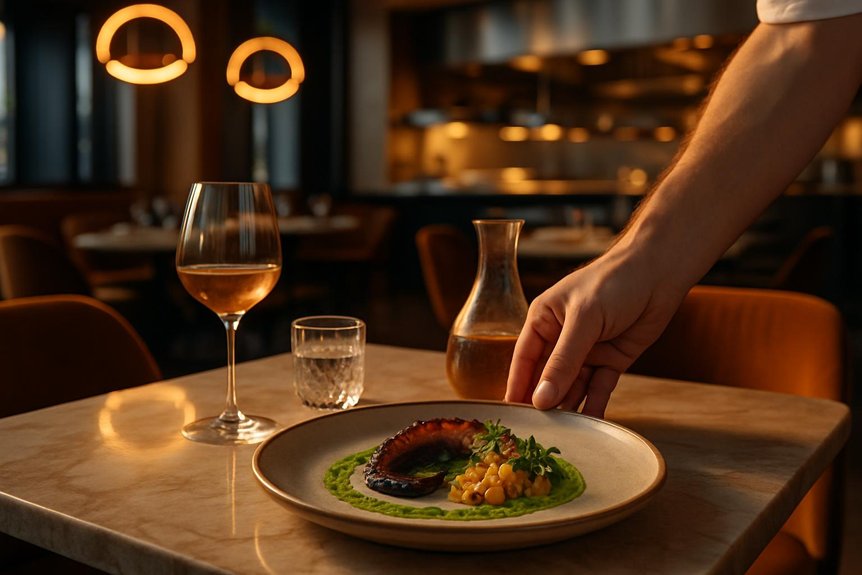
The plate becomes edible art, ephemeral and exacting, often assembled tableside to sharpen anticipation. Guests surrender choice for choreography, trusting the kitchen’s arc from saline overture to sweet diminuendo.
Ferments, custom distillates, and rare produce appear as cameos, not spectacle. It is cuisine as dramaturgy—rigorous, intimate, and intent on recalibrating how luxury tastes, sounds, and moves. At Meraki, exceptional sommeliers enhance the dining experience through their mastery in pairing techniques, ensuring that each dish is perfectly complemented by a nuanced appreciation of global wine regions.
Iconic Dining Rooms With Skyline Views
From panoramic Thames vistas to glass-walled skyline suites, London’s elite addresses turn the city into part of the meal. Guests track landmarks in real time as menus move from aperitif to finale. Sunset tasting menus align courses with the shifting light, sharpening both flavors and views. For those seeking a Greek culinary journey, Meraki in Fitzrovia offers a modern and stylish setting with standout dishes like tuna ceviche with black truffle, embodying the essence of luxury dining.
Panoramic Thames Vistas
How better to survey London’s glittering skyline than over a plate refined enough to match the view? From Thames‑straddling terraces to needle‑high perches, these dining rooms choreograph the river’s slow current with precise tasting menus.
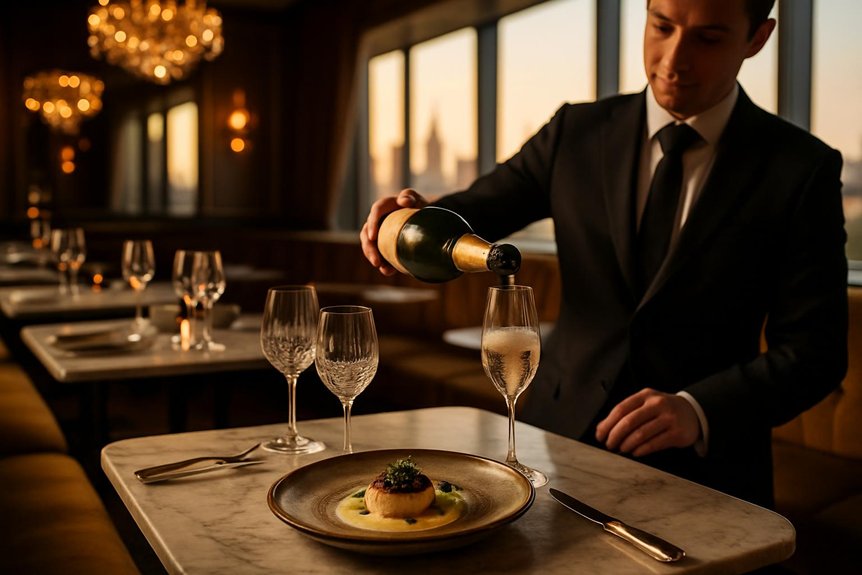
Guests track bridges like milestones between courses, while sommeliers time pours to sunsets prized by skyline photography enthusiasts and those arriving from river cruises.
Chefs lean into maritime light: shellfish glisten against porcelain, lacquered ducks reflect Shard facets, and desserts echo the London Eye’s geometry.
Service is unobtrusive, calibrated to preserve the hush that heightens distance and detail. Floor‑to‑ceiling panes frame Parliament, St Paul’s, and Canary Wharf as edible cartography.
Here, the Thames is both backdrop and tempo, making each plate a measured response to the city’s luminous sweep.
Glass-Walled Skyline Suites
Even behind panes polished to invisibility, the city declares itself: a lattice of lights, river bends, and serrated rooftops captured in dining rooms engineered like observatories.
These glass-walled skyline suites frame London as a living mural, granting unbroken sightlines without glare or echo. Modern glass architecture meets culinary staging: low-iron panels, acoustic interlayers, and discreet mullions keep the view crystalline and conversations intimate.
Climate systems employ innovative aeration to prevent fogging and stabilize temperature, so dishes arrive pristine and aromas remain undisturbed.
Seating radiates from the perimeter inward, calibrating privacy without sacrificing spectacle. Lighting is angled to vanish in reflection. Service pathways are hidden, yet swift.
The result is an atmosphere where precision design turns urban panorama into quiet theater.
Sunset Tasting Menus
As daylight thins across those glass-walled perches, kitchens switch to choreography timed to the horizon. Courses arrive in sync with shifting color, tracing evolving flavor profiles from bright, saline openers to dusk-deep reductions.
This is sensory dining shaped by light: citrus and shellfish while the sky glows, embered meats and aged sauces as silhouettes harden, a cool finale mirroring the city’s nocturne.
Chefs use altitude and aspect as ingredients, calibrating temperature, acidity, and texture to match the skyline’s tempo. Saucing leans lucid early, then gains density; aromatics pivot from verdant to smoky.
Service follows a hush that heightens perception, while glassware, reflective and spare, frames the Thames like a course. Sunset tasting menus become timekeeping—precision plated against the vanishing day.
Wine Sanctuaries and Rare-Cellar Pairings
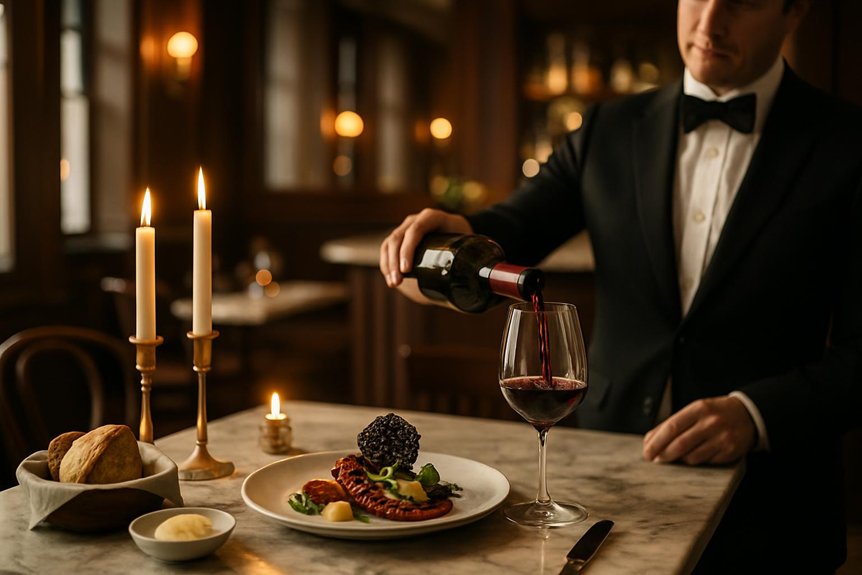
Why do London’s most coveted dining rooms now resemble sanctums of vinous scholarship? Because cellars have become curated archives, where Sommelier Expertise navigates terroir, provenance, and maturity with clinical precision. Lists read like atlases, mapping verticals of Bordeaux and Barolo alongside singular growers from Etna to Tasmania.
Each course is plotted against structure—acidity, tannin, and texture—so pairings elevate rather than echo.
Rare Vintage bottles emerge by the glass via Coravin, allowing guests to test micro-epochs: pre-’82 claret, late-harvest Mosel, or old Champagne with gentle mousse. Chefs now compose dishes around a wine’s arc, not merely the protein’s primacy.
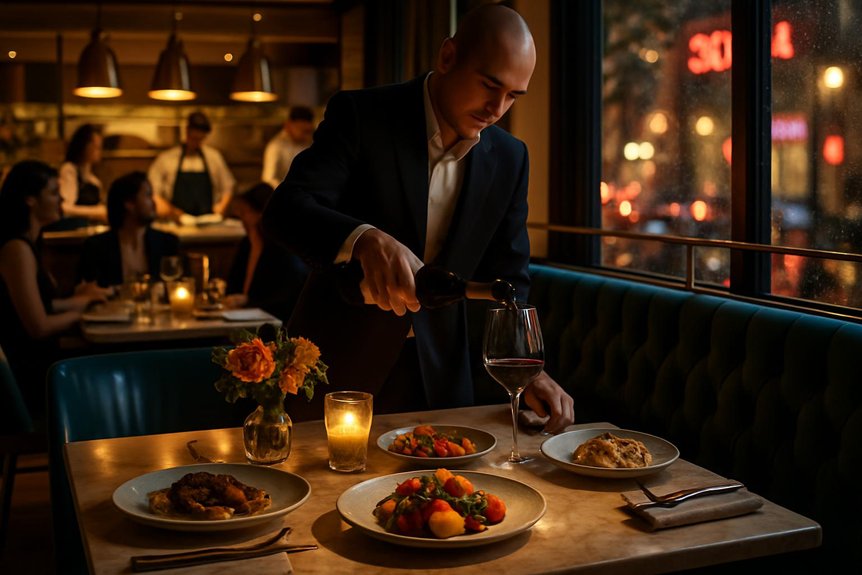
Guests witness calibrated generosity: decanting protocols, serving temperatures, and sequence pacing that protect nuance, ensuring scarcity becomes experience rather than ornament.
Craftsmanship in Service and Design
Though menus and cellars draw headlines, the quiet distinction lies in the choreography of service and the rigor of design. In London’s elite dining rooms, precision becomes a signature: maître d’s cue lighting, sommeliers move with architectural intent, and artisan plating reads like cartography.
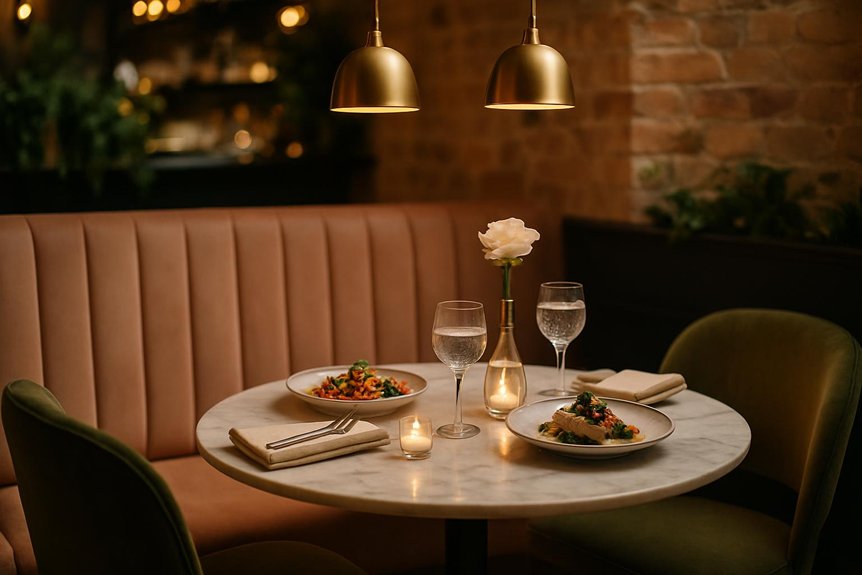
Chairs meet the table at measured heights; customized decor calibrates acoustics to preserve conversation. The effect is restraint, not spectacle, where comfort, timing, and proportion govern every gesture.
- Ritual mapped to rhythm: courses arrive with clockwork pacing that feels unforced.
- Material honesty: stone, leather, and linen chosen for touch, not ostentation.
- Seamless wayfinding: sightlines guide attention from plate to room without distraction.
- Quiet authority: informed staff anticipate needs, then recede, letting design speak.
Chef’s Tables and Immersive Culinary Journeys
At London’s top chef’s tables, intimate counter experiences place guests inches from the pass, where timing and technique are on open display.
Bespoke tasting progressions unfold course by course, calibrated to season, ingredient maturity, and the guest’s preferences.
Chef interaction rituals—brief explanations, finishing touches, and invitations to taste in-process—turn the meal into a guided journey.
Intimate Counter Experiences
In London’s elite dining scene, the most coveted seats often line the counter, where chef’s tables turn meals into tightly choreographed performances. Here, proximity replaces spectacle with intimacy: knives whisper, sauces bloom, and guests read the tempo of the kitchen like chamber music.
The experience favors calibration over pomp—personalized melodies of seasoning, heat, and timing, conducted plate by plate. Access is scarce; exclusive reservation access functions as a quiet currency, admitting those who value focus over flash.
- Sightlines: technique revealed without theatrics, emphasizing discipline and restraint.
- Dialogue: concise chef-to-guest exchange that edits out ceremony and amplifies intent.
- Texture studies: micro-adjusted finishes deliver contrast with surgical accuracy.
- Pace: a metronomic flow that syncs bites to the kitchen’s heartbeat, sustaining concentration.
Bespoke Tasting Progressions
From the hush of the counter, the arc widens into tasting progressions engineered with intent—menus that plot flavor like movements in a score. Courses arrive in calibrated sequence, each dish advancing texture, temperature, and tempo.
London’s elite houses treat these journeys as design problems: map appetite, modulate contrast, land with resonance.
At select chef’s tables, the progression adapts in real time, guided by quiet observation and recorded preferences, yielding custom flavor paths without spectacle. Sensory pairing becomes the compass—volatile aromas, salinity, and acidity aligned with glassware, infusion, and ambient tone.
A shellfish consommé might precede aged pigeon, buffered by a mineral white; smoke and citrus bridge toward a restrained red. Desserts taper intensity, extending memory rather than sweetness, completing a precise, immersive arc.
Chef Interaction Rituals
How close should a diner stand to the fire of authorship? In London’s elite rooms, Chef Interaction Rituals frame that distance with studied intimacy. Pre meal greetings establish tempo—names learned, preferences quietly confirmed—before seats at chef’s tables place diners within the choreography of heat, steel, and timing.
Kitchen tour insights translate process into narrative: brines, reductions, ferments, and the split-second choices that define a plate.
- Access as authorship: proximity confers a co-creator illusion while preserving the chef’s editorial control.
- Transparency as theater: mise en place becomes plot, and timing, the heartbeat.
- Dialogue as seasoning: brief exchanges calibrate pacing and palate without breaking momentum.
- Memory as takeaway: a signature flourish anchors recall, turning technique into story.
Such rituals transform tasting into participation, without surrendering discipline.
Conclusion
In the end, London’s elite restaurants compose a rare symphony of heritage, innovation, and sensual detail. From reimagined British classics to avant‑garde theatrics, skyline salons to hushed wine sanctuaries, every element is precision‑set for memory. Service becomes choreography; design, a whispering backdrop; chef’s tables, portals to craft. What lingers after the final course—is it flavor, ritual, or the alchemy between them? Here, luxury isn’t decoration; it is the medium through which culinary art becomes timeless.