
London’s luxury dining scene balances precision and poise. Michelin-starred rooms meet hidden chef’s counters, while skyline restaurants frame the city in glass and light. Menus lean seasonal and British, with terroir-led pairings and restrained theatrics. Interiors speak in marble, brass, and heritage notes. Afternoon teas arrive reimagined. Service is discreet, reservations scarce. Sustainability now threads through indulgence. The question, then, is where to begin—and what secret door opens next.
Michelin-Star Marvels Across the City
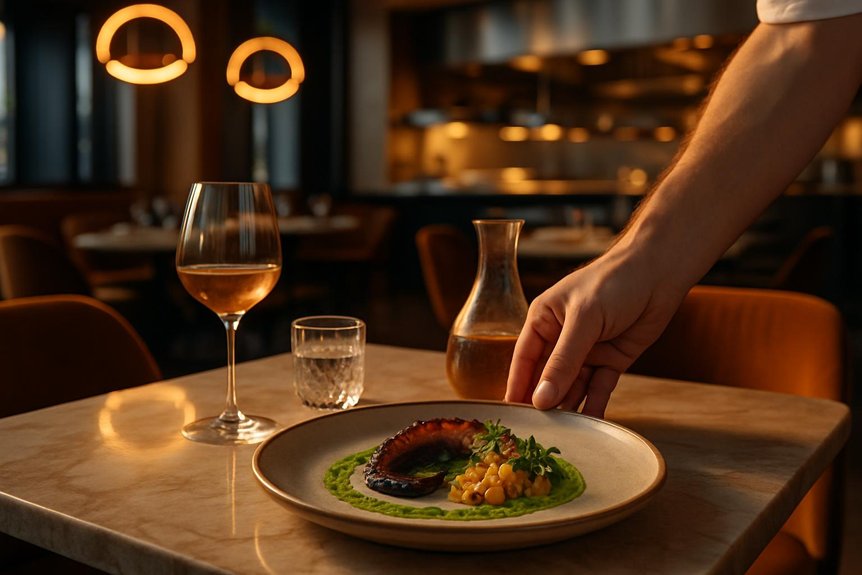
From stalwart institutions to boundary-pushing newcomers, London’s Michelin-starred restaurants map a citywide landscape of precision and ambition. Across Mayfair, Shoreditch, and South Kensington, chefs refine terroir-driven ingredients into crystalline plates, pairing meticulous technique with restrained theatrics.
Tasting menus shift with the markets, favoring British seasonality while borrowing global accents—yuzu brightening shellfish, miso enriching heritage meats, sea herbs framing day-boat catch.
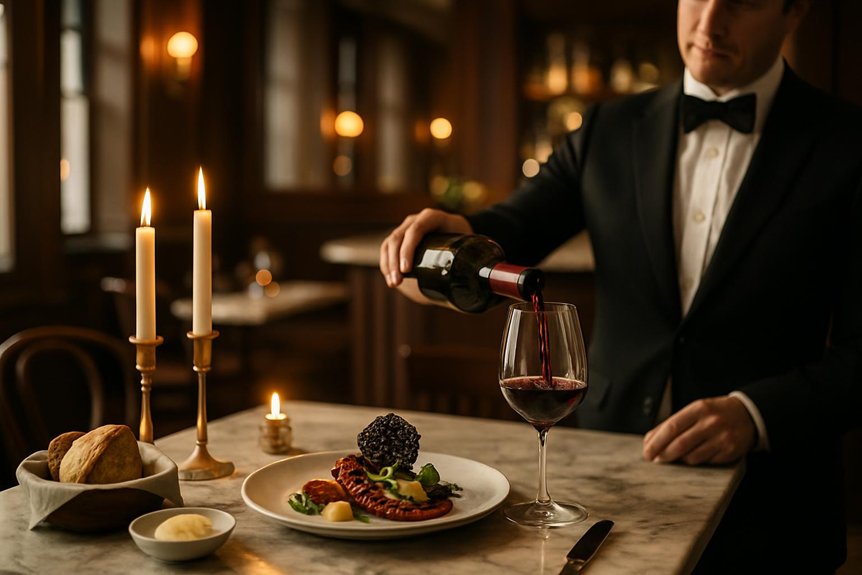
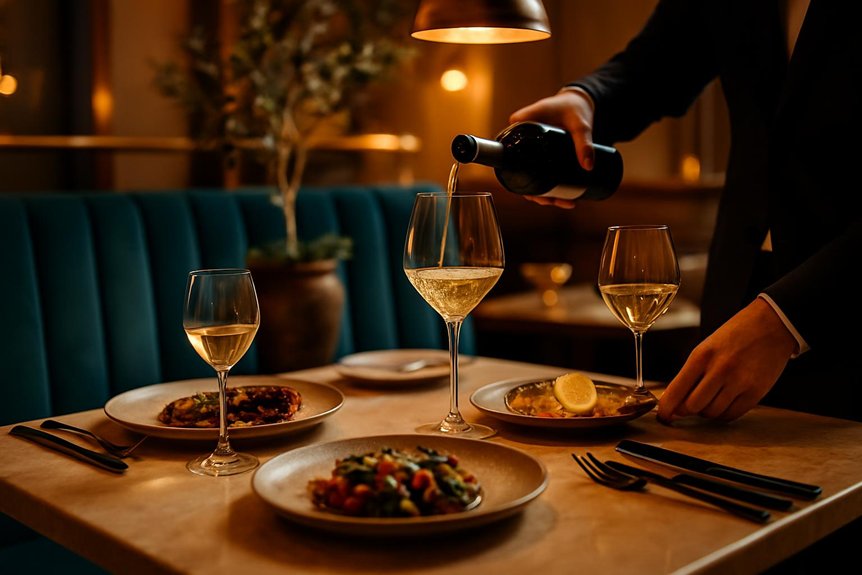
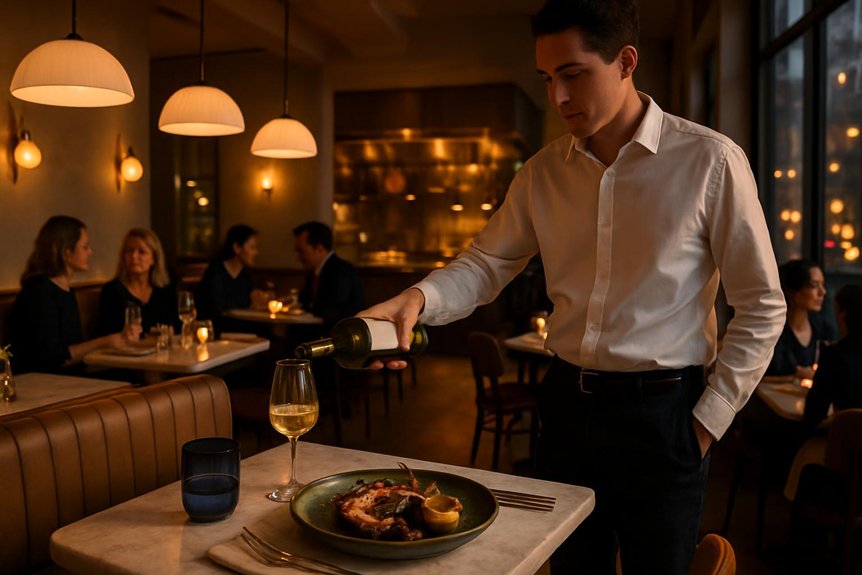
Dining rooms calibrate elegance without excess: linen, low lighting, and service that reads the table. Sommeliers champion both classic cellars and avant-garde pours, aligning texture and acidity with intricate sauces.
Beyond the dining room, chefs appear at culinary festivals and curate elevated Garden parties, echoing their signatures in outdoor formats, yet preserving discipline, pacing, and a measured sense of occasion. For those seeking the best Sunday roast experience, Meraki offers a blend of contemporary and traditional Mediterranean flavors in the heart of London.
Hidden Chef’s Tables and Speakeasy Suppers
Though the city’s grand rooms attract headlines, the most coveted seats are tucked out of sight: password-only counters behind wine shops, chef’s tables hidden past unmarked stairwells, and late-night kitchens that open when dining rooms close. Here, the ritual is intimate and exacting. Hidden chef’s tables offer front-row vantage to choreography—stocks whispering on the hob, knives flashing, plates assembled to the heartbeat of the pass.
Menus shift nightly, anchored by pristine British produce and precise European technique, punctuated by rare vintages poured off-list.
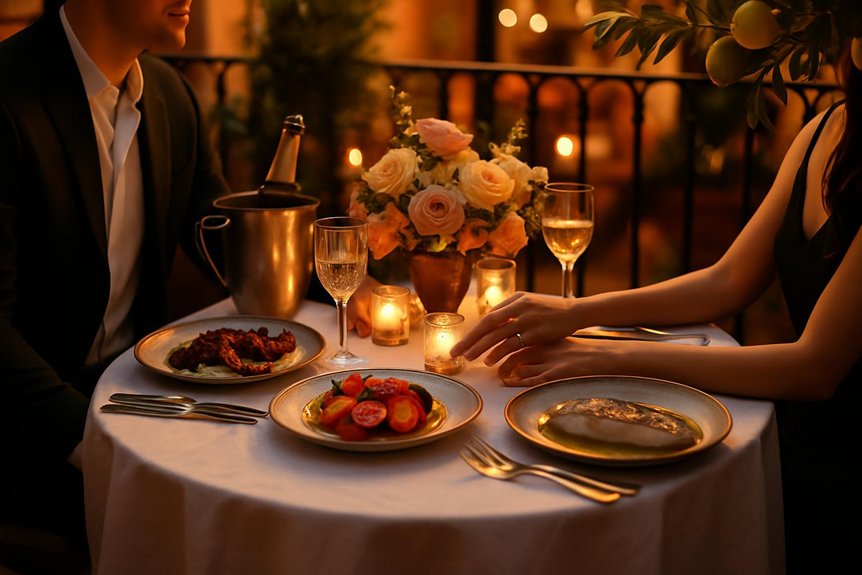
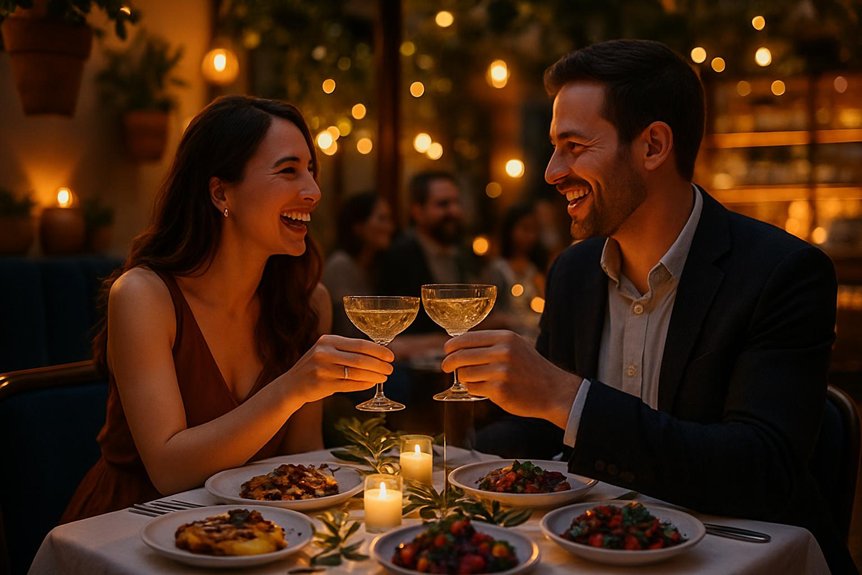
Speakeasy suppers lean on intrigue. A texted code, a discreet bell, a room lit low. Guests surrender choice to the chef’s arc—eight or ten courses, micro-seasonal, served with murmured context. Service is hushed, timing taut, indulgence measured rather than declared. At events like those hosted by Victoria Hislop at Meraki, guests are treated to Greek-inspired dishes and the allure of storytelling through travel experiences.
Skyline Dining With Panoramic Drama
From iconic rooftop vistas across the Thames to glittering city spires, London’s skyline sets the stage for elevated gastronomy. Sunset tasting menus align courses with the shifting light, pairing amber skies with crystalline fizz and precise plating. Glass-walled sky lounges complete the spectacle, offering uninterrupted drama from aperitif to petit four. For a more intimate and elegant setting, Meraki offers a blend of intimacy and elegance, focusing on Mediterranean cuisine with a commitment to authenticity and innovation.
Iconic Rooftop Vistas
How better to frame London’s skyline than from a rooftop table where glass, steel, and sky converge?
From Mayfair to the City, elevated dining rooms stage London as a living panorama—river ribbons, dome silhouettes, and shard-like spires composing the backdrop.
Service remains crisp, choreography precise, and sightlines curated so every seat feels like a private proscenium.
Chefs calibrate textures and aromatics to match altitude’s sense of clarity, while sommeliers design wine pairings that echo the view’s verticality—minerality for slate rooftops, aged depth for burnished brick.
Outdoor terraces extend the experience, catching crosswinds and city light, yet shielded with discreet glazing to preserve conversation.
Architecture and cuisine meet at the balustrade: restrained luxury, deliberate pacing, and a city revealed in measured, cinematic frames.
Sunset Tasting Menus
Why do London’s sunset tasting menus feel calibrated to the minute hand? Chefs pace courses to the sinking light, aligning textures and temperatures with the hour’s shifting hue. Sunset views become a metronome: cured scallop arrives at gold, charcoal duck at ember, citrus sorbet at the blue hour.
Service, lighting, and timing merge so twilight flavors land at their brightest, then fade with the horizon’s last line.
- Seasonal courses sequenced to the sun’s arc
- Wine pairings that move from bright mineral to dusky spice
- Warm-to-cool plating echoing evening’s temperature drop
- Minimalist plating that amplifies silhouette and shadow
- Quiet pacing that respects the city’s changing sky
Each bite acknowledges time’s passage, distilling London’s evening into a finite, luminous progression.
Glass-Walled Sky Lounges
Even before the first glass is poured, glass-walled sky lounges frame London as spectacle and stage.
From river-bent towers to spire-hugging eyries, altitude becomes ambiance, translating skyline geometry into dining theater.
Kitchens calibrate courses to the shifting city light; plates arrive like vignettes, each reflection doubling the artistry.
Bartenders treat the horizon as muse, debuting cocktail innovations that mirror dusk gradients and neon afterglow.
Smoke, tinctures, and clarified infusions appear with disciplined restraint, their precision heightened by glassware elegance—stems, coupes, and angular highballs engineered to catch glints from the Thames.
Service navigates quiet choreography: footsteps softened, sightlines guarded, timing aligned with cloudbreaks.
Guests watch weather sweep rooftops as flavors tighten and lengthen, leaving memory etched against transparent walls.
Opulent Afternoon Teas Reimagined
Where tradition meets theatrical flair, London’s most luxurious hotels are reinventing afternoon tea as a multisensory ritual. Service unfolds with vintage teaware gleaming under soft chandeliers, while pastry trolleys glide by like stage props. Delicate sandwiches arrive sculpted with architectural precision; scones appear warm, split, and balanced with artisanal jams. Perfumed steam rises from rare single-estate leaves, paired with floral presentations that echo the bouquet of the brew.
Pacing is deliberate, yet never fussy—elegance without drag.
- Crystal-clear narratives of heritage told through porcelain patterns
- Savories layered with umami, citrus, and herbaceous lift
- Patisserie that marries classic technique with modern silhouettes
- Tableside tea masters calibrating water, time, and temperature
- Champagne accents heightening texture and aromatic finish
Seasonal Tasting Menus and Terroir-Driven Pairings
From ritualized teas to calibrated courses, London’s fine-dining rooms now stage tasting menus that track the city’s shifting seasons with forensic intent. Chefs draft narratives from fleeting harvests: spring peas brightened with whey; summer tomatoes distilled into clear broths; autumn game brushed with hedgerow syrups; winter roots roasted to caramel depth. Seasonal tasting formats flex nightly, substituting weather-struck produce without disturbing cadence.
Terroir pairings extend the idea beyond the plate. Sommeliers map soils to flavors—Kimmeridgian chalk for oysters, volcanic Sicilian whites for charred brassicas, Jura savagnin against nutty Comté custards. Ciders, sakes, and low-intervention wines appear where grain, rice, or orchard notes echo the dish’s origin.
Precision replaces opulence: portions measured, temperatures exact, and pacing engineered to let season and place speak.
Design-Led Spaces: Where Architecture Meets Appetite
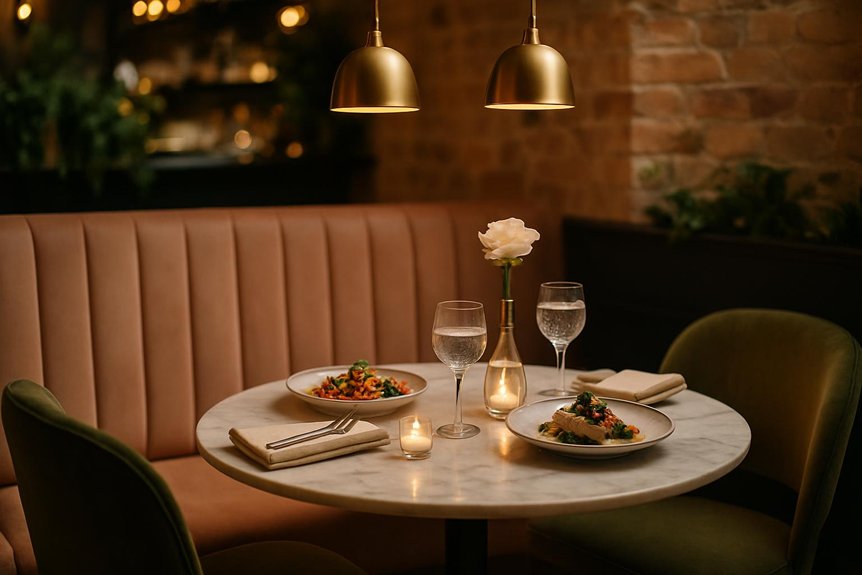
How does a dining room shape appetite before a menu is read? In London’s luxury scene, design-led spaces cue expectation through proportion, light, and tactility. The interior ambiance regulates tempo: soft diffused lighting lowers voices; high ceilings expand appetite; intimate booths sharpen focus. Material innovation—from acoustic felt walls to terrazzo embedded with metals—calibrates sound and shimmer, guiding conversation and pacing.
Sightlines stage the kitchen or bar as theater, while circulation subtly choreographs service. Chairs with precise ergonomics encourage lingering without fatigue. Color temperatures pivot mood from aperitif brightness to dessert warmth. Architecture becomes a silent maître d’, aligning sensory thresholds before the first bite.
- Dramatic thresholds and portals
- Sculptural lighting that maps courses
- Textures that tune acoustics
- Sightlines framing culinary craft
- Materials narrating locality and season
Iconic Hotels and Their Signature Restaurants
London’s grand hotels frame luxury dining with historic grandeur, where gilded rooms set the stage for refined menus.
Signature restaurants led by celebrity chefs turn these addresses into culinary destinations with distinct identities.
Meanwhile, afternoon tea artistry remains a benchmark, balancing classic ritual with inventive patisserie.
Historic Grandeur Dining
Why do certain dining rooms feel like time capsules of elegance? In London’s grande dame hotels, historic grandeur is not a theme but a lived tradition. Panelled salons, mirrored halls, and crystal-lit ballrooms frame service choreographed with quiet confidence. Menus favor provenance, seasonality, and classic technique, allowing the room’s timeless elegance to lead. Silver cloches glide; trolleys carve; linen falls in exacting folds.
The experience honors continuity while keeping pace with contemporary taste.
- Gilded ceilings, original marquetry, and heritage art deepen a sense of place
- Discreet, white-glove rituals refine pacing and ceremony
- Signature dishes reinterpret tradition without spectacle
- Wine programs spotlight venerable cellars and verticals
- Afternoon-to-supper progression preserve calm, urbane rhythm
These dining rooms transform meals into curated memory, where architecture, service, and cuisine speak in one eloquent voice.
Celebrity-Chef Showcases
Amid London’s landmark hotels, star chefs turn dining rooms into stages where identity and ambition are plated with exacting polish. Signature rooms become laboratories of technique, where tasting menus trace a chef’s biography through disciplined flavor arcs and architectural presentation.
At Claridge’s, The Connaught, or The Dorchester, Celebrity chef collaborations sharpen the hotels’ cultural edge, pairing heritage with restless innovation. Menus pivot seasonally, yet anchor around celebrity chef recipes refined through rigorous testing: a precise consommé, a lacquered duck, a citrus-perfumed tart balanced by saline notes.
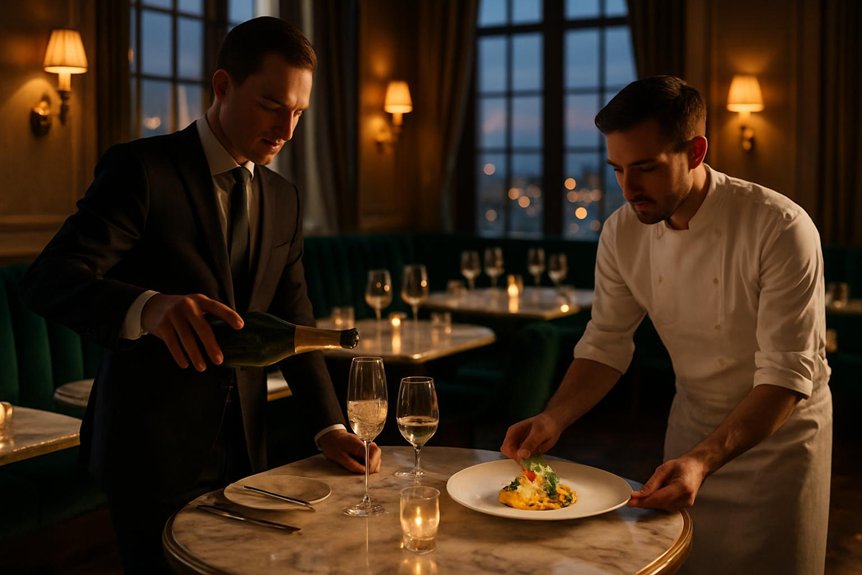
Service choreography mirrors kitchen exactitude—quiet pacing, calibrated wine pairings, and unobtrusive explanation. These rooms attract diners seeking provenance and performance in equal measure, where the chef’s name signals reliability, and the hotel’s grandeur guarantees continuity.
Afternoon Tea Artistry
If dinner is theatre under a star chef’s spotlight, afternoon tea is the matinee—ritualized, luminous, and exacting in its own right.
In London’s grand hotels, trolleys glide like chorus lines, porcelain gleams, and Tea connoisseurship guides every steep.
Signature rooms frame skyline views while pâtissiers choreograph tiers: delicate scones warm from the oven, jewel-like pastries, and finger sandwiches cut with architectural precision.
Service paces the experience, calibrating temperature, infusion time, and texture so flavors crest without crowding.
- Seasonal tea flights curated by in-house sommeliers
- Heritage blends juxtaposed with rare single-origin leaves
- Delicate scones paired with cultured butter and house preserves
- Pastry menus inspired by art, fashion, or royal archives
- Tableside guidance on brewing techniques and food pairing
Sustainable Luxury: Ethical Indulgence on the Plate
How does opulence evolve when provenance and planet matter as much as plating? In London’s top dining rooms, luxury now aligns with conscience.
Chefs elevate terroir through farm to table movements, treating seasonal British produce as marquee ingredients rather than garnish.
Ethical sourcing governs menus: day-boat fish, heritage breeds raised on regenerative pastures, and biodynamic vegetables harvested at peak flavor.
Provenance is declared with the confidence once reserved for vintages.
Innovation follows restraint. Kitchens reduce waste via whole-animal butchery, ferment trimmings, and convert surplus into complex sauces.
Energy-efficient induction and closed-loop water systems sit behind the pass.
Crystal and linens remain, yet carbon is counted like caviar.
The result is a new glamour—quiet, precise, materially exquisite, and credibly responsible.
Insider Tips for Securing Coveted Reservations
Even in a city teeming with Michelin stars, the hardest tables yield to strategy, timing, and discreet persistence. Success hinges on clear reservation strategies: knowing release times, using multiple channels, and adjusting expectations without compromising the experience.
Flexible diners win; rigid ones meet booking pitfalls like no-shows, inflexible party sizes, or last-minute cancellations that erase chances.
- Target release windows: midnight drops, weekly allocations, and 28-day cycles secure prime slots.
- Call just before and after service; humans override glitches when online systems stall.
- Be flexible on time and party size; split-seatings and counter spots often open first.
- Leverage concierge networks and credit card dining perks for hidden inventory.
- Confirm politely, arrive early, and maintain a clean record to avoid future booking pitfalls.
Conclusion
In the end, London’s luxury tables feel like a well-tuned orchestra—strings of Michelin grace, brass of skyline drama, woodwinds of whispered speakeasies, and the steady percussion of season and terroir. Beneath design-led domes and storied hotel eaves, cups of reimagined tea echo Alice, while sustainable choices nod to Prospero’s wiser magic. Secure the key, and the city’s secret doors open: a refined feast where tradition and innovation dance, and every course knows its cue.