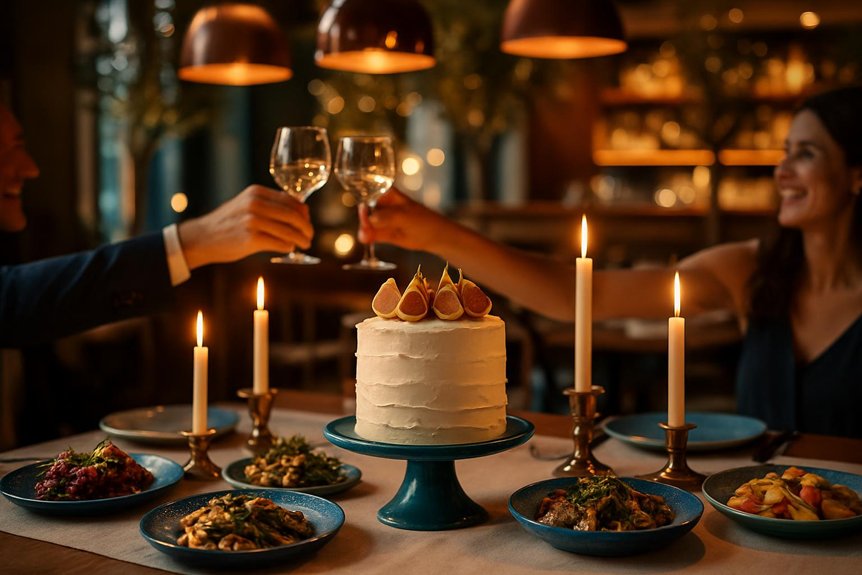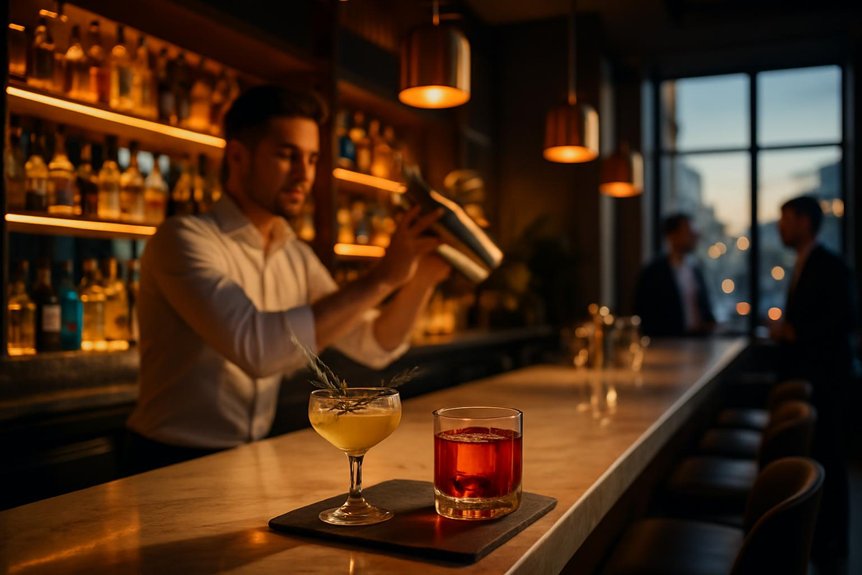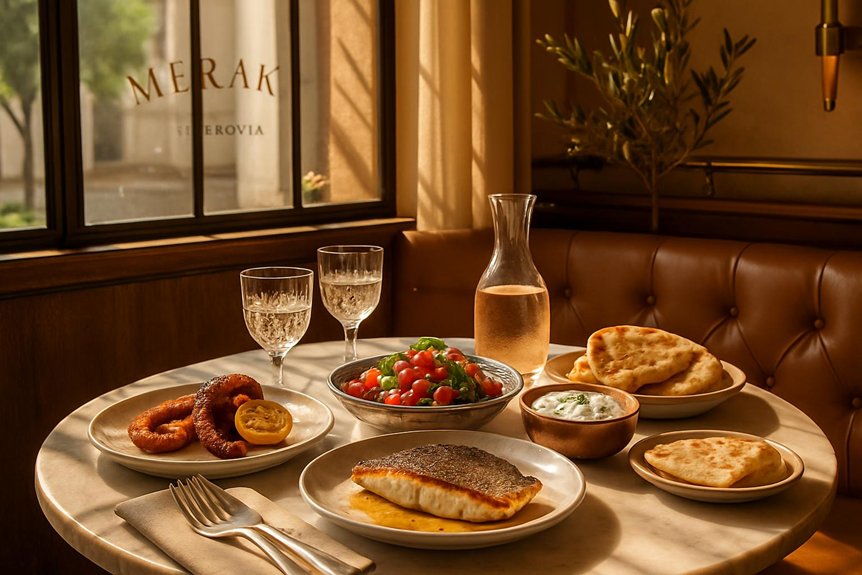

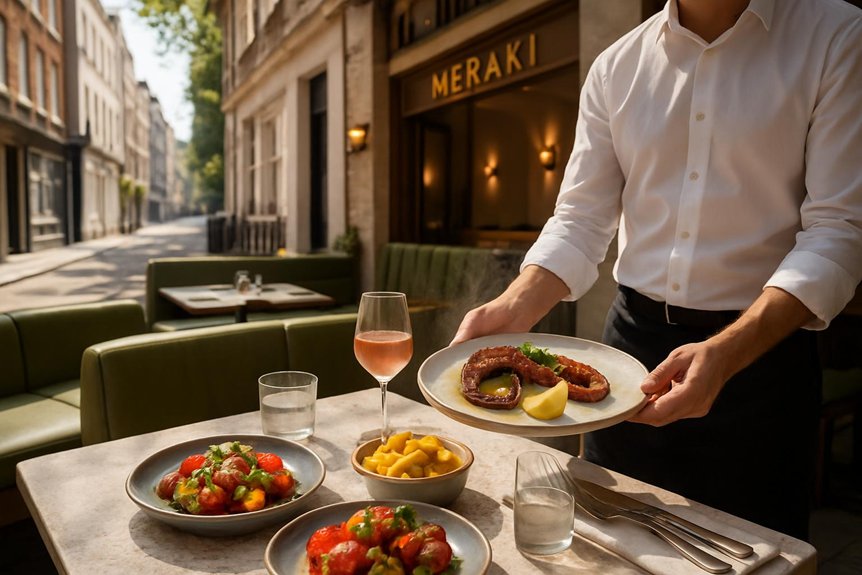
Midday in Fitzrovia finds Meraki quietly poised between calm and bustle. The room carries a sun-washed ease. Staff move with measured grace. Plates arrive focused on freshness, light, and precision. Seafood glints, herbs lift, and charcoal leaves a gentle trace. It is not showy, yet it leaves a mark. For those seeking a lunch that feels unhurried and assured, the menu suggests more than it says—and the details begin to surface.
Fitzrovia’s Quiet Allure and Meraki’s Midday Mood
On a weekday noon, Fitzrovia yields a measured hush: offices exhale, side streets steady, and sunlight slips along Portland stone. The neighborhood’s pace softens, revealing a district that values nuance over spectacle. Its mosaic of galleries, cafés, and quiet mews suggests rustic charm without resorting to nostalgia. Its hidden gems feel earned rather than advertised.
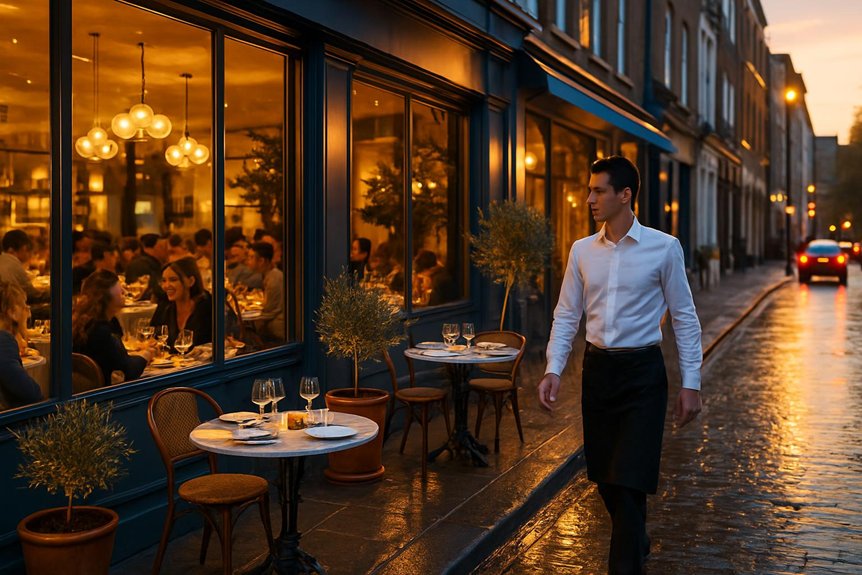
Meraki fits this cadence. The frontage sits poised, neither clamorous nor coy, catching the sift of light along Fitzroy Place. Inside, the midday rhythm aligns with the area’s restraint: conversation low, movements unhurried, detail unobtrusive.
Herbs and lemon drift in the air, signaling intent rather than insistence. The atmosphere supports a reflective pause, guiding attention to what’s on the plate and the city gently moving beyond the glass. The exceptional service from the welcoming staff and knowledgeable team adds to the relaxing experience of dining at Meraki.
A Warm Welcome: Service, Space, and Setting
Service arrives before it is asked for, quiet yet precise. The room carries a chic Mediterranean ambience—sun-bleached tones, clean lines, and soft light. Together, they set an inviting stage for what follows. The intimate atmosphere at Meraki, enhanced by dim lighting and tasteful décor, ensures a serene and romantic dining experience.
Effortless, Attentive Service
A quiet assurance greets arrivals before a word is spoken: doors opened with timing, coats whisked away, and a table found without fuss. Staff move with practiced ease, calibrating pace to the room’s dining ambiance and the cadence of midday relaxation. Menus appear without theatricality; water is poured, not announced.
Requests are anticipated—an extra napkin before the question forms, a discreet check on allergies delivered as neutral fact. Plates land warm, courses staggered with quiet logic, and cutlery realigned between bites without intrusion. Eye contact replaces interruption; refills happen on the pass.
Guidance is precise when asked, absent when not. The bill arrives at the right moment, clipped and clear, letting the meal end as it began: smoothly, confidently, and unforced. Experience the bohemian gypset vibe of Mykonos right in the heart of London, all while savoring the seamless service at Meraki.
Chic Mediterranean Ambience
What begins with understated competence at the door unfolds into a room tuned to Mediterranean ease: sun-washed neutrals, limestone hues, and pale oak setting a calm register. The palette is quiet but intentional, projecting ambient elegance without theatrical gesture. Seating sits low and generous, spacing measured for conversation, not spectacle.
Light slips across textured plaster and woven cane, articulating a clean line of mediterranean aesthetics. Olive-toned banquettes and stoneware vases cue the islands rather than imitate them. The soundtrack is discreet, a warm acoustic thread that softens edges.
Tables are dressed simply; glassware catches light like small coastal reflections. Movement flows efficiently from bar to banquette, a calm choreography. The room reads as contemporary, coastal, and urbane—an atmosphere that invites lunch to stretch by design.
From Market to Table: Ingredients That Lead the Menu
In Fitzrovia’s kitchens, menus start at the market, where the day’s best catch, peak-season produce, and small-batch dairy shape what’s cooked.
At Meraki, local sourcing is treated as method rather than trend, with buyers scanning stalls for texture, aroma, and color that signal ingredient freshness. Fishmongers influence the grill list; greengrocers dictate garnishes and sides; cheesemakers define the finish on salads and warm breads.
Olive oils are selected for varietal character, not just region, and citrus is chosen for acidity that lifts herbs already clipped that morning. The result is a lunch menu that shifts subtly with weather and tide, keeping flavors bright and focused.
Small Plates to Share: Mezze That Steal the Scene
Bowls of vibrant dips and spreads set the tone, from smoky aubergine to lemon-bright tahini.
Sizzling halloumi arrives with charred seasonal veg, offering salt, sweetness, and crunch.
Seafood mezze follows with crisp calamari, marinated anchovies, and grilled prawns that bring coastal freshness to the table.
Vibrant Dips and Spreads
A table in Fitzrovia often starts with color: bowls of smoky baba ghanoush, herb-bright zhug, beet-stained labneh, and tahini whipped to a silk.
At Meraki, these arrive as quiet statements of intent, each bowl calibrated for balance and snap. Dipping traditions guide the cadence: warm pita tears drag through sesame’s nutty depth, then slip into aubergine’s smoke, before a jolt of coriander-chilli heat resets the palate.
Color combinations aren’t decorative; they signal flavor—magenta tang meets earthy taupe, emerald heat cuts creamy ivory.
A drizzle of olive oil, a dusting of sumac, and lemon zest sharpen edges without blurring textures.
Guests share, compare, and return to favorites, finding that small plates can anchor the meal with precision and restraint.
Halloumi and Grilled Veg
How does a skillet-singing cheese become the room’s focus? At Meraki, it’s the halloumi: seared to a bronzed edge, yielding a clean, briny snap that anchors the table. The Grilled cheese arrives with ribbons of courgette, blistered peppers, and char-marked aubergine, each vegetable carrying smoke and sweetness.
Mediterranean spices thread through every bite—oregano, lemon zest, and a restrained heat that lifts rather than smothers. A drizzle of herb oil glosses the plate, while a squeeze of citrus sharpens the halloumi’s salinity.
Textures play off each other: firm cheese, soft veg, crisp edges. Shared between forks, it functions as both centerpiece and palate-setter, bridging rustic comfort and urban polish. It is a concise argument for simplicity, executed with precision and restraint.
Seafood Mezze Highlights
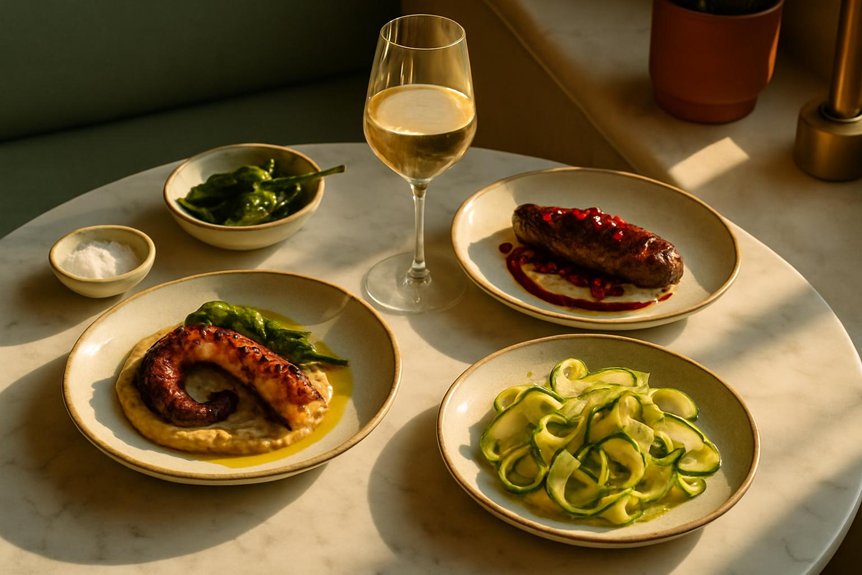
From the cold counter and the grill, seafood mezze arrive in quick succession, built for sharing and calibrated for contrast. Crisp calamari wears lemon and oregano, its salinity clipped by smoked taramasalata. Octopus, charcoal-blistered, yields to the knife and leans on caper leaf and fennel. Aegean prawns, shell-on, come glossed with garlic oil and a flick of chili.
Cured anchovies deliver clean brightness, set over tomatoes and olive crumbs, while a thyme-scented mussel saganaki folds into tomato and feta. The kitchen foregrounds sustainable fishing, listing catch origins and seasons, and staff speak directly about seafood sustainability, steering diners toward resilient species.
Portions are compact, encouraging variety; plates circulate and disappear, leaving citrus, iodine, and smoke as the lingering refrain.
Salads That Sing: Bright, Herb-Forward Bowls
Some of Fitzrovia’s most memorable bites arrive in bowls where herbs lead and leaves support. At Meraki, salads are built with intent: seasonal greens provide structure while herb combinations deliver aroma, lift, and contrast.
Parsley, dill, and mint appear frequently, sharpened by citrus and softened by creamy elements like whipped feta or tahini yogurt. Tomatoes, cucumbers, and shaved fennel add crunch and clarity, while toasted seeds or pistachios bring ballast without heaviness.
Dressings are tuned rather than loud—lemon, good olive oil, and a flicker of sumac or oregano. Bitter notes from radicchio or rocket keep sweetness in check.
Portions are lunch-friendly, bright, and brisk, working as standalone plates or counterpoints to warmer dishes. The result is invigorating and precise, a confident expression of produce.
Seafood Spotlight: Grilled, Crudo, and Coastal Notes
Why does Fitzrovia’s seafood feel both coastal and composed? At Meraki, the answer lies in restraint and clarity. Crudo arrives chilled and translucent, dressed with citrus, olive oil, and a prickle of sea salt; nothing masks the tide-borne sweetness.
Grilled fillets carry a light char, then yield to tender flesh, balanced by lemon and wild herbs. Octopus is briefly seared for texture, finished with capers and peppery greens.
The kitchen’s sourcing underscores sustainable fishing, with species selected for stock health and season. Notes on seafood sustainability appear beside the menu, guiding choices without sermonizing. Salinity, acidity, and smoke stay in dialogue, never in conflict.
Each plate suggests shoreline air—clean, mineral, and bright—yet keeps its structure, aligning coastal intuition with urban polish.
Fire and Flame: Charcoal-Grilled Meats Done Right
Fitzrovia’s grills showcase signature charcoal techniques that lock in heat and kiss the meat with clean, controlled smoke.
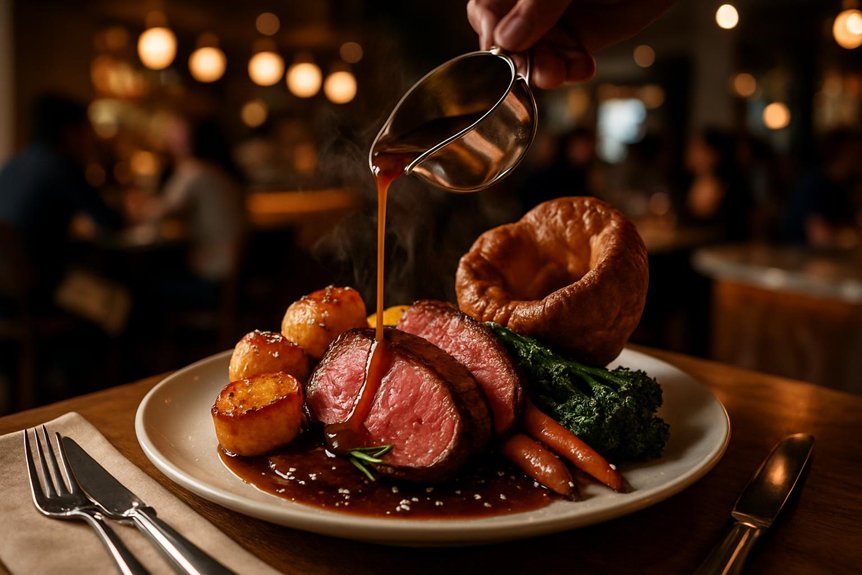
Prime cuts—ribeye, lamb rack, and aged pork—are chosen for marbling and texture that stand up to the flame.
Smoky Mediterranean marinades of olive oil, lemon, garlic, and herbs finish the profile with brightness and depth.
Signature Charcoal Techniques
How does a coal bed become a chef’s signature? At Meraki, charcoal mastery is measured in restraint and timing. The cooks read embers like a score, shifting heat rather than food. They chase a precise smoky aroma without soot or bitterness, letting flame kiss, not conquer. Technique speaks louder than spectacle.
- Layered ember zones guide sear and rest, keeping edges hot while centers relax.
- A whisper of rosemary or citrus peel smolders on the grate, perfuming without masking.
- Controlled flare-ups are induced with fat basting, then tamed by ash to lock caramelization.
- Resting on warm mesh above coals prevents steam loss and preserves crust.
The result is clean, characterful grillwork—clarity of flavor, disciplined fire, and a recognizable Meraki imprint.
Prime Cuts Selection
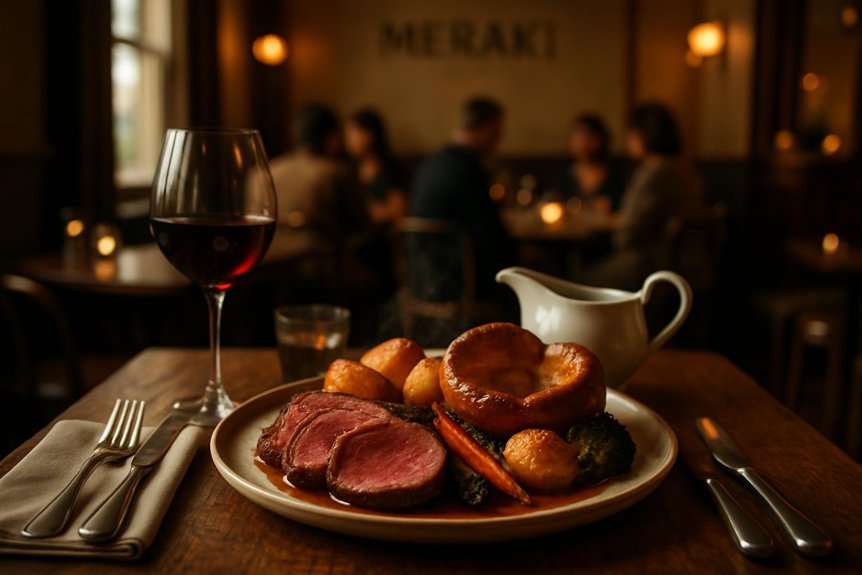
Ember fluency only matters if the meat merits it, and at Meraki the grill meets its match in a tight roster of prime cuts. The menu narrows focus to cuts that reward fire: ribeye with dense marbling, strip loin for balanced chew, and a leaner fillet when delicacy is the aim.
Each portion is trimmed for consistency, a quality selection that shows restraint rather than spectacle.
Portion sizes suit a lunch pace, yet sear depth suggests dinner-level attention. Heat is disciplined, locking juices without scorched bitterness, and resting times are observed so slices land vivid and clean.
Sourcing reads as deliberate—age, breed, and fat cap considered—producing savory concentration. The result is meat-forward clarity: texture, aroma, and a confident, charcoal-marked finish.
Smoky Mediterranean Marinades
Why do the simplest pantry staples seem to sing louder over charcoal? At Meraki, that question is answered with Mediterranean marinades built on citrus, herbs, and good oil. The grill’s heat awakens smoky flavors, setting a crisp edge against tender centers. Each cut arrives seasoned, not smothered, allowing the fire to finish the story with char and perfume.
- Lemon, garlic, and oregano form a saline-bright base that tightens texture yet keeps juices intact.
- Smoked paprika and cumin add warmth, steering lamb and chicken toward embers’ sweetness.
- Olive oil carries aromatics, helping herbs cling while moderating flare-ups for steady caramelization.
- Red wine vinegar or pomegranate molasses sharpens the finish, balancing fat and char.
The result: precise, fire-kissed meat, confidently simple and unmistakably Mediterranean.
Bread, Oil, and Citrus: The Little Touches That Matter
The smallest gestures often define a meal in Fitzrovia: a warm heel of bread with a peppery pour of olive oil, a flick of sea salt, and a bright squeeze of citrus.
At Meraki, this quiet prelude signals intent. The bread, rooted in artisanal baking, arrives with a thin crackle and soft crumb, ready to absorb flavorful oils that smell of green tomato and wild herbs.
Lemon wedges rest nearby, their acidity sharpening the olive’s fruit and lifting the grain of the crust. A sprinkle of oregano, a twist of black pepper, and the table settles into its rhythm.
These touches calibrate the palate, framing what follows with restraint and balance, and reminding diners that hospitality begins with texture, brightness, and care.
Sips at Noon: Wines, Spritzes, and Non‑Alcoholic Pairings
Midday invites a lighter register: glasses that refresh without slowing the stride. At Meraki, the noon hour favors clarity—spritzes that lift, wines that frame, and non alcoholic options that keep focus sharp.
The wine pairing ethos leans Mediterranean, steering toward saline whites and herb‑tinged rosés that echo the kitchen’s brightness. Bitter citrus and restrained sweetness guide the spritzes, keeping them crisp rather than coy. Zero‑proof blends mirror the same structure: acidity first, then aromatics.
- Assyrtiko by the glass, a linear wine pairing for grilled seafood and lemon.
- Pale rosé with stone fruit tones, easing alongside mezze and herbs.
- Grapefruit–thyme spritz, gently bitter, sparkling, and brunch‑friendly.
- Verjus highball with cucumber and mint, a poised entry among non alcoholic options.
Everything stays nimble, never heavy.
How to Plan the Perfect Lunch at Meraki
After a glass that sharpens appetite rather than slows it, planning lunch at Meraki starts with timing and intent. Lunch planning begins by booking a table slightly early to beat the rush and secure quieter corners.
A balanced meal follows: shareable starters to map Mediterranean flavors, a focused main, and a light finish.
He studies the menu for seasonal highlights, pairing crisp salads with grilled seafood or lamb, avoiding duplicate herbs across courses. He sequences textures—crunch, silk, char—so the palate stays alert. Drinks complement, not dominate: mineral whites, citrus spritzes, or precise non-alcoholic pairings.
Allergies and preferences are flagged early; staff guidance refines choices. Portions are paced to allow conversation. He ends with espresso or herbal tea, leaving room for an afternoon stride.
Conclusion
As lunch at Meraki draws to a close, Fitzrovia’s quiet pulse feels like a tide settling after a bright crest. The room’s coastal calm, deft service, and ingredient-first plates converge into an unhurried ritual. Mezze, salads, and charcoal-kissed mains speak in clear, confident notes, while citrus and oil stitch the details together. With thoughtful sips and measured pacing, the midday pause becomes a small compass—pointing to freshness, restraint, and the ease of Mediterranean light in London’s heart.