
London’s most rarefied dining rooms pair restored heritage with modern restraint. Marble, patina, and tailored upholstery frame precise service and quietly confident cooking. Menus shift with the fields and shores, honoring provenance over flourish. Chef’s counters push British flavors forward while storied rooms preserve ritual. Cellars whisper with rare vintages and forensic pairings. It is luxury without noise, craft without spectacle. The question is which doors open to the city’s most exacting experiences next.
Michelin Legends and Storied Dining Rooms
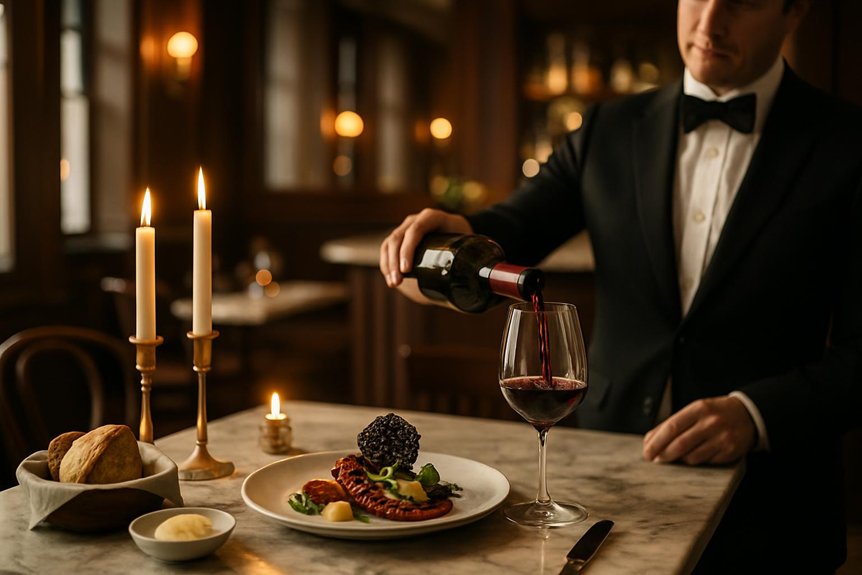
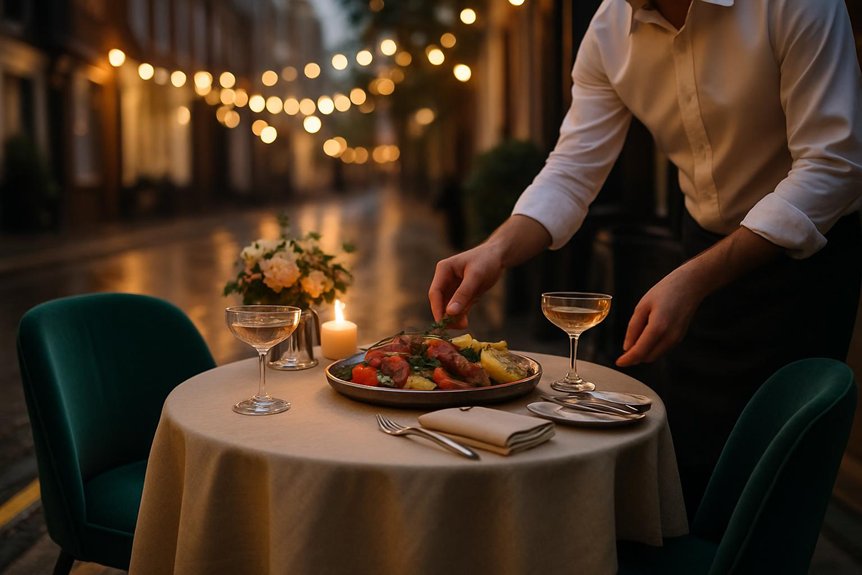
How did London’s Michelin-starred stalwarts become shorthand for culinary gravitas? Their reputations rest on meticulous technique, exacting service, and rooms where ritual meets restraint. White tablecloths, polished trolleys, and silent choreography signal reliability rather than novelty.
Menus champion seasonal precision—Farm to Table sourcing executed with classical discipline, not pastoral romance. Seafood Specialties arrive with unshowy mastery: turbot sauced correctly, langoustines precisely glazed, oysters dressed to highlight provenance.
These storied dining rooms hold cultural memory. Power lunches, anniversary rituals, and discreet celebrations shape an aura that outlives trends. Restaurants like Meraki emphasize seasonal ingredients in their evolving menus, reflecting a dedication to imaginative dishes.
Wine cellars and cheese carts reflect decades of curation. Consistency is the luxury: sauces taste identical across seasons, timing remains immaculate, and hospitality reads the room. Legacy becomes the promise, and the promise keeps them full.
Avant-Garde Chef’s Counters Redefining British Cuisine
At London’s most experimental chef’s counters, immersive tasting menus place guests inches from the craft. Courses map hyperseasonal British terroir, shifting weekly with coastal catches, hedgerow finds, and heritage farms. Technique is global, but the flavors speak a precise, modern vernacular of Britain. Meraki Restaurant offers an inviting and stylish retreat from the city’s hustle and bustle, featuring Mediterranean cuisine that seamlessly blends traditional flavors with modern culinary techniques.
Immersive Tasting Menus
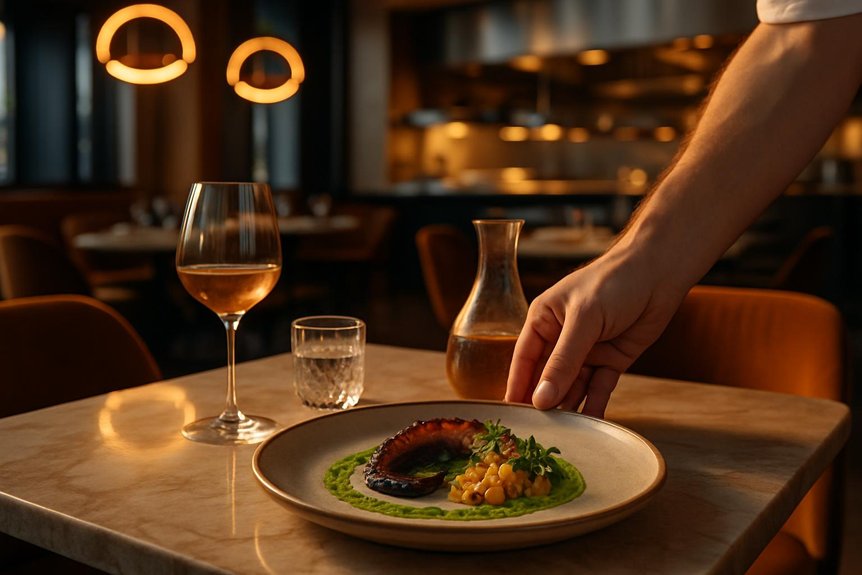
Though Britain’s culinary heritage is often framed by tradition, a new vanguard is rewriting its course by course at intimate chef’s counters across London. Immersive tasting menus here function as theater: chefs narrate techniques, guests witness assembly, and each dish lands with intention. Molecular gastronomy underpins texture play and temperature contrast, yet restraint keeps cleverness in service of flavor.
Plates read as edible art—precise, sculptural, fleeting—while pacing choreographs anticipation and relief.
Counter seating compresses distance between creator and diner, enabling spontaneous variations, mid-service adjustments, and tailored seasoning. Beverage pairings extend the storyline with distilled broths, low-intervention wines, or crafted nonalcoholic infusions.
The result is not spectacle for its own sake, but a controlled, sensorial arc that maps curiosity to satisfaction, memory to return. For those seeking vibrant nightlife, venues like Meraki Restaurant offer a unique experience with dining and dancing on select nights, ensuring patrons enjoy both culinary and entertainment delights.
Hyperseasonal British Terroir
Often, the most compelling plates in London’s avant-garde chef’s counters are anchored to the hour-by-hour mood of British soil and sea. Hyperseasonality becomes choreography: chefs pivot as tides, hedgerows, and allotments shift, translating microclimates into courses.
Foraged fungi appear minutes after discovery, brushed clean, kissed by embers, and paired with saline broths that mirror estuary breezes. North Sea landings dictate raw, lightly cured, or smoked expressions; nothing lingers past its peak.
Precision extends to bread and ferments. A Coastal Telera, leavened with seaweed starter, carries cockle butter and pickled alexanders. Beet tops, kelp stems, and apple cores underpin stocks and vinegars, closing loops.
Guests witness provenance as performance—cards name coves, farms, and foragers—while technique recedes, letting place speak.
Wine Programs and Sommelier-Led Pairings
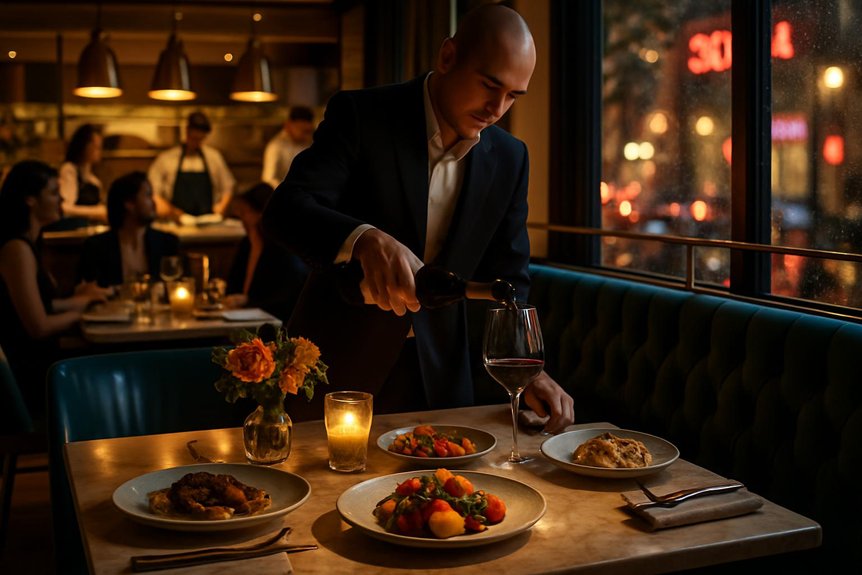
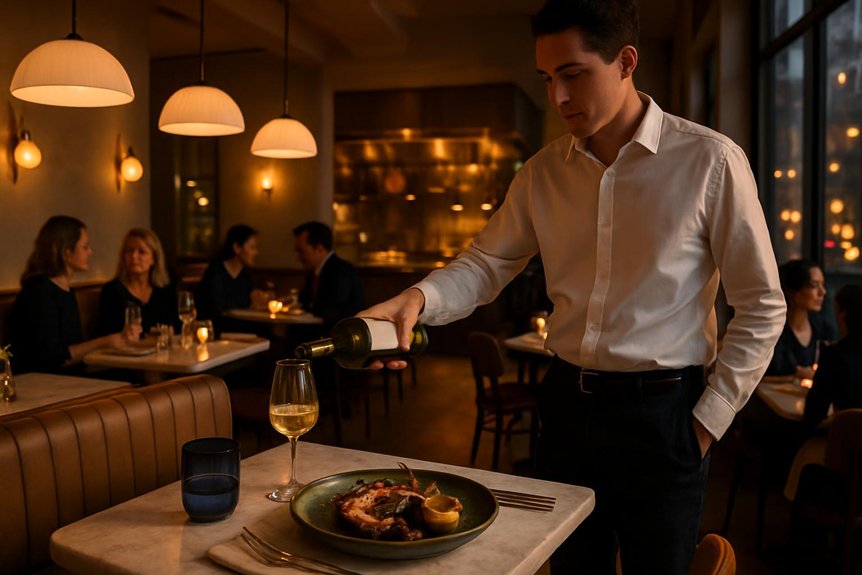
Few cities match London’s precision in wine curation, where deep cellars, Coravin-poured rarities, and nimble by-the-glass lists anchor dining at the top tier. Here, the wine cellar is not ornament but instrument—mapped, climate-mastered, and primed for moment-to-moment service.
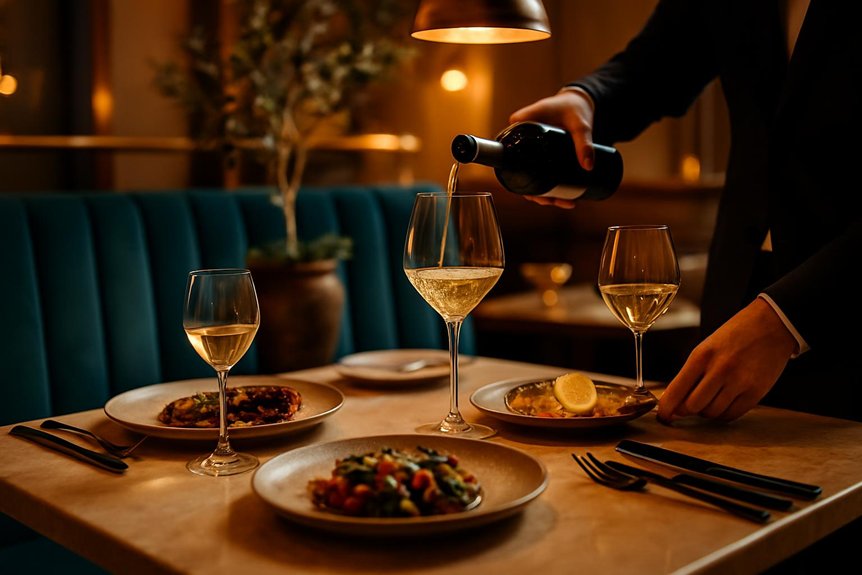
Sommelier expertise drives the narrative. Pairings move beyond regional comfort, aligning acidity, extraction, and texture to dishes with technical intent.
Mature Bordeaux may be split via Coravin alongside raw shellfish; Jura savagnin counters umami; aged Champagne decants to elevate poultry’s roast sugars. Producers are presented context-first: soil, elevation, vintage arc, and cellar craft.
Guests choose flights calibrated by structure—mineral, oxidative, or aromatic—rather than price cues. Non-alcoholic fermentations fit the same matrix, mirroring grip and salinity. The result is choreography: precise, seasonal, and utterly guest-centric.
Design-Forward Spaces: Heritage Meets Modern Glamour
London’s leading dining rooms present restored historic interiors reframed with crisp lines and discreet lighting.
Contemporary art accents punctuate plaster cornices and paneled rooms, signaling a confident dialogue between eras.
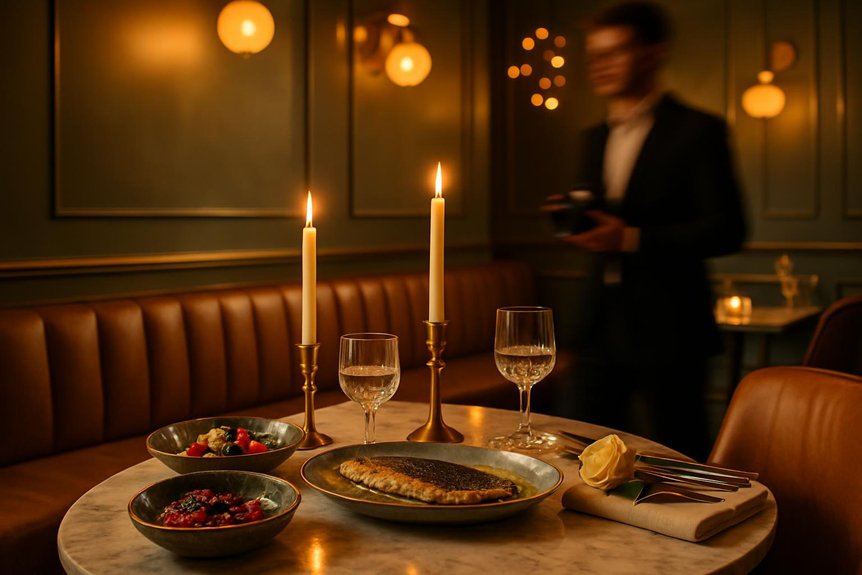
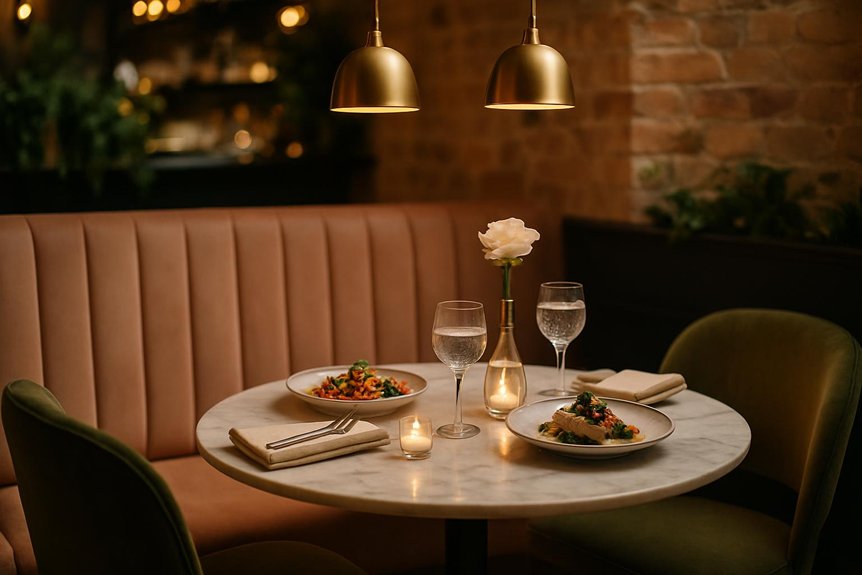
A luxe materials palette—patinated brass, velvety upholstery, rare marbles—cements the mood of modern glamour anchored in heritage.
Restored Historic Interiors
A new generation of dining rooms is reclaiming London’s architectural heritage with a cool, contemporary edge. These restored interiors treat listed features as assets, not relics, pairing coffered ceilings, marble mantels, and oak paneling with disciplined lighting schemes and tailored upholstery.
The result is a historic ambiance calibrated for modern service rhythms and acoustics.
Original cornices and parquet are stabilized, then contrasted with sleek banquettes and discreet brass detailing. Period fireplaces anchor rooms without dictating them; sightlines are opened, table spacing optimized, and underfloor systems deliver comfort without visual clutter.
Color palettes lean toward deep greens, oxblood, and stone, allowing patina to read clearly. The overall effect is a measured dialogue between preservation and performance, where heritage frames, rather than competes with, the dining experience.
Contemporary Art Accents
What begins with reverent woodwork and stabilized cornices now finds its counterpoint in bold, curated art that sharpens the historic frame. In these dining rooms, contemporary pieces act as incisive punctuation, not decoration.
Commissioned murals nod to street art while remaining impeccably framed by tradition; neon scripts, abstract canvases, and sculptural lighting create a crisp dialogue with paneling and plaster rosettes.
Rotating gallery exhibitions keep the narrative agile, allowing chefs’ seasonal menus to align with fresh visual tempos.
Sightlines are choreographed: a single statement piece anchors the room, secondary works draw the eye along corridors, and intimate booths receive quieter pieces to temper scale.
The result is poised tension—heritage warmed, modernity disciplined—producing spaces where conversation, cuisine, and culture feel precisely in sync.
Luxe Materials Palette
Texture becomes the language of luxury, translating heritage into a modern register through calibrated contrasts. Patinated bronze meets mirror-polished steel; Calacatta marble edges into smoked oak. Velvet banquettes carry couture-like piping, while ribbed plaster softens the gleam of lacquered millwork.
Brass inlays trace historical motifs across terrazzo floors, aligning tradition with a crisp, contemporary cadence. Tablescapes affirm the message: luxury tableware in bone china and hand-cut crystal refracts candlelight, balancing artisanal weight with razor-fine profiles.
Leather-wrapped menus and stone chargers echo material narratives found upstairs in opulent guestrooms, creating a seamless brand of tactility. Acoustic panels clad in mohair hush the room; charred timber screens frame sightlines like gallery partitions. The result is disciplined richness—no excess, only deliberate, sensorial precision.
Hyper-Seasonal Menus and Provenance-Driven Produce
In London’s top kitchens, hyper-seasonality has shifted from trend to operating principle, with menus rewritten weekly—sometimes daily—to mirror the market’s briefest peaks. Chefs source on a first-name basis with day-boat skippers, regenerative farms, and micro-mills, mapping provenance with the rigor of a ledger.
Plates read like supply chains: coastal herbs, heritage grains, rare-breed dairy, and orchard fruit at perfect ripeness.
Techniques emphasize restraint to let origin speak—light cures, raw dressings, charcoal licks. Foraging fungi and shoreline greens appear beside edible flowers grown in controlled city plots. Waste is minimized through nose-to-tail and root-to-leaf practices, broths and ferments extending fleeting harvests.
Service teams detail terroir and methods with quiet authority, positioning ingredient integrity as the city’s new luxury benchmark.
Once-in-a-Lifetime Tastings and Special-Occasion Splurges
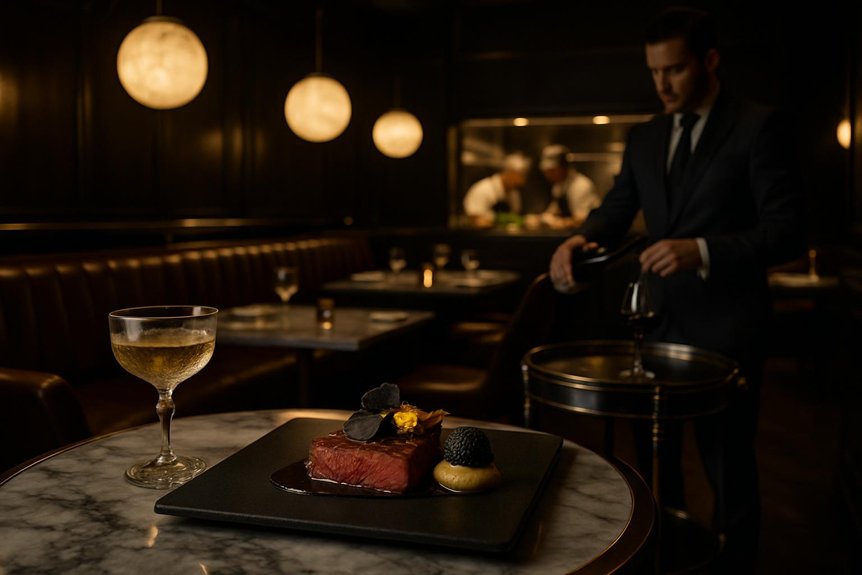
A crescendo of ambition defines London’s most coveted dining rooms, where reservation lists stretch months and tasting menus amount to edible theater. Here, chefs stage narrative courses that pivot from caviar-laced canapés to monkfish aged like charcuterie, each plate justified by relentless luxury ingredient sourcing.
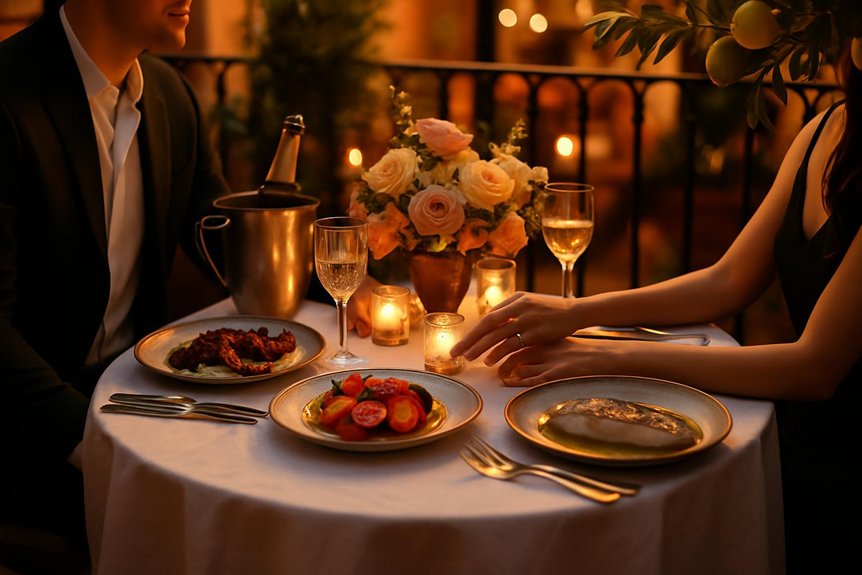
The craft targets memory, not mere appetite: rare vintages unveiled by sommeliers, sauces mounted tableside, and discreet pacing that underscores occasion.
These rooms excel at personalized dining experiences. Anniversaries trigger off-menu flourishes; chefs tailor progressions to a guest’s palate map, substituting with intent, not compromise. Private counters offer front-row dialogues with the brigade, while salons promise hushed celebration.
Prices acknowledge spectacle, yet the value lies in irreproducible moments—precision, provenance, and a finale that lingers longer than dessert.
Conclusion
In London, luxury dining moves like a well-rehearsed symphony—heritage brass gleaming under soft light, plates whispering of tide and soil, cellars breathing rare secrets. Chef’s counters flicker with modern alchemy; storied rooms hold their polished hush. Service flows like silk, each course a compass point on a quietly dazzling map. Here, provenance is poetry, restraint a signature. For the devoted epicure, these addresses aren’t meals—they’re constellations, charting a city’s past and future in impeccable detail.