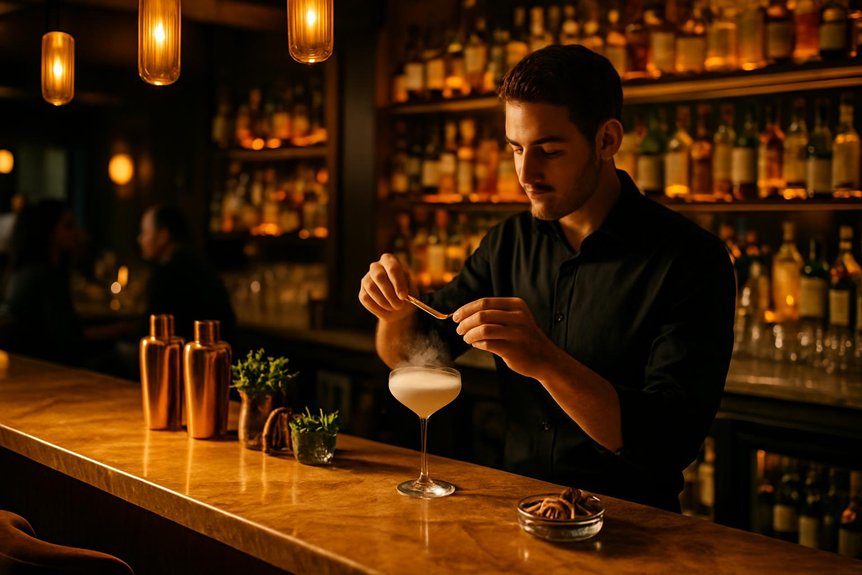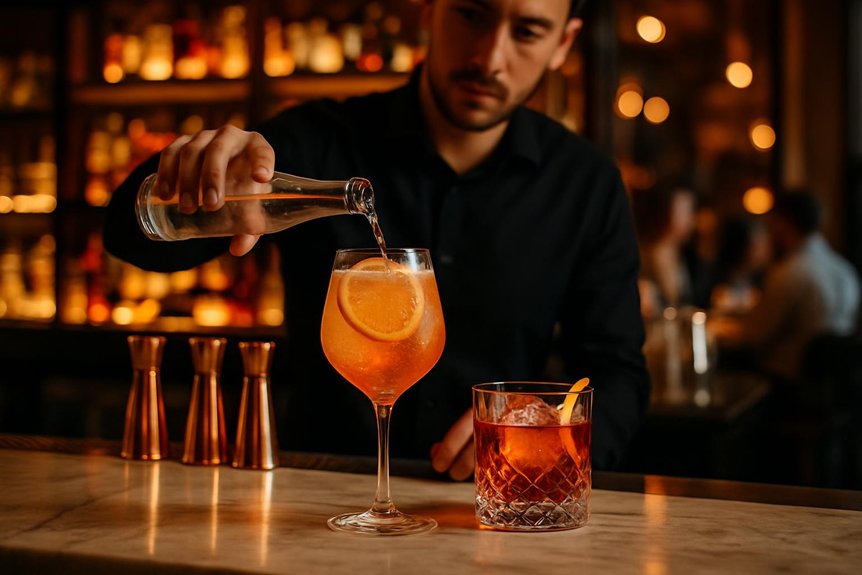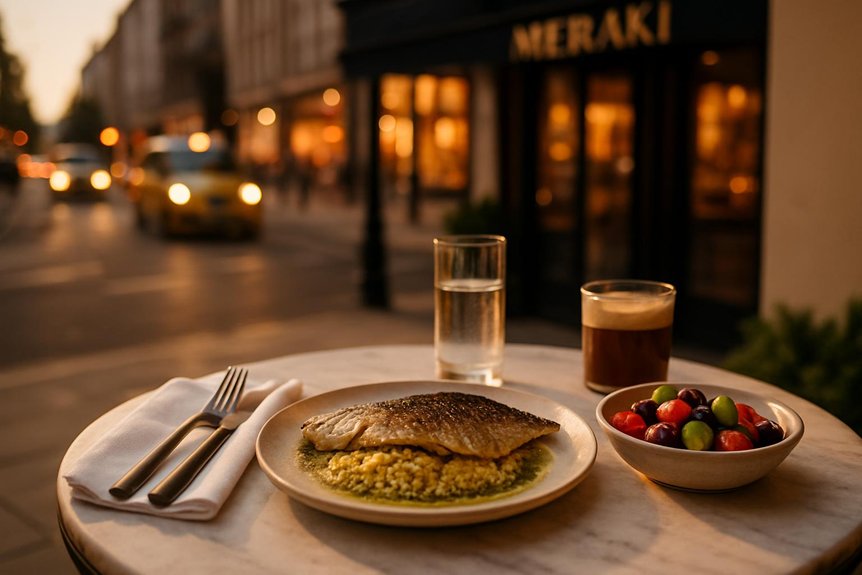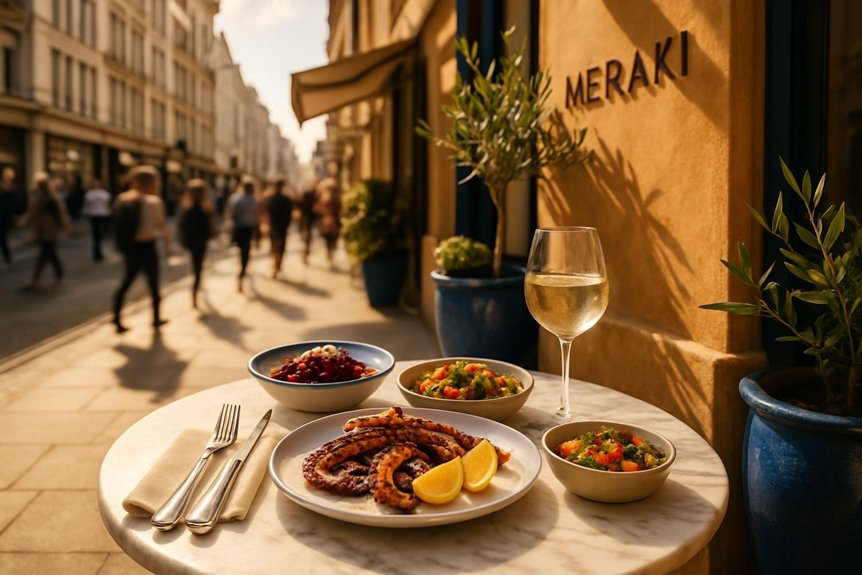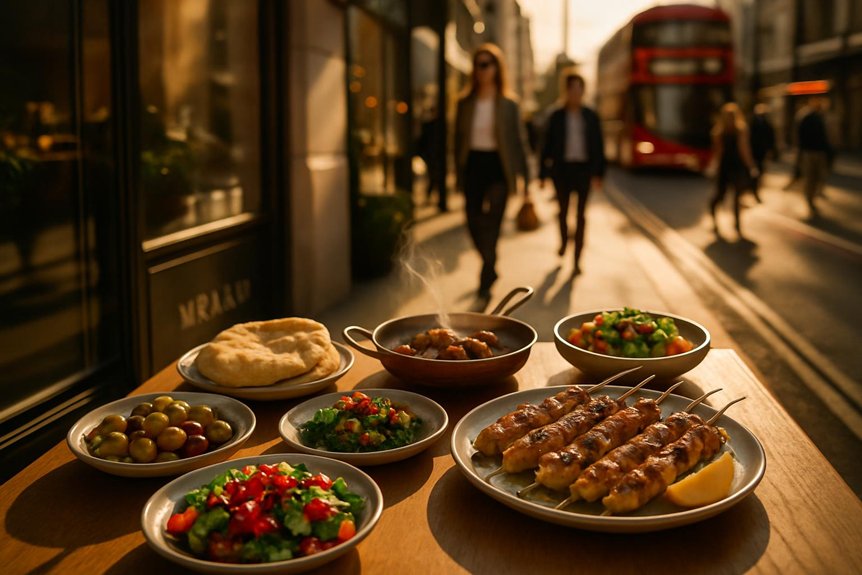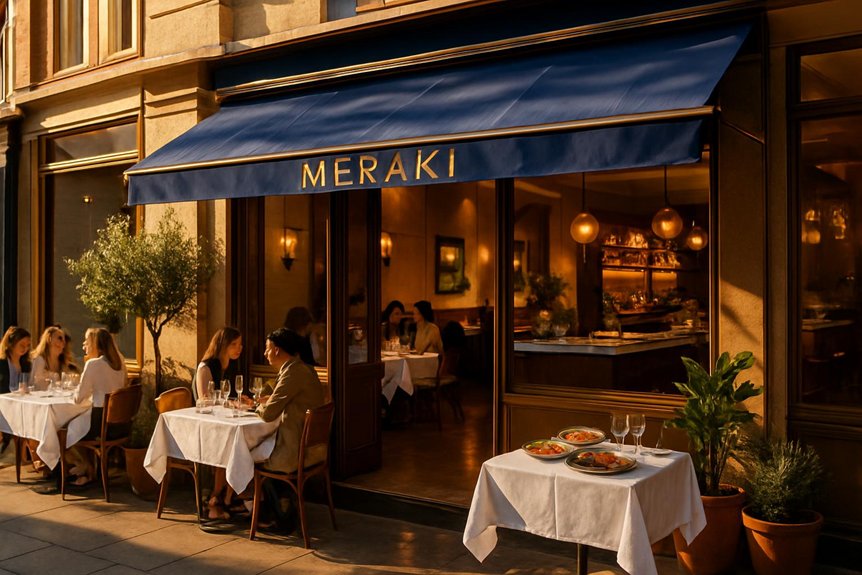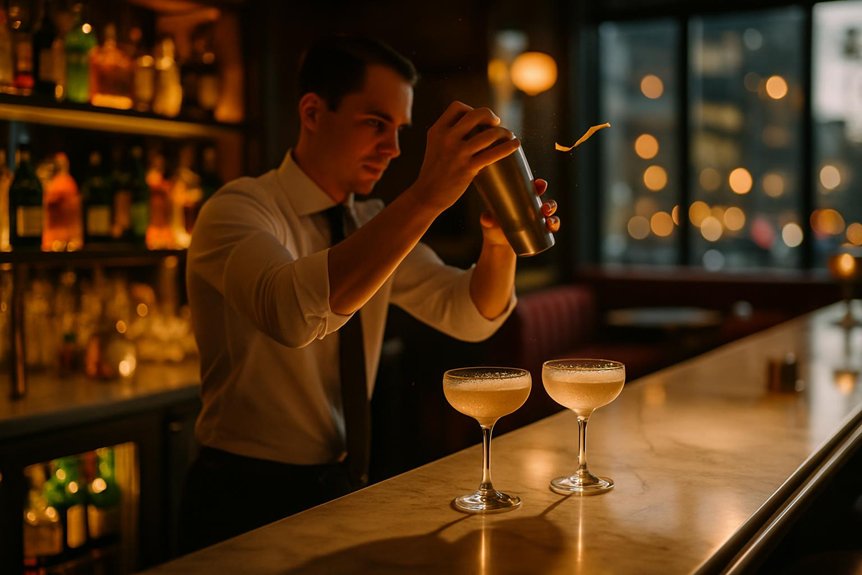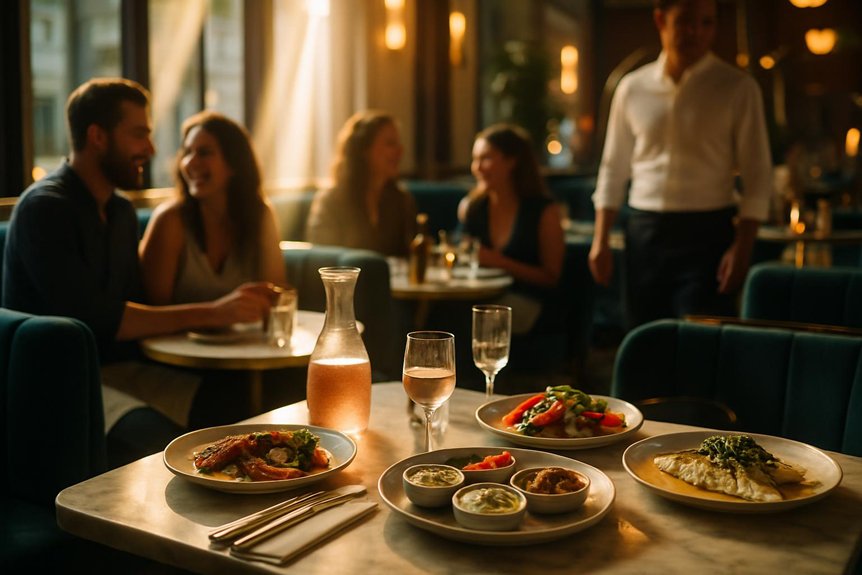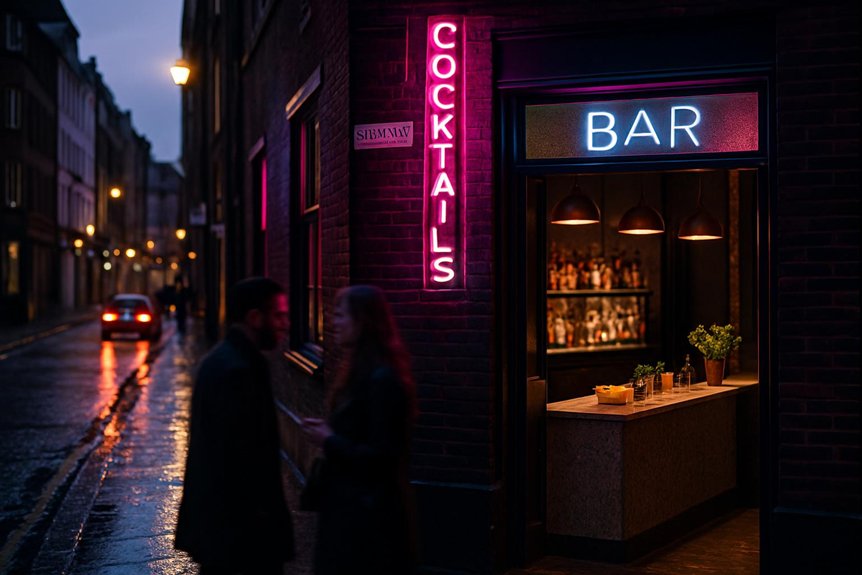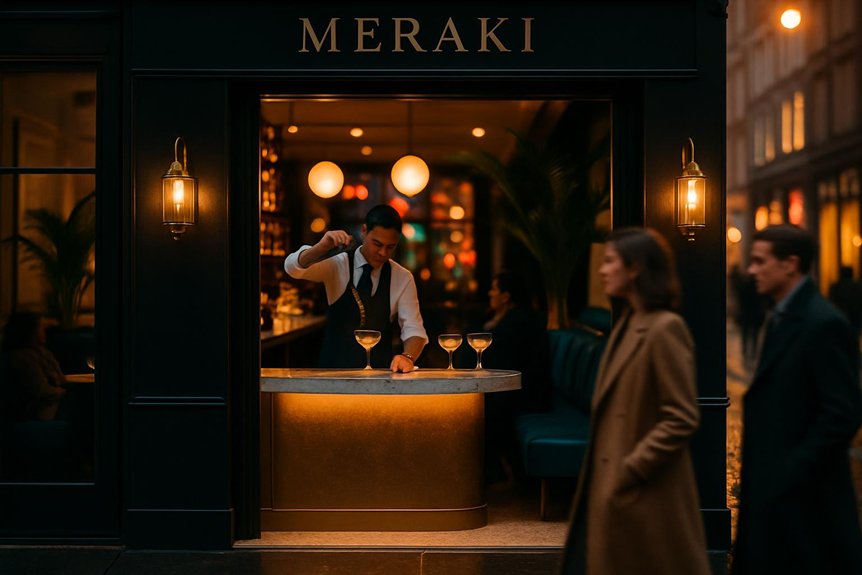


On Oxford Street’s edge, Meraki approaches cocktails with Aegean restraint and London polish. The menu leans herb-driven and citrus-forward, shaped by house infusions of thyme, bay, and basil. Spritzes are sleek, aperitifs stay dry, and low-ABV twists carry mineral clarity. Seasonal fruit and crisp garnishes frame the glass, while small plates echo Mediterranean ease. It is a quiet nod to tradition—until a few signature serves challenge expectations, and something else emerges.
Aegean-Inspired Mixology Near Oxford Street
Just off Oxford Street, a handful of bars are channeling the Aegean with clean, herb-driven cocktails built on Greek and Turkish spirits. The approach favors clarity: anise, mastiha, and grape distillates framed by citrus, saline notes, and restrained sweetness. Bartenders balance tradition and Mediterranean fusion by pairing ouzo or raki with thyme, bay, and roasted lemon, then accenting with brined olives or caper leaves.
Menus emphasize locally sourced herbs and produce to mirror island freshness while reducing weight on the palate. Texture is managed through chilled dilution and precise salinity rather than heavy syrups. Guests encounter bright, savory profiles that suit aperitif hours and late service alike.
The result is a focused style—sunlit, mineral, and quietly aromatic—distinct from mainstream London signatures. Meraki’s unique menu offers a quirky twist on traditional Greek cuisine, enhancing the overall dining experience with its exceptional service and sophisticated ambiance.
House Infusions That Define the Menu
House infusions set the tone on Oxford Street, where signature botanical blends shape spirits before a shaker is lifted. Bars highlight seasonal fruit macerations that shift with the market, bringing freshness and color to familiar bases. Together, these techniques define the menu’s backbone and signal a precise, ingredient-led approach. The relaxed dining experience at Meraki offers patrons a chance to savor these unique flavors in a setting that complements the innovative cocktail menu.
Signature Botanical Blends
Where do Oxford Street’s bartenders distill their identity if not in the jars steeping behind the bar? At Meraki, Signature Botanical Blends act as a manifesto: precise, layered, and disciplined. Juniper anchors citrus leaf and toasted coriander, while gentian lends backbone to chamomile-kissed vodka. These house infusions deliver innovative flavor combinations without gimmickry, translating botanical artistry into clean, confident pours.
Aniseed threads through fennel-frond gin; pink peppercorn warms rosemary-washed tequila; cacao nibs soften bergamot-forward rum. Each spirit is clarified, measured, and rested until edges round and aromas align. The result is structure first, fragrance second, sweetness last. By controlling extraction—heat, time, surface area—Meraki defines balance as a method, not an accident.
Signature blends become the menu’s quiet architecture, guiding cocktails with calm authority. Meraki offers a blend of intimacy and elegance, creating the perfect setting for enjoying these sophisticated drinks.
Seasonal Fruit Macerations
If botanicals set the framework, seasonal fruit supplies the pulse. At Meraki on Oxford Street, macerations rotate with the market: Kentish strawberries in late spring, gooseberries in early summer, and russet apples once the air turns crisp. Spirits rest with sliced fruit and measured sugar, drawing color and pectin while keeping acidity intact.
The result shapes house infusions that anchor spritzes, sours, and highballs without masking glasswork. Technique nods to cocktail history—oleo-saccharums, shrubs, and cordial-style extractions—yet remains pragmatic. Bar staff chart pH and Brix to ensure balance, then pair the infusions with DIY garnishes: candied peels, brined cherry tomatoes, dried berry leather.
Guests taste seasonality in layered textures, not novelty. Each batch is small, deliberate, and fleeting by design.
Citrus-Forward Creations for Spritz Lovers
Though Oxford Street is better known for retail than rejuvenation, its bartenders are quietly perfecting citrus-forward spritzes that balance lift and bite. At Meraki, servers describe a lean style: brut bubbles, measured bitterness, and disciplined acidity. Citrus infusion trends guide the builds—clarified lemon peels steeped in neutral spirits for clarity, quick-lime oleo for body, and yuzu tincture for a high-frequency top note.
Grapefruit drives effervescence. Bar teams test grapefruit soda recipes for pith-free brightness, blending fresh juice, saline, and restrained sugar before force-carbonating.
A house “Oxford Spritz” pairs dry vermouth, bitter orange liqueur, and a micro-dose of bergamot with that soda, finishing with a spritz of expressed zest. The result is crisp, invigoratingly dry, and engineered for repeat sipping.
Herbaceous Notes and Mediterranean Aromatics
How do Oxford Street bars fold green, resinous edges into otherwise brisk builds? They lean on herbaceous notes that cue freshness without tipping into bitterness. Meraki’s bartenders study texture and temperature first, letting chilled dilution soften sharper oils from rosemary, thyme, and bay.
Mediterranean aromatics arrive as measured infusions, rinses, or vaporized mists, never heavy-handed, so botanical lift reads clean rather than medicinal.
Saline adjustments tame piney intensity; a pinch can round fennel and sage while brightening orchard fruit or dry vermouth. Basil stems offer peppery depth when shaken, while tarragon brings anise sheen in stirred formats.
Citrus zest appears as a framing accent, not the headline, enabling chlorophyll tones to persist. The result: poised, garden-forward profiles that finish dry, cooling, and quietly complex.
Signature Serves You Can’t Miss
Among Oxford Street’s standouts, signature serves skew precise, narrative-driven, and highly textural.
At Meraki, each glass frames a small story: spirits layered with saline snaps, restrained sweetness, and crisp aromatics.
Artisanal ice sets tempo—clear, dense blocks slow dilution while amplifying mouthfeel.
Cocktail garnishes act as final punctuation, guiding aroma on the first lift and lending contour to the last sip.
The result is balance without fuss, style without theater.
- Order the house olive-brined martini; note how artisanal ice sharpens minerality while citrus oils open the nose.
- Try the fig-and-smoke highball; observe bubbles skate cleanly over sculpted ice for a dry finish.
- Request off-menu variations; staff iterate with precision.
- Photograph thoughtful cocktail garnishes; they signal structure and intent.
Perfect Pre-Dinner Aperitifs
Before dinner on Oxford Street, attention turns to the crisp clarity of aperitifs. Bars set the tone with classic bitter spritzes, low‑ABV botanical blends, and zesty citrus openers that sharpen the palate.
Each style promises freshness and restraint, priming guests for the courses to come.
Classic Bitter Spritzes
The classic bitter spritz sets the tone for an Oxford Street evening with restrained sparkle and herbaceous bite. At Meraki, the style stays faithful to tradition—bittersweet liqueur, chilled sparkling wine, and a measured dash of soda—yet gains contemporary lift through glassware innovations and meticulous cocktail presentation. Citrus oils glide across ice, amplifying aroma while keeping the palate brisk.
Salted olives or a thin orange wheel provide balance, encouraging a slow, anticipatory sip before dinner. The result is a poised aperitif: vivid, dry, and quietly complex.
- Request tall, tapered stems to focus bubbles and fragrance.
- Choose a drier sparkling base for sharper definition.
- Ask for a restrained soda top to avoid dilution.
- Pair with briny snacks—olives, almonds, anchovy toasts—for contrast.
Low-Abv Botanical Blends
Quietly, Oxford Street’s bars turn to low-ABV botanical blends when a lighter pre-dinner lift is in order. Bartenders favor gentle fortification: vermouths, aromatized wines, and sherries layered with garden herbs and delicate bitters. Herbal tea infusions—think chamomile, jasmine, or nettle—add depth without weight, softening edges while amplifying aroma.
At Meraki, the approach is measured. A rosemary-steeped blanc vermouth meets cucumber tonic, delivering freshness and a subtle piney echo. Thyme-touched fino gains texture from pear cordial and a saline spritz, finishing crisp rather than heavy.
Alcohol free mocktails echo the same structure, swapping base wines for distilled botanicals and zero-proof aperitifs, keeping balance and length intact. The result suits an early evening pace: nuanced, restrained, and comfortably sessionable before the main event.
Zesty Citrus Openers
From feather-light botanicals, attention shifts to sharper, sunlit openings built on citrus.
At Meraki, pre-dinner drinks lean bright and bracing, designed to wake the palate without overwhelming it. Lime, bergamot, and grapefruit appear in lean builds, each lifted by a precise zest garnish that perfumes the rim. Balance is the aim: a dry backbone, restrained sweetness, and mineral finish encourage the first bite to feel inevitable.
Smart citrus pairing guides every pour, linking acidity with salinity, herbs, or bitters to tune appetite.
- Begin with a grapefruit spritz; its saline edge tightens focus before richer courses.
- Choose bergamot-forward twists for seafood starters; the aromatics align cleanly.
- Request a zest garnish expressed table-side for brighter top notes.
- Pair yuzu sours with crisp salads; acidity mirrors greens.
Nightcaps With Late-Night Energy
After the last shop lights dim, Oxford Street swaps retail rush for low-lit bars that pour with purpose. Nightcaps here lean bold and deliberate, designed to steady the pulse while keeping conversation alert. Meraki frames the late hour as a canvas: sturdy spirits, restrained sweetness, and measured bitterness set the tone.
Drawn from cocktail history, the menu favors classics with midnight posture—Manhattan echoes, Old Fashioned contours, and nuanced flips—refined through modern bartending techniques. Stirring over shaking preserves clarity and texture; precise dilution keeps edges polished, not blunted.
Coffee infusions and cacao accents heighten focus, while amaro undertones signal closure without heaviness. Service moves unhurried yet exacting, the lighting hushed, the glassware cool. The effect is composure, not collapse—energy distilled, then quietly sustained.
Seasonal Ingredients and Fresh Garnishes
Bars along Oxford Street increasingly center menus on peak-season produce, letting ripe berries, stone fruit, and rhubarb set the tone. Garden-to-glass herbs—think mint, thyme, and basil—are clipped fresh to bolster aroma and structure.
A final snap of citrus zest finishes many builds, brightening the palate and sharpening the presentation.
Peak-Season Produce Picks
In peak season, Oxford Street bars lean on British produce to sharpen flavor and reduce waste. Menus pivot to berries, stone fruit, and crisp orchard apples, letting natural acidity replace excess sugar.
Meraki favors short harvest windows: strawberry shrub highballs, gooseberry sours, and apricot spritzes with restrained sweetness. Clear ice and minimal garnish keep cocktail presentation focused on color and aroma, while small-batch cordials stabilize fleeting flavors for consistent service and smart dessert pairings.
- Choose tart base fruit (gooseberry, blackcurrant) to lift spritzes without heavy syrups.
- Use quick macerations for strawberries or raspberries; strain for brilliant hue and clarity.
- Batch light cordials to stretch peak produce and maintain day-to-day consistency.
- Match orchard-fruit cocktails with custards or shortbread for balanced dessert pairings.
Garden-To-Glass Herbs
On Oxford Street, garden-to-glass herbs move cocktails from bright to dimensional, supplying lift, texture, and aromatics without piling on sugar. At Meraki, bartenders cut from an herb garden moments before service, applying mint for cooling, basil for peppered sweetness, and thyme for savory depth. Leaves are pressed, slapped, or briefly churned to release essential oils, then layered with botanical infusions that echo the chosen spirit rather than mask it.
Rosemary is singed to perfume highball rims; dill and tarragon temper saline notes; lemon balm softens bitterness.
Stems aren’t wasted—fine-strained syrups and tinctures preserve volatile compounds with measured extraction times. The result is structure: crisp entry, herbal mid-palate, clean finish. Guests recognize freshness by restrained color, vivid aroma, and balanced, persistent lift.
Citrus Zest Finishing
From clipped herbs to citrus skins, the toolkit shifts from verdant lift to radiant oils expressed at service.
At Meraki on Oxford Street, bartenders deploy citrus zest finishing as a precise, last-second flourish.
A tight twist over the glass releases volatile oils, creating a vivid aroma halo and measurable flavor enhancement without altering dilution.
Lemon brightens gin, grapefruit deepens agave, orange rounds rye, and yuzu sparks spritzes, each selected for seasonality and intensity.
The peel never lingers in the drink unless required; contact is calculated to prevent pith bitterness and maintain clarity.
- Choose firm, peak-season fruit; scrub and dry.
- Cut a wide peel, avoiding pith.
- Express oils over the glass rim and surface.
- Swipe the rim lightly; discard or garnish sparingly.
Pairing Small Plates With Craft Cocktails
Amid the thrum of Oxford Street, thoughtful pairings turn cocktails into courses and small plates into conversation. At Meraki, the menu treats food pairing as a design problem: match weight, contrast texture, echo aromatics. A briny oyster finds lift beside a dry martini spritzed with lemon oil; a smoky mezcal sour offsets charred aubergine, its acidity cutting through tahini richness.
Spice-led bites meet highball fizz to refresh the palate, while silky negronis mirror umami-forward lamb skewers. Temperature and timing matter—the beverage presentation arrives with chilled glassware and precise dilution, ensuring each sip lands where the bite leaves off.
Garnishes are intentional signals: citrus peels promise brightness; herbs forecast green notes. The result is choreography, not coincidence, paced for lingering.
How to Find This Hidden Spot off the Bustle
Two turns off Oxford Street and the noise thins. The entrance sits where shoppers rarely glance, tucked behind glass-front boutiques and a mural-splashed mews. A discreet brass plaque marks Meraki, a waypoint for seekers of hidden gems who favor quiet alleys over neon.
The route rewards attention: follow the narrowing pavement, pass the florist’s late blooms, and watch for warm light spilling from a recessed doorway.
- Check the map pin, then switch to walking view; the final approach is easier by sight than by address.
- Time arrival after the evening rush; the laneway clears and signage becomes legible.
- Look for the mural of cobalt swirls; Meraki’s door is ten steps beyond.
- If uncertain, ask the florist—locals guard the secret kindly.
Conclusion
In a city famed for excess, Meraki whispers restraint—herbs, citrus, and mineral clarity masquerading as indulgence. Spritz lovers find discipline in bubbles; night owls meet bedtime in a low-ABV lullaby. House infusions flex quietly, as if thyme and bay needed no applause. Small plates pretend to be sides, then steal the show. Hidden just off Oxford Street, it proves that the loudest statement is a soft one—ironic, perhaps, for London’s most crowded stage.