

London’s luxury dining scene balances elegance with restraint. Vaulted ceilings and plush textures frame curated art, while low lighting softens conversation. Service moves with rehearsed precision, guiding each course without intrusion. Tasting menus unfold like chapters, anchored by seasonal British produce and quiet innovation. Glass by glass, wines and cocktails tune the palate to shifting flavors. The result is a composed, multisensory journey. What happens when architecture, artistry, and taste compete for the spotlight?
Architecture, Art, and Atmosphere: Setting the Stage
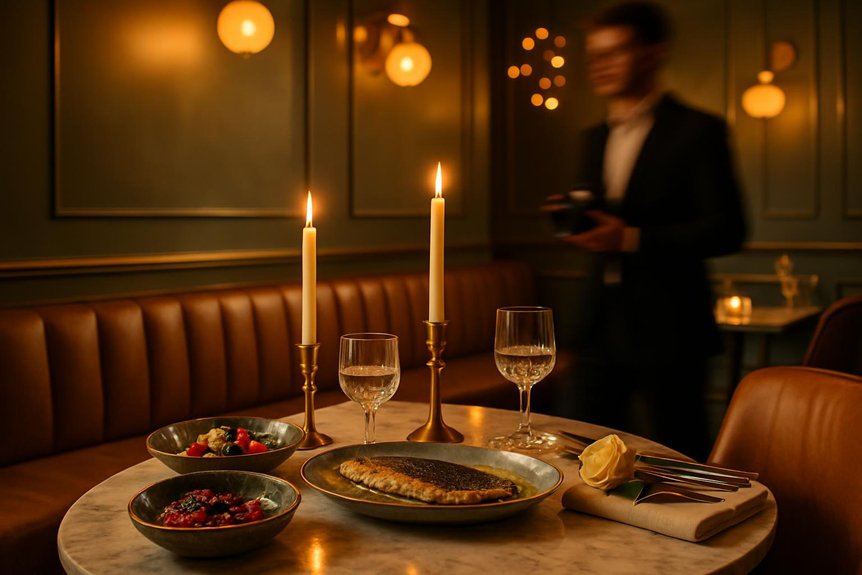
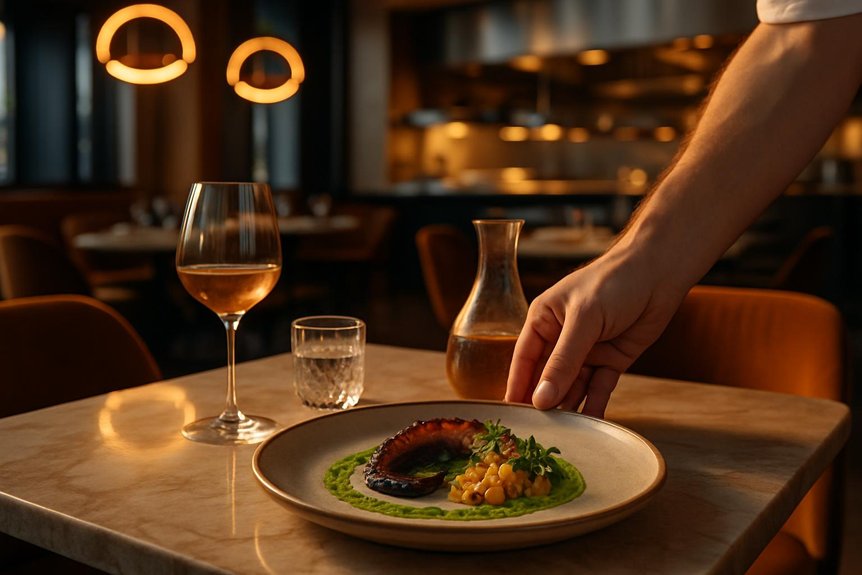
How does a dining room’s design quietly script the meal to come? In London’s luxury restaurants, architecture frames expectation before a menu opens. Porticos, vaulted ceilings, and sightlines choreograph entry and focus, guiding attention toward signature artworks or an open hearth. Ambient lighting calibrates tempo—soft gradients invite lingering, while spotlighted tables sharpen detail and color.
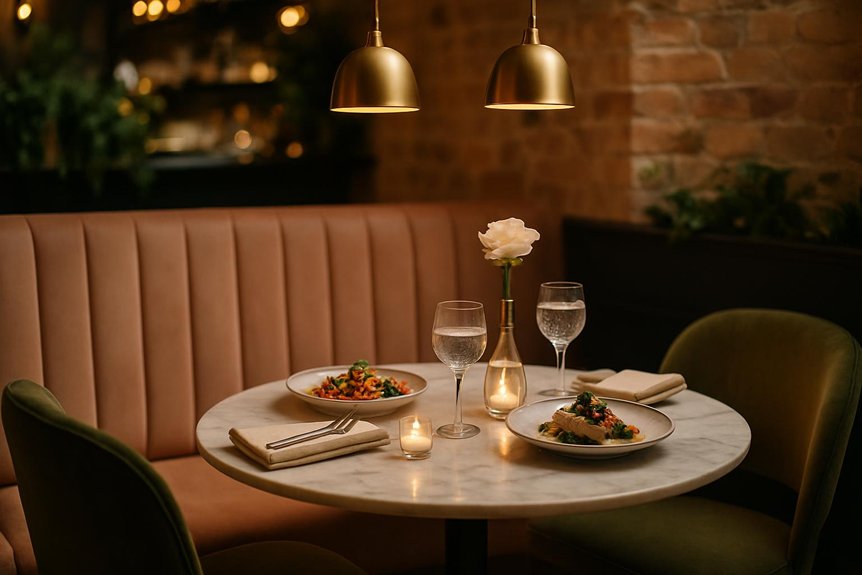
Material choices complete the cue sheet. Marble, velvet, and patinated brass temper acoustics and temperature, while bespoke interior decor resolves a coherent narrative: heritage or futurism, restraint or opulence.
Art functions as thesis, from curated canvases to sculptural installations that echo the kitchen’s sensibility.
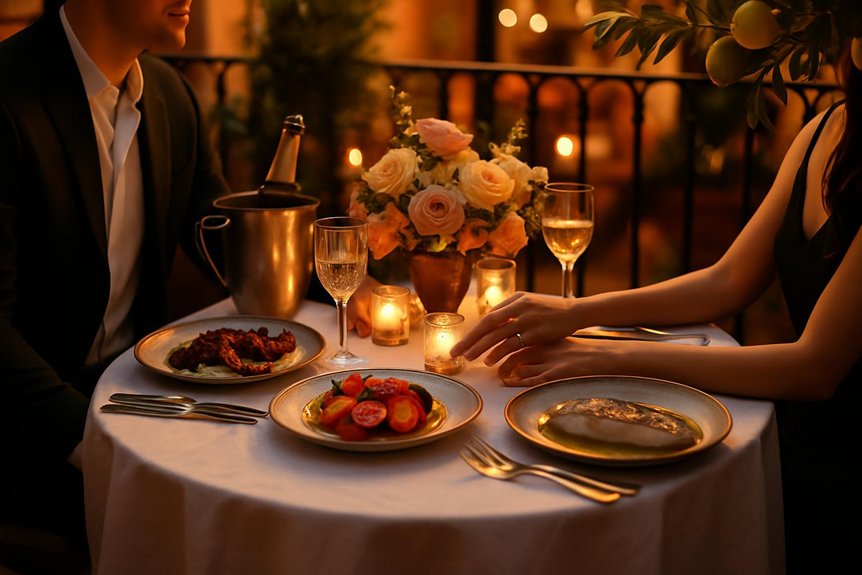
Spatial proportion grants privacy without isolation, ensuring conversation flourishes. The room’s geometry, palette, and light conspire to make flavor feel inevitable. At Meraki, sophisticated ambiance and tasteful décor create an inviting atmosphere, enhancing the luxury dining experience.
Service as Performance: The Choreography of Hospitality
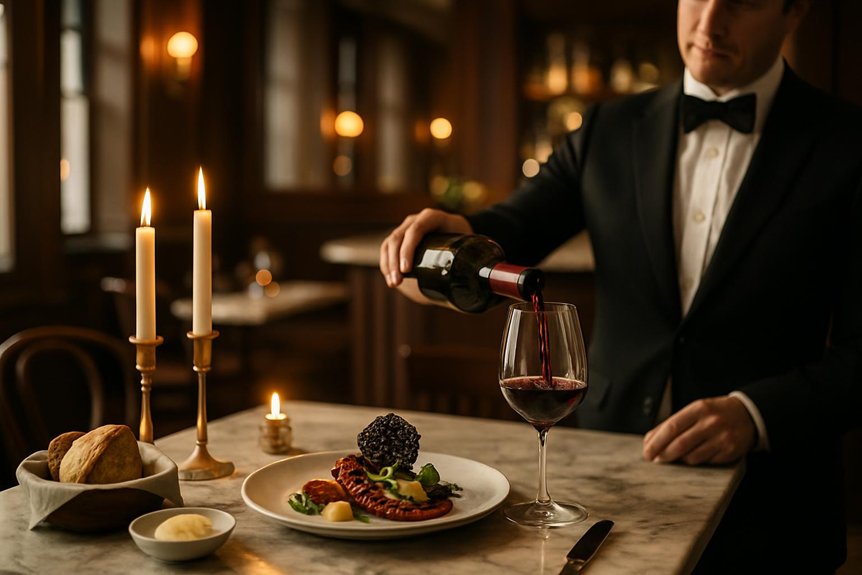
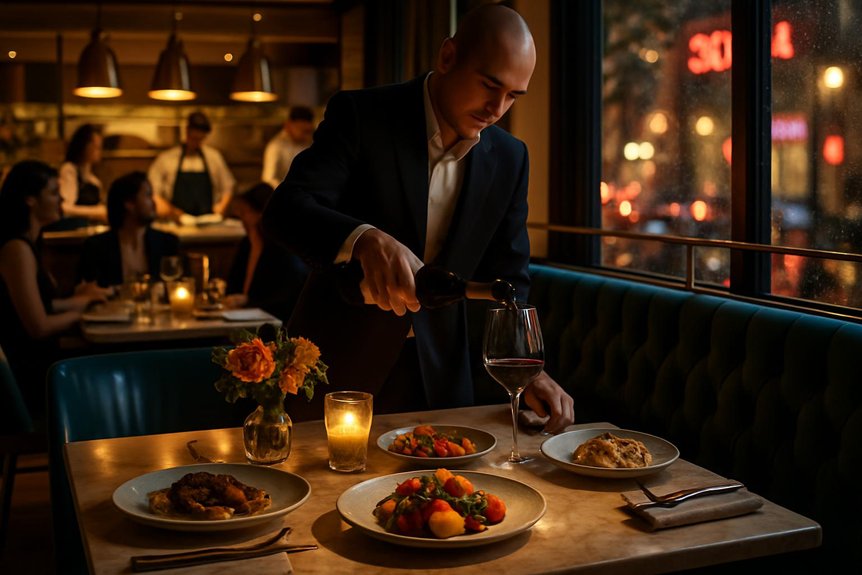
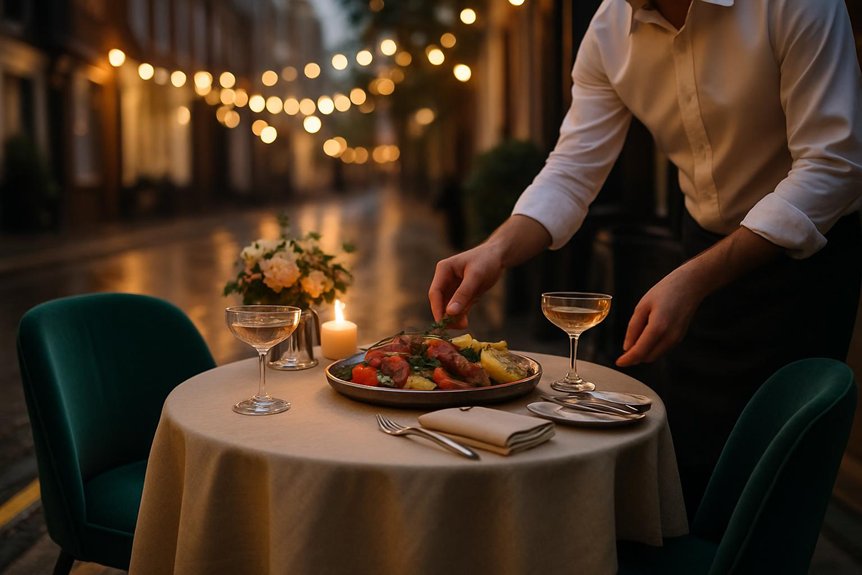
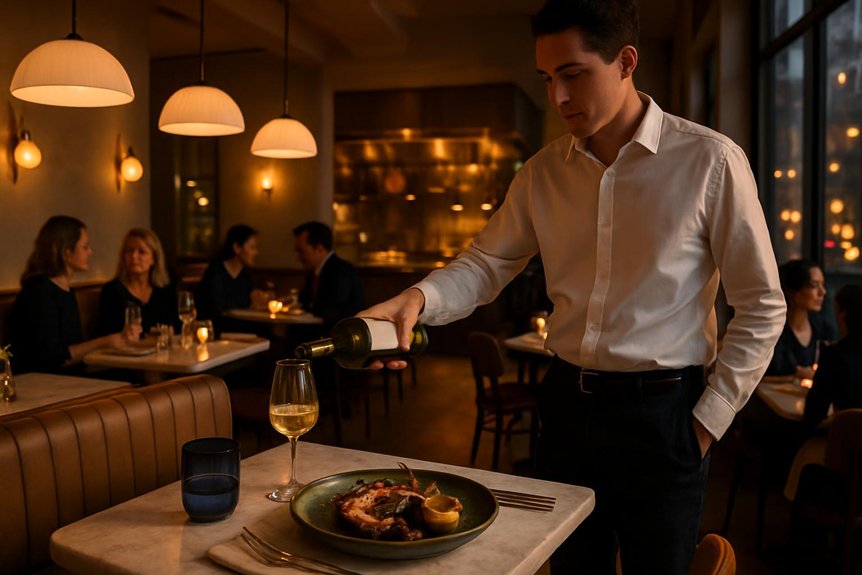
Why does service feel rehearsed yet effortless in London’s top dining rooms? Because precision is staged like theatre. The front of house operates on cues: an eye-line exchanged, a tray lifted, a table reset between breaths. Timing governs movement; silence carries intent. The guest experience is engineered without appearing engineered, from coat check to farewell, with progresses that erase friction and heighten anticipation.
Training drills posture, pacing, and micro-gestures so hospitality reads as natural speech.
- Sequenced arrivals: doors, greetings, and escorting flow as a single motion.
- Table mapping: roles assign who pours, clears, and presents, minimizing overlap.
- Sensory scanning: staff read tempo, lighting, and tone to adjust service.
- Recovery choreography: missteps addressed swiftly, preserving momentum and memory.
At Meraki Luxury Restaurant, the carefully curated experience extends from the open kitchen to the bespoke caves, where diners can enjoy both culinary excellence and the chance for celebrity sightings.
Tasting Menus as Narratives: Courses That Tell a Story
Where does a meal become a narrative rather than a sequence of plates? In London’s luxury rooms, tasting menus act like chapters, each course advancing a plot of place, season, and craft. Chefs frame beginnings with bright, concise bites, setting tone and tempo, then deepen themes through textures and temperature shifts.
Interactive plating invites guests to participate—cracking a salt crust, finishing a broth at the table—turning passive dining into sensory storytelling. Aromas arrive first, visuals cue memory, and sound—of a pour, a crackle—punctuates change.
The midpoint often reframes expectations with a clever contrast, while a pre-dessert edits the palette for resolution.
Provenance appears as character: coastal herbs, heritage grains, urban honey. The finale ties motifs together, leaving a coherent aftertaste of narrative closure. For an immersive dining experience, consider reservations available at Meraki Restaurant, where dining and dancing create a vibrant atmosphere.
Liquid Luxury: Wine Pairings and Couture Cocktails
Even before the first bite, the glass sets the register for London’s high-end tables, where pairings and cocktails are composed with the same rigor as the menu.
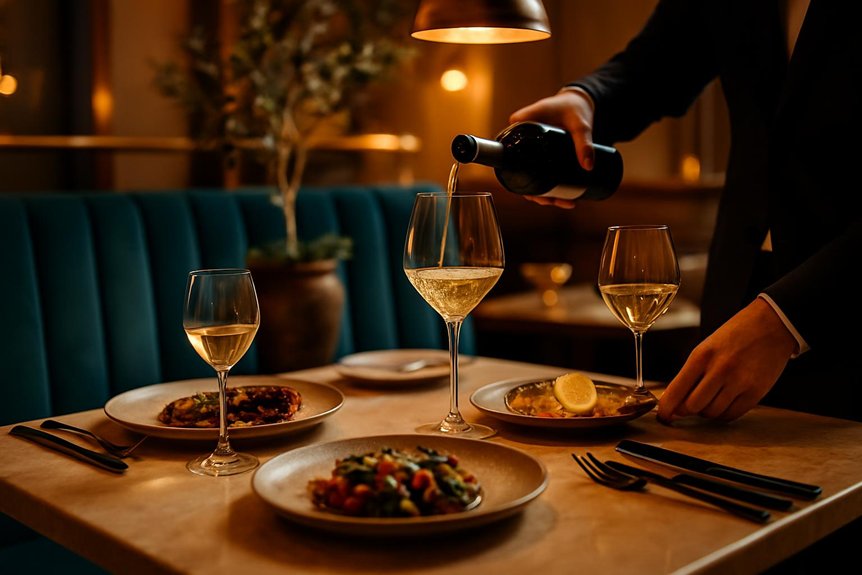
Sommeliers chart Wine evolution by tracing vintages across terroirs, calibrating acidity, structure, and texture to echo or counterpoint a dish’s intent.
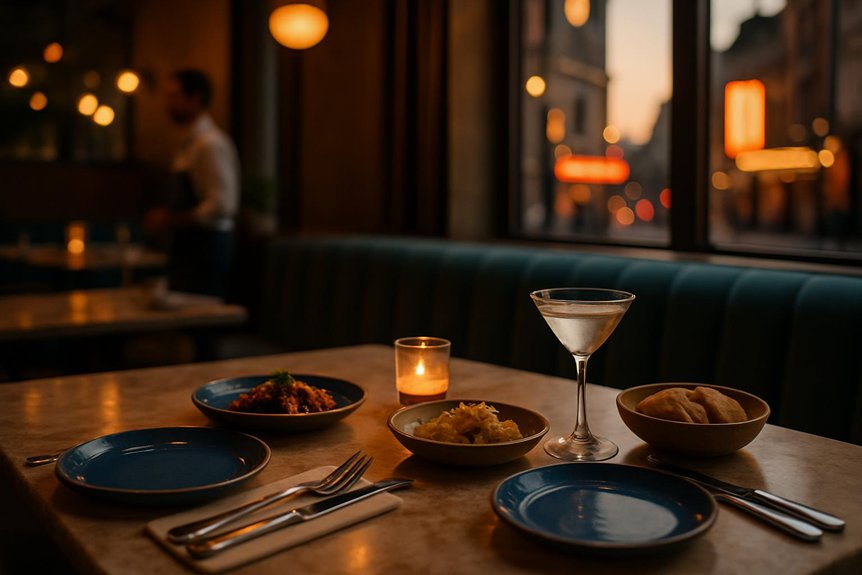
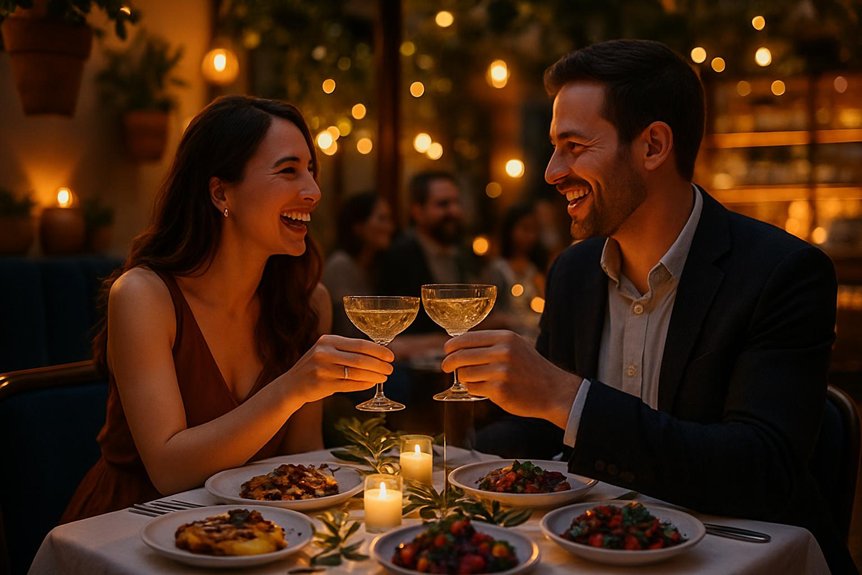
Meanwhile, bartenders practice cocktail artistry, engineering temperature, dilution, and aromatics so the first sip frames the meal’s arc without overwhelming it.
- Precision pairings align salinity, umami, and sweetness with balanced tannin and minerality.
- Low-ABV aperitifs open palates; digestifs close with restrained sweetness and herbal lift.
- Techniques: fat-washing, smoke, lacto-ferments, and clarified juices for crystalline flavor.
- Glassware matters: stem height, bowl shape, and rim width alter aroma delivery and sip cadence.
Provenance and Seasonality: Celebrating British Produce With Global Flair
If the glass sets the overture, the plate delivers London’s thesis: luxury here is anchored in provenance and season.
Across the city, chefs treat the British landscape as pantry and compass, practicing Local sourcing that prioritizes proximity and clarity of origin. Menus read like field notes—Isle of Mull scallops, Kentish cherries, Yorkshire rhubarb—then pivot outward with restrained cosmopolitanism.
Techniques travel; ingredients don’t. Kombu-cured Cornish mackerel, miso-brushed Norfolk asparagus, and tandoori-spiced Herdwick lamb illustrate how global methods amplify native character.
Sustainable farming underpins the supply chain, rewarding soil health, rotational grazing, and low-intervention fisheries. Seasonality governs tempo: brief elderflower, autumn ceps, winter brassicas.
Waste is minimized through whole-animal butchery and secondary cuts, ensuring luxury expresses responsibility as much as indulgence.
Conclusion
In the end, London’s finest tables feel like orchestras mid-crescendo—architecture the overture, service the choreography, courses the plot, and glasses the glinting punctuation. Each plate speaks in seasonal dialects, translating British terroir through worldly inflections. Lights dim, whispers soften, and the city’s pulse slows to a velvet hush. What remains is an aftertaste of memory—silk-threaded, precise, and resonant—proof that when environment, artistry, and flavor align, dining becomes less a meal and more a lingering spell.