
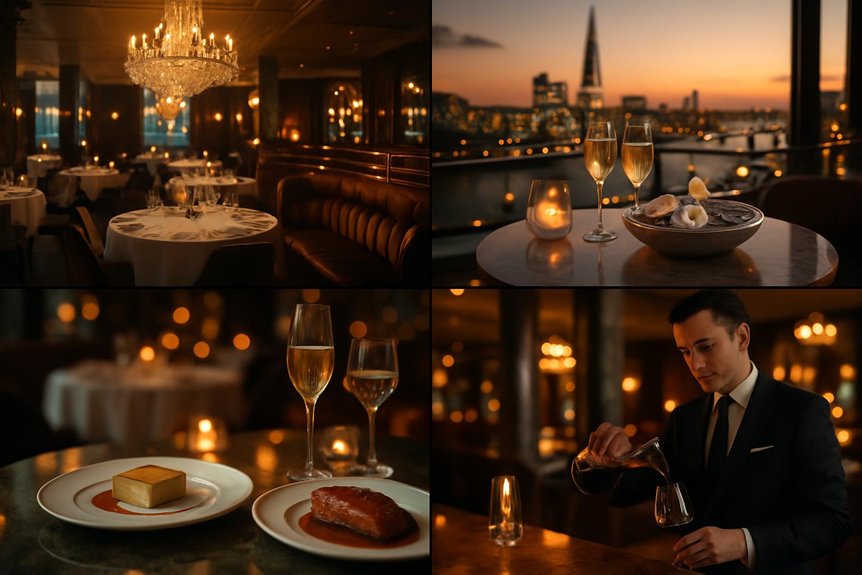
London’s luxury dining scene balances heritage and innovation with quiet confidence. Classic Michelin stalwarts offer white-glove service and precise technique. Experimental counters push form and flavor with intimate tasting menus. Cellars run deep, and sommeliers guide pairings with measured finesse. Interiors signal status through marble, velvet, and light. Access is scarce, and strategy matters. The city rewards those who know where to sit, what to order, and when to ask—if they know where to start.
Michelin Icons and Timeless Grandeur
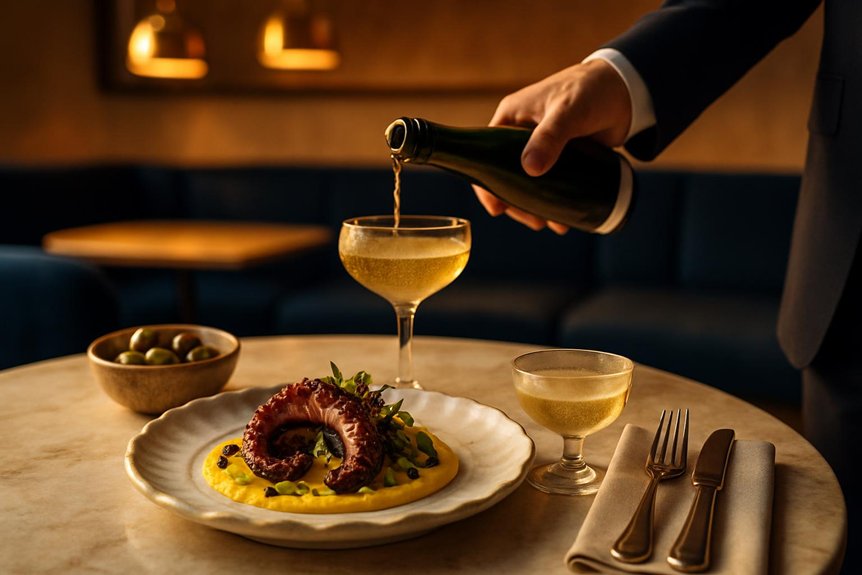
How does a city distill opulence into a plate? In London, heritage and precision meet in rooms that seem to pause time. Michelin Icons and Timeless Grandeur describe addresses where white-glove service, hushed dining rooms, and historic interiors frame faultless technique. Here, Celebrity chefs refine classics rather than chase novelty, elevating sauces, stocks, and roasts with exacting control and rare produce. Dining unfolds as ceremony: crystal glints, trolleys glide, and sommeliers navigate deep cellars with quiet authority. Menus lean on provenance and seasonality, honoring British terroir while nodding to continental craft. The rhythm is disciplined, the pacing assured. Guests encounter luxury as restraint—measured portions, perfect temperatures, and textures that land precisely—leaving an impression of continuity, legacy, and unforced splendor. Among the city’s culinary delights are contemporary Greek menus that capture the essence of the Mediterranean, such as those found at notable establishments like Kima and Opso.
Avant-Garde Tasting Menus and Chef’s Counters
Although London reveres tradition, its sharpest thrills gather at chef’s counters and avant‑garde tasting rooms where experimentation is staged in real time. Here, the city’s boundary-pushers compress seasons into mouthfuls, test textures, and choreograph heat, smoke, and silence. Diners watch precision unfold: tweezers, pipettes, disciplined calm.
Molecular gastronomy appears as a tool, not a gimmick, turning broths into pearls and herbs into vapor. Experimental plating favors sculptural balance—negative space, unexpected height, edible gloss—yet remains anchored to flavor. Progressions move swiftly, calibrated to sustain curiosity without fatigue. Chefs narrate provenance sparingly, letting technique speak.
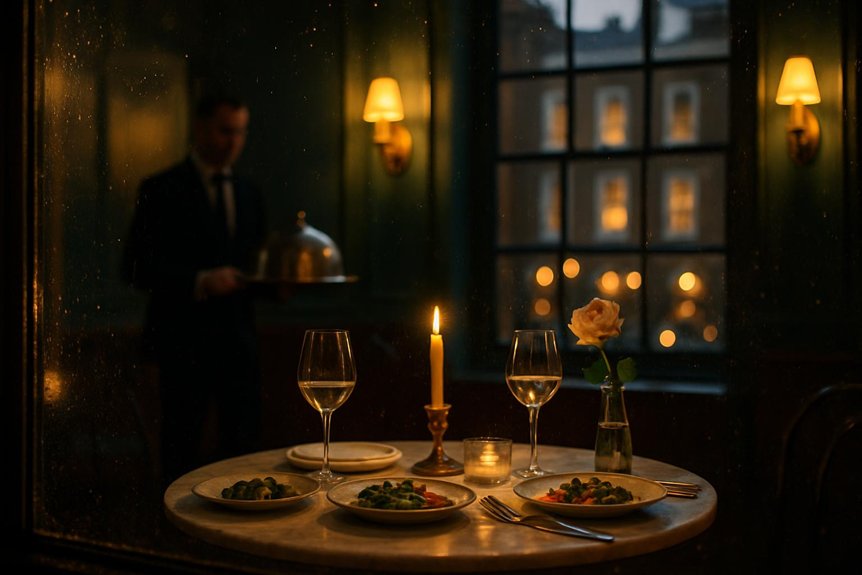
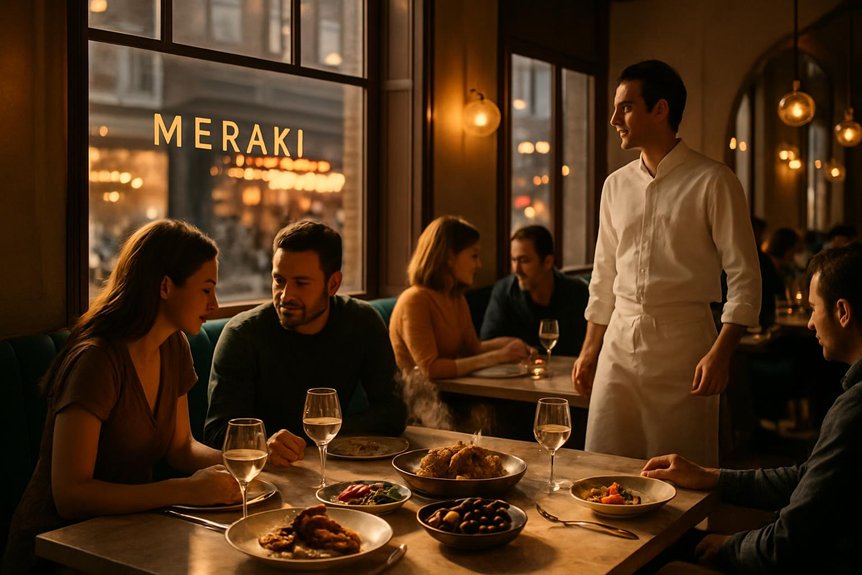
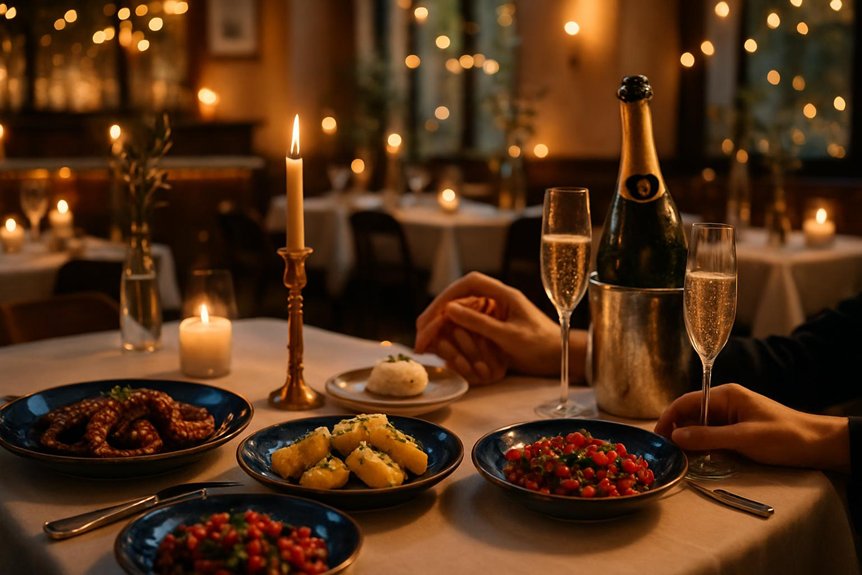
Counter seats feel conspiratorial; courses arrive seconds from the pass, capturing volatile aromas. The result is culinary theatre with intellectual backbone, calibrated surprise, and rarefied intimacy. For those seeking a romantic setting, Meraki offers an exquisite blend of intimacy and elegance with its Mediterranean delights and dimly lit atmosphere.
Wine Temples and Sommelier-Led Pairings
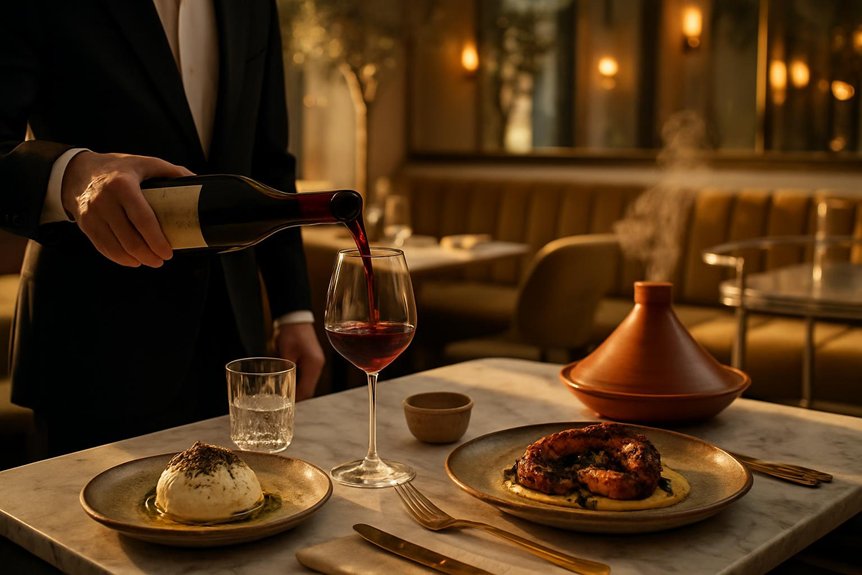
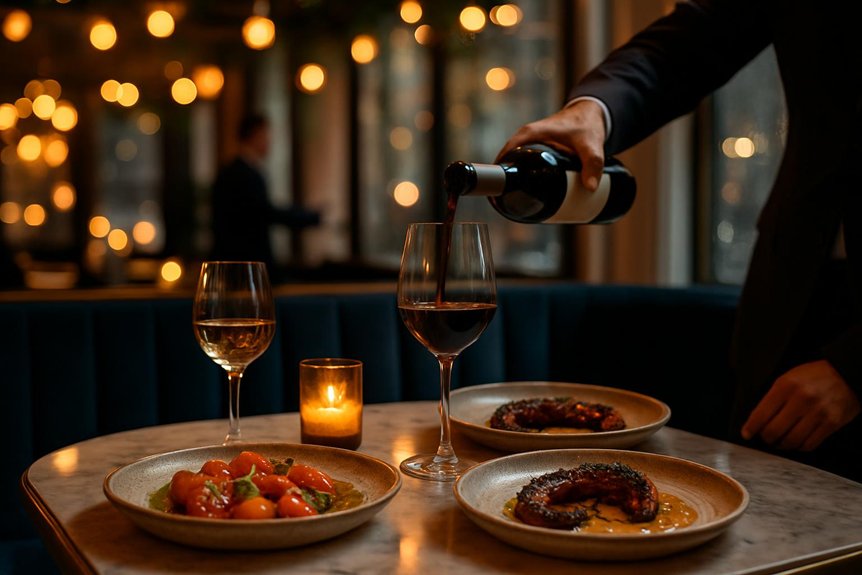
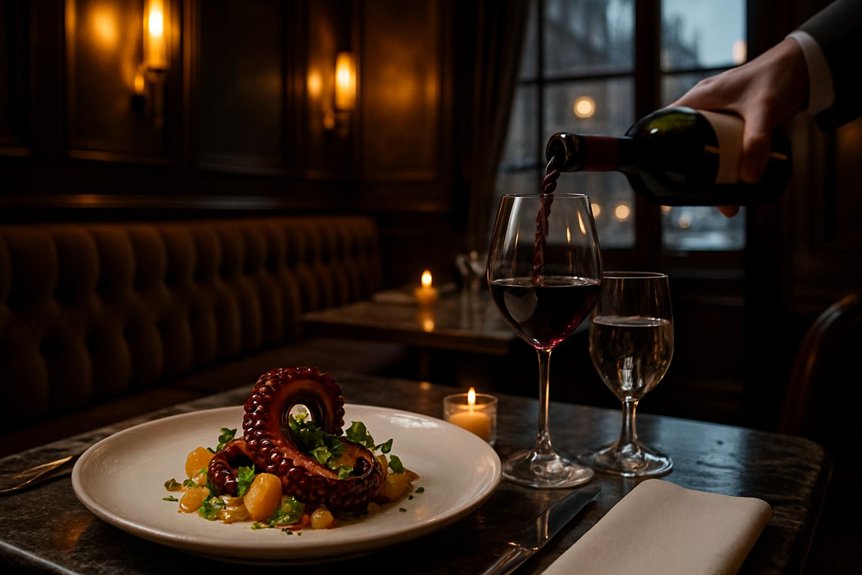
Where do oenophiles go when dinner becomes a dialogue with the vine? In London, the answer lies in rigorous cellars where lists read like maps and the pour is purposeful. Here, pairings aren’t accessories but narrative arcs, guided by sommelier expertise that decodes terroir, vintage, and texture with crisp economy.
These wine temples privilege provenance and patience. Vertical tastings trace wine history through shifting seasons; rare bottles emerge not as trophies but as lessons. Palates are led from saline Champagne to old-world reds, punctuated by precise decanting and temperature control.
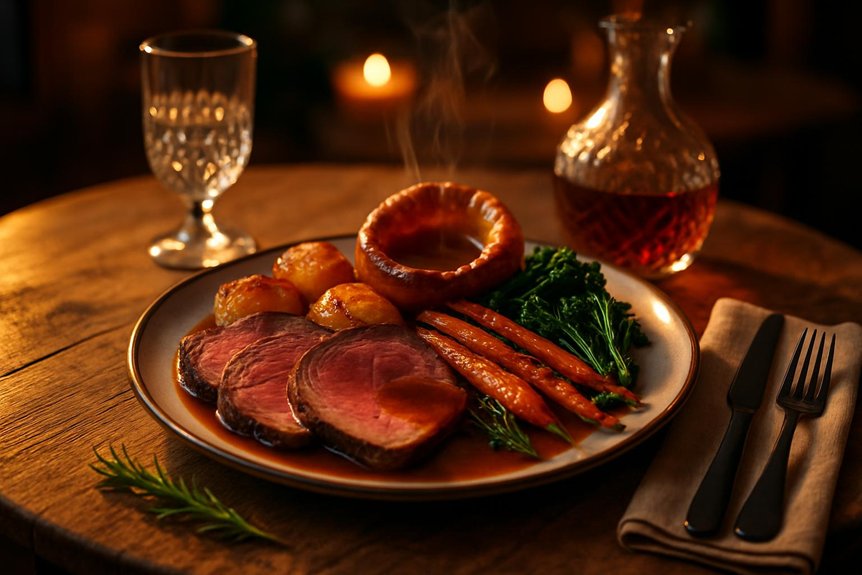
Menus flex to the glass, not the reverse, ensuring each course finds its counterpart’s structure—acid, tannin, or residual sugar—in balance. The result is orchestration: culinary cadence shaped, paced, and elevated by informed pours. Discover the best Sunday roast in London at Meraki, where the modern twist on classic flavors elevates the dining experience to new heights.
Design-Forward Dining Rooms and Ambiance
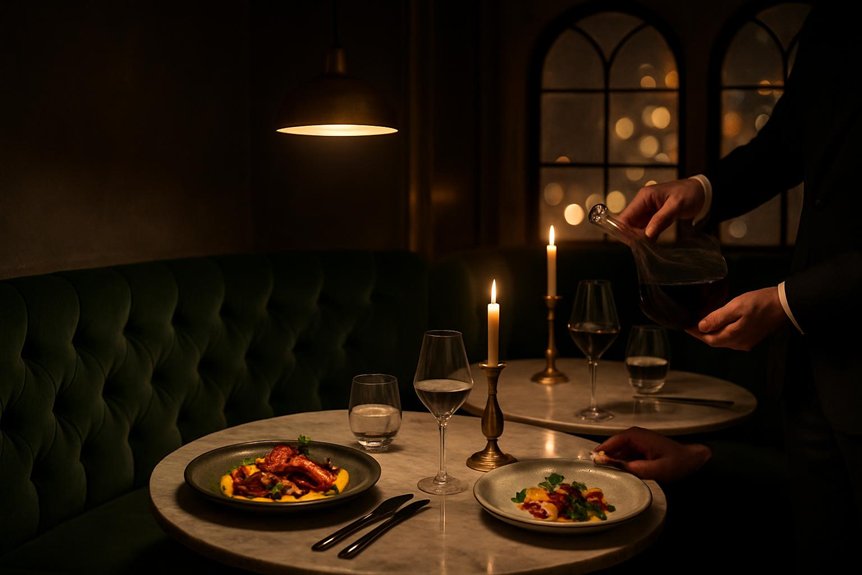
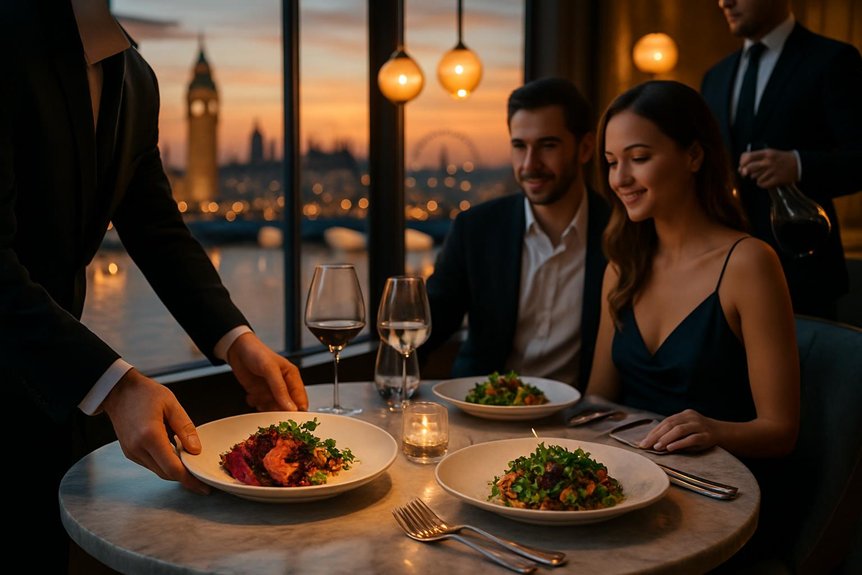
Even before a plate touches the table, London’s luxury restaurants choreograph mood through material and light. Marble thresholds dampen city noise; velvet banquettes and low-slung lamps warm the perimeter. Designers stack contrasts—burnished brass against charred timber, rippled glass beside stone—to slow the pace and heighten focus. Candlelines trace tabletops like runways, guiding service with quiet theater.
Sightlines matter. Panoramic rooftop views turn twilight into a course of its own, while mirrored panels fold the skyline back into the room. Acoustic panels hush conversation without dulling energy. Color is rationed: a moss-green wall here, a cobalt glass there. Seasonal floral decor acts as punctuation, not wallpaper. Scent stays restrained—herbaceous, mineral, fleeting—so texture and light carry the narrative from arrival to final crumb.
Reservation Strategies and Insider Tips
While prime tables can feel elusive, timing and channels make them attainable. Savvy diners track reservation drops at midnight or 7 a.m., when allocations refresh, and monitor waitlists that often move 24–48 hours out.
Direct calls at off-peak hours can secure clarity on cancellations, counter seats, and pairing menus.
Insiders leverage concierge desks, chef’s counters, and pre-paid platforms; flexible party sizes increase options. Noting seasonal menus helps, as menu rollouts create quieter windows before reviews hit.
Weekday lunches and late services yield success without compromising experience.
Polished confirmations matter: mention special occasions succinctly, request dietary notes early, and follow dress codes to avoid last-minute refusals.
Arrive five minutes early, accept adjacent time slots, and confirm the day prior. Courtesy toward staff frequently releases future access.
Conclusion
In the end, London’s luxury dining is less a checklist than a quiet symphony—each course a note, each room a resonant hall where tradition and innovation harmonize. From Michelin pillars to chef-led laboratories, from cellars whispered over by sommeliers to salons draped in velvet light, the city invites a practiced palate and a patient heart. With timing, tact, and curiosity, the most coveted doors yield, revealing a table where the present tastes of legacy.